The Diagnostic Value of Stem Features
The stem of an aquatic plant is more than a support structure — it is an anatomical record of the plant's adaptation strategy. Stem features differ systematically between species in ways that are observable in the field with minimal equipment. The most diagnostically useful stem features are: (1) hollow vs. solid construction; (2) stem color and texture; (3) node spacing and architecture; (4) branching pattern; and (5) overall growth habit (upright, sprawling, mat-forming, or free-floating).
Stem examination is particularly useful when leaves have been damaged, grazed, or are absent at the base of the plant — conditions common in actively managed water bodies or in systems with grass carp, waterfowl grazing, or heavy boat traffic. The stem structure remains consistent even when leaf features have been compromised.
Hollow vs. Solid Stems
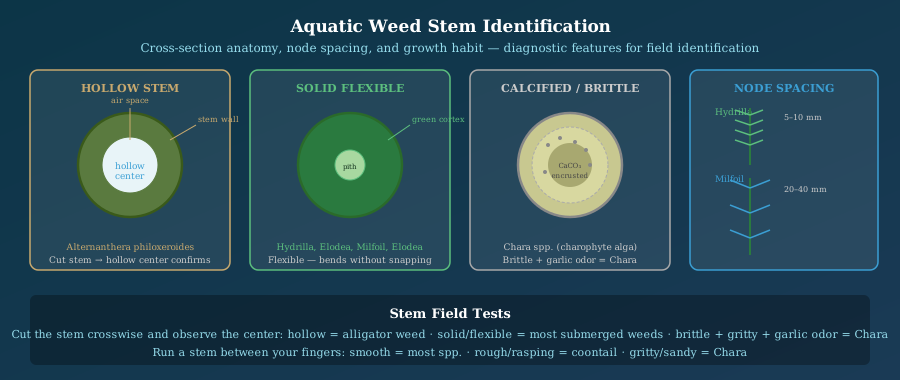
The cross-sectional anatomy of the stem — specifically whether the central pith is hollow or solid — is a reliable, consistent diagnostic feature for several species pairs:
- Hollow stems: Alligator weed (Alternanthera philoxeroides) has a characteristic hollow stem that is immediately apparent when the stem is cut or broken. This hollow stem is the source of one of the most reliable identification field tests for alligator weed: cut the stem and observe the hollow center. No other common emergent aquatic weed has this hollow stem combined with alligator weed's opposite, oval-to-lance-shaped leaves and white clover-like flowers.
- Solid, flexible stems: Most submerged aquatic weeds — including hydrilla, elodea, milfoil, and coontail — have solid, pliable stems that bend without breaking and do not have a hollow center.
- Brittle, calcium-encrusted stems: Chara has stems that feel gritty and abrasive due to a coating of calcium carbonate (lime) deposited on the surface — a process called calcification. Chara stems snap or crumble when compressed, unlike the flexible stems of true vascular plants. This brittleness combined with the distinctive garlic-skunk odor when crushed makes Chara unmistakable in the field.
Node Spacing and Architecture
Node spacing — the distance between attachment points for leaves on the stem — is useful for distinguishing species with similar leaf arrangements. For whorled submerged plants, closely spaced nodes with tight whorls create a dense, bottle-brush appearance, while widely spaced nodes create a more open, sparse appearance. Compare:
- Compact, dense whorls: Hydrilla typically has nodes spaced 5–10 mm apart, creating a dense, bushy appearance when the plant is actively growing in summer. Dense stands look like dark green brushes at the water surface.
- Wider node spacing: Elodea tends to have nodes spaced 5–15 mm apart and appears less densely packed than hydrilla for its leaf count. Combined with the 3-leaf whorl (vs. hydrilla's 5), elodea stems look less congested overall.
- Very widely spaced whorls: Eurasian watermilfoil has node spacing that can be 2–4 cm apart, giving the plant a more open, airy appearance than hydrilla. The pinnate (feather-like) leaves project widely from the stem in all directions.
Branching Patterns
Branching pattern — whether and how the main stem divides into secondary stems — reflects growth strategy and affects the overall appearance of plant stands:
- Freely branching: Coontail branches frequently and irregularly, producing the bushy, ball-like masses that accumulate in wind-exposed areas of lakes. The branching of coontail, combined with the forked leaves, gives the plant its characteristic pompom-like appearance that justifies the common name "hornwort."
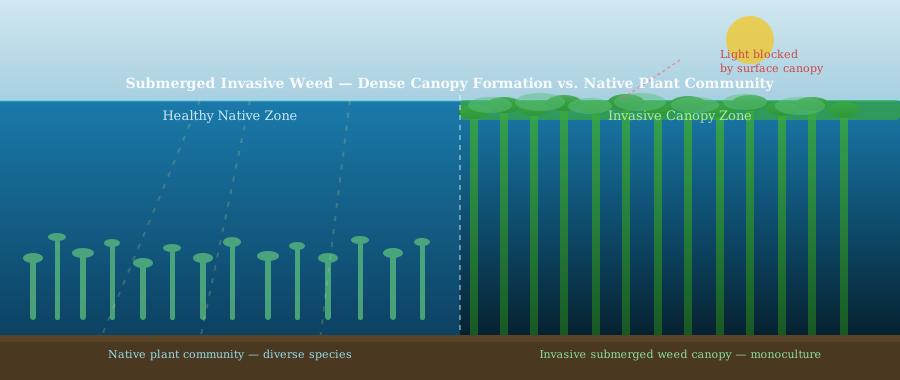
- Primarily apical growth: Hydrilla and elodea grow primarily from the apical tip (top of the stem), extending vertically toward the surface. Branching occurs but is less frequent than in coontail. When hydrilla tips reach the water surface, the plant spreads laterally to form a canopy mat — a distinctive growth pattern that creates a "lid" of vegetation impeding light penetration below.
- Horizontal rhizome spread: Emergent species like alligator weed spread primarily through horizontal rhizomes in the sediment, producing vertical shoots at intervals along the rhizome. The plant appears to expand outward from established stands rather than growing from a central point.
Growth Habit: The Overall Appearance at the Water Body Scale
At the water body scale, different species create recognizable growth patterns that can be visible from the shoreline or a boat before individual plant features are examined:
- Dense surface canopy mat: Hydrilla and Eurasian watermilfoil form horizontal surface mats when they reach the water surface — a characteristic "carpet" of vegetation at the top of the water column visible from above. This canopy habit blocks light, reduces oxygen, and provides the distinctive tangled mass that fouls propellers and fishing lines.
- Floating mat on open water: Water hyacinth, duckweed, and salvinia form visible surface mats that drift with wind and current. These mats move — a feature immediately distinguishing them from rooted emergent vegetation along the shore.
- Free-floating masses: Coontail often drifts free from its loose sediment anchor and accumulates in wind-driven windrows on the leeward shore — tangled balls of dark green material piled at the water's edge.
- Shoreline fringe: Emergent weeds form a characteristic fringe band along the shoreline, rooted in saturated sediment and growing upright above the water surface. The band may be 1–10 meters wide and densely packed in established infestations.
Stem Color and Surface Texture
Stem color provides supporting information that can accelerate species identification when combined with other features. Curly-leaf pondweed stems tend to be olive-green to reddish-green, often with a bronze tint that is characteristic and visible to the naked eye. Eurasian watermilfoil has pinkish to reddish stems, especially visible at the emergent flowering spike — one of the most distinctive features when the plant is in bloom. Hydrilla stems are typically light green and may have small, pointed spines at the nodes in the monoecious biotype. Chara stems are grayish-green to olive and have a rough, gritty surface texture from calcium encrustation.
Stem Feature Comparison Table
Use this table as a quick field reference when you have a stem sample in hand. Cross-referencing at least three stem features with leaf and root characters provides the most reliable identification outcome.
| Species | Stem Interior | Stem Color | Surface Texture | Node Spacing | Branching | Growth Habit |
|---|---|---|---|---|---|---|
| Hydrilla | Solid, flexible | Light green | Smooth; small spines at nodes | 5–10 mm (dense) | Primarily apical; some lateral | Upright to surface canopy mat |
| Elodea | Solid, flexible | Medium green | Smooth | 5–15 mm (moderate) | Moderate | Upright; less dense than hydrilla |
| Eurasian Watermilfoil | Solid, flexible | Pinkish-reddish ★ | Smooth | 20–40 mm (wide) | Moderate; emergent spike in bloom | Upright to surface canopy mat |
| Coontail | Solid, flexible | Dark green | Rough (leaf teeth) | 10–25 mm | Freely branching ★ | Free-floating masses; windrows |
| Curly-leaf Pondweed | Solid, flexible | Olive to reddish-bronze ★ | Smooth | Variable | Sparse; emergent flowering spike | Winter/spring active; dies in summer |
| Alligator Weed | Hollow ★ | Light green to reddish | Smooth | Opposite pairs | Opposite branching | Sprawling mat on water or shore |
| Water Hyacinth | Spongy/solid petiole | Green | Smooth; petiole inflated ★ | Rosette (no internodes) | Rosette/runner | Floating surface mat |
| Chara | Brittle, calcified ★ | Gray-green to olive | Gritty, rough (calcium) ★ | Whorled internodes | Whorled branchlets | Submerged mat; garlic odor ★ |
★ = particularly diagnostic field character. Stem features should be combined with leaf and root observations for confirmed identification. Growth form guides: Floating | Submerged | Emergent
Frequently Asked Questions
How do I test whether a stem is hollow in the field?
Simply cut or break the stem crosswise with your fingers or a knife and observe the cut surface. A hollow stem shows a clear air space in the center. Alligator weed stems are hollow and produce a clean, obvious central cavity. Most other aquatic weed stems are solid. If in doubt, place the cut stem tip in water — a hollow stem will often produce small bubbles from the cut end as air in the cavity is displaced.
What does the surface canopy mat formation tell me about management options?
Surface canopy mat formation by hydrilla and Eurasian watermilfoil indicates that mechanical harvesting can be effective in removing the photosynthetically active canopy layer, providing temporary relief for navigation and recreation. However, cutting leaves roots and much of the stem intact, allowing rapid regrowth. Contact herbicides applied to the surface mat are absorbed by the top layer but may not penetrate to lower portions of dense beds. Systemic herbicides (like fluridone or triclopyr) that are absorbed and translocated throughout the plant are often more effective for long-term control of canopy-forming species.
Why do coontail plants accumulate in windrows along the shore?
Coontail is rootless or only loosely anchored and drifts freely in the water column. Wind-driven surface currents and wave action transport free-floating coontail mass to the leeward (downwind) shore, where it accumulates in tangled windrows. This accumulation pattern can concentrate large quantities of plant material that create navigation obstacles and aesthetic nuisances along shorelines and boat landings. The same wind-driven dispersal mechanism also spreads coontail fragments to previously uninfested areas of the water body.
Does stem branching affect herbicide efficacy?
Branching pattern affects the total surface area of photosynthetically active tissue and thus the amount of herbicide contact or uptake potential. Freely branching species like coontail have more surface area per unit of stem length than sparsely branched species — which can affect contact herbicide efficacy. More importantly, branching pattern affects biomass density: densely branching canopy mats may require higher herbicide concentrations or longer contact times to achieve effective penetration to all plant surfaces within the stand. Always follow label-specified application rates and timing recommendations for the target species.