Last updated: May 27, 2026 · Reviewed by the AquaticWeed.org Editorial Team
Overview
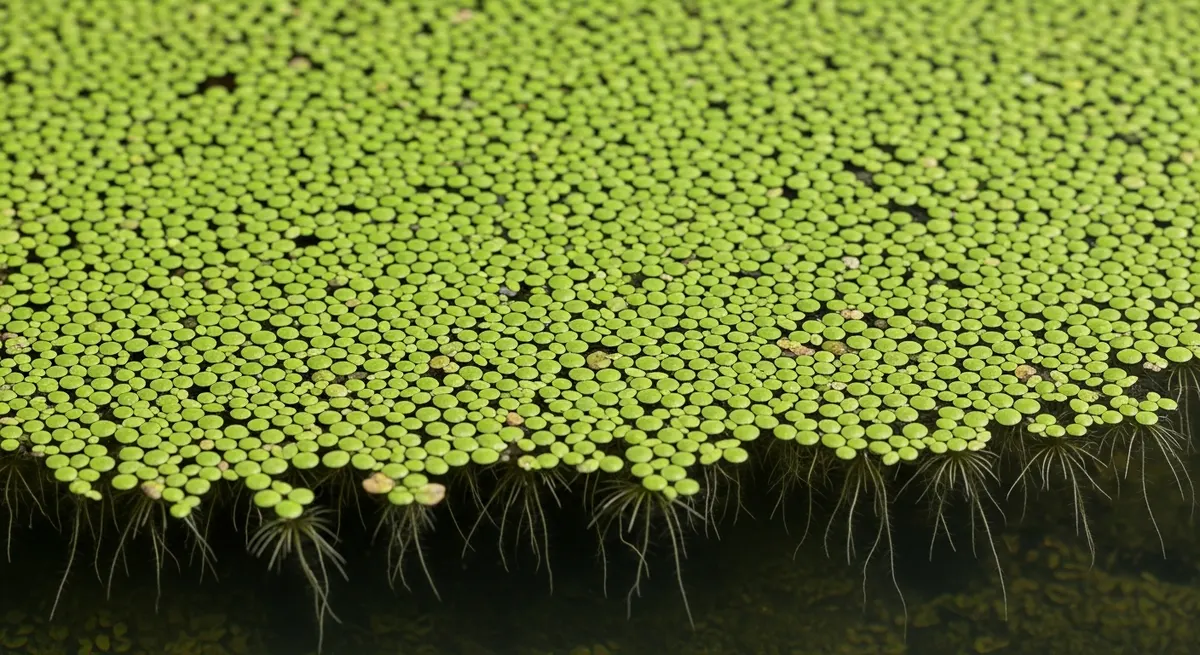
Duckweed refers to several species of tiny free-floating aquatic plants in the family Lemnaceae. Common duckweed (Lemna minor) is one of the smallest flowering plants on Earth, with individual plants just 1–5mm across. While native duckweed plays important ecological roles — providing food for waterfowl, cover for aquatic insects, and a nutrient cycling function — dense blooms indicate water quality problems and can cause significant ecological disruption.
Identification Characteristics
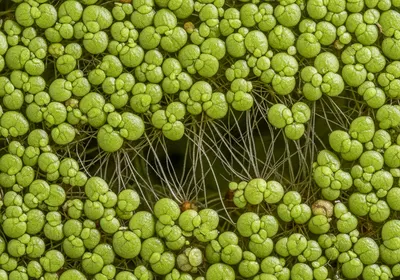
Duckweeds are identified primarily by their extremely small size and floating habit. Common duckweed (Lemna minor) consists of oval to rounded green fronds, 1–5mm across, with a single root hanging below. The frond (which is the entire plant body, combining stem and leaf functions) is flat, smooth, and bright green on top, often paler beneath. Individual fronds can produce two or three daughter fronds, forming small groups that stay loosely attached before separating.
Several related species occur in North America: Giant duckweed (Spirodela polyrhiza) is slightly larger (4–10mm), has multiple roots, and often has a reddish or purple underside. Star duckweed (Lemna trisulca) forms star-like fronds that may be partially submerged. Watermeal (Wolffia species) is even smaller than common duckweed, lacks roots entirely, and resembles tiny green specks floating on the surface — it is the world's smallest flowering plant.
All duckweeds float in dense mats on calm or slow-moving water. They can be distinguished from algae by their structured, rounded frond shape; algae lack this cellular organization and appear as slimes, threads, or irregular mats. When duckweed is abundant enough to cover an entire pond surface, it creates a brilliant green carpet that can be mistaken for grass or algae from a distance.
| Feature | Duckweed | Filamentous Algae | Cyanobacteria |
|---|---|---|---|
| Organism type | Vascular plant | Multicellular algae | Photosynthetic bacteria |
| Structure | Discrete oval fronds | Long strands or mats | Slimy or paint-like scum |
| Roots | One hanging root per frond | None | None |
| Texture in hand | Granular, solid | Hair- or cotton-like | Slimy, paint-like, sometimes powdery |
| Color | Bright to medium green | Bright green to yellow-brown | Blue-green, teal, or rust |
| Toxin risk | None | None | Can produce hepatotoxins and neurotoxins |
| Effective control | Fluridone, diquat, skimming, nutrient reduction | Copper algaecides, beneficial bacteria | Algaecide plus public-health notification |
Growth Habit & Ecology
Duckweed reproduces almost exclusively by vegetative budding — new fronds bud off from parent fronds in a cleft on the frond margin, resulting in extremely rapid population growth. Under ideal conditions (warm water 77–86°F, full sun, nutrient-rich water), populations can double every 24–48 hours, covering entire water bodies within days to weeks.
Duckweed can persist through winter through two mechanisms: dormant fronds that sink to the bottom, and turion formation in some species. These dormant fronds overwinter in sediment and rise to the surface when water warms in spring. Wind, water currents, watercraft, and wildlife (particularly waterfowl, whose feathers and feet carry fronds between water bodies) spread duckweed to new locations.
Despite this rapid growth, duckweed is also limited by nutrient depletion, shading, and cold temperatures. In oligotrophic (low-nutrient) ponds, duckweed populations remain sparse. Dense blooms are almost always a symptom of eutrophication — excess nutrients entering the system from agricultural runoff, septic leakage, fertilizer application, or high waterfowl populations.
Habitat Preferences
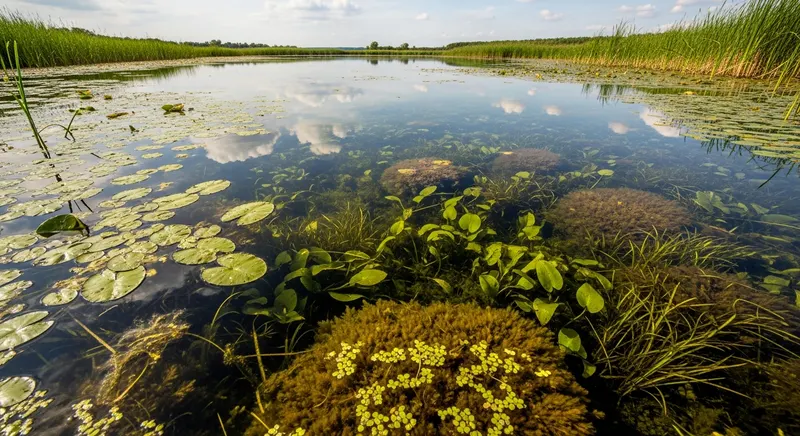
Duckweed species are among the most habitat-tolerant aquatic plants on Earth. Common duckweed (Lemna minor) is native to and present in all 50 U.S. states and on every inhabited continent. It colonizes virtually any standing or slow-moving freshwater body: ponds, lakes, marshes, rice paddies, ditches, backwater river channels, and man-made impoundments.
The essential habitat requirements are calm water (duckweed cannot persist in turbulent or fast-flowing water, where wave and current action break up mats and submerge fronds) and adequate nutrients. Dense bloom conditions require elevated nitrogen and phosphorus, typically associated with agricultural runoff, fertilized lawns, failing septic systems, or high waterfowl density. In low-nutrient (oligotrophic) ponds, duckweed may be present but sparse. In eutrophic systems — particularly small, enclosed ponds with abundant nutrient inputs — the combination of warm water, calm conditions, and high nutrients enables the explosive growth that covers entire surfaces.
Temperature range is broad: duckweed can grow actively from 50–95°F, with optimal growth around 77–85°F. It can survive brief freezing through dormant frond formation. Bright sunlight accelerates growth; shading from trees or other plants can limit bloom severity. Water bodies fully shaded by overhanging vegetation rarely develop problem duckweed blooms regardless of nutrient levels.
Spread Mechanisms
Duckweed spreads with remarkable efficiency through multiple pathways, which explains its presence in essentially every water body in North America regardless of isolation. The most important natural vector is waterfowl: ducks, geese, herons, and shorebirds carry duckweed fronds — which are tiny, moist, and stick readily to feathers, bills, and feet — between water bodies during feeding and travel. A single heron moving between a duckweed-covered pond and a clean pond can transfer hundreds of fronds.
Flooding events flush duckweed from water bodies into downstream systems, spreading it through connected watersheds. Recreational equipment — kayaks, canoes, fishing gear, and wading boots — can carry fronds to new water bodies. Water garden and aquarium trade has historically contributed to duckweed introduction in isolated ponds; Wolffia (watermeal) in particular has spread through the aquatic plant trade.
Once introduced to a water body, spread within the system is driven by wind, which pushes mats to sheltered areas, and water circulation patterns. A few fronds introduced to an upwind or up-current area can rapidly expand to cover most of the surface in a nutrient-rich system within a single growing season. Prevention requires vigilance: rinsing gear and boats between water bodies, avoiding the aquatic plant trade for naturally invasive species.
Similar Species & How to Tell Them Apart
Duckweed is most often confused with several other small floating organisms, particularly by pond owners new to aquatic plant identification. Common duckweed (Lemna minor) is the most widespread, but accurate identification matters because management differs slightly between species, and several look-alikes are not duckweed at all.
Common duckweed vs. watermeal: Watermeal (Wolffia species) is even smaller than common duckweed — individual plants are less than 1 mm and resemble tiny green pinhead grains floating on the surface. Watermeal has no roots at all (common duckweed has one root hanging below each frond). Watermeal mats are much harder to control mechanically because the plants pass through ordinary screens, and management programs typically combine systemic fluridone with extended treatment periods.
Common duckweed vs. giant duckweed: Giant duckweed (Spirodela polyrhiza) is larger (4–10 mm fronds), has multiple roots per frond, and usually shows a reddish or purple underside. Star duckweed (Lemna trisulca) forms star-shaped frond clusters that often grow partially submerged just below the surface.
Duckweed vs. filamentous algae: Filamentous algae form stringy, slimy mats without the structured, rounded frond shape characteristic of any duckweed species. From a distance both look like a green carpet, but a close inspection — picking up a small handful — immediately distinguishes the plant-like fronds of duckweed from the unstructured threads of algae. Treatment products are different, so accurate ID matters.
Duckweed vs. azolla (mosquito fern): Azolla (Azolla caroliniana) is a small floating fern that can superficially resemble duckweed but has a distinctly red color in many conditions, branching scale-like leaves, and a fern-like growth form when examined closely. Azolla is sometimes deliberately cultivated; some species are invasive. See the identification hub for diagnostic close-up images.
Seasonal Growth Pattern
Duckweed follows a clear seasonal cycle in temperate climates. In spring, dormant fronds that overwintered in the sediment rise to the surface as water temperatures warm above 50°F, typically in April in the mid-Atlantic states and earlier in the South. Initial populations are sparse and inconspicuous.
Through late spring and early summer (May–June), populations expand rapidly as temperatures rise and nutrients increase with spring runoff. By midsummer (July–August) in warm, nutrient-rich ponds, complete surface coverage is common — the classic "green carpet" scenario. Population doubling every 24–48 hours means that a few fronds visible in June can become a complete pond covering by July in high-nutrient conditions.
Late summer and fall often see natural thinning as nutrients become depleted and days shorten. Cold nights in September and October trigger turion formation in some species — specialized dormant fronds that sink to the sediment. By November–December in most temperate regions, visible surface populations disappear, creating a false impression of resolution. However, dormant fronds in the sediment are fully viable and will resurface the following spring, making duckweed management a multi-year commitment rather than a one-time treatment. In frost-free zones (Florida, Gulf Coast), duckweed may persist year-round at varying densities.
Ecological Impact
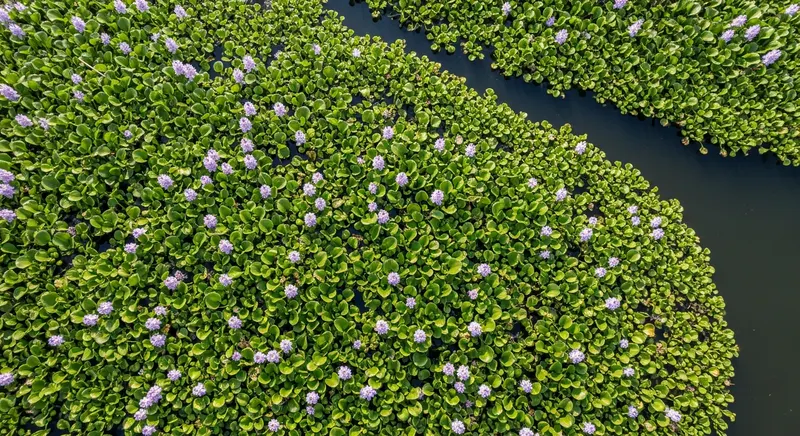
Dense duckweed mats — defined as covering more than 50% of a water body's surface — create significant ecological disruption. Mats block sunlight from reaching the water column, inhibiting growth of submerged aquatic plants and phytoplankton that form the base of the aquatic food web. The resulting reduction in photosynthesis and disruption of gas exchange can lead to dramatically reduced dissolved oxygen levels.
When large duckweed mats die back (triggered by nutrient depletion, temperature changes, or weather events), the decomposing biomass creates a massive oxygen demand. Bacterial decomposition of dead organic matter consumes oxygen faster than it can be replenished, leading to hypoxic conditions that can kill fish and other aquatic organisms. Fish kills following duckweed die-offs are documented in the scientific literature.
Paradoxically, duckweed blooms are more often a symptom of underlying water quality problems (eutrophication) than a primary cause. Treating only the duckweed without addressing nutrient sources will result in persistent recurrence.
Water Quality Effects
Duckweed coverage is one of the most reliable visual indicators of eutrophic water-quality conditions in U.S. ponds and slow waterways — and once coverage exceeds roughly 50% of the surface, duckweed itself drives further degradation. Dense surface mats block sunlight from reaching the water column, halting photosynthesis by submerged plants and phytoplankton, which had been the dominant daytime oxygen source. The result is a steady decline in dissolved oxygen across the day-night cycle rather than the sharper peaks and troughs of clear-water systems.
Dissolved oxygen collapse typically follows mat closure within days to weeks. Under a continuous duckweed mat in a small pond, dissolved oxygen at depth routinely falls below 2 mg/L, and complete oxygen depletion (anoxia) is common in stratified water deeper than 6 feet. Fish kills, particularly of catfish, bass, and sunfish, are documented after sustained mat coverage in summer. The risk is amplified during the natural mat die-back triggered by nutrient depletion or cold weather — bacterial decomposition of large dead biomass can consume the remaining oxygen within 24–48 hours.
Nutrient cycling shifts toward internal loading: duckweed accumulates nitrogen and phosphorus while alive, but releases the same nutrients in a pulse during die-back, creating conditions favorable for cyanobacterial blooms in the weeks following collapse. This is the underlying reason that surface skimming alone — without addressing nutrient sources — almost always produces a rebound bloom within a single growing season. See the water quality degradation guide for the full eutrophication-feedback sequence.
Risks to People, Property & Infrastructure
Most duckweed risks are mediated through water-quality effects rather than direct contact, but the cumulative impacts on small ponds and the property and aquaculture sectors that depend on them are substantial. Pond fishery risks are the most common: persistent mat coverage produces fish kills, particularly in the warmer months when both oxygen demand and water temperature stress are highest. For recreational fishing ponds and ornamental koi ponds, a single summer mat-and-collapse cycle can eliminate the entire fish population.
Aesthetic and recreational risks are real even where no fish kill occurs. A completely covered pond loses recreational value, becomes visually unappealing, and frequently develops surface scum and odor as the mat thins or decomposes. Property values on rural ponds and suburban retention ponds with chronic duckweed problems can decline measurably, particularly in real-estate markets where pond views are a selling point.
Aquaculture and livestock risks exist in agricultural settings. Heavy duckweed coverage in catfish and sport-fish production ponds reduces dissolved oxygen and can require costly aeration intervention. Livestock watering pond mats can entangle young calves and lambs, and high coverage may concentrate cyanobacterial blooms beneath the mat that can be acutely toxic to cattle and pets drinking from the edge. See the cyanobacterial bloom risks guide for the toxicity background.
Mosquito habitat is a frequently raised but more nuanced concern: very thin duckweed films can actually suppress mosquito breeding by interfering with female egg-laying, but heavy persistent mats trap larvae and shelter them from fish predation. Local mosquito control districts can advise on conditions in your area.
Control Methods
Effective duckweed management starts with identifying and reducing the nutrient sources driving its growth. Without addressing the underlying cause — excess nitrogen and phosphorus — any surface removal will be followed by rapid regrowth.
Nutrient reduction strategies include: establishing vegetated buffer strips to intercept agricultural runoff; repairing or replacing failing septic systems; reducing fertilizer application near water bodies; creating aeration to improve water circulation; and managing waterfowl populations that contribute nutrient loading.
Physical removal by skimming, raking, or specialized harvesting equipment can provide temporary relief and reduce the nutrient load in the system. Removed duckweed should be composted away from the water body.
Water circulation and aeration — using aerators, fountains, or de-stratification equipment — disrupts the calm conditions duckweed requires and adds oxygen to the water column.
Aquatic herbicides (diquat, fluridone, flumioxazin, carfentrazone) require state permits and may provide temporary control but do not address underlying causes.
Biological control: grass carp consume duckweed and may help reduce populations where stocking is permitted. Certain waterfowl (ducks, geese) and aquatic insects also consume duckweed.
Important: Always obtain required permits before applying any aquatic herbicide or introducing biological control agents. Requirements vary by state. Contact your state department of natural resources or environmental protection agency for guidance.
Management Considerations
The defining principle of effective duckweed management is that duckweed itself is rarely the underlying problem — chronic dense mats are almost always a symptom of nutrient enrichment, and surface treatment without addressing the nutrient sources will produce a guaranteed recurrence. Realistic management programs therefore proceed in two parallel tracks: short-term suppression to restore acceptable surface conditions, and long-term watershed work to reduce the nutrient inputs that drive the explosive growth.
Diagnose the nutrient sources first. Common culprits in small ponds and slow waterways include: agricultural runoff (fertilizers, animal waste), failing or proximate septic systems, lawn fertilizer applied within the pond watershed, koi and goldfish overstocking (fish waste is a major nutrient source), waterfowl overcrowding (especially domestic ducks and Canada geese fed by neighbors), and decomposing organic matter (leaves, grass clippings) entering the pond. Until the nutrient source is identified and reduced, even the best herbicide program will deliver only weeks of relief.
Short-term suppression options include: physical skimming (effective for small ponds, labor-intensive, requires removal of harvested biomass away from the water body); aeration and circulation (disrupts the calm conditions duckweed requires, adds oxygen to mitigate die-back effects, and is often the most cost-effective long-term tool for small ornamental ponds); aquatic herbicides registered for duckweed control (fluridone, flumioxazin, diquat, carfentrazone, penoxsulam) — fluridone is the most commonly effective for whole-pond suppression but requires extended exposure (45–90 days at low concentration); and biological control using grass carp (effective but unselective) or domestic ducks (modest impact, may add nutrients).
Long-term watershed work is the durable solution and the only approach that prevents recurrence: install vegetated buffer strips around the pond to intercept runoff (10+ feet wide, planted with native grasses and shrubs); repair or replace failing septic systems within 100 feet of the water body; reduce or eliminate fertilizer use in the pond watershed; manage waterfowl population (do not feed wild waterfowl, fence small ponds where feasible); stop ornamental fish overstocking; and remove decomposing organic matter from the pond and shoreline. These watershed practices typically reduce duckweed problems within 1–3 growing seasons. See the management planning guide for prioritization frameworks.
Regulatory considerations: All aquatic herbicide applications require state permits, including for small private ponds in most states. Some states regulate grass carp stocking strictly (Washington, Oregon, parts of New York prohibit them entirely). Always consult your state department of natural resources or environmental agency before initiating any program.
Distribution in the United States
Duckweed species are found worldwide and are native to most of the United States. Lemna minor occurs in all 50 states and is among the most widely distributed aquatic plants on the planet. Dense blooms occur wherever nutrient-rich conditions prevail — ponds and slow-moving waterways across all regions of the United States can experience duckweed problems.
Problem blooms are most frequent in the agricultural Midwest and South, where nutrient loading from crop production and livestock operations is heaviest. The Mid-Atlantic region and Southeast also experience significant duckweed problems associated with nutrient-enriched suburban stormwater, failing septic systems, and high waterfowl density. Urban and suburban ponds with ornamental fish (koi, goldfish) that generate nutrient-rich waste are frequent duckweed problem sites.
Frequently Asked Questions
Is duckweed bad for a pond?
In moderation, duckweed is generally beneficial — it provides food and cover for waterfowl and aquatic insects, and it absorbs excess nutrients. However, when it covers more than 50% of a pond's surface, it reduces dissolved oxygen, blocks sunlight from underwater plants, and degrades overall water quality. Dense coverage is typically a symptom of excess nutrients rather than a problem you can fix by just removing duckweed.
What causes a duckweed explosion?
Duckweed blooms are driven by excess nutrients, particularly phosphorus and nitrogen, from agricultural runoff, lawn fertilizers, septic system leaks, waterfowl waste, fish (koi, goldfish), or decomposing organic matter. Calm water, warm temperatures (70–85°F), and bright sunlight promote rapid doubling. Eliminating the nutrient source is the only long-term solution.
Is duckweed the same as algae?
No. Duckweed is a true flowering plant — one of Earth's smallest — with a distinct cellular structure and, in some species, tiny inconspicuous flowers. Algae are simpler organisms without the cellular organization of true plants. Distinguish duckweed from algae by looking for individual rounded fronds with clear structure. Algae appears as slimes, threads, mats, or blooms without distinct frond shapes.
Can you eat duckweed?
Yes — duckweed is highly nutritious, with protein content of 20–40% dry weight, comparable to legumes, along with essential amino acids, omega-3 fatty acids, vitamins B12 and D, and minerals. It is consumed in some Southeast Asian countries and is being actively researched as a sustainable protein source for food and animal feed. However, duckweed from potentially contaminated, chemically treated, or sewage-impacted water should not be consumed without laboratory testing.
Whole-Lake Hydrilla Management: Lake Tohopekaliga, FL
Lake Tohopekaliga ("Lake Toho"), a 22,700-acre Central Florida lake, has sustained one of the most intensively managed hydrilla programs in the U.S. since the 1990s. Annual fluridone treatments combined with targeted mechanical harvesting in high-use recreational areas have maintained hydrilla coverage below nuisance thresholds while preserving native submersed vegetation communities in designated littoral zones.
Key outcome: Multi-decade integrated program demonstrates that hydrilla can be managed at acceptable levels in large water bodies, but requires sustained annual investment and coordinated agency cooperation across FDEP, SFWMD, and local fisheries managers.
References & Further Reading
- Landolt, E. (1986). The family of Lemnaceae — a monographic study. Veröffentlichungen des Geobotanischen Instituts ETH, Stiftung Rübel, Zürich.
- Bhanthumnavin, K. & McGarry, M.G. (1971). Wolffia arrhiza as a possible source of inexpensive protein. Nature 232:495.
- Cao, X., et al. (2017). Can duckweed (Landoltia punctata) be used as a bioindicator of nitrogen and phosphorus in water? Chemosphere 168:1488–1493.
We used the integrated management framework from this site to structure our Eurasian watermilfoil control program. After three seasons we've reduced lake-wide coverage by 78% on our 340-acre water body.
Susan Thibodeau Lake District Manager, MN · Crow Wing CountyThe seasonal timing guidance has been invaluable. Treating at the right growth stage cut our herbicide costs by nearly 30% without sacrificing efficacy on our county-managed reservoir.
Dale Buchanan County Parks Director, MI · Kalamazoo County