The National Authority on Aquatic Plants
Identify and Manage Aquatic Weeds
Comprehensive scientific profiles, identification guides, ecological research, and control methods for invasive and nuisance water plants across all 50 U.S. states. Trusted by lake managers, landowners, researchers, and conservationists.
What You Need to Know
Aquatic Weeds: America's Growing Water Crisis
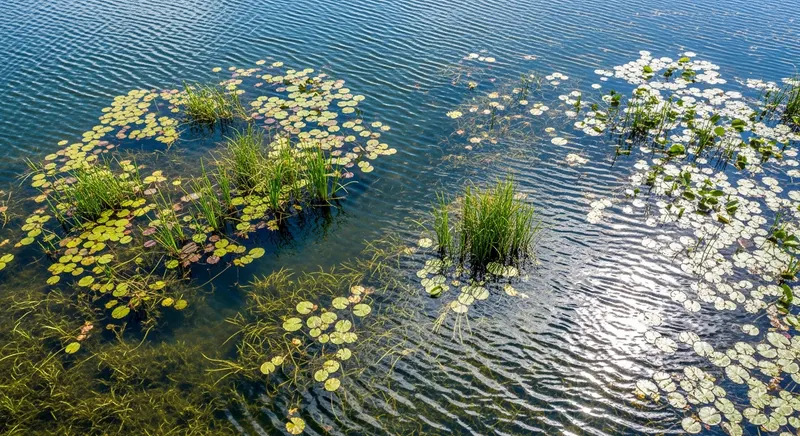
Aquatic weeds are among the most challenging environmental problems facing lakes, ponds, rivers, and reservoirs across the United States. Whether native plants growing in nuisance densities or aggressive invasive species arriving from other continents, problematic aquatic vegetation affects every region of the country — from Florida's subtropical waterways to New England's glacial lakes, from the Great Lakes to California's agricultural canals.
The scale of the problem is significant. Aquatic invasive plants cost the U.S. economy an estimated $100 million to $1 billion annually in direct control costs and economic damages. Hydrilla alone has been documented in at least 30 U.S. states, infesting millions of acres of water surface area. Eurasian watermilfoil is present in every contiguous state. Water hyacinth can double its population in as few as 12 days, blanketing water bodies with impenetrable floating mats that choke out all other life.
But the problem is more nuanced than a simple "invasive vs. native" dichotomy. Many native aquatic plants — duckweed, coontail, cattails — become problematic in water bodies enriched by agricultural runoff, urban stormwater, and septic system effluent. Understanding the distinction between a native plant growing in natural abundance and a genuine weed problem is essential for making sound management decisions that protect both water quality and native biodiversity.
AquaticWeed.org is built to be the most comprehensive national reference for anyone dealing with aquatic vegetation: lake managers coordinating county-wide programs, landowners struggling with a pond taken over by hydrilla, fisheries biologists monitoring restoration projects, or curious naturalists trying to understand what's growing in a local waterway. Our species profiles, identification guides, ecology articles, and management resources are grounded in peer-reviewed science and field-verified information — and cover every major aquatic weed species found in the United States.
This site covers the complete lifecycle of aquatic weed management: from initial identification to understanding plant biology, assessing ecological impacts, choosing appropriate control methods, navigating regulatory requirements, and developing long-term management plans. Whether you are dealing with a single-season bloom or a multi-year eradication program, the resources here will guide your decisions with science, not guesswork.
Reference Library
Explore Our Knowledge Hubs
Eight comprehensive topic hubs — each containing dozens of in-depth articles, species profiles, and practical guides organized for professionals and informed landowners alike.
Step-by-step guides to identifying aquatic weeds by leaf shape, growth habit, habitat, and season. Covers floating, submerged, and emergent types.
How aquatic plants reproduce, grow, photosynthesize, and survive. Covers vegetative fragmentation, turions, tubers, light requirements, and dormancy.
Mechanical, chemical, biological, and integrated approaches to aquatic weed management. Includes permit requirements and method selection guidance.
How invasive and nuisance aquatic plants affect dissolved oxygen, native biodiversity, fish habitat, sediment dynamics, and nutrient cycling.
How to build a comprehensive, multi-year aquatic weed management plan. Covers goal-setting, method selection, monitoring, and adaptive management.
Regional distribution data for major aquatic weed species across all 50 states, with analysis of invasion pathways and spread vectors.
How aquatic weeds grow, bloom, and overwinter through the seasons — and how to time control efforts for maximum effectiveness.
The role of phosphorus, nitrogen, and eutrophication in driving aquatic weed explosions — and how nutrient management can prevent them.
Definitions of technical, scientific, and regulatory terms used in aquatic plant management — from macrophytes to phytoremediation.
Species Authority Pages
America's Most Problematic Aquatic Weeds
Comprehensive scientific profiles for every major aquatic weed species found in the United States — covering identification, biology, ecological impact, control methods, distribution, and frequently asked questions.
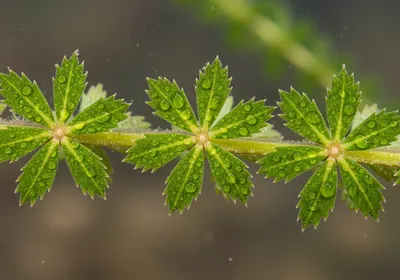
Hydrilla
The most widely distributed invasive submerged aquatic plant in the United States, established in 30+ states. Grows up to 1 inch per day, forms dense surface mats, and reproduces via tubers, turions, and fragments. Native to Asia; introduced via the aquarium trade.
Full Species Profile →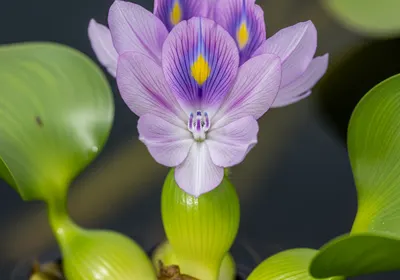
Water Hyacinth
Considered one of the world's worst aquatic weeds. A free-floating plant native to South America that can double its population in 12 days under optimal conditions. Its showy purple flowers belie an extraordinarily destructive invasive capacity across the Gulf South.
Full Species Profile →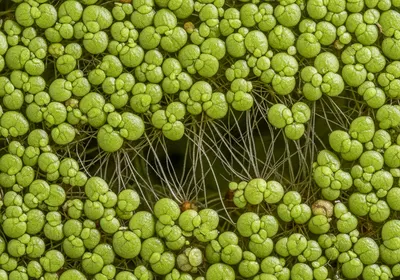
Duckweed
Among the world's smallest flowering plants — individual fronds measure just 1–5mm. Native throughout North America, duckweed is a nuisance indicator of eutrophication. Dense mats can cover entire pond surfaces, deplete dissolved oxygen, and block sunlight from submerged vegetation.
Full Species Profile →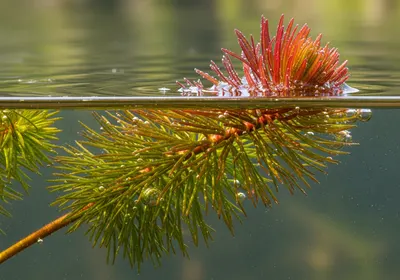
Eurasian Watermilfoil
A feathery submerged invader native to Europe, Asia, and northern Africa that now occupies every contiguous U.S. state. Spreads primarily through vegetative fragmentation on boat propellers and trailers. Forms dense canopies that shade out native aquatic vegetation.
Full Species Profile →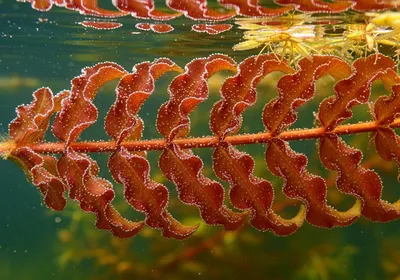
Curly-leaf Pondweed
Unlike most aquatic invasives, curly-leaf pondweed grows most aggressively in fall, winter, and spring — outcompeting native plants before they emerge. Its early-season growth and distinctive wavy, crispy leaves make it a unique management challenge in northern states.
Full Species Profile →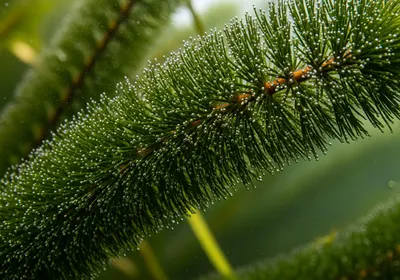
Coontail
A native, rootless submerged plant found throughout North America. Coontail provides valuable fish habitat and waterfowl food, but forms nuisance dense beds in nutrient-enriched water bodies. Often confused with hydrilla — knowing the difference matters for management decisions.
Full Species Profile →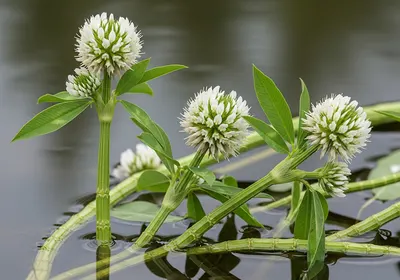
Alligator Weed
A federally listed noxious weed with a uniquely challenging amphibious growth habit — thriving equally in water and on land. Native to South America, alligator weed forms dense floating and emergent mats in the Gulf Coast states, blocking waterways and displacing native vegetation.
Full Species Profile →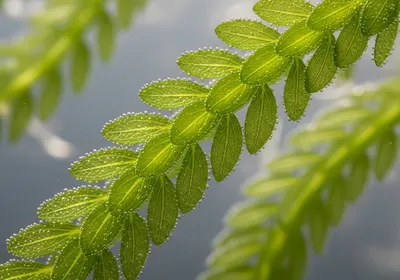
Elodea
A native North American submerged plant commonly confused with hydrilla. Ecologically valuable in its home range — providing habitat and oxygen — elodea becomes invasive in Europe where it was introduced. Understanding the distinction from hydrilla is critical for management decisions.
Full Species Profile →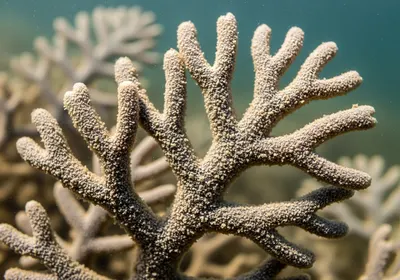
Chara (Muskgrass)
Technically a complex alga, not a true plant, chara grows in dense mats that can cover lake and pond bottoms. Distinguished by a strong garlic-like odor and rough, calcium-encrusted texture. Native and often ecologically beneficial as a water quality indicator in clear, low-nutrient lakes.
Full Species Profile →Classification
Understanding the Three Growth Categories
Every aquatic weed is classified by its position relative to the water surface. This distinction is the foundation of identification and determines which management approaches are appropriate for each species.
Floating Aquatic Weeds
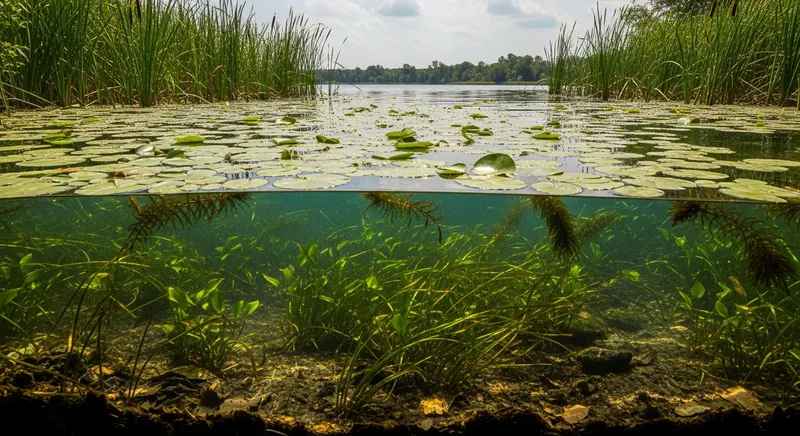
Free-floating on the water surface
Floating weeds are plants that drift freely on the water surface, with roots hanging in the water column below and leaves and flowers above. They intercept atmospheric carbon dioxide and sunlight directly, enabling extremely rapid growth — water hyacinth can double its biomass in under two weeks. Dense floating mats shade out submerged vegetation, deplete oxygen through decomposition, create mosquito breeding habitat, and obstruct navigation and recreation.
Submerged Aquatic Weeds
Growing entirely beneath the surface
Submerged weeds grow fully beneath the water surface, with roots anchored in bottom sediments and stems extending upward through the water column. They must photosynthesize using dissolved carbon dioxide and light filtered through the water above. The most problematic species — hydrilla, Eurasian watermilfoil — are adapted to grow in extremely low light, giving them a competitive advantage over native species. Dense submerged beds entangle boat propellers, impede swimming, and form surface canopies that shade out competing plants.
Emergent Aquatic Weeds
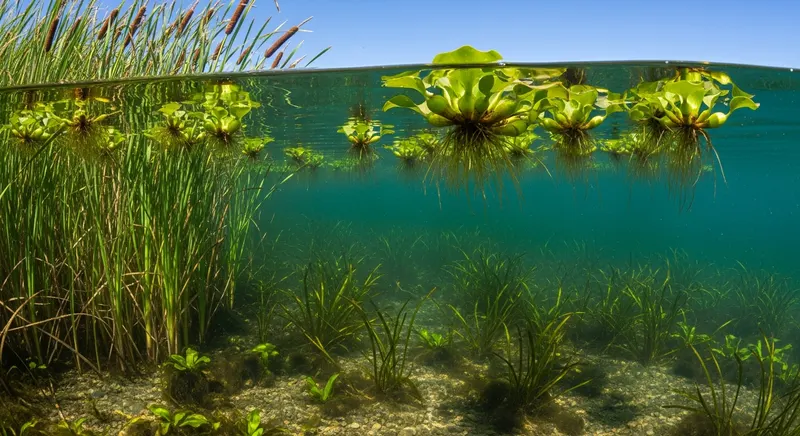
Rooted underwater, stems above surface
Emergent weeds are rooted in submerged or saturated sediment but extend their stems, leaves, and flowers above the water surface. They colonize shoreline margins, shallow bays, and wetland areas. Some emergent species — like phragmites and alligator weed — form impenetrable monocultures that eliminate native plant diversity and alter hydrology. Others, like native cattails, provide critical wildlife habitat even as they expand in enriched water bodies.
Plant Science
Biology of Aquatic Weeds: How They Grow, Spread, and Persist
Understanding the biological mechanisms that drive aquatic weed growth is essential before selecting a control strategy. The most problematic species exploit specific adaptations — low-light photosynthesis, multiple reproductive pathways, rapid vegetative fragmentation — that make them exceptionally difficult to eradicate once established.
Photosynthesis in Aquatic Environments
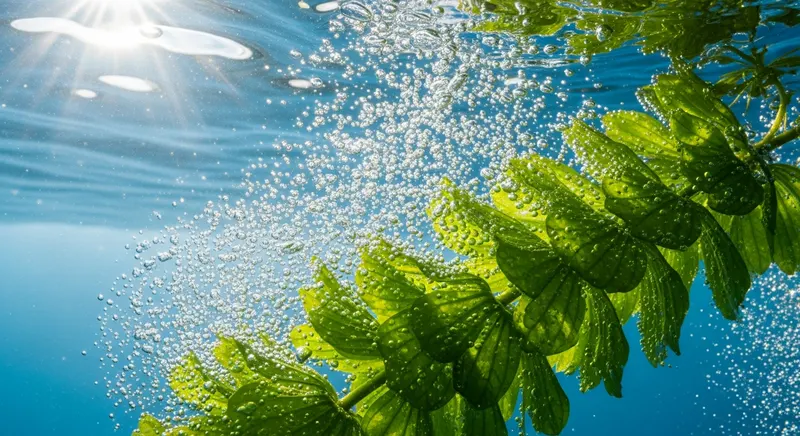
Aquatic plants face different photosynthetic challenges than terrestrial species. Submerged plants must extract dissolved carbon dioxide from the water column and use light filtered through depth and turbidity. The most problematic invasive species — hydrilla and Eurasian watermilfoil — have evolved efficient low-light photosynthetic pathways that allow them to grow vigorously in conditions that suppress native plants. This competitive advantage lets them establish dense beds in water up to 15 feet deep while native vegetation struggles to survive.
Floating species like water hyacinth and duckweed avoid this challenge entirely — they access atmospheric carbon dioxide directly and intercept full sunlight, enabling the explosive growth rates (water hyacinth can double its biomass in under two weeks) that make them so difficult to manage at scale.
Vegetative Reproduction and Fragmentation
The most dangerous aquatic weed characteristic is the ability to reproduce from fragments. A single internode — a stem segment containing one node — can establish a new plant if it reaches suitable sediment. Hydrilla, Eurasian watermilfoil, elodea, and many other submerged species spread primarily through fragmentation: boat propellers, swimmers, water currents, and aquatic birds transport fragments between water bodies, establishing new infestations from material that would fit in a cupped hand.
Several species combine fragmentation with additional reproductive structures that make eradication extremely difficult. Hydrilla produces both underground tubers and resting buds called turions. A single plant can produce up to 5,000 tubers per square meter. Even after complete above-ground eradication, tubers lying dormant in the sediment can regenerate a full infestation within one growing season — which is why management programs typically require multi-year commitments.
Nutrient Uptake and Eutrophication Response
Aquatic macrophytes are uniquely efficient at extracting phosphorus and nitrogen from water and sediment. While this nutrient uptake can serve a water quality function at low plant densities, dense weed beds actually accelerate eutrophication: when plants die and decompose, they release stored nutrients back into the water column in a concentrated pulse, fueling algal blooms and the next generation of weed growth. This nutrient cycling effect creates a self-reinforcing positive feedback loop that makes highly eutrophic water bodies extremely difficult to restore.
For a comprehensive exploration of aquatic plant biology — including dormancy mechanisms, seed bank dynamics, and the physiological basis of herbicide selectivity — visit the Aquatic Weed Biology hub.
Turions & Tubers
Dormant overwintering structures — produced by hydrilla, pondweed, and other species — that survive winter and herbicide treatments in bottom sediments, regenerating full infestations in spring.
Reproductive strategies →Low-Light Photosynthesis
Invasive species like hydrilla use C4-like photosynthetic mechanisms adapted to the low-light, dissolved CO₂ environment underwater — outcompeting native species in turbid conditions.
Photosynthesis biology →Seasonal Dormancy
Most aquatic weeds follow predictable seasonal growth cycles — spring emergence, summer peak biomass, fall dieback — which determine the optimal timing windows for chemical and mechanical control.
Seasonal growth cycles →Why It Matters
The Ecological and Economic Impact of Aquatic Weeds
Unchecked aquatic weed growth triggers cascading ecological damage and imposes significant economic costs on communities, water systems, and public infrastructure.
Fish Habitat Loss
Dense weed monocultures eliminate the structural diversity that fish need for spawning, foraging, and cover. Native plant communities support far more fish species diversity than invasive monocultures.
Oxygen Depletion
Decomposing weed biomass consumes dissolved oxygen, creating hypoxic or anoxic zones that suffocate fish and aquatic invertebrates. Fish kills following weed die-offs are common in heavily infested water bodies.
Native Plant Displacement
Invasive species form dense monocultures that crowd out the diverse native plant communities that support waterfowl, turtles, aquatic insects, amphibians, and hundreds of other species dependent on aquatic ecosystems.
Economic Damage
Control programs, reduced property values, diminished fishing and tourism revenue, blocked irrigation infrastructure, and clogged water intakes all contribute to economic losses exceeding hundreds of millions of dollars annually.
Recreation Impairment
Dense weed mats entangle boat propellers, impede swimming, and make angling nearly impossible. Recreational use of infested water bodies declines sharply, with direct impacts on marina revenues, fishing licenses, and lake community economics.
Water Quality Degradation
Dense aquatic vegetation traps sediment, alters pH, shades the water column, and releases nutrients during decomposition — conditions that favor algal blooms and further degrade water quality in a self-reinforcing cycle.
Public Health Risks
Dense floating mats create ideal breeding conditions for mosquitoes, some species of which transmit West Nile virus, Eastern equine encephalitis, and other vector-borne diseases. Stagnant water beneath weed mats is particularly problematic.
Flood Risk Increase
Thick vegetation in drainage channels, canals, and floodplains reduces water flow capacity, increasing flood risk in low-lying areas. Flood management infrastructure is significantly compromised by dense aquatic weed growth.
Management Approaches
Aquatic Weed Control Methods
Effective aquatic weed management requires matching the right control strategy to the specific species, water body, environmental conditions, and management goals. There is no single approach that works for all situations — but science-based integrated management consistently outperforms single-method programs.
Mechanical Control
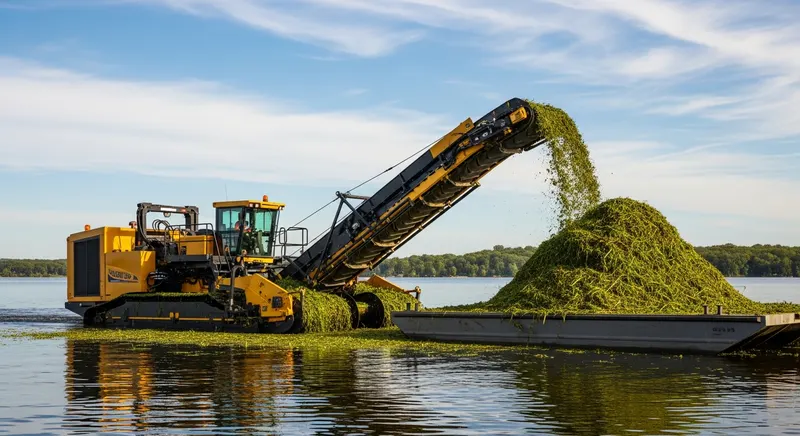
Harvesting, cutting, raking, dredging, and bottom barrier installation provide immediate physical removal of plant biomass. No chemicals are required, and treatment effects are visible immediately. However, mechanical methods are temporary — they do not kill roots or tubers — and many species regrow or spread via fragments within weeks. Best suited as a component of an integrated program.
Chemical (Herbicide) Control
EPA-registered aquatic herbicides — including fluridone, endothall, diquat, glyphosate, triclopyr, and newer active ingredients — are among the most effective tools for large-scale aquatic weed management. Requires state permits and professional application in most jurisdictions. When applied correctly, selective herbicides can target invasive species while minimizing impacts on native plants and non-target organisms.
Biological Control
Biocontrol uses living organisms — host-specific insects, pathogens, and herbivorous fish like triploid grass carp — to suppress target weed populations. USDA-approved biocontrol agents have achieved long-term suppression of water hyacinth, alligator weed, and other invasive species in some regions. Grass carp require state permits and careful stocking rate management to prevent overgrazing of native vegetation.
Integrated Management (IPM)
Combining multiple control approaches tailored to specific species, water body characteristics, and management objectives — the gold standard in professional aquatic weed management. An integrated program typically combines chemical treatment for initial knockdown, mechanical removal for maintenance, monitoring to track recolonization, and prevention protocols to stop re-introduction. Long-term success requires adaptive management and annual program review.
Prevention
The single most cost-effective aquatic weed management strategy is preventing invasive species from entering a water body in the first place. The "Clean, Drain, Dry" protocol — removing plant material, draining all water, and allowing equipment to dry before moving between water bodies — prevents the majority of human-assisted invasive species transport.
Permits & Regulations
Most aquatic weed control activities require permits from state agencies — particularly any chemical treatment or introduction of biological control agents. Permit requirements vary significantly by state, water body type, and intended use. A complete guide to the regulatory landscape, including how to contact state agencies, is available on our permits and regulatory considerations page.
Where They Are
Aquatic Weeds Across the United States
Aquatic weed problems are not confined to any single region. While species composition varies with climate and geography, problematic aquatic vegetation is a documented management challenge in every U.S. state.
Southeast
The most severely affected region. Florida, Georgia, Louisiana, Texas, and the Carolinas face year-round infestations of hydrilla, water hyacinth, alligator weed, and salvinia. Florida alone has millions of acres affected.
Great Lakes Region
Eurasian watermilfoil, curly-leaf pondweed, and flowering rush are major concerns across Michigan, Wisconsin, Minnesota, Ohio, and Indiana. Boat-assisted spread is the primary vector.
Mid-Atlantic & Northeast
Hydrilla monoecious biotypes have expanded into Virginia, Maryland, New Jersey, and Connecticut. Eurasian watermilfoil is established throughout New England and the Mid-Atlantic states.
Pacific Northwest
Eurasian watermilfoil and Brazilian waterweed (egeria) are major threats to Washington, Oregon, and Idaho water bodies. Elodea poses a growing concern in Alaskan lakes.
Midwest & Great Plains
Curly-leaf pondweed, Eurasian watermilfoil, and flowering rush are significant problems across Iowa, Illinois, Missouri, and Kansas. Agricultural nutrient loading exacerbates native nuisance species like duckweed.
West & Southwest
Water hyacinth, hydrilla, and various pondweed species affect California's irrigation canals, delta waterways, and agricultural reservoirs. Arizona and New Mexico face problems in managed water systems.
Scientific Authority & Source Standards
Featured Educational Articles
Essential Reading for Aquatic Weed Management
Start with these core resources — our most comprehensive guides covering identification, biology, control selection, and ecological assessment. Each article is grounded in peer-reviewed science and built for practical application.
Common Questions
Frequently Asked Questions About Aquatic Weeds
Answers to the most common questions from lake owners, land managers, and conservationists dealing with aquatic weed problems. For ongoing updates on invasions, new research findings, and regulatory changes, see our aquatic weed news page.
What are aquatic weeds?
Aquatic weeds are aquatic plants — native or non-native — that grow in densities or locations where they cause ecological, economic, or recreational harm. The term is a management designation, not a botanical classification: the same species may be a valued component of a natural ecosystem in one context and a destructive weed in another. The three primary categories are floating weeds (water hyacinth, duckweed), submerged weeds (hydrilla, Eurasian watermilfoil), and emergent weeds (alligator weed, cattails, phragmites).
What is the most invasive aquatic weed in the United States?
Hydrilla (Hydrilla verticillata) is widely considered the most problematic invasive submerged aquatic plant in the United States. Established in at least 30 states, it can grow up to 1 inch per day and reproduces through multiple mechanisms — tubers, turions, and vegetative fragments — making complete eradication extremely difficult. Its ability to grow in very low light gives it a competitive advantage over native species.
How do aquatic weeds spread between water bodies?
The primary mechanism is human-assisted transport. Boat hulls, trailers, propellers, live wells, bilge water, and fishing equipment can all carry plant fragments between water bodies — even a single fragment with a node attached to a propeller can establish a new infestation. The aquarium and water garden trades have introduced many non-native species. Natural vectors include waterfowl (plant seeds and fragments attach to feathers and feet), water currents during flood events, and migratory birds.
The "Clean, Drain, Dry" protocol — removing all plant material, draining all water, and allowing equipment to dry thoroughly — prevents the vast majority of human-assisted invasive species transport.
What are the main methods for controlling aquatic weeds?
The four main control approaches are:
- Mechanical control: Physical removal through harvesting, cutting, raking, dredging, or bottom barriers. Immediate but temporary.
- Chemical control: EPA-registered aquatic herbicides applied with proper state permits. Effective for large infestations.
- Biological control: Host-specific insects, pathogens, and herbivorous fish (triploid grass carp). Long-term suppression for some species.
- Integrated management: Combining multiple methods for sustainable, long-term control — the recommended approach for serious infestations.
Do I need a permit to treat aquatic weeds?
In most U.S. states, any chemical herbicide application to a water body requires a permit from your state department of natural resources or environmental protection agency. Some states also require permits for mechanical harvesting and biological control introductions. Permit requirements vary significantly by state, water body type (public vs. private), and the intended treatment method. Treating without required permits can result in significant fines. Always consult your state agency before beginning any treatment program.
Are all aquatic plants weeds?
No — and this distinction is critically important. Many native aquatic plants are ecologically valuable: they provide food, habitat, oxygen, and water quality functions that fish, wildlife, and entire aquatic ecosystems depend on. A plant becomes a "weed" only when it grows in densities or locations that cause economic, ecological, or recreational harm. Accurate species identification is essential before any management decision is made. Treating beneficial native plants as weeds can cause significant and unnecessary ecological damage.
What causes aquatic weed blooms to happen?
Aquatic weed blooms are driven by a combination of factors. The most important is nutrient enrichment — excess phosphorus and nitrogen from agricultural runoff, lawn fertilizers, septic system effluent, urban stormwater, and livestock waste fuel rapid plant growth. Warm water temperatures, high light levels, and reduced water clarity (from disturbance or algal blooms) also promote weed growth. For invasive species, the absence of natural predators, diseases, and competing vegetation — conditions that limit their growth in their native range — allows unchecked population growth. Addressing underlying nutrient sources is essential for long-term weed management success.
How does hydrilla differ from elodea?
Hydrilla and elodea are two commonly confused submerged plants with very different management implications. Key differences include: (1) Leaf whorls: Hydrilla typically has 4–8 leaves per whorl; elodea usually has exactly 3. (2) Leaf margins: Hydrilla has visible serrations (toothed edges) visible to the naked eye; elodea has smooth margins. (3) Midrib tooth: Hydrilla has a single distinctive tooth on the underside of the leaf midrib; elodea does not. (4) Native status: Hydrilla is invasive (native to Asia); elodea is native to North America. Correct identification is essential because management decisions — including herbicide selection and permit requirements — differ significantly.
Get Started
Start Exploring AquaticWeed.org
Whether you are a lake manager building an annual treatment program, a landowner confronting a first-time infestation, a researcher tracking invasive species spread, or a curious naturalist, you will find authoritative, science-based guidance here. Use our identification hub to determine what you're dealing with, explore our species profiles for in-depth biological and management information, and consult our control methods library to develop an effective, permitted management response.