Educational Information Only
AquaticWeed.org provides general educational information about aquatic weed identification, biology, ecology, distribution, and management in the United States. All content on this site is produced for educational and informational purposes only. It is not intended to constitute, and should not be relied upon as, professional management advice, species identification services, legal guidance, regulatory compliance assistance, or any other form of professional consultation.
The information on AquaticWeed.org is designed to help users understand aquatic weed issues, the scientific basis for management approaches, and the landscape of options available. It is not a substitute for site-specific professional assessment or regulatory consultation, both of which are essential before implementing any aquatic weed management program.
Management Decisions
Aquatic weed management decisions are inherently site-specific. The right management approach for a particular water body depends on factors that cannot be assessed remotely or through general educational content, including: the specific plant species present (which require in-person or sample-based confirmation), the water body's size, depth, and hydrological characteristics, the current and intended uses of the water body, adjacent land use and nutrient inputs, the presence of sensitive resources (protected species habitat, drinking water intakes, irrigation sources), budget and long-term management capacity, and applicable state and federal permit requirements.
Before implementing any aquatic weed management program, you must:
- Obtain confirmation of species identification from a qualified aquatic plant specialist or your state's natural resources agency, as management approaches differ significantly by species
- Consult with a licensed aquatic plant management professional who is familiar with the regulations and management options applicable in your state
- Obtain all required state and federal permits before applying any aquatic herbicide or implementing other regulated management activities
AquaticWeed.org is not liable for any management outcomes, costs, regulatory violations, environmental damage, or other consequences arising from management decisions made based on content found on this website.
Species Identification
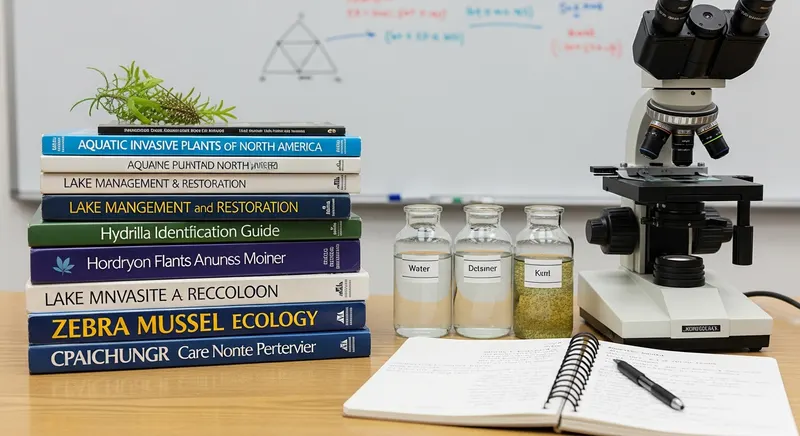
Accurate species identification is critical for aquatic weed management — both because management approaches differ by species and because legal requirements (permit conditions, protected species considerations, noxious weed regulations) depend on species identity. Species identification information on AquaticWeed.org is provided for educational purposes to help users understand general identification characteristics. It is not a substitute for in-person or sample-based identification by a qualified aquatic plant specialist.
Misidentification carries real risks: treating an invasive species' look-alike that is actually a protected native plant; failing to identify a regulated invasive species and missing permit requirements; or applying an herbicide appropriate for one species to a different species with different biological characteristics. For any management situation, obtain species confirmation from your state cooperative extension service, state natural resources agency, or a licensed aquatic plant management professional before proceeding.
Regulatory Compliance
Aquatic weed management is regulated at the state level, and requirements differ substantially between states and sometimes between water body types within a state. Permit requirements, licensed applicator requirements, allowable herbicides and application methods, buffer zones near drinking water intakes, and use restrictions on treated water are all regulated and can change. The regulatory information on AquaticWeed.org is provided for general educational awareness only. It should not be used as the basis for regulatory compliance decisions.
For current permit requirements and regulatory guidance in your state, contact your state's Department of Natural Resources, Department of Environmental Quality, or equivalent agency directly. Regulatory information from AquaticWeed.org may be outdated or incomplete for your specific situation.
Information Accuracy
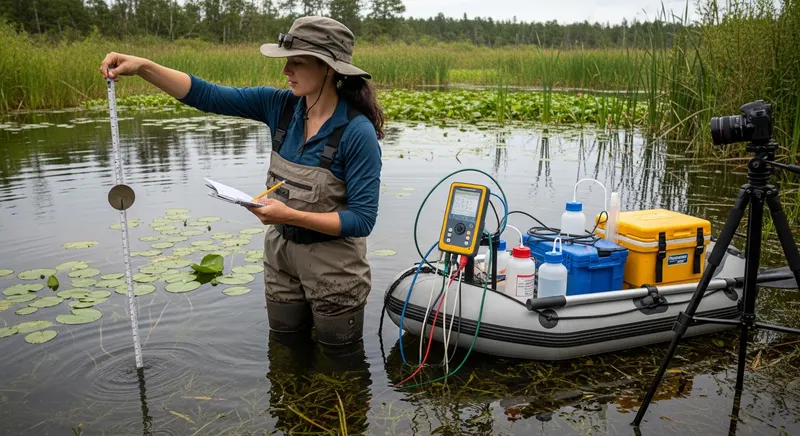
We make every reasonable effort to ensure that the information on AquaticWeed.org is accurate, complete, and current. We follow a structured editorial review process and correct errors when they are identified. However, scientific understanding evolves, regulations change, and new research may supersede older guidance. We cannot guarantee that all information is error-free or reflects the most current developments in the field.
For current regulatory and product registration information, always consult the authoritative primary source: your state's natural resources agency for permit requirements, EPA's pesticide registration database for current herbicide registrations, and USDA APHIS for Federal noxious weed listings. See our editorial policy for our content standards and correction procedures.
No Professional Relationship
Use of AquaticWeed.org does not create any professional relationship between you and AquaticWeed.org or its editorial team. No content on this site should be understood as professional advice from a qualified aquatic plant manager, licensed pesticide applicator, attorney, regulatory consultant, or other professional.
Limitation of Liability
AquaticWeed.org, its operators, and its contributors disclaim all liability for any damages, losses, costs, or regulatory penalties arising from your use of or reliance upon information on this website. This includes direct, indirect, incidental, consequential, and punitive damages. The content is provided "as is" and "as available" without any warranty of accuracy, completeness, or fitness for a particular purpose. See our full terms of use for the complete limitation of liability provisions.
Questions about this disclaimer: [email protected]. See also our terms of use and editorial policy.
Ten-Year Lake Management Plan: Lake Wingra, WI
Lake Wingra, a 342-acre urban lake in Madison, WI, developed a comprehensive 10-year management plan coordinating the City of Madison, University of Wisconsin, and adjacent neighborhood associations. The plan addressed Eurasian watermilfoil, curly-leaf pondweed, and purple loosestrife through an integrated approach including targeted herbicide treatment, mechanical harvesting, native plant restoration, and public education.
Key outcome: The structured multi-agency planning process secured consistent funding across multiple budget cycles, a key advantage over ad hoc management. Native plant restoration efforts showed measurable progress in designated restoration zones within three years of initiation.
We referenced the biological control pages extensively when evaluating our grass carp stocking proposal. The detail on stocking rates and target species specificity helped us present a credible case to our board.
Karen Ostrowski HOA Lake Committee Chair, MN · Lake Minnetonka associationThe ecological impact section helped our team explain to county commissioners why early intervention matters. The oxygen depletion data alone secured funding for our early-detection monitoring program.
Donna Whitfield State Wildlife Biologist, GA · Okefenokee region