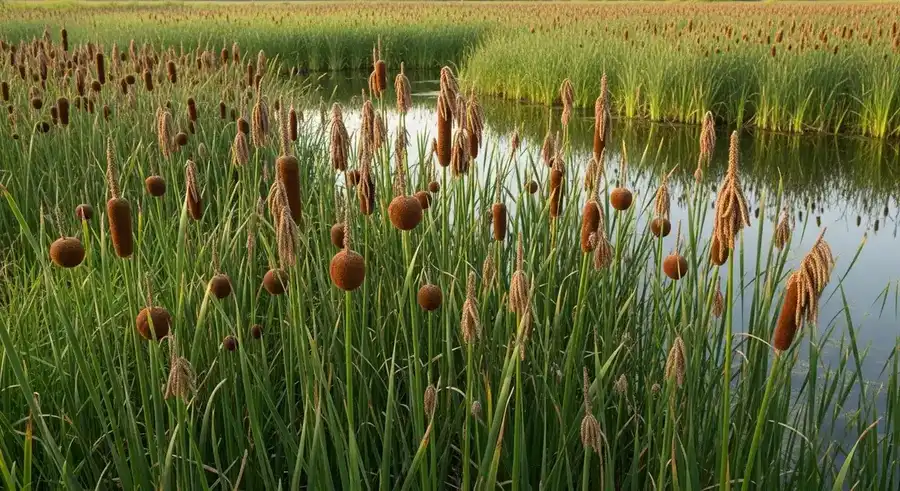
Identification Features
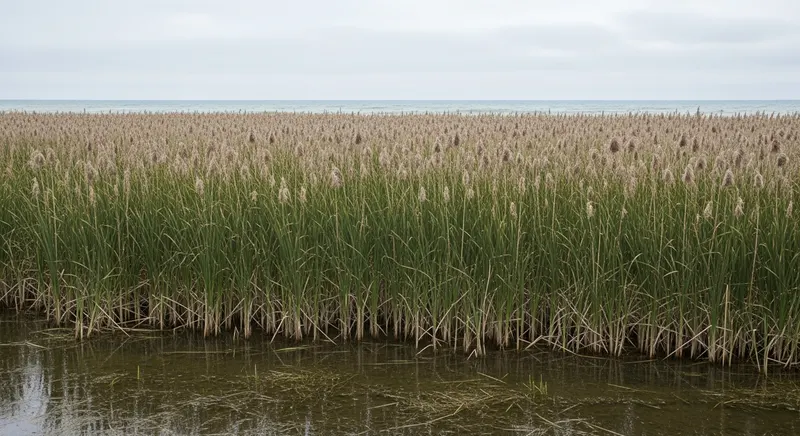
Bulrushes (Schoenoplectus spp., formerly Scirpus spp.) are large native emergent sedges that are often confused with cattails or reeds. Key identification features: stems are round in cross-section (triangular in some species), solid, and can reach 1–3 m in height; leaves are reduced to blade-like sheaths near the stem base (in most species); flowers and seed heads are distinctive clustered brown spikelets emerging from the upper stem, not the cylindrical brown spike of cattails. The absence of the characteristic cattail "hot dog" seed head is the quickest way to confirm you're looking at a bulrush rather than a cattail.
The most common nuisance species include hardstem bulrush (S. acutus / S. tabernaemontani) with round stems and clusters of brown spikelets at the stem tip, and softstem bulrush (S. validus) with softer, more flexible round stems. Both are native to North America and ecologically important. Identification guide →
Ecological Importance
Bulrushes are among the most ecologically valuable native emergent plants in North American wetlands. Their value to wildlife is extraordinary: American bitterns, rails, herons, coots, and multiple duck species nest in or adjacent to bulrush stands. Muskrats use bulrush as building material for lodges and as food. The root systems stabilize shoreline sediment, preventing erosion. The stems provide winter cover and insulation for overwintering wildlife.
Bulrush stands are also important indicators of water quality. They are characteristic of natural wetland and shallow lake conditions. Dense monoculture expansion of bulrush is not typically observed at the same scale as cattail in eutrophied systems — bulrush is generally a more conservative wetland indicator. When bulrush coverage becomes problematic, it is usually a sign of good ecological conditions that need to be managed for recreational access rather than a sign of environmental degradation.
Biology
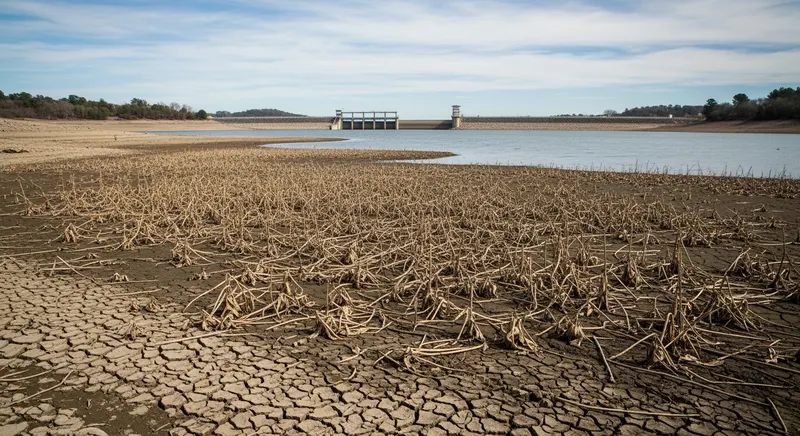
Bulrushes reproduce by both seeds and rhizomes. The rhizome system allows lateral spread of 0.5–1 meter per year in typical conditions. Seeds are produced in abundance from the clustered spikelet flower heads and persist in the sediment seed bank for multiple years. Like cattails, bulrush in wet-dry cycling wetlands (prairie potholes, managed impoundments) responds to water level changes and can expand rapidly after water level drawdown creates the disturbed, moist soil conditions in which seeds and rhizomes establish.
Distribution
Bulrush species are found in wetlands, lake margins, and pond edges throughout North America. They are most diverse in the Great Plains, Pacific Coast marshes, and Great Lakes wetlands. Found in all 48 contiguous states and most of Alaska and Canada.
Management
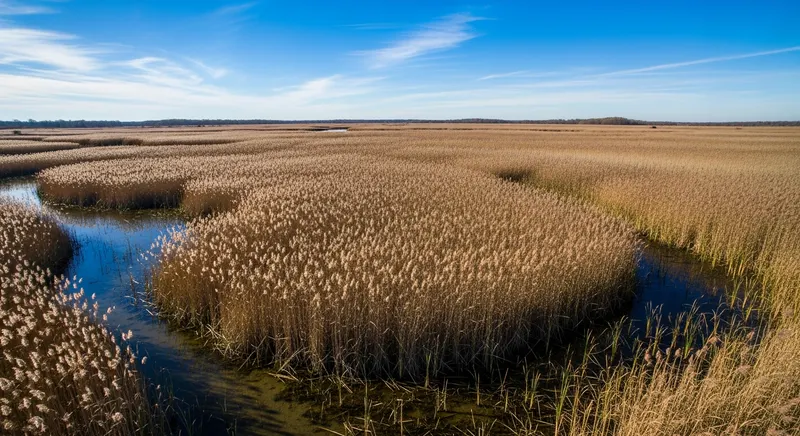
Bulrush management is approached with caution given its ecological value. Management is typically needed only when bulrush has expanded to impair specific recreational uses (swimming, fishing access, boat navigation) or to restore open water in managed impoundments. Mechanical cutting, water level manipulation, and targeted herbicide application (imazapyr, glyphosate) are the primary tools. Consult your state fish and wildlife agency or department of natural resources before managing native bulrush — permits may be required, and management may affect protected species that depend on bulrush habitat. Control methods →
Bulrush in Wildlife Management
Bulrush (Schoenoplectus and Scirpus species) occupies an important and somewhat paradoxical position in aquatic plant management: it is simultaneously a high-value native plant community for waterbirds and wetland wildlife, and a species that can expand aggressively into open water in eutrophic conditions. Wildlife managers — particularly those managing wetland impoundments for waterfowl — often deliberately maintain or establish bulrush stands as prime brood habitat for ducks and nesting cover for marsh birds. The management goal in these contexts is not elimination but spatial control: maintaining a mosaic of bulrush stands, interspersed open water, and other vegetation types that provides maximum habitat diversity. Water level manipulation (flooding in summer to impede growth, drawdown in fall to stimulate germination) is the primary tool for managing bulrush distribution in managed wetland impoundments. In non-managed lake margins where bulrush is encroaching aggressively, mechanical clearing or targeted herbicide treatment may be needed to maintain boat access or swimming areas. Emergent plants hub →
Frequently Asked Questions
Is bulrush the same as cattail?
No. Bulrush and cattail are both native emergent plants that grow in similar habitats, and they are often confused by the general public. The easiest way to distinguish them: cattail has the distinctive brown, sausage-shaped seed head on a tall stalk — unmistakable. Bulrush has a round or triangular stem with clusters of small, brown spikelets at the tip — no large seed head. Cattail leaves are flat and strap-like; bulrush leaves are often reduced to sheaths on the stem. Both provide excellent wildlife habitat, and neither should be confused with invasive plants like Phragmites.
Ten-Year Lake Management Plan: Lake Wingra, WI
Lake Wingra, a 342-acre urban lake in Madison, WI, developed a comprehensive 10-year management plan coordinating the City of Madison, University of Wisconsin, and adjacent neighborhood associations. The plan addressed Eurasian watermilfoil, curly-leaf pondweed, and purple loosestrife through an integrated approach including targeted herbicide treatment, mechanical harvesting, native plant restoration, and public education.
Key outcome: The structured multi-agency planning process secured consistent funding across multiple budget cycles, a key advantage over ad hoc management. Native plant restoration efforts showed measurable progress in designated restoration zones within three years of initiation.
Running a golf course with three retention ponds means constant weed pressure. The prevention and best management practices guide gave us a systematic approach that replaced our reactive spray schedule.
Paul Esteban Golf Course Superintendent, SC · Myrtle Beach areaAs a lakefront property owner I was completely lost until I found AquaticWeed.org. The permit guidance alone saved me from making costly, potentially illegal treatment mistakes.
Gerald Renfrew Lakefront Landowner, WI · Vilas County