Last updated: May 27, 2026 · Reviewed by the AquaticWeed.org Editorial Team
Overview
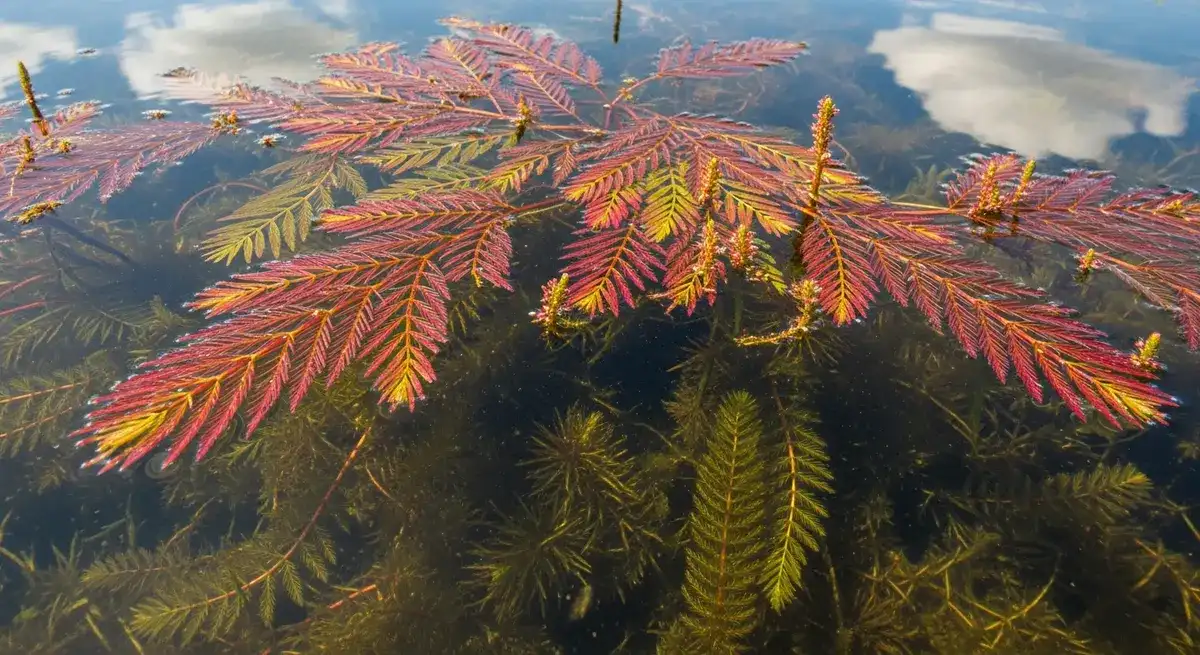
Eurasian watermilfoil is a submerged aquatic plant native to Europe, Asia, and northern Africa that has become one of the most widespread and problematic aquatic invasive plants in North America. Its feathery, pinnately compound leaves form dense underwater canopies that crowd out native aquatic vegetation, foul boat propellers, entangle swimmers, and degrade water quality. Present in all 48 contiguous U.S. states, it is considered one of the most economically costly aquatic invasive weeds in North America.
Identification Characteristics
Eurasian watermilfoil has feathery, pinnately compound leaves arranged in whorls of 3–4 around the stem. Counting leaflet pairs is the most reliable identification step: Eurasian watermilfoil typically has 14 or more pairs of thread-like leaflets per leaf. Native northern watermilfoil (Myriophyllum sibiricum) typically has 5–9 pairs. Hybrids between the two species (which occur naturally where both grow) may have intermediate leaflet counts.
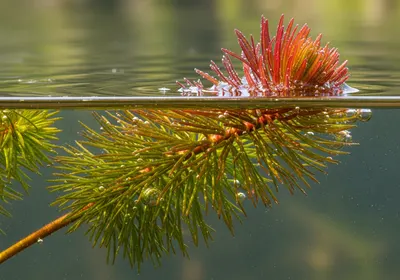
Leaves of Eurasian watermilfoil tend to collapse and fold flat against the stem when lifted from the water, while native milfoil species generally hold their shape better out of water — though this character is less reliable than leaflet counts. The stem is reddish-brown to whitish. In summer, emergent flower spikes with tiny pinkish-red flowers rise above the water surface; the emergent flower stalk is an important identification feature because it confirms the plant's identity and indicates reproductive maturity.
Hybridization with native milfoil species complicates identification in some regions. Genetic testing is sometimes required to definitively distinguish hybrid plants from pure Eurasian watermilfoil.
Growth Habit & Ecology
Eurasian watermilfoil exhibits a seasonal growth pattern that gives it a competitive advantage over many native plants. It begins growing earlier in spring than most native aquatic plants, rapidly forming dense canopies before native plants emerge and shade it. Surface canopy formation shades the water column, suppressing native plant emergence and giving milfoil a head start that it maintains through summer.
The plant spreads primarily through fragmentation — any stem fragment with at least one node can root and establish a new plant. This makes boat propellers, anchors, and fishing equipment extremely effective vectors for spread. Fragments caught on these surfaces then break off when equipment enters a new water body, seeding new infestations. This is why Eurasian watermilfoil has spread so rapidly since its introduction — every recreational boater who moves between water bodies is a potential vector.
Overwintering occurs through root crowns that persist at the base of stems even after the plant's above-ground biomass dies back in winter. New growth emerges from these root crowns in spring. The plant can also produce seeds, though seed production and germination are less important for spread than vegetative fragmentation.
Habitat Preferences
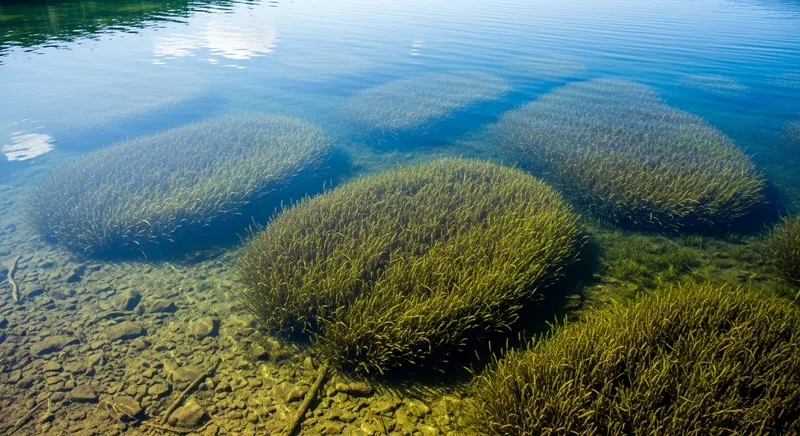
Eurasian watermilfoil occupies a wide range of freshwater habitats across all 48 contiguous states: lakes, reservoirs, rivers, ponds, and slow streams. It tolerates soft and hard water, moderate to high nutrient levels, pH from 6.5 to 9.5, and depths from one to twenty or more feet in clear water. Unlike some aquatic invasives, it does not establish in turbid water where light penetration is severely limited — it requires at least moderate light to form dense canopies.
The species shows a distinct preference for disturbed or nutrient-enriched systems over pristine oligotrophic lakes. Lakes with heavy recreational boat traffic, agricultural runoff, or shoreline development are at highest risk of severe infestations. In these conditions, milfoil's early-season canopy formation and aggressive competitive strategy give it an overwhelming advantage over native submerged plants that have not evolved to tolerate such human-mediated disruptions.
Water chemistry matters: Eurasian watermilfoil performs best in moderately fertile water with bicarbonate alkalinity above 50 mg/L. Extremely acidic or acidified systems and very low-fertility, pristine lakes provide less favorable conditions. The species tolerates a modest level of salinity and can establish in tidal freshwater river reaches — a characteristic that helps it spread through connected river systems.
Spread Mechanisms
Eurasian watermilfoil is considered the quintessential "hitchhiker" invasive plant because its primary spread mechanism is fragmentation on recreational watercraft. The stem is brittle, and propeller cutting, anchor fouling, and even simple contact with boats or fishing gear creates viable fragments. A single stem fragment with just one node can root and establish a new colony. The plant produces fragments readily, particularly in dense canopy stands where stems compete for surface space.
Long-distance spread is almost entirely human-mediated. Studies of milfoil population genetics show that isolated lake populations were almost always founded by single introduction events linked to specific watercraft movements. This means every time a boater moves between water bodies without properly inspecting and cleaning equipment, they are a potential milfoil vector. Waterfowl and mammals that swim through infested areas can also carry fragments short distances.
Hybrid formation represents a separate but important complication: where Eurasian watermilfoil co-occurs with native northern watermilfoil (M. sibiricum), natural hybridization produces plants with intermediate characteristics that can be more aggressive than either parent. Hybrid milfoil may also show different, sometimes reduced, responses to herbicide treatment. This evolutionary dynamic means that management programs must monitor for hybrid development and may need to adjust treatment strategies accordingly.
Similar Species & How to Tell Them Apart
Eurasian watermilfoil identification is genuinely difficult because several native milfoil species and natural hybrids look very similar, and misidentification can lead either to unnecessary treatment of native plants or to delayed response on real infestations. The single most important distinguishing character is leaflet pair count.
Eurasian vs. native northern watermilfoil (M. sibiricum): Eurasian milfoil typically has 14 or more pairs of thread-like leaflets per leaf (range 12–21); native northern milfoil typically has 5–9 pairs. Count multiple leaves on multiple stems — both species show some leaf-to-leaf variation. Eurasian milfoil leaves tend to collapse limply against the stem when lifted from water; northern milfoil leaves hold their shape somewhat better. The stem of Eurasian milfoil is often reddish-brown; northern milfoil tends to be whiter. Where the two species co-occur, natural hybrids show intermediate leaflet counts (typically 9–13 pairs) and may require genetic testing for confirmation.
Eurasian milfoil vs. parrot-feather (M. aquaticum): Parrot-feather is another invasive milfoil in the same genus, but grows as a partially emergent plant with feathery blue-green leaves held above the water surface. The emergent growth form makes parrot-feather immediately distinguishable from the fully submerged Eurasian milfoil. Parrot-feather is most common in the Southeast and Pacific Northwest.
Eurasian milfoil vs. coontail and other whorled-leaf submerged plants: Coontail has stiff, dark green leaves with multiple forking — clearly different from the feathery, pinnately compound leaves of any milfoil. Hydrilla has small, serrated, undivided leaves arranged in tight whorls — also clearly different. See the identification hub for diagnostic side-by-side images.
Seasonal Growth Pattern
Eurasian watermilfoil's early-season growth pattern is one of its most important invasive advantages. While most native submerged plants remain dormant through early spring, milfoil begins active growth as water temperatures rise above 45–50°F — in late March or April in the northern U.S., or even earlier in warmer states.
By May and early June, milfoil is already forming a dense canopy in the upper water column, shading native plants during their critical germination and establishment period. This canopy formation before native plant emergence means milfoil captures available light, carbon dioxide, and nutrients while native competitors are still dormant. By the time native plants begin active growth, milfoil has already secured a dominant position in the plant community.
Summer peak (July–August) brings the densest surface mats — the period of maximum recreational impact, when milfoil fouling of propellers is most severe. Flower spikes emerge above the water surface during this period, producing pollen and seeds.
Fall senescence begins as water temperatures drop below 55°F. Above-ground biomass dies back, but root crowns remain viable in the sediment through winter. New growth emerges from these persistent root crowns the following spring, providing an established base for rapid canopy re-formation without needing to germinate from seed. This gives established milfoil populations a significant head-start advantage over any competing plants each spring.
Understanding this seasonal pattern is critical for management timing. The optimal window for herbicide application targeting Eurasian watermilfoil is early spring (April through early June in the northern U.S.) when the plant is actively growing, has not yet reached full canopy density, and is metabolically active enough to translocate systemic herbicides effectively. Applications after peak canopy formation in July are less effective because the plant is no longer in active growth phase. Fall applications are sometimes used in states where spring treatment window is missed, but efficacy is generally lower than spring treatment. Managers should also account for the hybrid milfoil complication: hybrid populations may show reduced herbicide response at standard doses, warranting genetic testing of milfoil populations before finalizing treatment strategies in areas where hybrid milfoil has been documented. State aquatic invasive species coordinators can provide guidance on genetic testing resources and current management recommendations for hybrid milfoil in your region. All chemical treatment requires an aquatic herbicide permit from your state department of natural resources prior to application.
Ecological Impact
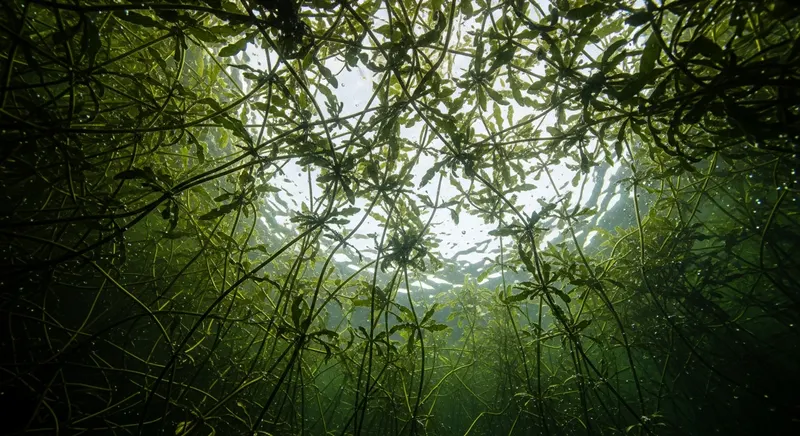
Eurasian watermilfoil forms dense monospecific stands that dramatically reduce native aquatic plant diversity. In infested lakes, native plant communities of 15–30 species may be reduced to 2–5 species dominated by milfoil within a few years of invasion. This loss of plant diversity cascades through the food web — insects, fish, amphibians, and birds that depend on diverse native plants are all affected.
Dense surface canopies provide extremely poor fish habitat compared to diverse native plant beds. Warm-water sport fish species prefer heterogeneous plant structures; the dense, uniform milfoil canopy provides minimal cover and foraging habitat for many species.
Recreational impacts are severe: milfoil growth that reaches the surface fouls boat propellers, impairs swimming and water skiing, catches anchor lines, and renders many areas inaccessible. Lake property values decline when milfoil infestations go unmanaged. The economic cost of milfoil management has been estimated at hundreds of millions of dollars annually across North America.
Water Quality Effects
Eurasian watermilfoil's effects on water quality are subtler than those of canopy-forming floating mats like water hyacinth or duckweed, but they are ecologically significant and well-documented in long-term lake studies. Dense surface canopies that form during peak summer in shallow water (less than 8 feet) suppress wind-driven mixing in the upper water column, allowing thermal stratification to develop earlier and more strongly in the growing season. The stratified conditions in turn promote hypolimnetic oxygen depletion in lakes that would otherwise mix more freely.
Daytime pH beneath dense canopies frequently rises above 9.0 during peak photosynthesis, shifting ammonia toward its toxic un-ionized form and stressing sensitive fish and invertebrates. Nighttime dissolved oxygen drops as plant respiration and bacterial activity below the canopy consume oxygen faster than restricted mixing can replenish it; oxygen sags below 4 mg/L are common in densely infested coves on still summer nights.
Nutrient cycling effects are pronounced over multi-year timeframes. Milfoil concentrates phosphorus and nitrogen in its biomass during the growing season, then releases the trapped nutrients in a pulse during fall senescence — fueling cyanobacterial blooms in the subsequent open-water period and increasing internal phosphorus loading in the sediment. Long-term monitoring on Lake Champlain and the Adirondack lakes has documented gradual eutrophication trajectories associated with sustained milfoil dominance. See the water quality degradation guide for the underlying mechanisms.
Risks to People, Property & Infrastructure
Eurasian watermilfoil creates risks across recreation, infrastructure, property values, and ecosystem services. Recreational risks are the most visible: dense canopies foul boat propellers, entangle swimmers, snag fishing lines, and impair water skiing and tubing. Although milfoil itself is rarely a direct drowning hazard at the scale of hydrilla mats, the combination of surface canopy and submerged stems in 4–8 feet of water can disorient swimmers and create hazardous near-shore conditions.
Infrastructure risks are less acute than those of floating mats but still substantial. Marina basins and boat-launch ramps require regular mechanical clearance; water-intake screens (drinking water, irrigation, hydropower) require additional maintenance when located near infested water; drainage outlets and culverts on infested lakes show increased clogging and reduced flow.
Property-value impacts are well-documented and are among the most studied for any aquatic invasive plant in North America. Hedonic pricing research on lakes in Wisconsin, Vermont, Minnesota, and New York has found 10–25% reductions in waterfront property values on heavily infested lakes compared with managed-comparable lakes. The loss propagates to local tax revenue, tourism revenue, and the small-business sector dependent on lake recreation.
Fishery risks are nuanced. Moderate milfoil cover can briefly improve fish habitat in lakes that had little submerged vegetation, but established dense monocultures consistently reduce sport-fish growth and recruitment over multi-year timeframes by simplifying habitat structure, reducing prey diversity, and altering predator-prey dynamics. Wisconsin DNR studies on bass and bluegill populations in heavily infested lakes have documented measurable reductions in fish size-at-age relative to managed comparable lakes.
Hybridization risk represents an evolving ecological risk: where Eurasian watermilfoil co-occurs with native northern watermilfoil (M. sibiricum), natural hybrids form and can show increased aggressiveness and reduced herbicide sensitivity compared with either parent. Hybrid milfoil now dominates some heavily managed Midwest lakes and is forcing changes in regional management programs.
Control Methods
Eurasian watermilfoil management requires a sustained, integrated approach. Given its primary spread through fragmentation, any mechanical control must be conducted carefully to avoid creating new infestations.
Herbicide control is the most widely used and effective option. 2,4-D and triclopyr (systemic herbicides) are effective against milfoil and have some selectivity advantage over native milfoil species. Newer herbicides such as florpyrauxifen-benzyl have demonstrated excellent efficacy with improved environmental profiles. Permits are required for all aquatic herbicide applications.
Biological control: The native milfoil weevil (Euhrychiopsis lecontei) is a North American insect that naturally attacks Eurasian watermilfoil. Research and restoration of weevil populations in some lakes has shown meaningful control results. The weevil preferentially attacks Eurasian watermilfoil over native milfoil species.
Mechanical harvesting can provide temporary navigational relief but requires careful operation to minimize fragmentation. Suction harvesting (pulling plants from the water rather than cutting) reduces fragment spread.
Bottom shading using benthic barriers can be effective for small, high-priority areas.
Important: Always obtain required permits before applying any aquatic herbicide or introducing biological control agents. Requirements vary by state. Contact your state department of natural resources or environmental protection agency for guidance.
Management Considerations
Eurasian watermilfoil management is one of the most-studied and most-experienced aquatic invasive plant management programs in North America. After 70+ years of milfoil management experience, three principles are well established: (1) prevention is dramatically cheaper than control; (2) early detection and small-scale rapid response produce far better outcomes than waiting for established whole-lake infestations; and (3) successful long-term programs combine multiple control tactics with sustained funding, not single-tactic short-term efforts.
Decision framework: New infestations detected under 1 acre can usually be suppressed for under $20,000 with focused treatment and follow-up monitoring; established infestations covering 100+ acres typically require $100,000–$500,000 per year over multiple years. The cost-effectiveness of early detection — through volunteer lake monitoring programs, snorkel surveys, and aquatic invasive plant reporting systems — is consistently the highest-return investment available to lake associations and state programs. See management planning for program design.
Treatment tactics by infestation scale: For small, isolated infestations, hand-pulling with diver-assisted suction harvesting can be effective if conducted within the first 1–2 seasons of detection. For larger established infestations, herbicide treatment — typically 2,4-D, triclopyr, or the newer florpyrauxifen-benzyl — is the standard. Florpyrauxifen-benzyl (Procellacor) has shown particularly strong efficacy and selectivity, allowing milfoil control with reduced impacts on native vegetation. The native milfoil weevil (Euhrychiopsis lecontei) provides supplemental biological control in some Midwest lakes. Mechanical harvesting can provide temporary navigational relief but creates fragmentation risk that can spread infestations and is not recommended as a primary tactic.
Hybrid management is an emerging consideration: where hybrid milfoil is confirmed, treatment programs may require higher herbicide doses or different product selection. Several state programs now require hybrid screening prior to treatment for this reason.
Prevention infrastructure — boat inspection stations, wash stations, and Clean-Drain-Dry signage at boat ramps — is the single highest-return management investment for milfoil-free lakes in regions where milfoil is established. Studies on Minnesota and Wisconsin programs show that every dollar invested in inspection returns $10–$50 in avoided downstream management costs.
Regulatory considerations: All aquatic herbicide applications require state permits, with public notice requirements for drinking water and recreational water bodies. Lake associations, marina operators, and downstream water users should be consulted before treatment. Several states (Vermont, Wisconsin, Maine, Washington) have well-developed milfoil management cost-share programs that can dramatically reduce per-lake costs for organized response programs.
Distribution in the United States
Eurasian watermilfoil is established in all 48 contiguous U.S. states and across much of Canada, making it one of the most widely distributed aquatic invasive plants in North America. It was first recorded in North America in the Chesapeake Bay area in the 1940s–1950s, and its range expanded dramatically through the 1960s–1980s as recreational boating grew in popularity.
The Great Lakes region, New England, Mid-Atlantic states, and Pacific Northwest have particularly severe and long-standing infestations. Lake Champlain, Lake Erie, and many smaller lakes in Wisconsin, Minnesota, Michigan, and New York have spent decades managing milfoil. Western states including California, Oregon, and Washington have significant and growing infestations. In most regions, management programs maintain rather than eliminate infestations.
Frequently Asked Questions
How does Eurasian watermilfoil spread between lakes?
The primary pathway is on boats, trailers, and fishing equipment. Even a single stem fragment with one node attached to a boat propeller, trailer wheel well, anchor, or live well can establish a new infestation. This is why Clean, Drain, Dry protocols are critical. Always inspect and remove all plant material before leaving any water body.
How can I tell Eurasian watermilfoil from native milfoil?
Count the leaflet pairs on a leaf. Eurasian watermilfoil (Myriophyllum spicatum) typically has 14 or more pairs of thread-like leaflets per leaf. Native northern watermilfoil (M. sibiricum) typically has 5–9 pairs. Eurasian milfoil leaves also tend to collapse when removed from water. Note that hybrids between the two species exist and may have intermediate counts, requiring laboratory identification.
Is Eurasian watermilfoil related to parrot-feather?
Yes — parrot-feather (Myriophyllum aquaticum) is another invasive watermilfoil species in the same genus, native to South America. It grows as a partially emergent plant with feathery blue-green leaves above the waterline, making it easy to distinguish from Eurasian watermilfoil. Both are listed as noxious weeds in many states.
Milfoil Management Program: Lake Champlain, VT/NY
Lake Champlain's Eurasian watermilfoil program, coordinated by the Lake Champlain Basin Program, has used a combination of diver-assisted suction harvesting (DASH), benthic barriers in protected coves, and targeted endothall/2,4-D treatments since the early 2000s. The program prioritizes preventing the spread of milfoil from infested bays to currently uninfested areas through aggressive early-detection monitoring at boat launches.
Key outcome: Areas treated with DASH show lower milfoil density for 2–3 growing seasons compared to untreated controls. Early-detection boat inspection programs have been credited with preventing establishment in multiple tributary lakes.
References & Further Reading
- Smith, C.S. & Barko, J.W. (1990). Ecology of Myriophyllum spicatum. Journal of Aquatic Plant Management 28:55–64.
- Newman, R.M. (2004). Biological control of Eurasian watermilfoil by aquatic insects: basic insights from an applied problem. Archiv für Hydrobiologie 159:145–184.
- Moody, M.L. & Les, D.H. (2002). Evidence of hybridity in invasive watermilfoil (Myriophyllum) populations. Proceedings of the National Academy of Sciences 99(23):14867–14871.
Running a golf course with three retention ponds means constant weed pressure. The prevention and best management practices guide gave us a systematic approach that replaced our reactive spray schedule.
Paul Esteban Golf Course Superintendent, SC · Myrtle Beach areaAs a lakefront property owner I was completely lost until I found AquaticWeed.org. The permit guidance alone saved me from making costly, potentially illegal treatment mistakes.
Gerald Renfrew Lakefront Landowner, WI · Vilas County