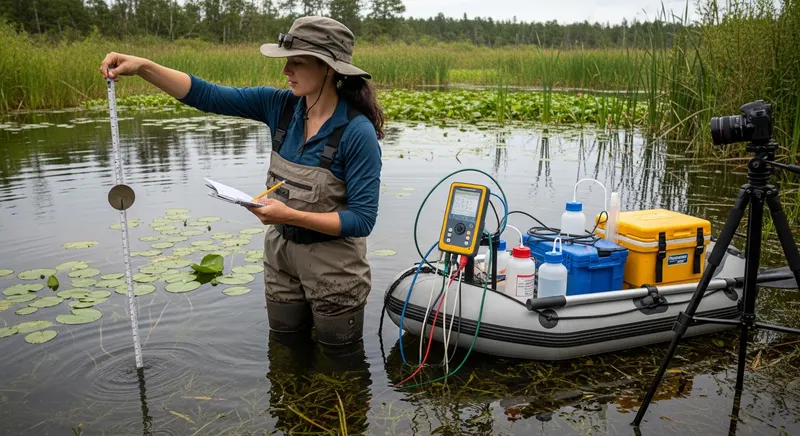
Our Mission
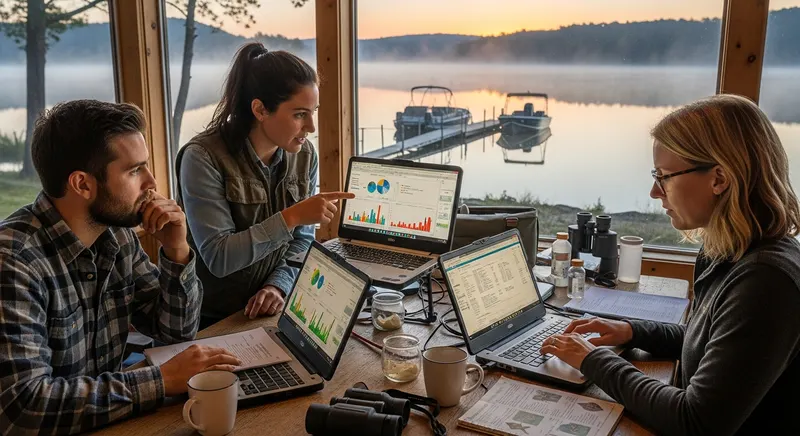
AquaticWeed.org exists because aquatic weed management in the United States is chronically underfunded, misunderstood, and underserved by accessible public information. Invasive aquatic plants infest hundreds of thousands of acres of U.S. lakes, rivers, and coastal waterways. They cost communities tens of millions of dollars annually in direct management expenses, property value losses, and degraded water quality. Yet the gap between what the research community knows and what the average lake owner, municipal manager, or landowner can access remains enormous.
We bridge that gap. AquaticWeed.org synthesizes peer-reviewed research, government agency data, and field-validated management experience into clear, authoritative educational content — structured so that anyone from a first-time lake owner to a professional biologist can find exactly what they need.
Who We Serve
Our content is written for a diverse audience with a common need: accurate, science-based information about aquatic weeds that is directly applicable to real-world management decisions.
- Lake owners and lakefront homeowners — understanding what is growing in their water body, whether it is a problem, and what options exist for management
- Lake associations and management districts — planning multi-year integrated management programs for recreational lakes and reservoirs
- Municipal governments and water utilities — managing aquatic weeds in public water bodies, drinking water reservoirs, and stormwater infrastructure
- Agricultural operators — managing weeds in irrigation canals, drainage ditches, and agricultural ponds
- Environmental consultants and lake management professionals — needing authoritative reference content for client education and program planning
- Researchers and students — seeking comprehensive literature synthesis and authoritative species information
- Anglers, boaters, and recreationists — understanding the invasive species risks in waters they use and how to prevent new introductions
Our Scientific Approach
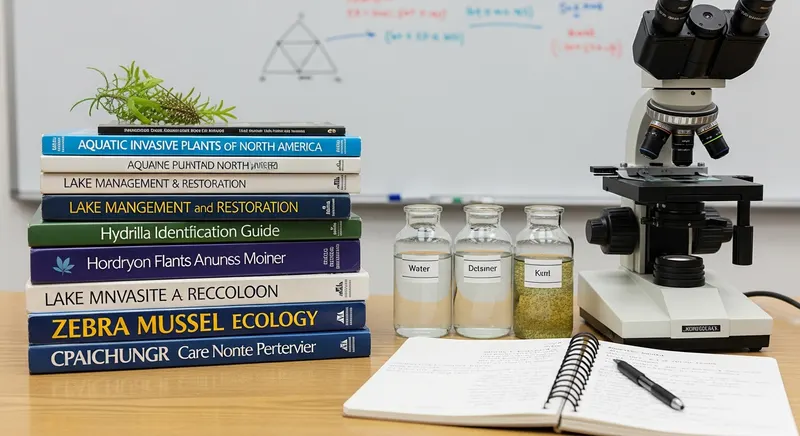
Every page on AquaticWeed.org is grounded in the published scientific literature. Our approach to content development follows a systematic process: we identify the leading peer-reviewed research on each topic, synthesize it with authoritative agency guidance (USDA, EPA, USGS, state extension services), consult with subject-matter experts, and translate the findings into clear, accurate educational content accessible to non-specialist audiences.
We do not simplify at the expense of accuracy. Where management questions are genuinely uncertain or contested in the literature, we represent that uncertainty honestly rather than overstating consensus. Where species identification requires technical precision, we provide the necessary diagnostic detail rather than sacrificing accuracy for accessibility. We believe that informed decision-making requires complete information, not comfortable oversimplification.
All species profiles, identification guides, and management recommendations cite the specific studies and authoritative sources they are based on. Our comprehensive references page lists the key journals, government databases, and research programs that inform our content. Our research methodology page details how content is developed, reviewed, and updated. Our editorial policy governs how we handle conflicts of interest, corrections, and content updates.
Editorial Standards
AquaticWeed.org operates under rigorous editorial standards designed to ensure accuracy, objectivity, and currency of all published content.
- Source standards: We cite only peer-reviewed literature, government agency publications (USDA, EPA, USGS, state extension services), and recognized university research programs. We do not cite product promotional materials, industry advocacy documents, or sources without verifiable scientific review.
- Review process: All content is reviewed for scientific accuracy by qualified aquatic science professionals before publication. Species profiles and management guidance are subject to expert review.
- Independence: AquaticWeed.org has no financial relationship with aquatic herbicide manufacturers, lake management service companies, or any entity with a commercial interest in aquatic weed management decisions. We do not accept sponsored content or paid product endorsements.
- Correction policy: Factual errors are corrected promptly and transparently. Readers who identify errors are encouraged to contact us at [email protected].
- Content currency: We review and update content when significant new research changes our understanding of species biology, management efficacy, or regulatory status.
Our Team
AquaticWeed.org is produced by an editorial team with combined expertise in aquatic biology, environmental science, and lake management. Our contributors hold advanced degrees from leading research universities and bring decades of practical field experience to the content they produce. Meet the editorial team →
Partners and Resources
AquaticWeed.org maintains relationships with leading aquatic research institutions, government agencies, and conservation organizations. We collaborate with state aquatic invasive species programs, university extension services, and national research centers to ensure our content reflects the current state of knowledge. View our partners →
Contact
We welcome questions, corrections, and feedback from lake managers, researchers, regulatory professionals, and the public.
Email: [email protected]
For species identification assistance, we recommend contacting your state's cooperative extension service or aquatic invasive species program — they can provide regionally specific identification help and management guidance at no charge.
The Information Gap We Address
The scale of the aquatic weed problem in the United States is difficult to overstate. Invasive aquatic plants are established in all 50 states. Hydrilla alone infests an estimated 100,000+ acres of Florida waters. Eurasian watermilfoil is present in every contiguous US state. Giant salvinia, capable of doubling its biomass in under a week, is spreading into previously uninfested southern water bodies every year. The national economic cost of aquatic invasive species — including aquatic weeds — exceeds an estimated $9 billion annually. And the problem is worsening as climate change expands the suitable habitat range of warm-water invasives northward into states that previously had less exposure.
Despite this scale, the publicly available information on aquatic weed management has historically been fragmented across hundreds of state agency websites, academic journals, university extension bulletins, and federal agency technical notes — none of which were designed to work together as a coherent reference system. A lake owner in Wisconsin trying to understand whether a plant in their water is native or invasive, what management options exist, whether they need a permit, and what it might cost, had to visit a dozen different sites, read technical documents written for specialists, and still might not find a clear answer. AquaticWeed.org solves this by bringing all of that information together in one organized, accessible, science-based resource.
Our Accuracy Commitment
Scientific accuracy is the non-negotiable foundation of AquaticWeed.org. Every factual claim on the site is traceable to a primary source: a peer-reviewed journal article, a government agency technical report, a state extension service publication, or a publicly accessible agency database. We do not publish claims based on anecdote, industry promotional materials, or unverifiable sources. When reasonable disagreement exists in the scientific literature — as it sometimes does on management efficacy and ecological impact questions — we represent the range of evidence rather than selecting a single preferred study.
Our accuracy commitment has practical implications for how we write. We distinguish clearly between what is established scientific consensus and what is still contested or under active investigation. We acknowledge the limits of our own expertise and refer readers to regionally specific professional resources when site-specific guidance is needed. We correct errors promptly and transparently. And we update content when significant new research changes what we know — not on an arbitrary schedule, but when the science warrants it.
We benchmark our species profiles and management guidance against the peer-reviewed primary literature annually. Our primary reference journals include the Journal of Aquatic Plant Management, Aquatic Botany, Freshwater Biology, Hydrobiologia, Ecological Applications, Invasive Plant Science and Management, and Lake and Reservoir Management. Our distribution data is cross-checked against the USGS Nonindigenous Aquatic Species database. Our regulatory and legal status content is verified against current USDA APHIS noxious weed listings, EPA pesticide registrations, and state agency published lists. Full research methodology →
What Makes AquaticWeed.org Different
The content on AquaticWeed.org is distinguished from general web resources by several characteristics that matter to users making real management decisions:
- Primary source grounding: Every species profile, management guide, and ecological impact explanation is built from the peer-reviewed literature — not general reference sites or secondhand summaries. We go to the original research.
- Expert authorship: Content is written and reviewed by professionals with advanced degrees and years of field experience in aquatic plant biology, environmental science, and lake management — not general science writers or AI tools. The credentials of our team are publicly listed on our editorial team page.
- Management specificity: We write for people who need to make decisions, not just people who are curious. Species profiles include management sections that specify what works, what doesn't, what permits are required, and what professional resources are available.
- Regulatory currency: We maintain current awareness of noxious weed listings, state permit requirements, and EPA-registered product status — regulatory information that changes and has direct consequences for management decisions.
- Commercial independence: We have no financial relationship with any commercial entity that sells aquatic weed management products or services. Our recommendations are based solely on scientific merit and practical applicability.
Ten-Year Lake Management Plan: Lake Wingra, WI
Lake Wingra, a 342-acre urban lake in Madison, WI, developed a comprehensive 10-year management plan coordinating the City of Madison, University of Wisconsin, and adjacent neighborhood associations. The plan addressed Eurasian watermilfoil, curly-leaf pondweed, and purple loosestrife through an integrated approach including targeted herbicide treatment, mechanical harvesting, native plant restoration, and public education.
Key outcome: The structured multi-agency planning process secured consistent funding across multiple budget cycles, a key advantage over ad hoc management. Native plant restoration efforts showed measurable progress in designated restoration zones within three years of initiation.
We used the integrated management framework from this site to structure our Eurasian watermilfoil control program. After three seasons we've reduced lake-wide coverage by 78% on our 340-acre water body.
Susan Thibodeau Lake District Manager, MN · Crow Wing CountyThe seasonal timing guidance has been invaluable. Treating at the right growth stage cut our herbicide costs by nearly 30% without sacrificing efficacy on our county-managed reservoir.
Dale Buchanan County Parks Director, MI · Kalamazoo County