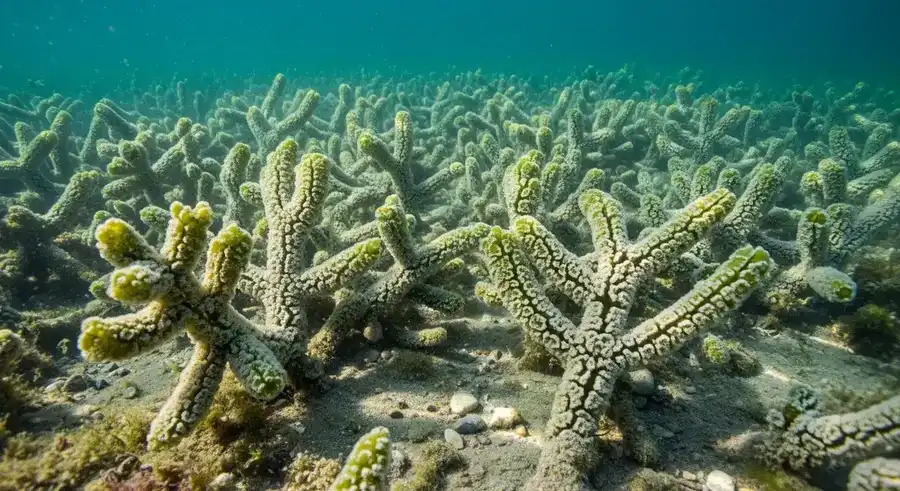
Identification Features
Chara (Chara spp.), commonly called muskgrass or stonewort, is not a true plant — it is a multicellular green alga (Kingdom Plantae, Division Charophyta) that closely resembles a submerged plant. Its most diagnostic features: (1) a distinctive strong garlic- or musky odor when rubbed or crushed — no other aquatic plant has this odor; (2) a gritty, rough, calcium-encrusted texture — the branches accumulate calcium carbonate deposits that feel like fine sandpaper; (3) whorled branchlets arranged at regular intervals around a central axis, giving the overall appearance of a green bottlebrush or segmented seaweed. Chara lacks true leaves, stems, roots, or vascular tissue — it anchors in sediment by rhizoids (hair-like projections, not true roots).
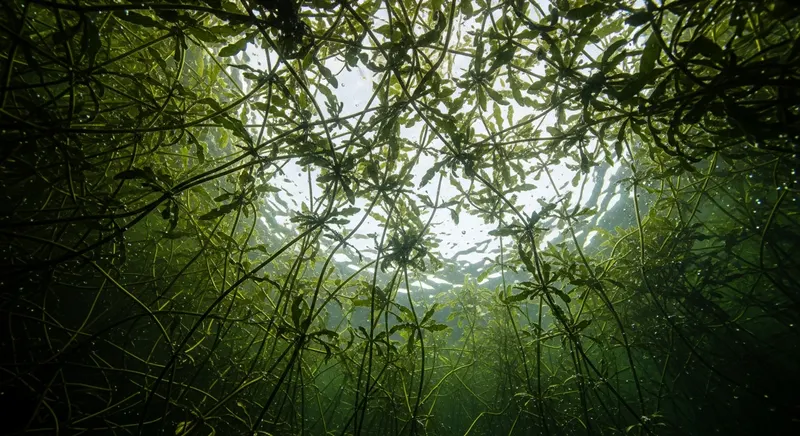
Chara is sometimes confused with Eurasian watermilfoil (which also has whorled structures) but is easily distinguished: milfoil has true pinnate leaves that wilt out of water; chara has rigid, calcium-encrusted branchlets that maintain their structure. The garlic odor alone is diagnostic. Growth pattern identification →
Biology and Ecological Role
Chara is generally considered a beneficial native alga in most North American freshwater systems. It plays important roles in clear-water lake ecology: chara beds in clean, well-lit lakes provide habitat for invertebrates, spawning substrate for fish, and food for waterfowl (particularly diving ducks that consume chara material). More importantly, dense chara beds are associated with clear-water lake states in shallow lakes — chara effectively competes with floating algae for nutrients and light, helping to maintain clear water conditions that resist algal bloom development. This makes chara beds a positive ecological indicator of healthy lake conditions.
Chara can become a nuisance in some contexts: very dense growths can impede swimming and fishing in lake margins, and the strong odor is sometimes objectionable to recreational users. In farm ponds and irrigation canals, dense chara mats can impede water movement. But these nuisance impacts are generally minor compared to the ecological benefits chara provides, and aggressive management of chara should be avoided unless it is causing significant functional impairment.
Distribution
Chara is found throughout North America in lakes, ponds, rivers, and streams — wherever clear water and adequate light allow the calcium precipitation required for the characteristic calcium carbonate encrustation. It is most abundant in clear, high-calcium, slightly alkaline water bodies. It is generally absent from very acidic (low pH) or very turbid water bodies.
Management Considerations
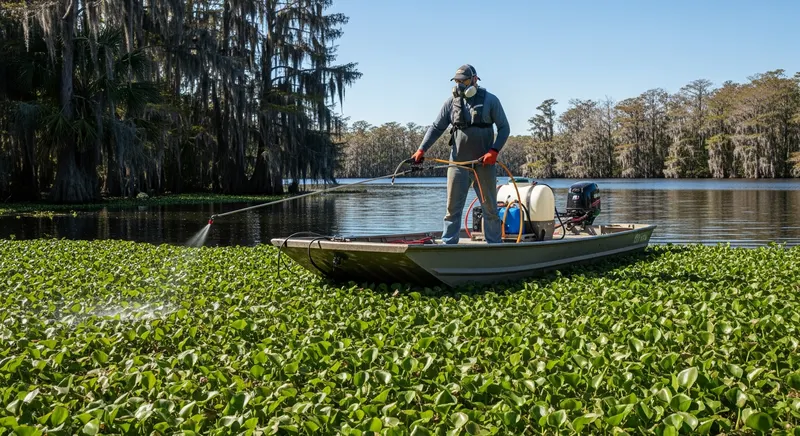
Chara management, when needed, typically involves copper sulfate (algaecide — chara is an alga, so algaecide rather than herbicide is the appropriate tool), sodium carbonate peroxyhydrate (GreenClean), or mechanical raking. State permit requirements vary. Because chara is native and ecologically beneficial, management decisions should be carefully weighed — the ecological cost of eliminating chara from a lake may exceed the recreational benefit of removal. Control options →
Frequently Asked Questions
Why does chara smell like garlic?
The garlic-like odor of chara is caused by dimethyl sulphide and related sulfur compounds produced by the plant's metabolism. These sulfur compounds are released when chara tissue is bruised or crushed. The strong odor is a reliable field identification character — once you have smelled chara, you will not mistake it for any other aquatic plant. No other common aquatic plant produces this specific odor. The odor has no known ecological function; it may be a byproduct of the chara's unique biochemistry.
Is chara harmful to fish?
Dense chara beds are generally beneficial to fish, not harmful. Chara provides spawning substrate for bass, bluegill, and other nest-building fish. Small fish use chara beds as refuge from predators. The calcium carbonate encrustation provides attachment substrate for periphyton that supports invertebrate food chains. In extreme densities (complete sediment coverage), chara can impede some spawning activities, but this level of density is uncommon in natural systems and typically indicates excellent water clarity conditions that otherwise favor fish productivity.
Full Species Profile: Visit the Chara authority page →
Ten-Year Lake Management Plan: Lake Wingra, WI
Lake Wingra, a 342-acre urban lake in Madison, WI, developed a comprehensive 10-year management plan coordinating the City of Madison, University of Wisconsin, and adjacent neighborhood associations. The plan addressed Eurasian watermilfoil, curly-leaf pondweed, and purple loosestrife through an integrated approach including targeted herbicide treatment, mechanical harvesting, native plant restoration, and public education.
Key outcome: The structured multi-agency planning process secured consistent funding across multiple budget cycles, a key advantage over ad hoc management. Native plant restoration efforts showed measurable progress in designated restoration zones within three years of initiation.
The species identification guides on AquaticWeed.org are the most accurate I've used in 18 years of lake management. I now send all my new clients here first before we discuss treatment options.
Robert Harmon Certified Lake Manager, FL · Lake Okeechobee regionWe referenced the biological control pages extensively when evaluating our grass carp stocking proposal. The detail on stocking rates and target species specificity helped us present a credible case to our board.
Karen Ostrowski HOA Lake Committee Chair, MN · Lake Minnetonka association