
Our Commitment
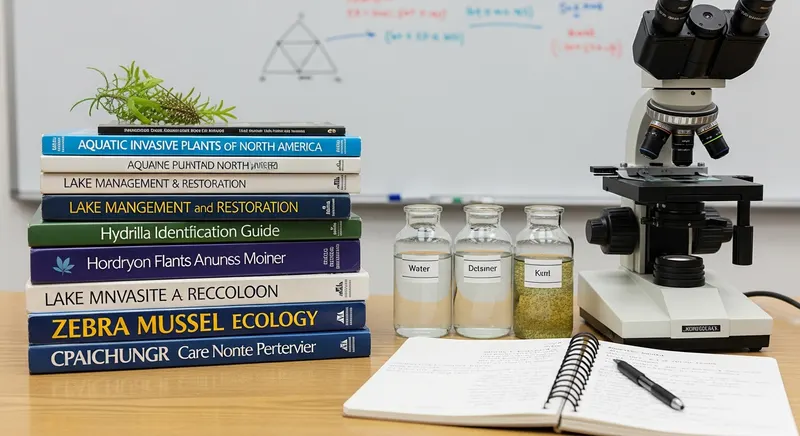
AquaticWeed.org is committed to producing accurate, science-based, editorially independent educational content about aquatic weeds. Every page on this site is the product of a structured development and review process designed to ensure that the information we publish is factually accurate, practically relevant, and free from commercial influence. This page explains our editorial standards, source requirements, review process, independence policy, and correction procedures in full.
Source Standards
All factual claims on AquaticWeed.org must be traceable to one or more of the following categories of authoritative sources:
- Peer-reviewed scientific literature: Articles published in refereed journals including (but not limited to) the Journal of Aquatic Plant Management, Aquatic Botany, Freshwater Biology, Hydrobiologia, Biological Invasions, Lake and Reservoir Management, Invasive Plant Science and Management, and Weed Technology. We prioritize systematic reviews and meta-analyses over single-study findings.
- Federal agency publications: Technical reports, guidance documents, and databases from USDA, EPA, USGS, and the U.S. Army Corps of Engineers. For regulatory and taxonomic information, we use EPA registrations, USDA PLANTS Database designations, and USGS Nonindigenous Aquatic Species database records as the authoritative primary source.
- State cooperative extension publications: Extension guides and bulletins from land-grant university extension services are accepted as authoritative sources for regional management guidance, provided they are current and cite their primary literature basis.
- University research program publications: Published research reports and technical bulletins from recognized university aquatic science programs (University of Florida IFAS CAIP, University of Wisconsin Center for Limnology, Cornell Biological Field Station, et al.).
We do not use the following as primary sources: product manufacturer promotional materials, undocumented anecdotal accounts, non-peer-reviewed industry publications, or advocacy documents that cannot be verified against independent scientific evidence.
Content Review Process
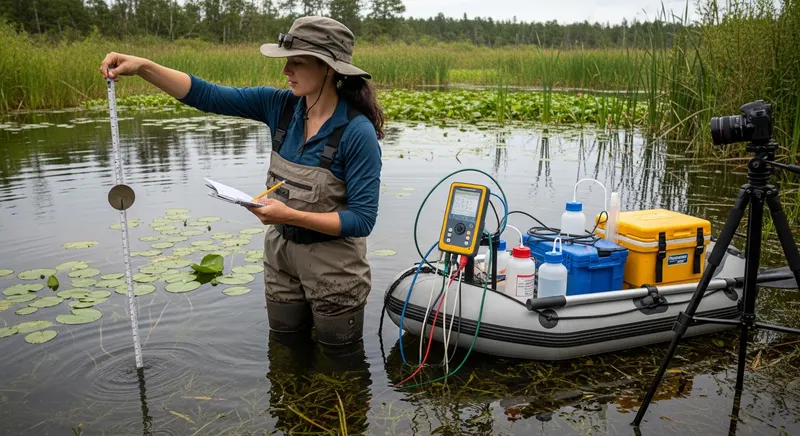
AquaticWeed.org operates a multi-stage review process for all published content:
- Literature review and drafting: Content is drafted by a team member with direct expertise in the subject area, based on a systematic review of the primary literature and authoritative sources. All claims are referenced to specific sources during drafting.
- Internal expert review: All content is reviewed by at least one team member with expertise distinct from the primary drafter before publication. Reviewer feedback must be addressed before content is cleared for publication.
- Practical applicability review: Management-relevant content is evaluated against a practical relevance standard — ensuring that technically accurate information is presented in a way that supports actual management decision-making, not merely satisfies academic completeness.
- External review (for specialized topics): Content involving species biology, management approaches, or geographic regions outside our team's primary expertise may be submitted for external review by subject-matter experts at university programs, state agencies, or professional organizations before publication.
See our full research methodology page for detailed descriptions of each stage, including how we handle conflicting sources and scientific uncertainty.
How We Handle Scientific Uncertainty
Science is not always settled, and responsible science communication acknowledges this reality. Where management questions are genuinely uncertain — where the peer-reviewed literature presents conflicting findings, where sample sizes are insufficient to draw firm conclusions, or where recommended practices vary substantially across expert opinion — we represent that uncertainty directly rather than overstating consensus. We use language like "evidence suggests," "some research indicates," or "results have been inconsistent across studies" to convey genuine uncertainty, and we explain the nature of the uncertainty in terms accessible to non-specialist readers.
We do not suppress inconvenient findings or present selective evidence that supports a predetermined conclusion. Where newer research contradicts older guidance that may still be in common use, we present both the older conventional practice and the newer evidence, and explain the implications for management decisions.
Independence and Conflicts of Interest
AquaticWeed.org has no financial relationship with aquatic herbicide manufacturers, biological control product companies, lake management service contractors, or any entity with a direct commercial interest in aquatic weed management decisions.
- We do not accept sponsored content, paid product placements, or advertising from commercial entities in the aquatic management sector.
- We do not receive commissions or referral fees for product or service recommendations.
- We do not allow commercial considerations to influence content decisions, product comparisons, or management recommendations.
- Team members are required to disclose any potential conflicts of interest before contributing content on topics where they may have a financial or professional stake in a particular outcome.
Our editorial decisions are made solely on the basis of scientific merit, accuracy, and reader utility. We disclose this independence policy publicly because we believe readers are entitled to know whether information they use is produced without commercial bias.
Use of Third-Party Data
AquaticWeed.org regularly references data from third-party databases including the USGS Nonindigenous Aquatic Species Database, USDA PLANTS Database, and EPA pesticide registration records. We link directly to these original sources rather than reproducing their data in ways that could introduce errors or create outdated copies. Where we present data derived from these sources (e.g., current distribution information for a species), we indicate the source and the date of our reference.
Corrections Policy
We correct factual errors promptly and transparently. When a factual error is identified — whether by a reader, external expert, or our own team — we investigate the report, verify the correct information against primary sources, correct the content, and note the correction. Significant corrections are noted on the page where the error appeared. Minor typographical or formatting corrections are made without notation.
To report a suspected error, please contact us at [email protected] with the specific page URL, the statement you believe to be incorrect, and if possible, a reference to the source you believe provides the correct information. We respond to all correction reports.
Content Currency Policy
We review and update content when significant new research changes our understanding of a species biology, management efficacy, or regulatory status. We maintain literature alerts for all major invasive species covered on the site. Species regulatory status (noxious weed listings, permit requirements) is verified against current agency sources annually, as regulatory status can change. Management guidance that reflects outdated practices is updated when current evidence clearly demonstrates superior alternatives.
Content that accurately represents the current state of scientific consensus is not updated simply to appear fresh or to add novelty. Our standard for updates is substantive scientific or regulatory change, not publication recency for its own sake.
Content Scope
AquaticWeed.org covers aquatic weed identification, biology, ecology, distribution, and management within the United States. We do not provide site-specific management recommendations, legal advice on permit applications or regulatory compliance for specific situations, or product endorsements. All management guidance is provided as educational information to support informed decision-making in consultation with licensed professionals and state regulatory agencies. See our disclaimer for the full scope of these limitations.
Questions about our editorial standards or to suggest improvements: [email protected]. See also our about page, editorial team, and research methodology.
Ten-Year Lake Management Plan: Lake Wingra, WI
Lake Wingra, a 342-acre urban lake in Madison, WI, developed a comprehensive 10-year management plan coordinating the City of Madison, University of Wisconsin, and adjacent neighborhood associations. The plan addressed Eurasian watermilfoil, curly-leaf pondweed, and purple loosestrife through an integrated approach including targeted herbicide treatment, mechanical harvesting, native plant restoration, and public education.
Key outcome: The structured multi-agency planning process secured consistent funding across multiple budget cycles, a key advantage over ad hoc management. Native plant restoration efforts showed measurable progress in designated restoration zones within three years of initiation.
The species identification guides on AquaticWeed.org are the most accurate I've used in 18 years of lake management. I now send all my new clients here first before we discuss treatment options.
Robert Harmon Certified Lake Manager, FL · Lake Okeechobee regionWe referenced the biological control pages extensively when evaluating our grass carp stocking proposal. The detail on stocking rates and target species specificity helped us present a credible case to our board.
Karen Ostrowski HOA Lake Committee Chair, MN · Lake Minnetonka association