What Is Mechanical Aquatic Weed Control?
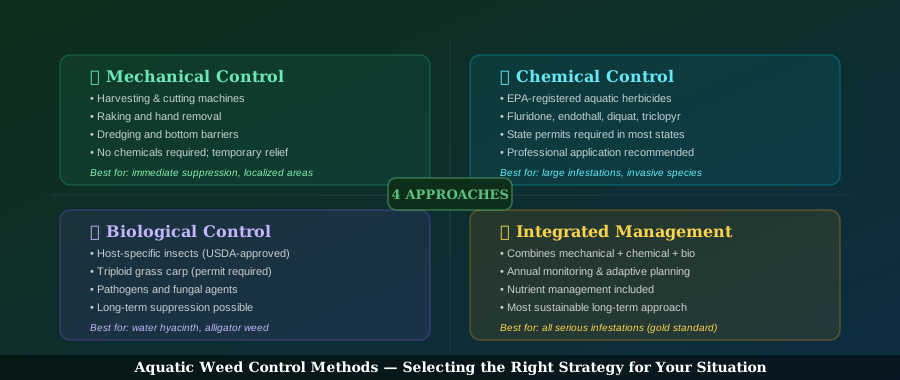
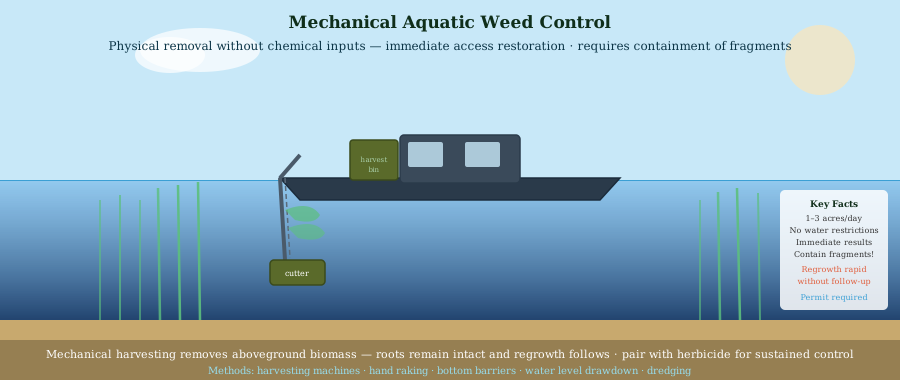
Mechanical control encompasses all physical methods used to remove or suppress aquatic weed growth without chemical inputs: harvesting machines, hand-pulling, raking, cutting, dredging, bottom barriers, and water level manipulation. Mechanical methods are non-chemical, produce no water use restrictions, and can provide rapid visual improvement — but they do not kill plants or their root systems, and regrowth is a certainty without follow-up management.
When Mechanical Control Is Appropriate
Mechanical methods are the right choice — or a required component of the right choice — when any of the following conditions apply:
- Immediate access restoration is the priority. When a boat launch, swimming beach, or navigation channel needs to be usable this weekend, mechanical harvesting is the only method that delivers same-day results. Herbicides take 2–8 weeks; mechanical cutting takes hours.
- Chemical-free management is required. Water supply reservoirs, waters near organic agriculture operations, or water bodies where stakeholders have mandated non-chemical management require mechanical approaches. Municipal drinking water intake areas often fall in this category.
- Small or early-stage infestations. New introductions detected at low density can often be manually removed entirely before they establish — eliminating the infestation rather than simply managing it. This is the best possible outcome and only achievable at very early infestation stages.
- Pre-treatment biomass reduction. Harvesting before herbicide application reduces the organic load that will decompose after treatment, reducing the dissolved oxygen crash risk in productive lakes.
- Localized clearance alongside a broader program. Even in lakes using herbicide programs for the infestation as a whole, mechanical harvesting is often used to maintain specific high-use areas between annual herbicide treatments.
Mechanical Harvesting Equipment and Operations
Aquatic weed harvesters are specialized boats equipped with underwater cutting heads and conveyor belts that cut, collect, and remove submerged plant biomass from the water. Modern harvesters can cut plants at depths of 1–2 meters, collect the cut material, and load it into transport barges or trucks for disposal on land. This removes the biomass from the water (preventing decomposition and nutrient recycling) and restores navigation and recreation access immediately after treatment.
The primary limitation of harvesting: it does not kill the root system or rhizomes of perennial plants. Eurasian milfoil and hydrilla regrow rapidly after cutting — in warm weather, 30–60 days after harvest, plant biomass may return to near-pre-harvest levels. This means that harvesting in isolation requires 3–5+ harvesting passes per growing season to maintain access — an expensive proposition for large infestations. Harvesting is most cost-effective as part of an integrated program with chemical treatment, particularly for maintaining access channels while herbicide programs work on the broader infestation. Integrated management guide →
Fragment Containment
One critical requirement for mechanical harvesting operations: fragment containment. Every harvest operation produces plant fragments, and for species like Eurasian milfoil, loose fragments can root and establish new plants in areas of the lake that were previously uninfested. Professional harvesting operations use boom containment systems to prevent fragment spread within the lake, and all harvested material is transported to upland disposal sites. Harvesting operations that release large quantities of fragments have documented cases of spreading infestations within water bodies — fragment containment is not optional. Why fragmentation matters →
Hand-Pulling and Raking
For small infestations or areas inaccessible to machinery, hand-pulling and raking by swimmers or waders is labor-intensive but highly targeted. Hand-pulling is most effective for early-stage infestations (when plant density is low enough to make manual removal practical) and for floating species where the entire plant including roots can be removed. It is the recommended technique for initial response to a new invasive species introduction before the infestation expands beyond manual management feasibility. The fragment management requirement applies equally — all removed plant material must be bagged and removed from the water.
Bottom Barriers and Water Level Manipulation
Benthic barriers (bottom barriers) are sheets of woven or non-woven fabric anchored to the lake bottom that exclude light and prevent plant growth beneath them. They are effective for small areas (swimming beaches, dock areas, boat launches) but impractical for large infestations. Bottom barriers must be properly installed and maintained — lifted edges allow plant recolonization, and improper installation can create low-oxygen zones harmful to benthic organisms. They are most suitable for focal clearance of specific high-use areas rather than lake-wide management.
Water level manipulation (drawdown) involves intentionally lowering water levels to expose aquatic plant root zones to freezing temperatures (winter drawdown) or desiccation (summer drawdown). Winter drawdown is one of the most cost-effective mechanical approaches for reservoirs with water level control infrastructure — it kills shallow-water species and can significantly set back milfoil and hydrilla populations when conditions are cold enough for extended root-zone freezing. Summer drawdown is less commonly used due to impacts on fisheries, recreation, and the risk of concentrating plants in deeper water. Both require detailed planning and stakeholder coordination. Management planning guide →
Advantages and Limitations
| Factor | Advantage | Limitation |
|---|---|---|
| Speed of results | Same-day access restoration; immediate visual improvement | Does not kill roots; rapid regrowth within 30–60 days for perennials |
| Water use restrictions | None — no swimming, drinking, or fishing restrictions | Harvested biomass must be transported to upland disposal sites |
| Cost | No permit fees for many operations; applicable to chemical-free water bodies | $800–$3,000+ per acre per harvest pass; high frequency required for perennial species |
| Ecological safety | No chemical inputs; no water quality changes from the treatment itself | Fragment spread risk requires careful boom containment; noise and turbidity during operations |
| Long-term efficacy | Removes biomass and nutrients from the lake system | Cannot deplete propagule banks (tubers, turions, root crowns) without chemical integration |
Environmental Considerations
Mechanical harvesting carries specific ecological risks that must be proactively managed in every operation:
- Fragment dispersal: The most significant ecological risk of mechanical harvesting. Loose fragments of highly invasive species like Eurasian watermilfoil or hydrilla can establish new colonies far from the treatment area if fragments escape containment booms. Fragment containment is mandatory for professional operations on invasive species. Fragmentation biology →
- Incidental fish and invertebrate removal: Harvesting equipment is not species-selective — macroinvertebrates and small fish sheltering in weed beds are removed along with the plants. This is typically a temporary impact, but in sensitive waters with rare or protected invertebrate communities, seasonal restrictions on harvesting may be warranted. Food web impacts →
- Sediment disturbance: Some harvesting equipment, particularly older cutting heads operating in shallow water, can disturb bottom sediments and resuspend nutrients. Modern harvesters operating at appropriate depths minimize this risk significantly.
- Oxygen dynamics after removal: Harvesting does not produce the dissolved oxygen crash associated with rapid herbicide-induced plant decomposition. However, large-scale removal of dense weed beds can temporarily reduce the photosynthetic oxygen contribution from the treated area. In productive lakes, post-removal monitoring is prudent when large volumes are removed at once. Oxygen dynamics →
Drawdown operations carry their own environmental considerations: temporary impacts on fish habitat and spawning grounds, stranding of invertebrates and eggs in exposed areas, and changes to nearshore vegetation community composition as different species recolonize after refill. These impacts must be carefully weighed against management benefits during the planning process.
Integration with Other Control Methods
Mechanical control achieves its highest cost-effectiveness and longest-lasting results when integrated with complementary approaches rather than deployed in isolation:
- Mechanical + chemical (most common integration): Herbicide programs handle lake-wide suppression and root/propagule kill; mechanical harvesting maintains access in priority areas and removes dead biomass after treatment to reduce oxygen depletion risk. This combination is the backbone of most professional management programs for large established infestations. Chemical control guide →
- Mechanical + biological: Hand-removal of floating weed patches alongside grass carp stocking for submerged vegetation — particularly effective in pond systems where grass carp stocking density can be properly calculated. Biological control guide →
- Mechanical + drawdown: Harvesting to remove accessible vegetation before drawdown, reducing the organic load that will decompose in exposed sediments. Drawdown then kills the root systems that harvesting cannot reach — the two methods are highly complementary in reservoirs with water level infrastructure.
- Mechanical + nutrient management: Harvesting removes biomass and its associated nutrients from the water body — a direct form of nutrient export. In phosphorus-limited systems, consistent mechanical harvesting contributes meaningfully to in-lake phosphorus management when paired with watershed-level loading reduction. Nutrient loading guide →
Frequently Asked Questions
How often does mechanical harvesting need to be repeated?
For fast-growing perennial species like hydrilla and Eurasian watermilfoil, harvesting typically needs to be repeated every 30–60 days during the growing season in warm climates. In cooler northern lakes, a 60–90 day interval may be sufficient. Without any chemical treatment to slow regrowth, 3–6 harvesting passes per season are typically required to maintain reasonable access in a heavily infested lake. This is why harvesting in isolation is generally less cost-effective for established large infestations than an integrated approach combining herbicide treatment for lake-wide suppression with targeted harvesting of priority areas.
Do I need a permit for mechanical harvesting?
Permit requirements for mechanical harvesting vary significantly by state. Most states do not require permits for hand-pulling of small quantities of vegetation. For commercial mechanical harvesting operations in navigable waters, permits are commonly required. Water level manipulation (drawdown) almost always requires permits because it affects water levels shared with other users and impacts fish populations. Check with your state department of natural resources before initiating any significant mechanical operation in public waters.
Can mechanical harvesting make an infestation worse?
Yes — improperly conducted mechanical harvesting has documented cases of spreading infestations by releasing viable plant fragments. This is most problematic for highly fragment-invasive species: Eurasian watermilfoil, hydrilla, variable-leaf milfoil, and Brazilian waterweed. Professional harvesting operations use containment booms around the work area and transport all harvested material to land-based disposal. If hiring a contractor, confirm their fragment containment protocols before work begins — this is one of the most important due diligence questions to ask.
References
- Madsen, J.D. (1997). Control methods for Eurasian watermilfoil. Journal of Aquatic Plant Management, 35, 1–12.
- U.S. Army Corps of Engineers (2001). Aquatic Plant Control Research Program Technical Notes. Waterways Experiment Station, Vicksburg, MS.
- Langeland, K.A., et al. (2008). Aquatic and Wetland Plants of Florida. University of Florida IFAS Extension.
- Gettys, L.A., et al. (2014). Biology and Control of Aquatic Plants: A Best Management Practices Handbook, 3rd ed. Aquatic Ecosystem Restoration Foundation.
- U.S. Fish and Wildlife Service. (2012). Management of Aquatic Invasive Plants: A Summary of Methods. USFWS Technical Notes.
Relevant Species
This control approach is applied to the following aquatic weed species. See each species profile for species-specific guidance, herbicide rates, and optimal treatment timing:
- Hydrilla Control Methods
- Water Hyacinth Control
- Eurasian Watermilfoil Control
- Alligator Weed Control
- Duckweed Control
Regulatory Notice: Most aquatic weed control activities require permits from your state's department of natural resources or environmental protection agency. Always verify permit requirements before taking any management action.