What Is Biological Control of Aquatic Weeds?
Biological control (biocontrol) uses living organisms — insects, pathogens, and herbivorous fish — to suppress aquatic weed populations. Unlike chemical or mechanical methods that provide rapid results, biological control is a long-term strategy: biocontrol agents establish, reproduce, and gradually increase their impact on target weed populations over multiple seasons. When successful, biological control provides sustainable, self-perpetuating suppression with minimal ongoing management input — the closest equivalent in aquatic weed management to a self-maintaining solution.
When Biological Control Is Appropriate
Biological control is appropriate as a management tool under these conditions:
- Long-term maintenance suppression goals. Once chemical or mechanical treatments have reduced an infestation to manageable levels, biocontrol agents can maintain suppression, reducing the need for repeated costly treatments over subsequent years. Biocontrol is rarely used as the sole initial treatment for established infestations because it acts too slowly to provide meaningful relief in the first treatment season.
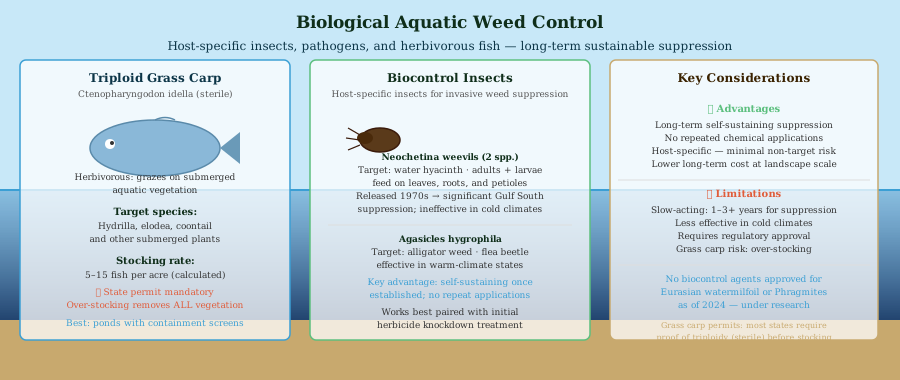
- Grass carp for pond and small lake management. In pond systems and small lakes where stocking density can be properly calculated and the fish population can be managed, triploid (sterile) grass carp provide cost-effective long-term suppression of submerged vegetation. They are the most widely deployed biocontrol agent in the U.S.
- Classical biocontrol for species with established agent programs. Water hyacinth (Eichhornia crassipes), water lettuce (Pistia stratiotes), alligator weed (Alternanthera philoxeroides), purple loosestrife (Lythrum salicaria), and giant salvinia (Salvinia molesta) all have USDA-APHIS-approved biocontrol agents with established release programs. For infestations of these species, incorporating approved biocontrol agents significantly improves long-term management outcomes.
- Herbicide-sensitive receiving waters. Where herbicide use is restricted or where stakeholders have chemical sensitivity concerns, biocontrol agents may be one of the few tools available for ongoing suppression in combination with mechanical approaches.
Triploid Grass Carp
Grass carp (Ctenopharyngodon idella) are large, herbivorous fish that consume submerged aquatic vegetation at rates of 25–100% of their body weight per day. Triploid (sterile, non-reproducing) grass carp have been used extensively in the U.S. for aquatic weed management since the 1970s. They are most effective in ponds and enclosed lakes where the stocking rate can be matched to plant biomass and where the fish can be contained — grass carp readily pass through spillways and escape water bodies with flow-through connectivity.
Triploid grass carp are regulated in all states: permits are required for stocking, and fish must be certified as triploid by the supplier. Stocking rates of 5–20 fish per acre are typical depending on weed species and density. They strongly prefer soft-tissued submerged plants (hydrilla, coontail, elodea) and avoid harder species (Eurasian milfoil) or emergent vegetation. At excessive stocking densities, they can completely eliminate all submersed vegetation — a significant ecological impact that proper stocking rate calculation prevents. Hydrilla biocontrol options →
Classical Biocontrol: Host-Specific Insects
USDA-APHIS coordinates the classical biocontrol program for invasive aquatic plants. Biocontrol agents are host-specific phytophagous insects or pathogens collected from the weed's native range, tested rigorously for host specificity, and released after regulatory approval. Approved and widely deployed agents include:
- Neochetina eichhorniae and N. bruchi (weevils): Primary biocontrol agents for water hyacinth. Adults and larvae damage leaf tissue and meristematic growing points. Established populations can reduce water hyacinth biomass by 30–50% over multi-year programs but rarely achieve complete control alone — most effective when combined with herbicide treatment. Water hyacinth management →
- Agasicles hygrophila (flea beetle): Primary biocontrol for alligator weed (Alternanthera philoxeroides). Highly host-specific; one of the more successful classical biocontrol introductions in the U.S. — in warm coastal regions, beetle populations can maintain alligator weed at non-problematic levels in many situations. Alligator weed management →
- Galerucella spp. (leaf beetles): Used for purple loosestrife control. Two species (G. calmariensis and G. pusilla) are established across much of the U.S. and have successfully reduced loosestrife density in many invaded wetlands.
- Cyrtobagous salviniae (weevil): Controls giant salvinia in tropical and subtropical regions. Highly effective; one of the most successful aquatic plant biocontrol programs globally. Established in Florida and Texas. Giant salvinia management →
Advantages and Limitations
| Factor | Advantage | Limitation |
|---|---|---|
| Long-term sustainability | Self-perpetuating once established; agent population grows with target weed population | Multi-season establishment period required; no meaningful results in first 1–2 seasons of release |
| Host specificity | USDA-approved agents target specific weed species; minimal non-target ecological impacts | Approved agents not available for all invasive species; agent approval process requires many years |
| Long-term cost | Once established, ongoing cost approaches zero; most cost-effective long-term maintenance option | Initial release, establishment monitoring, and chemical bridging costs; does not replace initial chemical/mechanical treatment |
| Level of control achievable | Can maintain suppression once population reduced to low density by other methods | Rarely reduces large established infestations to non-problematic levels without concurrent chemical support |
| Regulatory pathway | Grass carp and approved USDA insects have clear regulatory pathways in most states | Grass carp stocking requires permits and certified triploid fish; banned or restricted in some states |
Environmental Considerations
Biological control agents carry their own ecological considerations that must be carefully evaluated before deployment:
- Grass carp overgrazing risk: At excessive stocking densities, grass carp can eliminate all submersed vegetation in a water body — including native species critical to fish habitat, waterfowl, and macroinvertebrate communities. Once introduced, grass carp are extremely difficult to remove from a water body. Triploid certification and proper stocking rate calculation are essential safeguards, and these decisions are not easily reversible.
- Host specificity testing: Classical biocontrol agents approved for release in the U.S. have undergone extensive host specificity testing under USDA-APHIS oversight. Modern biocontrol approvals require testing against large numbers of native and economically important plant species before any release authorization.
- Climate limitations: Many biocontrol insects are native to tropical or subtropical regions and their effectiveness in northern states is limited by cold temperatures reducing winter survival. Water hyacinth weevils are effective in Florida and the Gulf Coast but less effective in states with extended periods below 10°C. Seasonal management →
- Interaction with chemical treatment schedules: Herbicide applications can negatively affect established biocontrol agent populations. Integrated programs that include both herbicide and biocontrol components must schedule treatments to minimize agent mortality — typically treating in areas or windows that allow agents to recolonize from adjacent refugia.
Integration with Other Control Methods
Biological control delivers its best results as a maintenance component within an integrated management program:
- Chemical + biological (most effective combination): Herbicide treatment achieves initial population knockdown; biocontrol agents maintain suppression in subsequent years, reducing the frequency of chemical retreatment required. This is the standard program design for water hyacinth management in Florida and other warm states. Chemical control guide →
- Grass carp + herbicide: Grass carp stocked after herbicide treatment reduces regrowth pressure and provides ongoing grazing on surviving plants — measurably extending the interval between chemical retreatment cycles in pond systems.
- Biocontrol + systematic monitoring: Biocontrol programs require dedicated monitoring to track agent establishment, population growth, and impact on target weed density. Without monitoring, it is not possible to determine whether agents are established, whether they are having the expected impact, or whether supplemental management action is needed. Monitoring and survey methods →
Frequently Asked Questions
How long does it take for biocontrol agents to show results?
Classical biocontrol insects typically require 2–5 years to establish self-sustaining populations after initial release, and demonstrable impacts on target weed populations often do not appear until year 3–7 of a program. Grass carp show impacts more rapidly — in pond systems with proper stocking densities, significant weed reduction is typically observed within one full growing season. For programs needing results within 1–2 seasons, biological control should be viewed as a long-term maintenance component alongside faster-acting chemical or mechanical methods, not as the primary initial treatment approach.
Are grass carp legal in my state?
Triploid grass carp are approved for use in most U.S. states but are banned or heavily restricted in a few states concerned about ecological risks. States with significant restrictions include Alaska, Maine, Rhode Island, and a few others — always verify with your state fish and wildlife agency before purchasing. Even in states where grass carp are legal, a permit is typically required for stocking, and the fish must be certified as triploid by the supplier. Stocking non-certified or diploid grass carp is illegal in virtually all states where grass carp use is permitted.
Can biocontrol agents be released without coordinating with state agencies?
No. Release of any biological control agent for weed management requires coordination with your state department of agriculture or natural resources. USDA-APHIS approved insects should be obtained through established distribution programs — not collected and redistributed independently. Grass carp stocking requires a permit in virtually all states, and the fish must be obtained from certified triploid suppliers. The regulatory requirements exist to prevent both the release of non-approved organisms and the introduction of non-sterile grass carp into public waterways.
References
- DeLoach, C.J. (1997). Biological control of weeds in the United States and Canada. In: Luken, J.O. and Thieret, J.W. (eds.), Assessment and Management of Plant Invasions. Springer, New York.
- Center, T.D., et al. (1999). Biological control of water hyacinth. In: Proceedings, First International Symposium on Biological Control of Weeds. USDA Forest Service.
- Shireman, J.V., and Smith, C.R. (1983). Synopsis of biological data on the grass carp. FAO Fisheries Synopsis, No. 135.
- Gettys, L.A., et al. (2014). Biology and Control of Aquatic Plants: A Best Management Practices Handbook, 3rd ed. Aquatic Ecosystem Restoration Foundation.
- van Klinken, R.D., and Edwards, O.R. (2002). Is host specificity of weed biocontrol agents a useful predictor of their ecological host range? Ecology Letters, 5, 590–597.
Relevant Species
This control approach is applied to the following aquatic weed species. See each species profile for species-specific guidance, herbicide rates, and optimal treatment timing:
Regulatory Notice: Most aquatic weed control activities require permits from your state's department of natural resources or environmental protection agency. Always verify permit requirements before taking any management action.