What Are Aquatic Herbicides?
Aquatic herbicides are EPA-registered pesticide products specifically formulated for use in or near water. Unlike general-use terrestrial herbicides, aquatic herbicides must meet rigorous additional testing requirements for aquatic toxicology, sediment binding, and water-column persistence. They are the most widely used and cost-effective tool for managing large aquatic weed infestations in the United States, accounting for the majority of professional aquatic plant management program expenditure each year.
When Chemical Control Is Appropriate
Aquatic herbicides are the appropriate choice — or a required component of effective management — under these conditions:
- Established large infestations. For infestations covering multiple acres or the majority of a lake's littoral zone, mechanical methods alone cannot achieve population-level suppression. Systemic herbicides that kill roots and deplete tuber banks are the only practical path to meaningful, lasting reduction of established infestations.
- Species with large propagule banks. Hydrilla (with dense tuber beds) and Eurasian watermilfoil (with extensive root crowns) require the root-kill capability that only systemic herbicides provide. Without depleting the propagule bank, any management program will face indefinite regrowth from surviving underground structures. Hydrilla management →
- Native plant community restoration goals. Timed, targeted herbicide treatments — particularly selective products — can suppress invasive species while allowing native aquatic plants to recolonize into cleared areas. This outcome is not achievable with mechanical methods alone, which remove native plants along with invasives.
- Cost-effective large-scale management. At $200–$600 per acre for a single treatment, aquatic herbicides typically cost 50–80% less per acre than equivalent mechanical treatments — the primary economic reason they are the backbone of most professional programs for large water bodies.
Key Active Ingredients and Their Uses
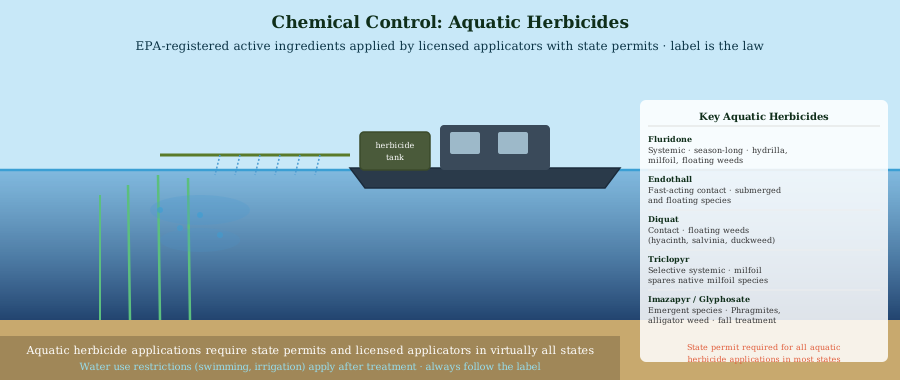
The most widely used aquatic herbicide active ingredients in U.S. management programs:
- Fluridone (systemic; whole-lake treatments): Slow-acting (60–90 days for full efficacy), extremely effective for hydrilla and milfoil, highly species-selective, minimal non-target impacts. Requires maintaining herbicide concentration above 5–10 ppb in treated water for 60–90 days — water exchange can dilute below effective concentrations. Best suited to relatively isolated water bodies with limited flow-through exchange.
- Endothall (contact; rapid-acting): Kills plant tissue on contact within 5–14 days. Effective for pondweeds, coontail, and various submersed species. Short persistence, low environmental impact, no sustained residual. Water use restrictions of 7–25 days depending on concentration and use type.
- Triclopyr (systemic; broadleaf selective): Highly effective on water hyacinth and other emergent broadleaf species with minimal impact on grasses and native submersed plants. Works systemically — translocation to roots and rhizomes provides more lasting suppression than contact products. Water hyacinth management →
- 2,4-D (systemic; broadleaf selective): One of the oldest and most extensively studied aquatic herbicides. Effective on Eurasian watermilfoil, water hyacinth, and pondweeds. Multiple aquatic-registered formulations with varying persistence profiles. Target species in the U.S. for 50+ years; extensive environmental safety database. Milfoil management →
- Copper-based algaecides (contact; primary algae target): Copper sulfate and chelated copper compounds for algae and chara control. Rapid action, no water use restrictions for swimming at label rates, but toxicity to invertebrates and fish at elevated concentrations requires careful dosing and avoidance of repeated applications in closed systems.
- Diquat (contact; broad-spectrum): Very rapid acting (24–72 hours), low persistence in water. Restricted to flowing or lotic systems in some states; multiple applications per season needed for perennial species. Permit requirements →
Advantages and Limitations
| Factor | Advantage | Limitation |
|---|---|---|
| Root and propagule kill | Systemic herbicides translocate to roots and propagule banks — essential for long-term population reduction | Contact herbicides kill only above-ground tissue; regrowth from surviving root systems is likely |
| Cost efficiency | $200–$600/acre typical; most cost-effective per-acre method for large infestations | Annual application typically needed for first 3–5 years; ongoing program costs are significant |
| Scale | Suitable for any size, from small ponds to hundreds of acres; applicable by boat, airboat, helicopter, or hand | Large-scale treatment causes simultaneous plant decomposition which can deplete dissolved oxygen in productive lakes |
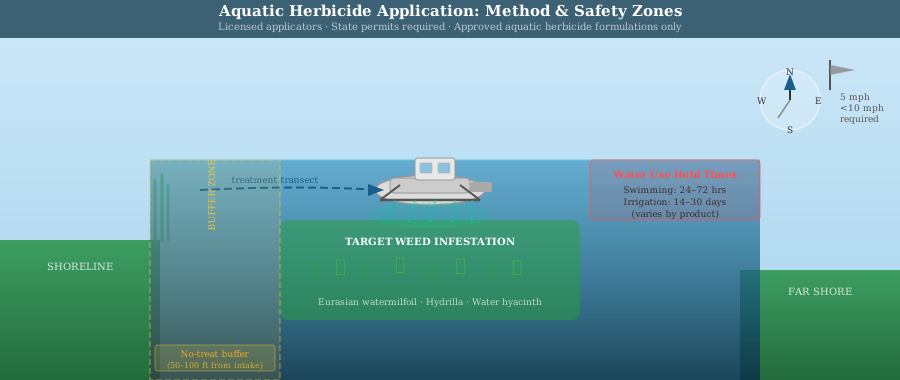
| Water use restrictions | Modern products have short or no restrictions for recreational use categories | Drinking water and irrigation restrictions typically 0–30 days; mandatory stakeholder notification required before all treatments |
| Regulatory requirements | Comprehensive state permit system with clear compliance pathways; permit departments often provide technical guidance | State permits required; licensed applicator required in most states; advance notification requirements add planning lead time |
Environmental Considerations
Aquatic herbicides are among the most thoroughly studied pesticides in current use. Properly applied EPA-registered products have extensive safety documentation. The key environmental considerations in practice:
- Dissolved oxygen management: The largest operational ecological risk of herbicide treatment is not the herbicide itself but the oxygen depletion that follows rapid decomposition of treated plant biomass. When large quantities die simultaneously in warm, productive water, bacterial decomposition consumes dissolved oxygen faster than natural reaeration replaces it. Sectional treatment — treating no more than one-third of the littoral zone at a time, with intervals between sections — is standard practice for managing this risk. In very productive lakes, post-treatment dissolved oxygen monitoring and standby emergency aeration equipment are prudent. Oxygen dynamics guide →
- Non-target plant impacts: Broad-spectrum products (diquat, endothall) can affect native aquatic plant communities along with target species. Species-selective products (fluridone for milfoil/hydrilla; triclopyr for broadleaf species) minimize non-target impacts. Treatment plans should be designed to maximize native plant recovery opportunity in the post-treatment period.
- Aquatic organism toxicity: Copper-based products pose the highest toxicity risk to sensitive invertebrates and some fish species. Most organic herbicide active ingredients have very low aquatic toxicity at EPA-registered application rates — the EPA registration process requires extensive aquatic toxicology testing for all registered products.
- Sediment persistence: Systemic herbicides with longer half-lives (fluridone: 20–120+ days in sediment depending on conditions) can affect subsequent plant communities. For propagule bank depletion programs, this persistence is often desirable; for native plant restoration goals, timing must account for residual effects on planted or recolonizing natives.
Integration with Other Control Methods
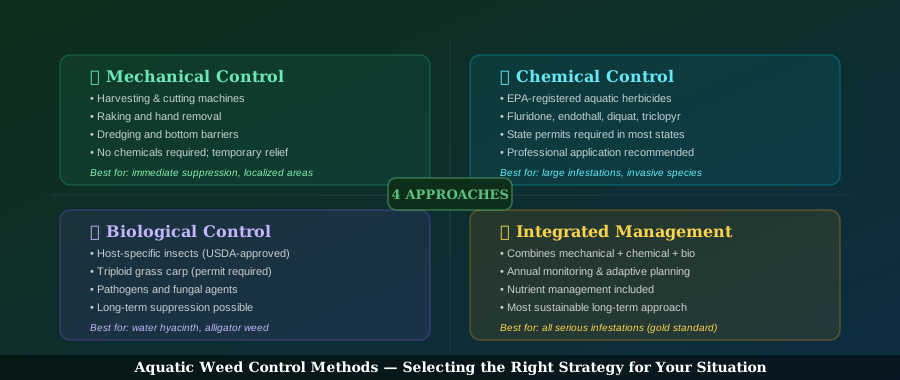
Chemical treatment achieves its best results as part of an integrated program:
- Chemical + mechanical: Pre-treatment mechanical harvesting reduces plant biomass before herbicide application, decreasing the organic load that decomposes after treatment and reducing dissolved oxygen risk. Post-treatment mechanical harvesting of dead biomass is sometimes used to remove material before it decomposes in place. Targeted mechanical harvesting maintains priority access areas while the herbicide program works on lake-wide suppression. Mechanical control guide →
- Chemical + biological: Herbicide treatment provides rapid initial suppression; biological control agents (grass carp, approved USDA biocontrol insects) provide long-term maintenance suppression to reduce ongoing herbicide treatment requirements over time. Biological control guide →
- Chemical + nutrient management: Herbicides can suppress the plant population, but without addressing the nutrient loading that drives plant growth, dense regrowth in subsequent seasons is likely. Herbicide programs achieve the most lasting results when paired with watershed-level and in-lake nutrient management. Nutrient loading guide →
Frequently Asked Questions
Are aquatic herbicides safe for fish, swimming, and drinking water?
EPA-registered aquatic herbicides applied at label rates have been tested for aquatic organism toxicity and human health effects. Most organic aquatic herbicides pose minimal risk to fish at label application rates. Water use restrictions on product labels specify mandatory waiting times before treated water can be used for swimming, drinking, irrigation, and livestock watering — these restrictions are legally required and must be followed. Copper-based algaecides require more careful application to avoid impacts on sensitive fish species, particularly trout and other salmonids. If you are using a licensed professional applicator (required in most states for treatments in navigable waters), they are responsible for ensuring label compliance and notifying water users of applicable water use restrictions.
How long do aquatic herbicides remain in the water?
Persistence varies significantly by product chemistry. Contact products (diquat, endothall) have half-lives of days to a few weeks in the water column. Systemic products (fluridone) may persist in the water column for 60–90 days and in sediment for months under some conditions. For fluridone whole-lake treatments, maintaining the herbicide concentration above 5–10 ppb for 60–90 days is necessary for full efficacy — this requires relatively closed water systems with limited inflow. In high-flow situations with frequent water exchange, fluridone is often not appropriate because dilution below effective concentrations occurs before the treatment window closes.
Can I buy aquatic herbicides and treat my own pond myself?
Some aquatic herbicide products are available for purchase by property owners for use in private isolated ponds — particularly aquatic-grade copper sulfate, some 2,4-D formulations, and certain contact herbicides. However, EPA label language specifies permitted use sites and required application rates for all products. Many states also require a licensed pesticide applicator for any aquatic treatment, including private ponds, if the products are restricted-use pesticides. For isolated private ponds not connected to public waters, more options are typically available than for connected or navigable waters. Always verify your state's specific requirements before purchasing or applying any aquatic herbicide product.
References
- Westerdahl, H.E., and Getsinger, K.D. (eds.) (1988). Aquatic Plant Identification and Herbicide Use Guide. U.S. Army Corps of Engineers Technical Report A-88-9.
- Madsen, J.D. (2000). Advantages and disadvantages of aquatic plant management techniques. Lakeline, 20(3), 22–34.
- Gettys, L.A., et al. (2014). Biology and Control of Aquatic Plants: A Best Management Practices Handbook, 3rd ed. Aquatic Ecosystem Restoration Foundation.
- Netherland, M.D., et al. (2005). Aquatic Plant Management in Lakes and Reservoirs. North American Lake Management Society and Aquatic Ecosystem Restoration Foundation.
- EPA. (2019). Pesticides and Aquatic Environments. U.S. Environmental Protection Agency, Office of Pesticide Programs.
Relevant Species
This control approach is applied to the following aquatic weed species. See each species profile for species-specific guidance, herbicide rates, and optimal treatment timing:
- Hydrilla Control Methods
- Water Hyacinth Control
- Eurasian Watermilfoil Control
- Duckweed Control
- Curly-leaf Pondweed
- Alligator Weed Control
- Coontail
Regulatory Notice: Most aquatic weed control activities require permits from your state's department of natural resources or environmental protection agency. Always verify permit requirements before taking any management action.