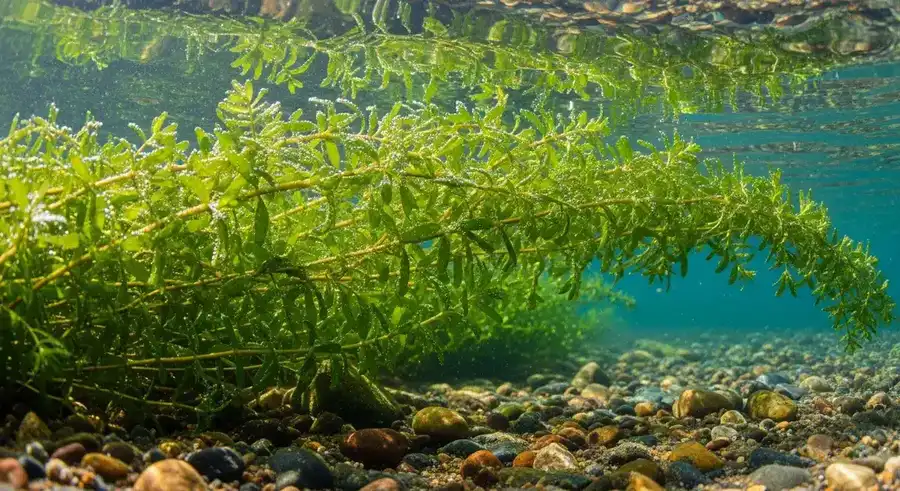
Identifying Elodea
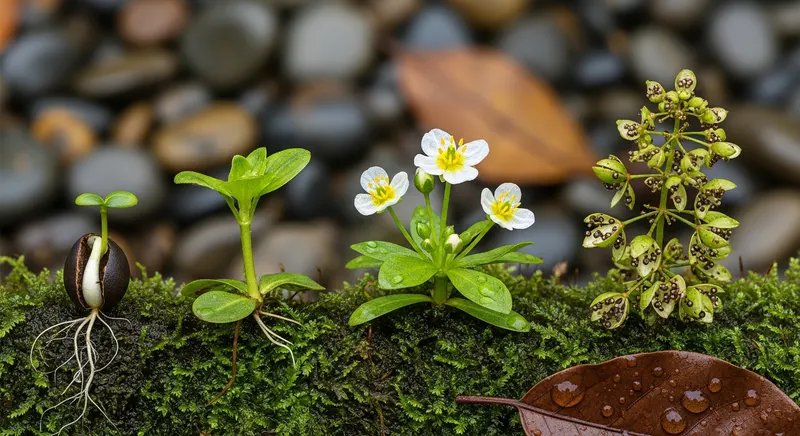
Elodea identification is primarily important for one reason: to correctly distinguish it from hydrilla (Hydrilla verticillata), with which it is frequently confused. In most U.S. states, elodea is a native plant requiring no management, while hydrilla is a federally listed invasive requiring active management. Incorrectly identifying hydrilla as elodea means leaving an invasive plant untreated; incorrectly identifying elodea as hydrilla means treating valuable native habitat. This guide covers all key features for accurate elodea identification and definitive separation from hydrilla.
Key Identification Features of Elodea
1. Exactly Three Leaves Per Whorl
The most reliable single identification feature for elodea is the number of leaves per whorl. Elodea canadensis and all other North American Elodea species have exactly 3 leaves per whorl — three leaves arranged in a ring around the stem at each node. This 3-leaf arrangement is consistent throughout the plant and can be confirmed by carefully examining any node. Hydrilla, by contrast, has 4–8 leaves per whorl — most commonly 5. If you count exactly 3 leaves at every node you examine, you have elodea. If you count 4 or more, you have hydrilla or another species.
2. Smooth or Very Finely Toothed Leaf Margins
Elodea leaves have smooth margins or margins with such fine, microscopic serrations that they appear smooth to the naked eye. When you run your fingernail along the margin of an elodea leaf from tip to base, it feels smooth — no scratching sensation, no distinct teeth. Hydrilla leaves have prominently serrated margins visible with the naked eye and feelably rough along the margin. If the leaf margin feels smooth and appears smooth without magnification, it is elodea. If it has obvious teeth, it is hydrilla.
3. No Midrib Tooth on the Leaf Underside
Run your fingernail along the underside of a single leaf from tip to base. Elodea leaves are smooth on the underside — no raised bump or scratchy sensation on the midrib. Hydrilla leaves have a distinctly raised tooth or teeth on the midrib underside, producing a scratchy sensation. This test is highly diagnostic: if the leaf underside is smooth, the plant is elodea or another non-hydrilla species.
4. Leaf Size and Shape
Elodea leaves are typically 10–35 mm long and 2–5 mm wide — longer and proportionally wider than hydrilla leaves (6–20 mm long, 1–4 mm wide). Elodea leaves are strap-like to linear-oblong, with rounded to slightly pointed tips. The generally larger leaf size of elodea compared to hydrilla is a useful supplemental feature.
5. No Tubers or Turions
Elodea does not produce the underground tubers (small white globular structures at the sediment surface) or the axillary turions (compact, dormant buds along the stem) that hydrilla produces. If you find tubers at the root zone of a whorled-leaved submerged plant, it is hydrilla, not elodea. If no tubers are found, this is consistent with elodea but does not alone confirm it.
Elodea nuttallii vs. E. canadensis
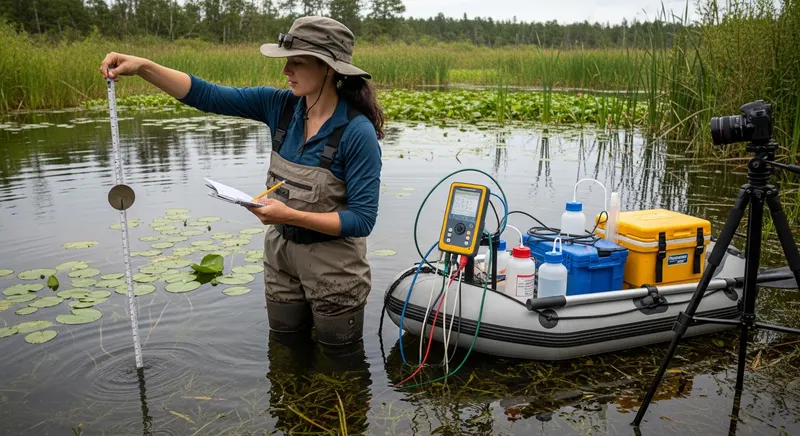
The two common U.S. elodea species are very similar. E. canadensis (common waterweed) has leaves 10–20 mm long, dark green, with 3 leaves per whorl tightly wrapped around the stem in a recurved pattern. E. nuttallii (Nuttall's waterweed) has slightly narrower leaves (1–2 mm wide vs. 1.5–3 mm in E. canadensis) that tend to be less strongly recurved. The distinction is rarely of management significance — both are native and treated identically from a management perspective.
Elodea vs. Hydrilla: The Critical Comparison
| Feature | Elodea | Hydrilla |
|---|---|---|
| Leaves per whorl | Exactly 3 | 4–8 (usually 5) |
| Leaf margin | Smooth or very finely toothed | Prominently serrated (toothed) |
| Midrib tooth (underside) | Absent | Present |
| Leaf length | 10–35 mm | 6–20 mm |
| Tubers | None | White, globular, at sediment surface |
| Native status | Native to North America | Non-native invasive |
See the full elodea vs. hydrilla comparison guide for additional detail.
What to Do After Identification
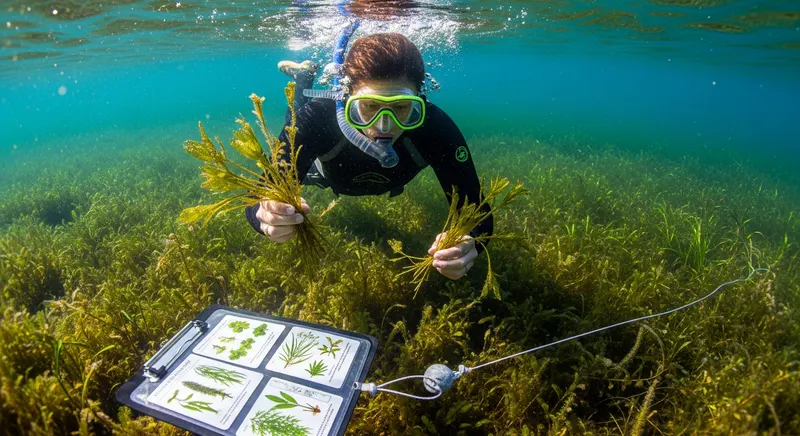
Once you have confirmed your identification, the next steps differ entirely based on the result. If you have elodea: no regulatory reporting is required, no management is necessary unless density has reached nuisance levels, and you can focus on monitoring and addressing any underlying nutrient conditions driving high density. If you have hydrilla: document the location (GPS coordinates if possible), do not disturb the plants further, and contact your state department of natural resources within 24 hours for guidance on reporting requirements and potential rapid response options. Even a single confirmed hydrilla plant in a previously uninfested water body is a reportable event in most states. Early reporting gives state managers the best chance of containing the infestation before it spreads beyond management feasibility.
References
- Cook, C.D.K. & Urmi-König, K. (1985). Revision of the genus Elodea. Aquatic Botany 21:111–156.
- Langeland, K.A. (1996). Hydrilla verticillata. Castanea 61(3):293–304.
Whole-Lake Hydrilla Management: Lake Tohopekaliga, FL
Lake Tohopekaliga ("Lake Toho"), a 22,700-acre Central Florida lake, has sustained one of the most intensively managed hydrilla programs in the U.S. since the 1990s. Annual fluridone treatments combined with targeted mechanical harvesting in high-use recreational areas have maintained hydrilla coverage below nuisance thresholds while preserving native submersed vegetation communities in designated littoral zones.
Key outcome: Multi-decade integrated program demonstrates that hydrilla can be managed at acceptable levels in large water bodies, but requires sustained annual investment and coordinated agency cooperation across FDEP, SFWMD, and local fisheries managers.
The ecological impact section helped our team explain to county commissioners why early intervention matters. The oxygen depletion data alone secured funding for our early-detection monitoring program.
Donna Whitfield State Wildlife Biologist, GA · Okefenokee regionWe used the integrated management framework from this site to structure our Eurasian watermilfoil control program. After three seasons we've reduced lake-wide coverage by 78% on our 340-acre water body.
Susan Thibodeau Lake District Manager, MN · Crow Wing County