Why Correct Identification Is Non-Negotiable
Applying the wrong herbicide to the wrong species wastes money, risks harm to native plants, and may violate state and federal pesticide regulations. Many states impose significant fines for the misapplication of aquatic herbicides — even when the error is accidental. Beyond legal compliance, control effectiveness depends entirely on species-specific herbicide selection: fluridone controls hydrilla but not coontail; triclopyr controls water hyacinth but not Eurasian watermilfoil. The financial and ecological cost of misidentification far exceeds the modest time investment required to identify the plant correctly.
There is also a conservation dimension. Many native aquatic plants look superficially similar to invasive weeds. Elodea (Elodea canadensis) is frequently confused with hydrilla (Hydrilla verticillata). Coontail resembles non-native cabomba. Killing native plants through misidentification reduces habitat quality for fish and waterfowl — the very resources most lake and pond managers are trying to protect. See our guide: Aquatic Weeds vs. Beneficial Native Plants →
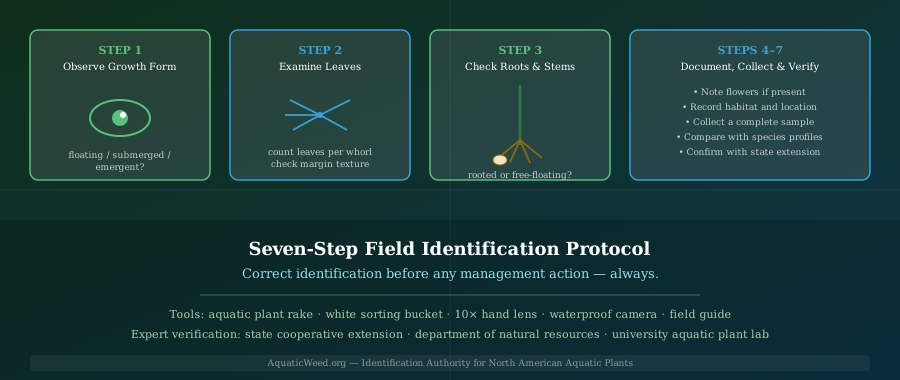
Step 1 — Determine the Growth Form
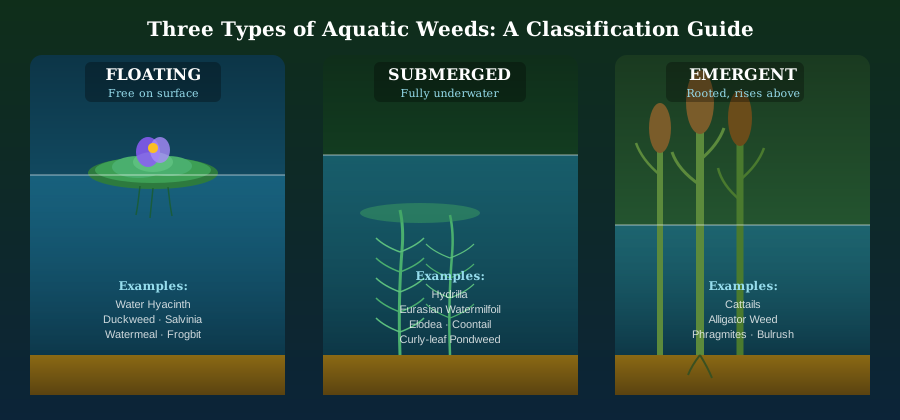
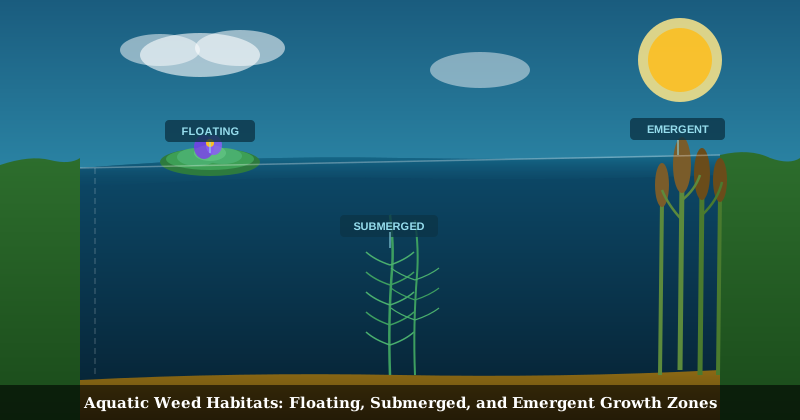
Before touching the plant, observe its position relative to the water surface. This single observation eliminates the majority of species from consideration. Ask three questions:
- Is the plant floating freely on the surface, moving with wind and current (not attached to the bottom)?
- Is the plant entirely or mostly below the water surface?
- Is the plant rooted along the shoreline with stems and leaves rising above the water?
These correspond to floating, submerged, and emergent growth forms respectively. See the complete explanation in our floating vs. submerged vs. emergent guide →
Step 2 — Examine the Leaves
Leaf morphology is the most diagnostic set of features in aquatic plant identification. For each plant you observe, document the following:
- Arrangement: Are the leaves whorled (multiple leaves at the same node, radiating outward like spokes), opposite (two leaves at each node, on opposite sides of the stem), or alternate (one leaf per node, alternating sides)?
- Count per node: Hydrilla typically has 4–8 leaves per whorl. Elodea usually has 3. Milfoil has 4. This count alone distinguishes hydrilla from elodea in most cases.
- Margin texture: Under magnification, look for serrulations (tiny saw-teeth) on leaf margins. Hydrilla and curly-leaf pondweed both have serrated leaf margins visible to the naked eye or with a hand lens.
- Shape and width: Ribbon-like and grass-like leaves suggest pondweeds or najas. Finely divided, pinnate (feather-like) leaves suggest watermilfoil. Forked or antler-like leaves suggest coontail.
- Response to air: Submerged leaves of most species collapse or droop when lifted from water — this is normal. Floating leaves of pondweeds and similar species are firm and remain upright.
See our visual reference guide: Common Aquatic Weed Leaf Shapes →
Step 3 — Examine the Roots and Stems
Root and stem features provide the second set of critical diagnostic clues. Pull a complete plant sample — including the root mass — from the sediment before making a final assessment. What to look for:
- Presence or absence of roots: Coontail has no true roots — a definitive diagnostic. Most other submerged aquatic weeds are rooted in sediment.
- Tubers and turions: Hydrilla produces small, white, potato-like tubers in the sediment and axillary turions on the stem. Curly-leaf pondweed produces turions (compact winter buds) on the stem. These are key diagnostic features visible during the right seasons.
- Stem texture: Is the stem smooth or rough? Flexible or brittle? Chara stems are encrusted with calcium carbonate and feel rough and gritty — unlike any true vascular plant.
- Stem hollow or solid: Hollow stems are characteristic of alligator weed and some emergent species. Most submerged plants have solid, flexible stems.
- Odor: Chara has a distinctive, unmistakable garlic or skunk-like odor when crushed — no other aquatic plant has this characteristic.
More detail: Root Structures of Aquatic Plants → and Stem and Growth Patterns →
Step 4 — Document Flowers and Reproductive Structures
If the plant is flowering or producing seeds, these features are often definitive. Document:
- Flower color and structure: Water hyacinth produces conspicuous lavender spikes with a yellow dot — unmistakable. Most submerged plants produce tiny, inconspicuous flowers at or near the surface during flowering season.
- Flower position: Emergent spikes at the water surface (milfoil, hydrilla), floating flowers (water lily, frogbit), or aerial flowers on emergent stems (alligator weed, cattail)?
- Fruiting bodies: Curly-leaf pondweed produces distinctive winter turions — compact, bud-like structures that break off and sink to the sediment, surviving drought and freezing. Hydrilla turions are smaller and axillary.
Photographing reproductive structures significantly improves the accuracy of remote expert identifications via extension services.
Step 5 — Record Habitat Context
Habitat information narrows the species list and provides context for the identification. Record:
- State, county, and specific water body name
- Water body type: lake, pond, reservoir, river, canal, wetland, drainage ditch
- Approximate water depth at the sample location
- Water clarity (can you see the bottom? How deep?)
- Any recent management history (herbicide application, mechanical harvesting, stocking of grass carp)
- Date of observation — seasonality affects appearance significantly. See Identification by Season →
Some species have strong regional specificity. Hydrilla is absent from most of the upper Midwest. Giant salvinia is established only in the Gulf South and parts of California. Knowing the state you're in eliminates some species from consideration entirely.
Step 6 — Collect and Preserve a Sample
For identification requiring expert verification, a physical sample is usually required. Collection technique matters:
- Submerged plants: Use an aquatic plant rake or a rake tied to a rope to retrieve a complete sample from the bottom. The sample should include the rooted base, several inches of stem, all leaf types, and any turions or tubers in the root zone.
- Floating plants: Collect a complete section of the mat including any roots. For duckweed or watermeal, a cup of water containing the floating material is sufficient.
- Emergent plants: Collect a stem segment with leaves attached, plus a root or rhizome section from the shoreline sediment.
Place samples in a sealed plastic bag with a small amount of water. Label the bag with location (GPS coordinates if available), water body name, date, and depth. Refrigerate samples if they cannot be examined or shipped within a few hours. Do not freeze samples intended for morphological identification.
Step 7 — Compare and Confirm Using Reliable References
Compare your documented features and sample photographs against our species authority pages, which provide detailed morphological descriptions, multiple photographs, and diagnostic features for each species. For field use, several published regional identification guides are valuable references: the University of Florida Center for Aquatic and Invasive Plants (CAIP) maintains one of the most comprehensive online aquatic plant databases in the country. Your state's cooperative extension service or department of natural resources can provide expert verification at no cost for most common species — and this step is strongly recommended before applying herbicides for the first time in a water body.
Important: Do not apply aquatic herbicides, grass carp, or other control measures until you have confirmed the species identification. In most states, aquatic herbicide application also requires a permit or must be performed by a licensed applicator. Contact your state environmental or natural resources agency before beginning any treatment program.
Quick-Reference: Key Diagnostic Features by Species
Use this table as a rapid cross-reference once you have gathered leaf, root, and stem observations from a field sample. Always confirm at least 3–4 features before making a final identification.
| Species | Growth Form | Leaves / Node | Leaf Shape | Margin | Root Feature | Key Diagnostic |
|---|---|---|---|---|---|---|
| Hydrilla | Submerged | 4–8 whorled | Narrow, oblong | Serrated ★ | White tubers in sediment | Serrated margins + tubers |
| Elodea | Submerged | 3 whorled | Oblong | Smooth | Fibrous, no tubers | 3 leaves/whorl, smooth margins |
| Eurasian Watermilfoil | Submerged | 4 whorled | Pinnate feathery | 12–21 leaflet pairs | Fibrous roots | Feathery leaves, 4/whorl |
| Coontail | Submerged | Whorled forked | Y-shaped forks | Rough/toothed | No roots ★ | Rootless; forked leaves |
| Curly-leaf Pondweed | Submerged | Alternate | Wavy ribbon | Crinkled ★ | Turions on stem | Wavy crinkled margins; winter active |
| Water Hyacinth | Floating | Rosette | Round, glossy | Smooth | Hanging, feathery | Inflated bulbous petioles ★ |
| Duckweed | Floating | Frond (1–3mm) | Tiny oval frond | Smooth | 1 root per frond | Tiny floating fronds; 1 root/frond |
| Alligator Weed | Floating/Emergent | Opposite | Oval-lance | Smooth | Rhizome network | Hollow stem ★ |
| Chara | Submerged (alga) | Whorled branches | Jointed, whorled | Rough/gritty | Rhizoids (not true roots) | Garlic odor when crushed ★ |
★ = single most diagnostic field character. Cross-reference at least 3 features before finalizing identification. Use species authority pages for full verification.
Frequently Asked Questions
Do I need professional training to identify aquatic weeds?
Not for common species. With the right reference materials — detailed species descriptions, clear photographs, and a systematic observation approach — most lake managers, homeowners, and conservation staff can reliably identify the most common aquatic weed species. Confident identification of less common or look-alike species (such as distinguishing Najas species from each other, or identifying rare pondweed species) often requires expert assistance from a university aquatic plant laboratory or state cooperative extension service.
What tools should I bring to identify aquatic weeds in the field?
The essential field identification toolkit includes: a long-handled aquatic plant rake for retrieving submerged samples; a white bucket or sorting tray for examining plant structure in water; a 10× hand lens or loupe for examining leaf margins and surface textures; a waterproof camera or smartphone for documentation; labeled zip-lock bags for sample collection; a ruler for measuring leaf dimensions; and a regional aquatic plant identification guide or app. A GPS device or phone app for recording precise sample location is strongly recommended.
How do I distinguish hydrilla from elodea — they look very similar?
The most reliable distinguishing feature is leaf count per node: hydrilla typically has 4–8 leaves per whorl (usually 5 in most U.S. populations), while elodea consistently has 3 leaves per node. Leaf margin serrulation is also diagnostic: hydrilla has distinctly serrated (saw-toothed) leaf margins visible with a hand lens, while elodea leaf margins are smooth or very finely toothed. Hydrilla also produces axillary turions and bottom tubers that elodea does not. For a detailed comparison, see our Weeds vs. Native Plants guide.
Where can I get expert help identifying an aquatic plant?
Several resources are available at no cost: (1) Your state's cooperative extension service — most land-grant universities have aquatic plant specialists. (2) The University of Florida Center for Aquatic and Invasive Plants (CAIP) online identification database at plants.ifas.ufl.edu. (3) Your state department of natural resources or department of environmental protection — aquatic invasive species staff can often provide rapid identification and are especially responsive for potential new invasive species introductions. (4) The iNaturalist app allows community-based identification with review by expert botanists.
Is it legal to collect aquatic plant samples for identification?
In most states, collecting small samples of aquatic plants from your own property or a public water body for identification purposes is legal and does not require a permit. However, transporting certain invasive aquatic species across state lines or between water bodies may be illegal regardless of purpose. Check your state's invasive species transport regulations before moving plant material. When in doubt, photograph the plant in place and consult an expert rather than collecting a physical sample.