Managing Invasive Phragmites: A Field Guide
Effective management of invasive common reed (Phragmites australis, non-native European lineage) is one of the most challenging and important tasks in North American wetland restoration. The scale of the problem, the plant's biological persistence, and the regulatory complexity of working in wetland environments all require a carefully planned, multi-year approach.
Step 1: Confirm the Invasive Lineage
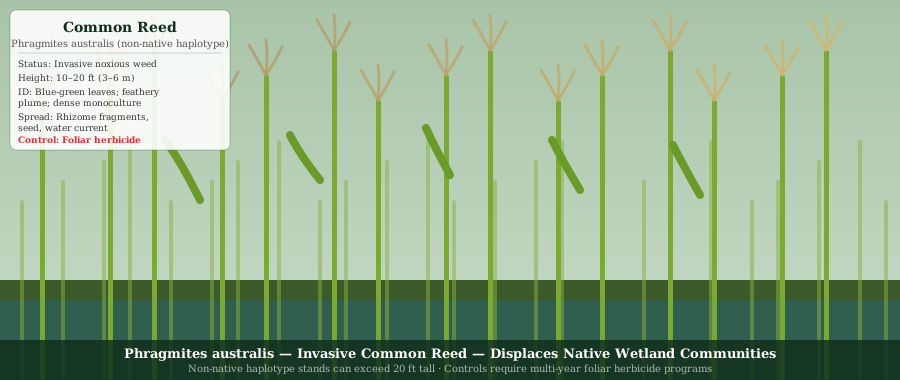
Before any management action, confirm that the Phragmites you are targeting is the invasive non-native lineage, not native North American Phragmites. Morphological features that suggest the invasive lineage include: persistent tan to gray dead stems standing through winter; pure, dense monocultures with no other plant species; smooth, glaucous leaf sheaths; stems reaching 4+ meters. However, morphological identification is not always reliable — genetic testing from a state-certified laboratory is the definitive method. Many state DNR programs offer identification assistance and may require confirmation before issuing treatment permits.
Step 2: Obtain Required Permits
Phragmites management in wetland environments typically requires permits under multiple regulatory programs: a state aquatic herbicide application permit; possibly a Section 404 Clean Water Act permit from the Army Corps of Engineers for mechanical disturbance of jurisdictional wetlands; and state wetland disturbance permits. Applications for management permits should include the species identification evidence, the treatment area boundary, the proposed herbicide(s) and application methods, and an ecological assessment of nearby non-target native plant communities. Allow 4–8 weeks for permit processing. Regulatory requirements →
Step 3: Timing and Herbicide Application
The optimal treatment window for Phragmites management is late summer to fall (August–October in most of the U.S.), when the plant is actively translocating photosynthate to rhizomes in preparation for winter dormancy. Herbicide applied during this translocation period is carried into the rhizome network, maximizing root kill. Spring treatments when plants are actively growing upward are less effective at killing rhizomes.
Primary herbicide tools:
- Imazapyr (Habitat, Arsenal Powerline): Systemic, soil-active herbicide highly effective against Phragmites. Persistent in soil — can injure non-target vegetation for 1+ years at application sites. Most effective as foliar spray in late summer. Requires aquatic registration.
- Glyphosate (Rodeo, AquaMaster): Systemic, non-persistent herbicide. Effective but generally requires higher rates than imazapyr for comparable Phragmites control. Less risk of residual soil activity. Often combined with imazapyr for enhanced control.
Step 4: Post-Treatment Litter Management
After a successful fall or early spring herbicide treatment, dead Phragmites stems and the deep litter layer (20–50 cm thick in established stands) remain and can prevent native plant regeneration for years. Mowing or burning in the following season (after the kill is confirmed) reduces the litter barrier and opens the site for native plant seed germination or transplanting. Controlled burning is often the most cost-effective litter removal approach for large stands, but requires appropriate permits and conditions.
Step 5: Native Plant Restoration
After Phragmites control and litter removal, native plant restoration is critical for long-term success. Without active restoration, invasive Phragmites may return from the seed bank, and non-target invasive species may colonize the disturbed areas. Immediate seeding or transplanting with native wetland plants (cattails, blue flag iris, native sedges, rushes, or regionally appropriate wetland mixes) after litter removal significantly improves restoration outcomes.
Multi-Year Monitoring and Follow-up
Even a successful first-year treatment rarely achieves complete control. Expect 20–40% resprouting in the second growing season from surviving rhizome tissue, seed bank germination, and re-invasion from adjacent untreated stands. Annual monitoring (April–May) and targeted retreatment of resprouting areas is essential for 3–5 years. Track treatment areas with GPS and photographic documentation.
Frequently Asked Questions
Can I burn Phragmites to control it?
Fire alone is not an effective control for invasive Phragmites — the plant resprouts vigorously from rhizomes after burning, and burning without herbicide treatment typically stimulates denser regrowth. However, burning is an effective and widely used tool for removing dead stems and litter after a successful herbicide treatment has killed the plants. In this integrated role — fire following herbicide — burning significantly reduces the litter layer that prevents native plant regeneration. Spring burning (March–April) of dead herbicide-killed stems is a common practice in Great Lakes and Atlantic Coast Phragmites management programs.
How long does Phragmites management take?
Realistic Phragmites management programs require 3–7 years of sustained effort for large established stands, including initial herbicide treatment, litter removal, native plant restoration, and multi-year monitoring and retreatment. Smaller or recently established populations can be controlled in 2–3 years with consistent effort. The largest, most established monocultures (50+ acres) require ongoing management programs with annual monitoring and targeted retreatment for the foreseeable future.