How Emergent Plants Fill In Open Water
Shoreline encroachment by emergent aquatic plants is one of the most common and most misunderstood processes in lake and pond management. Many water body owners observe their shoreline gradually filling in with cattails, bulrush, phragmites, or other emergent plants year after year, but don't understand the mechanism driving the change or the management options for addressing it. This guide explains the ecology of shoreline encroachment and the evidence-based approaches for managing it.
The Encroachment Process
Emergent plant encroachment follows a predictable sequence in most lake and pond environments:
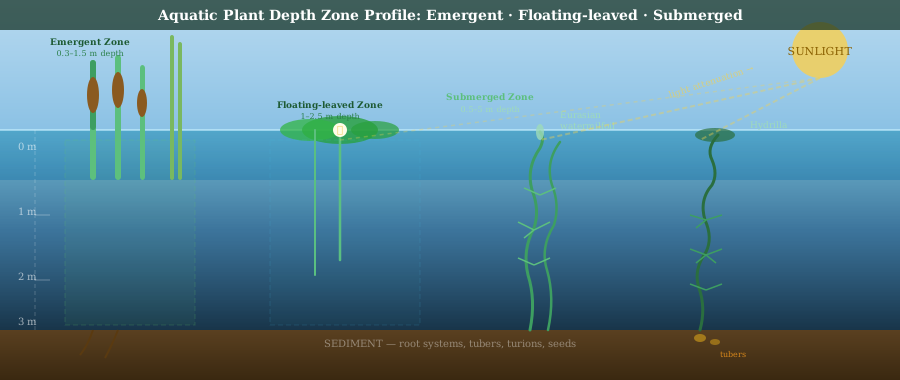
- Establishment in shallow margins: Emergent plants colonize shoreline areas in 0–1 meter water depth, where light reaches the sediment and rooting is feasible. Initial establishment is often from seeds dispersed by wind or waterfowl, or from rhizome spread of adjacent colonies.
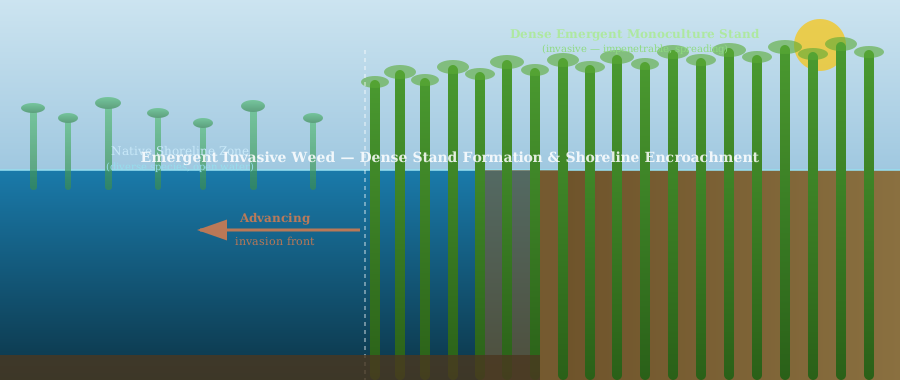
- Rhizome expansion: Once established, cattails, phragmites, and bulrush spread laterally through underground rhizomes that extend into adjacent water and soil. Rhizome growth rates of 1–4 meters per year are common. Over 5–10 years, a single established plant can colonize 50–100 square meters of shoreline.
- Sediment accumulation: Dense emergent plant stems slow water movement, causing suspended sediment to settle around plant bases. This sediment accumulation raises the lake bottom in the emergent zone, creating conditions suitable for plant growth in progressively deeper water — effectively "building out" the shoreline.
- Litter accumulation: Dead stems and leaf material accumulate as organic matter (peat) in the emergent zone, further raising the sediment surface and creating conditions favorable for expansion of the emergent community into what was formerly open water.
Nutrient Loading Accelerates the Process
In nutrient-enriched (eutrophic) water bodies, the encroachment process is dramatically accelerated. Higher phosphorus and nitrogen availability directly increases emergent plant growth rates and rhizome extension rates. Increased turbidity from algal blooms associated with eutrophication reduces light availability in open water, making conditions relatively more favorable for emergent plants (which access light above the surface) compared to submerged plants. Over time, nutrient loading shifts the competitive balance toward emergent dominance. Nutrient effects on plant growth →
Ecological Perspectives on Shoreline Encroachment
From a purely ecological perspective, emergent plant encroachment is not inherently negative — it represents the natural process of wetland succession (the transition of open water to shallow marsh to wet meadow that occurs over geological time in all lakes). Native emergent plant communities provide high-quality wildlife habitat, shoreline stabilization, and nutrient filtering. The encroachment becomes a management problem when it is dramatically accelerated by human-caused nutrient loading, when it involves invasive non-native species (like Phragmites), or when it conflicts with specific water body uses.
Management Approaches
Managing shoreline encroachment involves addressing both the immediate plant growth and the underlying drivers:
- Nutrient management (primary): Reducing phosphorus and nitrogen loading from the watershed reduces the growth rates driving encroachment. This is the only sustainable long-term solution.
- Mechanical removal: Cutting or harvesting emergent plants provides temporary suppression and access restoration. For native species, cutting alone rarely achieves long-term results because rhizomes are not killed. For non-native species like Phragmites, mechanical removal without herbicide pretreatment is insufficient.
- Herbicide treatment: Systemic herbicides (imazapyr, glyphosate) kill the rhizome network when properly applied — far more effective than cutting alone for long-term control. Requires permits and professional application in wetland environments.
- Water level management: Lowering water levels in fall exposes rhizomes to freezing and desiccation, reducing stand density in northern climates. Raising water levels to flood established plants deeply during the growing season can suppress some emergent species.
Frequently Asked Questions
How quickly can emergent plants fill in a small pond?
In heavily nutrient-enriched conditions with aggressive species (cattails, invasive Phragmites), small ponds (less than 2 acres) can transition from mostly open water to predominantly emergent-dominated within 10–20 years without management intervention. In less eutrophic conditions with native species at natural growth rates, the process may take 50–100 years. The rate depends strongly on nutrient loading, initial colonization density, and the specific species involved.
Should I remove emergent plants from my pond shoreline?
It depends on your goals and the species involved. A narrow band of native emergent plants (cattails, bulrush, wild rice) along 20–30% of the shoreline provides wildlife habitat, stabilizes the bank, and filters nutrients — these benefits argue for retaining some native emergent margin. If native emergent plants are expanding to impair specific uses or if invasive Phragmites is present, targeted management is warranted. Complete removal of all emergent vegetation typically reduces wildlife value and increases bank erosion. Consulting with your state fish and wildlife agency or a certified lake management professional before major management actions is advisable.