Why Timing Matters in Aquatic Weed Management
Aquatic weeds are not static — they cycle through predictable seasonal phases of germination, exponential growth, peak biomass, reproduction, senescence, and dormancy. Each phase has distinct biological characteristics that determine which management methods are effective, what side effects are likely, and what ecological outcomes can be expected. Treating a weed at the wrong phase of its seasonal cycle wastes money (poor efficacy) and misses the management window that would have the greatest long-term impact on population suppression.
The fundamental principle: treat during active growth, before peak reproductive output. During active growth phases, plants are metabolically active and translocating photosynthate — this is when systemic herbicides are most efficiently distributed to root systems for root kill. Before peak reproductive output means before tubers, turions, or seeds form in abundance — controlling plants before they produce next year's propagule bank has disproportionate long-term benefit compared to controlling the same plants after propagule formation.
Spring: The Critical Management Window
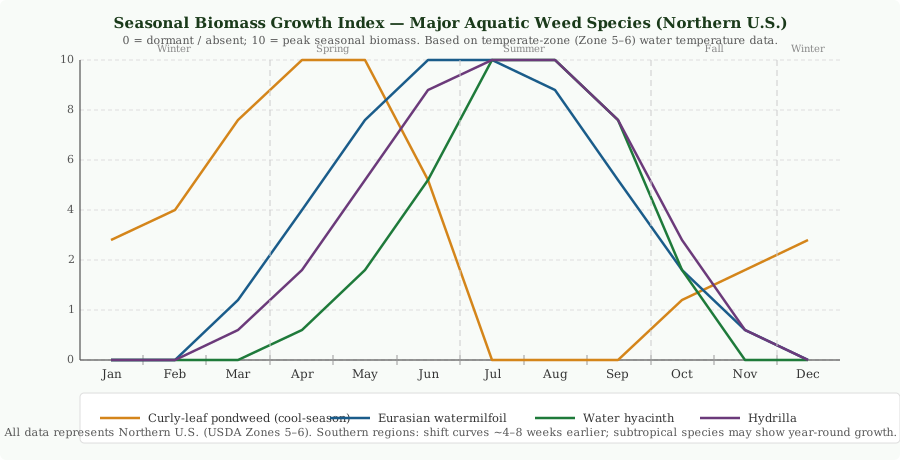
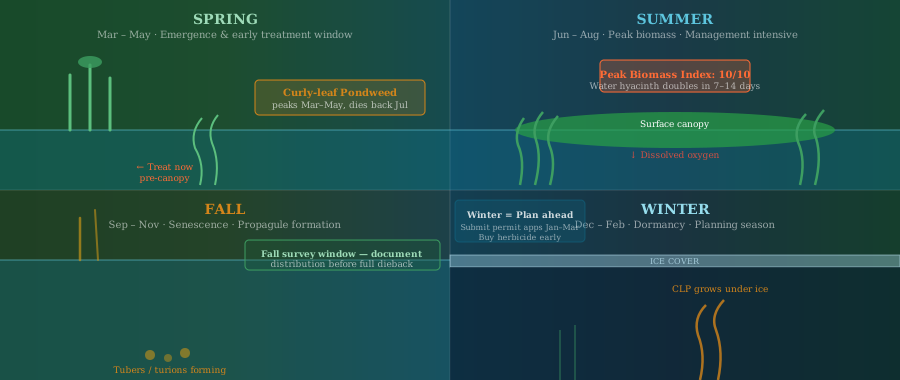
Spring is the most consequential season for aquatic weed management. Invasive plants like Eurasian watermilfoil and curly-leaf pondweed emerge from winter dormancy earlier than most native plants, establishing a competitive advantage through early-season light monopoly. In northern states, curly-leaf pondweed is actively growing under ice in February while native plants are fully dormant — by April, it has built a substantial canopy while natives are still emerging.
Early-season herbicide treatment (before plants reach the surface canopy, typically when plants are 30–60 cm tall) achieves better herbicide distribution through the plant, better root kill from systemic products, and prevents the formation of early-season propagules. Spring monitoring — plant surveys in April and May — provides the data needed to make timely treatment decisions and submit permit applications before the optimal treatment window opens. Spring growth patterns →
Summer: Peak Biomass and Management Challenges
Summer is the season of maximum biomass in most invasive aquatic plant species. By July and August, dense weed beds reach from sediment to water surface in the littoral zone, forming unnavigable mats in severe cases. Dissolved oxygen fluctuates dramatically — high in the afternoon from photosynthesis, crashing before dawn as respiration consumes the oxygen produced during the day. Recreational impairment is at maximum. Management during this season must address both immediate access needs and the longer-term ecological trajectory.
Summer herbicide treatment is effective but carries the highest risk of post-treatment oxygen depletion from the large biomass that dies and decomposes simultaneously. Large water bodies should be treated in sections (treating 30–50% of the lake at once, with 2–4 week intervals between sections) to limit the mass of decomposing material at any one time. Mechanical harvesting maintains access in priority areas while herbicide programs work on the broader infestation. Summer management guide →
Fall: Senescence and Critical Propagule Production
As days shorten and water temperatures drop below 15–20°C in autumn, most aquatic weeds begin the process of senescence — the seasonal die-back of above-ground growth. This natural senescence can create confusion: lake managers observing declining weed coverage in October might conclude the problem is resolving itself, when in fact the plants are simultaneously producing tubers, turions, and seeds at maximum rates before die-back.
Fall is when the propagule bank for next year's population is built. In hydrilla, maximum tuber production occurs in September–November in most management areas. Management interventions in early fall that can prevent tuber formation have disproportionate benefit compared to equivalent late-summer or spring treatments. Late fall is also the optimal window for emergent plant treatment (cattails, Phragmites) — foliar herbicide applied in September–October is translocated most efficiently into rhizomes just before rhizome nutrient storage for winter, producing the best root kill. Fall management guide →
Winter: Dormancy and Cool-Season Species
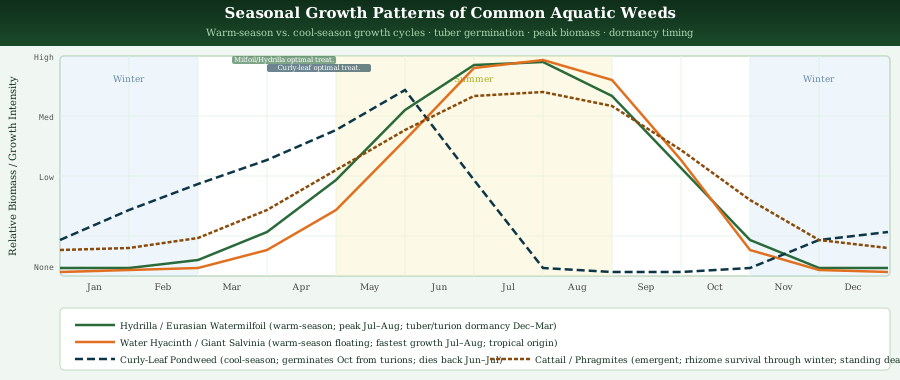
For most invasive aquatic plants, winter is a dormancy period with no above-ground growth. However, cool-season species (curly-leaf pondweed, some macroalgae) actively grow under ice — their competitive window is precisely this period when all other plants are dormant. Water temperatures under ice (1–4°C) are optimal for curly-leaf pondweed, which can build substantial biomass through winter before emerging aggressively in late February–April.
Winter is the season for planning, not treating. Review the current season's monitoring data, refine management goals, submit permit applications for the upcoming growing season, contract management services, and schedule equipment maintenance. The management decisions made in February determine whether the upcoming season's program starts on time (and cost-effectively) or scrambles to respond in May when biomass is already unmanageable. Winter dormancy guide →
Seasonal Guides by Season
- → Spring Growth Patterns
- → Summer Peak Biomass
- → Fall Dieback and Management Timing
- → Winter Dormancy
Multi-Species Seasonal Conflicts
Water bodies infested with both warm-season and cool-season invasive species present a management complexity: the optimal treatment windows for the two groups are separated by months, require different products and timing, and may compete for budget in the same program year. A lake with both hydrilla (warm-season, treat May–September) and curly-leaf pondweed (cool-season, treat March–April) requires two treatment events per year timed months apart. Understanding the seasonal biology of every species present is the prerequisite for designing a treatment calendar that addresses each at its moment of maximum vulnerability.
Frequently Asked Questions
When is the best time of year to treat aquatic weeds?
The optimal treatment time depends on the target species and the control method. For most submerged invasive plants (hydrilla, Eurasian milfoil), early spring treatment (before plants reach the surface canopy) with systemic herbicides produces the best efficacy and prevents early-season reproductive output. For emergent plants (cattails, Phragmites), late summer or early fall foliar treatment provides the best rhizome kill. For floating plants (water hyacinth, duckweed), treatment can be effective throughout the growing season, but early treatment before population doubling events in warm weather is most cost-effective. Consult your state cooperative extension program for species-specific treatment timing recommendations for your region.
What grows in water during winter?
Curly-leaf pondweed is the primary invasive aquatic plant that grows actively during winter — including under ice in northern states. It emerged as a management challenge in Minnesota and Wisconsin lakes specifically because of its cool-season growth advantage, which allows it to dominate the water column in early spring before native plants emerge. Some macroalgae (Chara, Nitella) also maintain winter growth. Most other invasive and native aquatic plants are dormant from freeze-up through early spring.
Why do aquatic weeds grow so much faster in summer than spring?
The dramatic summer acceleration in aquatic weed growth is driven by the intersection of three factors all reaching their peak simultaneously: water temperature (warmer water increases metabolic and enzymatic reaction rates, doubling growth rate for every 10°C rise above threshold), photoperiod (longer daylight hours mean more hours of photosynthesis per day), and nutrient availability (summer stratification concentrates nutrients in warm surface water, and internal nutrient recycling from sediments accelerates). For floating species like water hyacinth and duckweed, population doubling times of 7–14 days are possible under peak summer conditions — a single acre of water hyacinth can expand to cover 2 acres in two weeks without intervention.
Does killing aquatic weeds in fall prevent them from coming back next year?
Fall treatments have limited value for most perennial aquatic weed species because plants are already transitioning to dormancy — aboveground biomass is declining naturally, root systems and propagule banks are already established, and the season's reproductive output (tubers, seeds, turions) has already occurred. The propagule bank in the sediment is what drives next year's growth, not the aboveground plant material. The most effective investments for the following year are spring pre-treatment monitoring (to identify target areas before the optimal treatment window), fall monitoring and survey documentation (to plan next year's program), and for some species, fall root-zone herbicide application specifically targeting root systems before full dormancy.