Winter: Rest — But Not for the Propagule Bank
At first glance, winter appears to be a management reprieve — the lakes are frozen, the visible aquatic weed mats are gone, and the problem seems to have resolved itself. This impression is misleading. While above-ground biomass of most warm-season species has indeed disappeared, the propagule bank in the sediment — tubers, turions, seeds, and dormant root crowns — is fully charged and ready to generate next year's infestation. Winter is not the management solution it appears to be. It is, however, a period when certain specific management tools (drawdown, frozen lake access) can be deployed, and an important planning and preparation window for the following season.
How Aquatic Weeds Survive Winter
Tubers (Hydrilla)
Hydrilla tubers are the most management-resistant overwintering propagule among U.S. aquatic weeds. They are starch-filled, metabolically dormant underground structures 5–15 mm in diameter located 5–30 cm below the sediment surface. They are insulated from cold by the overlying sediment and water, which rarely freezes below a few centimeters depth even in severe winters. Tubers remain viable for 4+ years in sediment, surviving: standard herbicide treatments (which cannot reach dormant propagules); mechanical harvesting (which removes above-ground biomass but not tubers); and winter drawdowns (unless the sediment is exposed to sufficient freezing and drying to desiccate tubers in the upper sediment layer). This remarkable persistence is the primary reason hydrilla management requires multi-year sustained programs.
Turions (Hydrilla, Curly-leaf Pondweed)
Turions are compact, dormant vegetative buds that overwinter in the sediment. Hydrilla turions are small (2–5 mm), dense, cone-like structures produced in leaf axils that detach in fall and sink to the sediment. Curly-leaf pondweed turions are larger (10–25 mm), harder, somewhat spiny structures produced in spring and early summer. Both types are metabolically dormant during winter and are not reached by aquatic herbicides at normal treatment concentrations. Hydrilla turions germinate in spring when water temperatures warm; curly-leaf pondweed turions germinate in late summer–fall to begin the cool-season growth cycle.
Overwintering Root Crowns (Eurasian Watermilfoil, Emergent Weeds)
Eurasian watermilfoil overwinters as a perennial plant — root crowns remain metabolically active in the sediment through winter, even when all above-ground stems are dead or absent. In spring, new shoots emerge from these overwintering crowns and begin the season's growth. Emergent species (cattails, Phragmites, alligator weed) similarly overwinter in rhizomes below the frost line, with extensive underground reserves that fuel spring regrowth. Even when above-ground emergent stems are burned or frozen, rhizome systems can support complete regeneration the following season.
Seeds
Many aquatic weeds produce seeds that remain viable in sediment for years. Water hyacinth seeds can remain viable for up to 30 years in sediment. Even species that primarily spread vegetatively may have seed banks that allow recovery after complete elimination of above-ground and propagule material — one of the reasons eradication of established populations is so difficult.
Curly-leaf Pondweed: Growing Through Winter
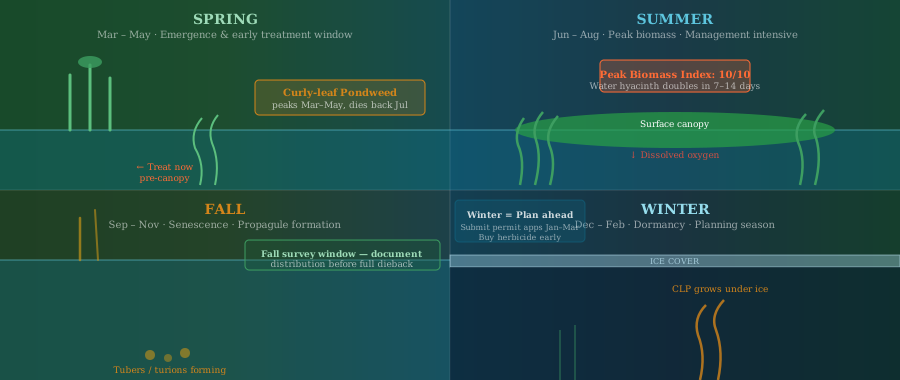
Curly-leaf pondweed is the notable exception to winter dormancy — it grows actively through winter, even under ice. From turions germinated in late summer–fall, small curly-leaf pondweed plants grow slowly through the coldest months and are already 15–30 cm tall by late winter before ice-out. See the spring growth patterns guide for management timing implications.
Winter Management Tools
Water Level Drawdown
Winter drawdown — reducing water levels in regulated lakes to expose the shallow littoral zone to winter air temperatures — is the most effective winter management tool for certain propagule types. Curly-leaf pondweed turions exposed to repeated hard freezes and drying show significantly reduced viability. Hydrilla tubers in the exposed upper sediment layer can be killed by exposure to freezing temperatures, though deeper tubers may survive. Effective drawdown requires: exposing the 0–1.5 meter depth zone (where most propagules are concentrated); maintaining exposure through at least 4–6 hard freeze events (temperatures below -5°C); and refilling before the spring growing season begins. Drawdown is only applicable in regulated impoundments with controllable water levels. Permits from state and federal agencies are required. Environmental impact assessment is needed for impacts on fish spawning, waterfowl habitat, and wetland vegetation.
Planning and Permit Applications
Winter is the ideal planning period for the following season's management program. Use winter months to: analyze the previous season's monitoring data; identify what worked and what didn't; draft the management plan for the coming year; submit permit applications (many states have permit application deadlines in January–March for spring treatment); purchase herbicides, aeration equipment, or other management materials; and train staff and volunteers in treatment protocols and Clean-Drain-Dry procedures. A management program that enters spring fully planned and permitted — with herbicide purchased, contracts in place, and monitoring scheduled — will consistently achieve better outcomes than one that begins planning in April or May. See the management planning hub for complete guidance.
References
- Harlan, S.M., et al. (1985). Hydrilla tuber longevity. Journal of Aquatic Plant Management 23:25–27.
- Madsen, J.D. (2000). Aquatic weed management in practice. Journal of Aquatic Plant Management 38:75–82.
Regional Variation in Winter Dormancy
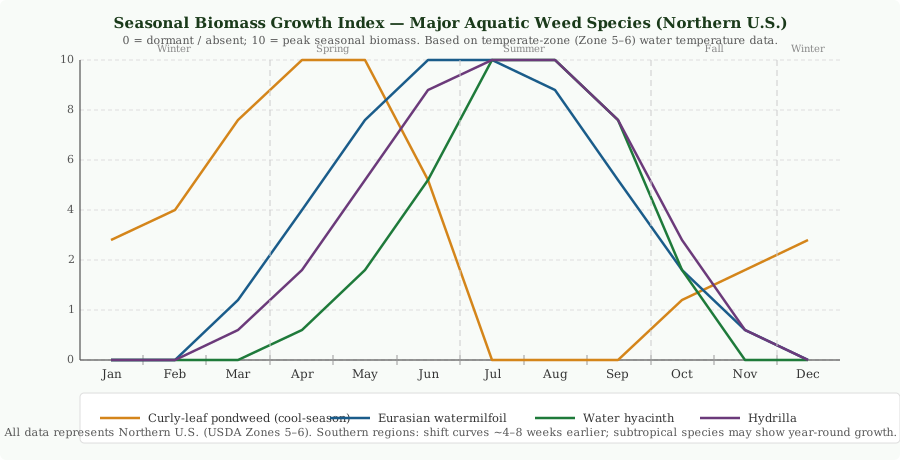
Winter dormancy patterns differ sharply across U.S. climate zones, and what constitutes "winter" for aquatic weed management purposes varies from near-complete cessation of growth in the northern tier to a reduced-intensity continuation of year-round management in the Gulf South:
- Zone 3–4 (northern Minnesota, Wisconsin, Maine): Lakes freeze in November–December and remain frozen through March–April. All warm-season aquatic weed growth is completely absent. Only curly-leaf pondweed grows under ice, and it is inaccessible to management. Winter is purely a planning and permitting period. Ice thickness may permit physical access to the lake for equipment staging but provides no treatment opportunities.
- Zone 5–6 (most of Midwest and Northeast): Lakes freeze intermittently or shallowly. Water temperatures 0–5°C. Warm-season species dormant; CLP slow but active growth. Planning and permit application season. Some late-fall (November) herbicide applications possible if water is still open and temperatures adequate for herbicide activity.
- Zone 7–8 (mid-Atlantic, Southeast transition, Pacific Northwest): Water temperatures 5–12°C. Warm-season species dormant or very slow growing. CLP actively growing. Herbicide treatment for CLP possible in favorable years. February–March represents the earliest possible pre-season treatment for milfoil in transitional zones.
- Zone 9–10 (South Florida, Gulf Coast, Central California): No true winter dormancy for most invasive species. Water temperatures 12–20°C throughout winter. Water hyacinth, alligator weed, and hydrilla maintain reduced but ongoing growth. This is the optimal winter treatment window for pre-season management before spring growth acceleration.
The Winter Planning Cycle — Maximize Next Season's Outcomes
For programs in zones 3–7, where winter provides a genuine management break, the winter months are the highest-leverage planning period of the year. Activities completed in winter that directly determine next season's management outcomes:
- Permit application submission: Most state aquatic plant management permits require 45–90 days of lead time. For a May 1 treatment target in the Midwest, applications must typically be submitted by February 1–March 1. Missing the permit submission deadline forces treatment into a suboptimal later growth stage. See: permit requirements by state →
- Herbicide and equipment procurement: Herbicide supply chains can tighten in late spring when demand spikes. Winter purchasing ensures availability and locks in pricing. Equipment maintenance (boat engines, pump systems, spray equipment) completed in winter avoids breakdowns during the short optimal treatment window.
- Management plan development and stakeholder engagement: Multi-year management plans that require board approval, lake association votes, or cost-sharing agreements must be developed and approved before the season begins. Winter provides the time for this process without the time pressure of active management. See: Management planning hub →
- Staff and volunteer training: Treatment applicators, volunteer monitors, and boat inspection staff trained during winter are fully prepared when the season opens. Training in identification, treatment protocols, Clean-Drain-Dry inspection, and monitoring survey methods is most effective when done calmly before the season rather than rushed during it.
Propagule Bank Biology in Winter
Understanding what is happening beneath the ice during winter explains why spring management must begin the moment growth conditions are met, rather than waiting for visible biomass to develop:
- Hydrilla tubers: Dormant in the sediment, viable for up to 4 years. Each tuber can produce a new shoot the following spring when sediment temperatures rise above 15°C. A fully developed hydrilla tuber bank in a 50-acre lake may contain millions of individual tubers per acre of sediment.
- Milfoil root crowns: Metabolically active throughout winter, even under ice. New shoot buds are formed on overwintering crowns during winter, ready to extend into the water column immediately at ice-out.
- Curly-leaf pondweed turions: Already germinated in fall, producing small actively-growing rosettes that are 15–30 cm tall at ice-out — having accumulated 3–4 months of growth before any other species begins to emerge.
This propagule bank reality explains why management programs that skip a season — due to budget cuts, missed permits, or pandemic-era disruptions — invariably see significant infestations return within one or two seasons. The seed bank is patient; management programs must be consistent. See aquatic weed biology hub for more on propagule persistence.