The Hidden World Below: How Submerged Weeds Transform Aquatic Environments
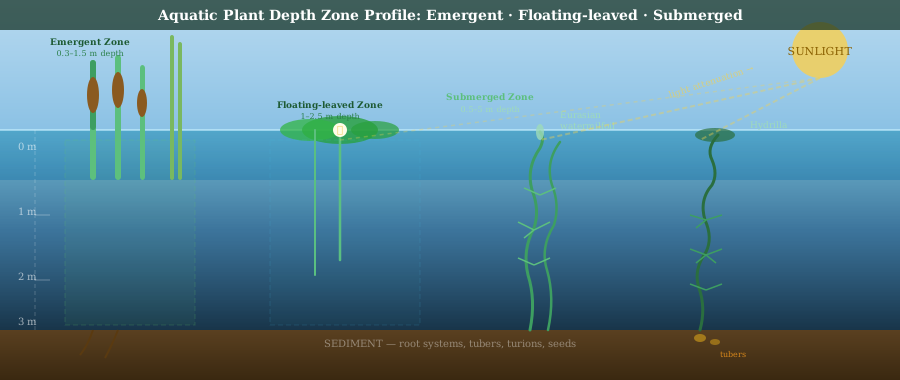
The impacts of submerged aquatic weeds are not immediately visible to most water users — the problem lies beneath the surface, invisible until boats stall, fish kills occur, or recreational access collapses. But the cascade of changes that submerged weeds drive in a water body's ecology can be profound and long-lasting, fundamentally altering water quality, dissolved oxygen, temperature, species composition, and the economic value of affected water bodies.
Physical and Chemical Water Quality Changes
Dense submerged weed beds alter the physics and chemistry of the water column through several interconnected mechanisms:
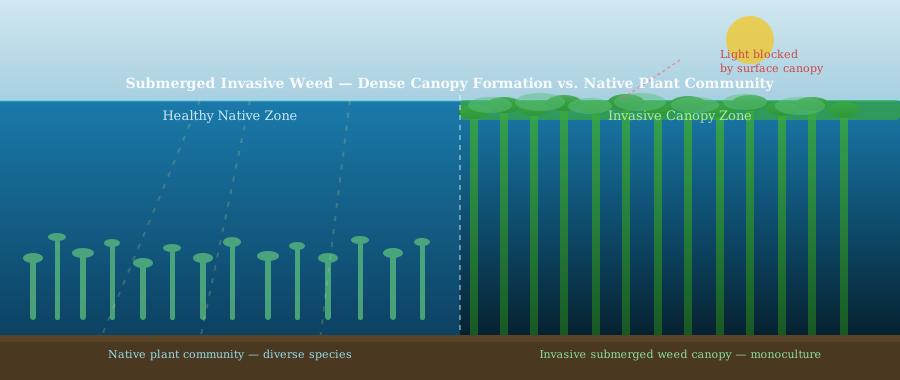
- Light attenuation: Dense surface canopies formed by hydrilla, Eurasian milfoil, and other canopy-forming species intercept 80–99% of sunlight before it reaches the water below. This light exclusion eliminates native lower-growing submerged plants, kills rooted plants at depth, and changes the distribution of phytoplankton in the water column.
- Oxygen dynamics: During daylight hours, dense submerged weed beds produce large quantities of dissolved oxygen through photosynthesis, sometimes supersaturating the surface layer. At night, the same plant mass consumes oxygen through respiration, creating a characteristic daily oxygen cycle: high in the afternoon, crashing before dawn. In heavily weeded water bodies, this nighttime oxygen sag can reach critically low levels (below 3 mg/L) that stress fish and invertebrates.
- pH shifts: Photosynthesis consumes dissolved CO₂, driving afternoon pH to 9–11 in heavily weeded lakes. At night, CO₂ accumulates and pH drops. These daily pH swings of 2–3 units stress fish, invertebrates, and native plants. Some native species cannot tolerate sustained pH above 9.
- Temperature stratification: Dense submerged weed beds reduce water mixing and can alter thermal stratification patterns, with implications for dissolved oxygen distribution and the available depth of cold water refuge for cool-water fish species in summer.
Biodiversity and Food Web Impacts
The most ecologically significant long-term impact of submerged weed invasions is the displacement of native plant communities. A healthy northern lake might support 20–35 species of native submerged and floating aquatic plants. When invasive hydrilla or milfoil establishes at high density, this diverse community is progressively replaced by a near-monoculture dominated by the invasive species.
This plant diversity loss propagates through the food web: the diverse invertebrate communities associated with complex native plant assemblages decline as native plant structure simplifies. Fish that depend on diverse invertebrate food sources and on the structural complexity of native plant beds for spawning, juvenile refuge, and ambush feeding are affected. Water quality functions provided by diverse native vegetation — sediment stabilization, nutrient cycling, oxygenation across multiple depth zones — are impaired. The end result can be a biologically impoverished, functionally degraded system from which recovery — even after weed control — takes multiple years. Fish and wildlife habitat effects →
Navigation and Economic Impacts
Propeller entanglement in dense submerged weed canopies is the most commonly reported direct user impact. Even species that don't form thick floating mats — like coontail or pondweed — can tangle boat propellers when stems reach the surface. Motor damage from aquatic vegetation entanglement is a significant maintenance cost for waterfront property owners and commercial fishing and tourism operations. Property values adjacent to heavily weeded water bodies are documented to decline by 10–30% in economic studies — a direct financial harm to riparian property owners.
Post-Control Recovery
After successful weed control, water body recovery is not automatic. Depending on the duration of the infestation and the extent of native plant community displacement, active restoration may be needed. Nutrient levels need to be reduced to prevent the conditions that favored the invasive species. Native plants may need to be reintroduced if their seed banks and vegetative propagule banks have been depleted. Monitoring must continue for regrowth. Recovery timelines in documented case studies range from 2–10 years for full restoration of native plant community diversity after successful invasive submerged weed management. Management planning →
Frequently Asked Questions
Can submerged weeds harm drinking water quality?
Yes. Dense submerged plant beds can affect drinking water quality in several ways: the pH fluctuations driven by weed photosynthesis affect taste and the chemistry of water treatment; geosmin and 2-methylisoborneol (2-MIB) released by decomposing plant material and associated cyanobacteria cause earthy, musty taste and odor in treated water; nutrient release from decaying weed biomass fuels cyanobacterial blooms, some of which produce cyanotoxins that require advanced treatment to remove. Water utilities drawing from weed-infested surface water sources often face increased treatment costs and taste-and-odor complaints when aquatic weed biomass dies back.