Light and Temperature: The Master Controls of Aquatic Weed Growth
Light availability and water temperature are the two most fundamental environmental parameters controlling aquatic weed growth, distribution, and seasonal timing. Every management decision — from treatment timing to species-specific control selection to understanding why infestations are concentrated in specific areas of a lake — ultimately traces back to light and temperature dynamics. Understanding these relationships allows managers to predict where and when growth will be most severe and to time management interventions at the moments of maximum plant vulnerability.
Light in the Aquatic Environment
Light availability in aquatic systems is far more limiting than in terrestrial environments. Water absorbs and scatters light across all wavelengths, and even relatively clear lake water attenuates light intensity by 10–20% per meter depth. In turbid or tannin-stained water, effective photosynthetically active radiation (PAR) may reach only 1–5% of surface levels within 2–3 meters. The depth at which PAR falls below the compensation point — the light level required to sustain positive net photosynthesis — defines the maximum colonization depth for submerged aquatic plants, known as the compensation depth.
In productive (eutrophic) lakes with high phytoplankton biomass, turbidity restricts submerged plant growth to depths of less than 1–2 meters. In oligotrophic or mesotrophic lakes with good water clarity, submerged plants can colonize to depths of 6–8 meters or more. This water clarity-depth relationship explains why nutrient loading that drives phytoplankton blooms simultaneously restricts rooted submerged plant distribution — and why nutrient management programs can inadvertently lead to increased submerged weed problems as water clarity improves. Nutrient loading dynamics →
How Invasive Species Exploit Light
Many invasive aquatic weeds have evolved specific adaptations that provide competitive advantages in light-limited environments:
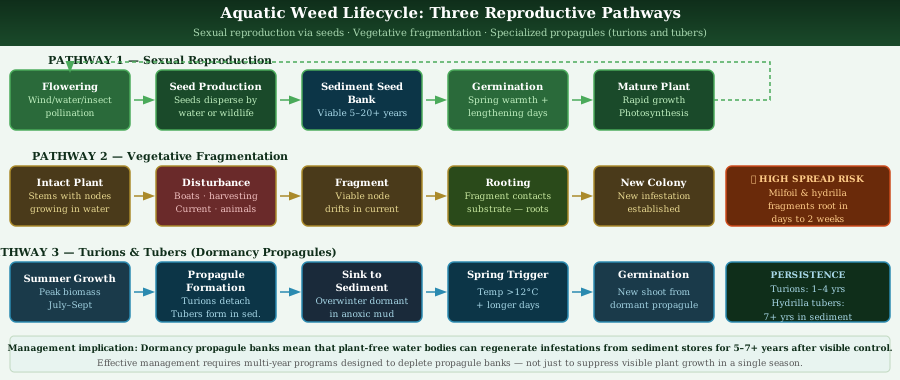
- Rapid vertical elongation: Hydrilla and Eurasian milfoil grow rapidly toward the surface (2–3 cm/day for hydrilla under optimal conditions), creating a canopy layer that captures surface light and shades native submerged species below. Once a dense surface canopy is established, native species lower in the water column are excluded by the shade from above — the invasive species has captured the light resource completely.
- Low light compensation point: Hydrilla in particular has been documented growing at light levels as low as 1% of surface radiation — significantly below the compensation point of most native submerged plants. This allows hydrilla to colonize deeper water and to persist under higher turbidity conditions where native competitors cannot survive. It is a primary competitive advantage of hydrilla over native vegetation in many systems. Hydrilla competitive ecology →
- Cool-season activity: Curly-leaf pondweed germinates in fall and grows actively during winter — when the light environment is less competitive because native plants are dormant. By spring, curly-leaf has built a large biomass that gives it a competitive head start. Curly-leaf pondweed strategy →
Temperature Effects on Growth Rates
Aquatic plant metabolic rates follow the same general biological temperature response as other living organisms: enzymatic activity and biochemical reaction rates approximately double with each 10°C increase (the Q₁₀ rule), up to the temperature optimum for each species. Most problematic invasive species in U.S. waters have temperature optima in the 25–35°C range and are therefore classified as warm-season species with peak growth in midsummer.
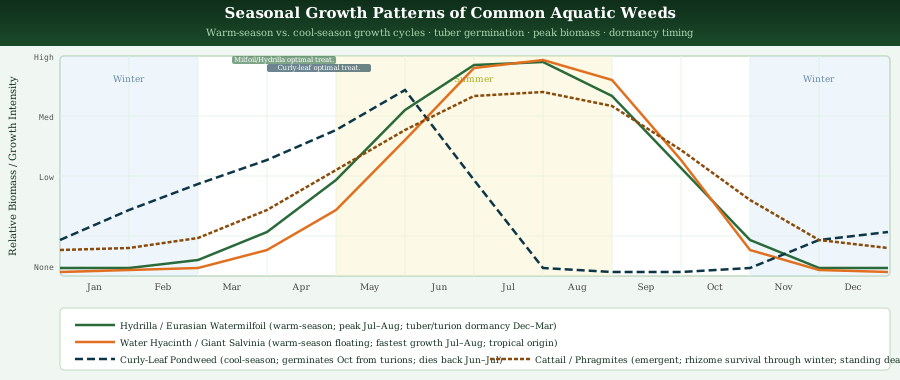
- Warm-season species: Hydrilla, water hyacinth, water lettuce, giant salvinia, alligator weed, and most milfoil species have minimum growth thresholds of approximately 10–15°C and peak growth at 25–30°C. In the southern U.S., where water temperatures exceed 25°C for 6–9 months per year, these species can achieve their full reproductive potential. In northern states, the growing season is compressed into 3–4 warm months, limiting but not eliminating their impact. Summer growth patterns →
- Cool-season species: Curly-leaf pondweed and some Potamogeton species grow actively at temperatures as low as 4°C and have competitive advantages in cold water. They exploit the winter and early spring window when warm-season competitors are dormant. Their summer die-back at temperatures above 25°C is an unusual trait among aquatic plants.
Practical Implications for Treatment Timing
The relationship between temperature and growth rate has direct management implications:
- Herbicide treatment timing: Systemic herbicides are most effective when plants are actively translocating carbohydrates from leaves to roots — which occurs most actively during rapid growth phases and during the late summer transition to dormancy. Treating hydrilla in late spring through early summer, when plants are growing rapidly and actively translocating, provides maximum systemic kill. Fall treatment targets late-season translocation that moves herbicide-contaminated photosynthate to root systems and developing propagules. Herbicide timing guide →
- Curly-leaf pondweed treatment: Because this species dies back naturally in late spring/early summer, early spring treatment (March–April) targeting the peak biomass before natural die-back is the critical treatment window. Treatment after the natural die-back in June–July has minimal effect and misses the season entirely.
- Winter drawdown timing: Water level manipulation (drawdown) for control of rooted submerged species must be timed to expose root zones to frost conditions — effective only in climates with sustained below-freezing temperatures sufficient to penetrate the sediment surface. The minimum frost penetration depth needed to kill hydrilla tubers (2–5 cm below sediment surface) requires extended cold periods not achievable in southern states.
Frequently Asked Questions
Why are aquatic weed problems worse in summer?
Warm-season aquatic weeds have growth rates that are approximately proportional to water temperature up to their thermal optimum (typically 25–30°C). Midsummer water temperatures in the littoral zone of southern and midwestern lakes routinely reach 25–30°C — the optimal growth range for most problematic invasive species. Additionally, summer brings the longest daylength (maximum photoperiod), providing the most available light energy for photosynthesis. The combination of warm temperature, long days, and high light intensity creates the maximum possible growth rate. This is why annual treatment timing targets the period just before or at the beginning of maximum summer growth, when a treatment can interrupt the season's main growth pulse.
Does water clarity affect where weeds grow in a lake?
Yes — profoundly. In clear lakes, submerged weeds can colonize depths of 6–8 meters or more because sufficient light penetrates to those depths. In turbid lakes, colonization may be limited to the top 1–2 meters. The implication is that nutrient management that clears the water (reducing phytoplankton) can expand the depth range available for submerged plant colonization — sometimes making weed problems worse in the shallow zones as light reaches previously uncolonized depths. This apparent paradox (clearing the water makes weeds worse) is a real phenomenon that complicates management in some lake systems.
References
- Barko, J.W., and Smart, R.M. (1981). Comparative influences of light and temperature on the growth and metabolism of selected submersed freshwater macrophytes. Ecological Monographs, 51(2), 219–235.
- Canfield, D.E., et al. (1985). Relationships between water transparency and maximum depth of macrophyte colonization in lakes. Journal of Aquatic Plant Management, 23, 25–27.
- Gettys, L.A., et al. (2014). Biology and Control of Aquatic Plants: A Best Management Practices Handbook, 3rd ed. Aquatic Ecosystem Restoration Foundation.
- Kirk, J.T.O. (1994). Light and Photosynthesis in Aquatic Ecosystems, 2nd ed. Cambridge University Press.