Permit Notice: Most aquatic weed control activities require permits from your state's department of natural resources or environmental protection agency. Chemical treatments, biological control introductions, and major mechanical operations require permits in virtually all states. Verify permit requirements before taking any management action. See: Permits and regulatory considerations →
The Foundation: Identify Before You Treat
No management program should begin without accurate species identification. The choice of control method, the specific herbicide or biological agent to use, the timing of treatment, and the realistic management goals all depend on which species are present. Treating the wrong target species wastes resources, may harm native plants, and may violate regulatory requirements.
Before proceeding beyond this page, verify that you have correctly identified the target species using our identification hub. If uncertain, contact your state department of natural resources or university cooperative extension service for identification assistance. Many states offer free plant identification services. See also: Aquatic weeds vs. beneficial native plants →
Mechanical Control
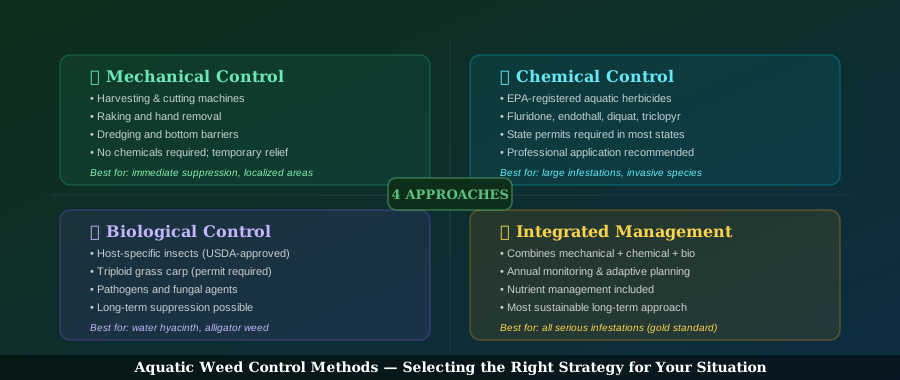
Mechanical control encompasses all physical removal methods — harvesting machines, hand cutting, raking, dredging, bottom barriers, and water level drawdown. Mechanical methods require no chemical inputs, produce immediate results (access restoration), and generate no water use restrictions. However, they are generally labor-intensive, expensive, and temporary — unless paired with other management approaches, regrowth is rapid and repeat treatments are required.
Key mechanical methods include:
- Mechanical harvesters: Self-propelled aquatic plant harvesting machines cut, collect, and remove plant material from the water body. Modern harvesters include conveyor systems that minimize fragment return to the water. Appropriate for navigational channel clearing, access restoration, and localized infestations. Typical capacity: 1–3 acres per day per machine. All harvested material must be properly disposed of on land.
- Hand cutting and raking: Labor-intensive but appropriate for small infestations, areas inaccessible to machinery, and sensitive areas near structures. Hand removal is the only mechanical method that can precisely target invasive plants while leaving native vegetation undisturbed.
- Bottom barriers: Benthic barriers (thick fabric sheets anchored to the sediment) block light and physically prevent plant establishment. Effective for small, localized areas such as swimming areas and boat launches. Must be properly anchored and maintained.
- Water level drawdown: Lowering water levels in fall/winter to expose plant material to freezing temperatures and desiccation. Effective in northern states where hard freezes occur; limited utility in warm-climate states. Requires permission from water control structures.
- Dredging: Removes plant material and nutrient-rich sediment. Expensive, logistically complex, and disruptive, but can provide long-term benefits in shallow, highly eutrophic water bodies by removing the nutrient source that fuels weed growth.
Complete mechanical control guide → | Harvesting vs. herbicides comparison →
Chemical Control
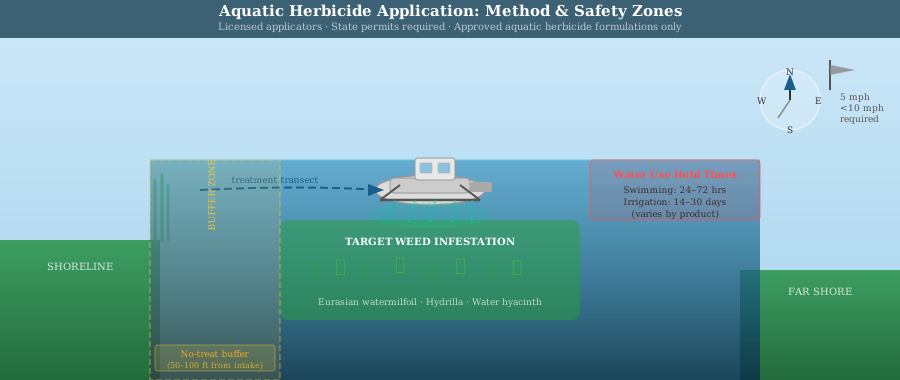
Chemical control uses EPA-registered aquatic herbicides applied to the water column, sediment, or plant surfaces. Aquatic herbicides are among the most cost-effective tools available for managing large or difficult infestations, but their use requires state permits, professional application expertise, label compliance, and careful attention to water use restrictions.
Major aquatic herbicide active ingredients used in the United States include:
- Fluridone: A slow-acting systemic herbicide applied at low, season-long doses. Highly effective against hydrilla, Eurasian watermilfoil, and many floating species. Requires 30–90 days of treatment. Most effective when applied in spring before peak growth. Selective at low dose rates.
- Endothall: A fast-acting contact and systemic herbicide effective against many submerged and floating species. Used as spot treatments and for rapid biomass reduction. Swimming and irrigation restrictions apply following treatment.
- Diquat: A fast-acting contact herbicide effective against floating species (water hyacinth, salvinia, duckweed) and some submerged species. Non-selective; care required near native plants. Water use restrictions apply.
- Triclopyr and fluroxypyr: Selective systemic herbicides effective against Eurasian watermilfoil with reduced effect on native milfoils. Increasingly used for targeted milfoil management in mixed native/invasive settings.
- Imazapyr and glyphosate (aquatic formulations): Systemic herbicides used primarily for emergent species (Phragmites, alligator weed) and riparian applications. Fall application when plants are translocating photosynthate to rhizomes is most effective.
- Penoxsulam and bispyribac-sodium: Systemic herbicides with activity against hydrilla, aquatic grasses, and some emergent species. Used in warm-climate states.
All aquatic herbicide use requires reading and following the complete product label — the label is the law. Misapplication, label violations, and untreated water use restriction violations can result in regulatory penalties and liability. Professional application by licensed applicators is strongly recommended for all but the smallest treatments. Complete aquatic herbicide guide → | Permit requirements →
Biological Control
Biological control uses living organisms — insects, pathogens, and herbivorous fish — to suppress aquatic weed populations. Biological approaches have the advantage of potentially providing long-term, self-sustaining suppression without repeated chemical or mechanical inputs. However, they are slow-acting, work best in warm climates, and require careful regulatory approval and monitoring to prevent unintended ecological effects.
Major biological control tools include:
- USDA-approved insects for water hyacinth: Two weevil species — Neochetina eichhorniae and N. bruchi — and a moth (Niphograpta albiguttalis) were released beginning in the 1970s and have provided significant long-term suppression of water hyacinth in the Gulf South. Ineffective in cold-climate states. Biocontrol is most effective when combined with herbicide to provide initial knockdown followed by insect-driven maintenance suppression.
- Alligator weed insects: Agasicles hygrophila (alligator weed flea beetle) and Vogtia malloi (alligator weed stem borer) have effectively suppressed alligator weed throughout warm-climate states where the insects can overwinter. In frost-prone areas, populations decline each winter and must reestablish from southern refugia.
- Triploid grass carp: Genetically sterile (triploid) grass carp are herbivorous fish that graze on submerged aquatic vegetation. Effective against hydrilla, elodea, coontail, and other submerged plants at appropriate stocking rates (typically 5–15 fish/acre depending on infestation density). State permits mandatory in virtually all states. Over-stocking can eliminate all aquatic vegetation; precise stocking calculations are essential. Most effective in ponds; difficult to manage in lakes with significant tributary connections.
- Potential future agents: Biocontrol agents for Eurasian watermilfoil and Phragmites are under investigation but not yet approved for widespread U.S. release as of 2024.
Complete biological control guide →
Prevention and Early Detection
Prevention is consistently the most cost-effective aquatic weed management strategy. A single contaminated boat trailer introducing an invasive species to a new lake can initiate an infestation requiring millions of dollars in management over decades. The math is compelling: preventing one hydrilla introduction costs a boat inspection station a few minutes of time; managing the resulting infestation typically costs $50,000–$200,000 per year for as long as the infestation persists.
The Clean, Drain, Dry protocol is the foundation of prevention:
- Clean: Remove all plant material, mud, and debris from boats, trailers, motors, propellers, bilge pumps, live wells, bait buckets, and all equipment before leaving any water body.
- Drain: Drain all water from bilge, live well, bait bucket, and motor before leaving the water body access area.
- Dry: Allow all equipment to dry completely for at least 5 days before entering a new water body. (Hot sunny conditions reduce the required drying time.)
Early detection programs — systematic monitoring of water bodies for new invasive plant introductions — allow rapid response while infestations are small and manageable. Many states have volunteer monitoring programs through which lake associations and anglers contribute to early detection networks. Report suspected new invasive plants to your state DNR immediately. Complete prevention guide →
Integrated Aquatic Weed Management
Integrated management — combining mechanical, chemical, biological, and cultural approaches in a coordinated, adaptive, multi-year program — is the gold standard for serious aquatic weed infestations. No single method produces lasting results for major infestations; integration of multiple tools applied strategically is required for sustainable long-term management.
A typical integrated program for hydrilla in a Florida lake might include: (1) early spring fluridone treatment for season-long chemical suppression; (2) triploid grass carp stocking at a calculated rate to provide ongoing biological suppression; (3) annual monitoring surveys to assess treatment effectiveness; (4) targeted mechanical harvesting for navigational access in high-use areas while herbicide takes effect; (5) nutrient management recommendations for the watershed to reduce the eutrophication driving weed growth; and (6) native plant restoration in areas cleared of hydrilla to provide competition against reinfestation.
Effective integrated management requires a written plan, clear management objectives, baseline data, treatment records, and annual monitoring. Many state programs require a written management plan as a condition of permit issuance. Integrated management guide → | How to choose a control method →
Control Method Guides in This Hub
⚙️ Mechanical Control
Harvesting, cutting, raking, dredging, and drawdown — physical removal without chemicals.
🧪 Chemical Control
EPA-registered aquatic herbicides, modes of action, permit requirements, and professional application.
🦋 Biological Control
Insects, pathogens, and grass carp for sustainable long-term weed suppression.
🛡️ Prevention and BMPs
Clean, Drain, Dry protocol — the most cost-effective strategy of all.
⚖️ Harvesting vs. Herbicides
Side-by-side comparison for common management scenarios.
🔄 Integrated Management
Combining multiple approaches for sustainable long-term control.
✅ How to Choose a Method
Decision framework based on species, scale, budget, and goals.
📋 Permits and Regulations
State permit requirements, water use restrictions, and notification rules.
Frequently Asked Questions
Do I need a permit to treat aquatic weeds with herbicide?
Yes, in virtually all U.S. states. Aquatic herbicide application requires a state permit regardless of whether the water body is private or public. Permit requirements vary by state and may include submission of a management plan, species identification, treatment notification to neighboring water users, water use restrictions during and after treatment, and reporting of treatment results. Operating without required permits can result in regulatory penalties and civil liability. Contact your state department of natural resources, department of agriculture, or water management district for specific requirements. See: Permits and regulatory considerations →
Which aquatic weed control method is most cost-effective?
Prevention — keeping invasive species out of water bodies in the first place — is by far the most cost-effective approach. For established infestations, cost-effectiveness depends heavily on species, infestation size, water body type, and desired management goal. Chemical herbicide treatment is generally the most cost-effective option for large infestations when measured by cost-per-acre-treated. Biological control (where available) can be highly cost-effective for long-term suppression once agents are established. Mechanical control has higher per-acre costs but may be essential where herbicides cannot be used. Integrated management programs that combine approaches typically achieve better long-term results at lower total cost than any single-method approach.
How long does it take to see results from aquatic herbicide treatment?
It depends on the herbicide and species. Contact herbicides like diquat produce visible results within days — plants die and disintegrate quickly. Slow-acting systemic herbicides like fluridone may take 30–90 days to produce full effect as the compound builds up in plant tissue and disrupts growth at the cellular level. This slow action is actually an advantage for fluridone, as it reduces the risk of oxygen depletion from rapid biomass death. For systemic emergent plant herbicides (imazapyr, glyphosate), visible browning typically occurs within 2–4 weeks. In all cases, a second treatment season may be needed for heavy infestations, and monitoring is required to assess effectiveness.
Can I use grass carp to control all aquatic weeds?
Grass carp are effective against many submerged aquatic plants but have significant limitations. They prefer certain species (elodea, hydrilla, coontail, water lettuce) and will avoid others (chara, milfoil at low densities, most emergent plants). They cannot be used in water bodies with connections to natural waterways in most states without special permits. Stocking rate calculations are critical — over-stocking eliminates all vegetation, including native plants, which can then trigger algal blooms and loss of habitat. Grass carp are most appropriate for closed ponds and lakes with limited inlet/outlet connections. Triploid (sterile) grass carp are required in virtually all states to prevent establishment of reproducing populations in natural water bodies.
What is the difference between selective and non-selective aquatic herbicides?
Selective herbicides affect only certain plant species or groups while leaving others unharmed at labeled application rates. For example, fluridone at low-dose application rates is effective against hydrilla and many dicot floating plants while having reduced impact on many native monocot species (grasses, sedges, rushes) at appropriate concentrations. Triclopyr is selective for broad-leaf plants, providing control of Eurasian watermilfoil with reduced impact on native milfoils and grasses. Non-selective herbicides (diquat, endothall at high rates) affect all plant types. Selective herbicides are preferred when native plant communities need to be protected; careful rate calibration and timing are essential to achieve selectivity in practice.
References and Further Reading
- Madsen, J.D. (1997). "Methods for Management of Nonindigenous Aquatic Plants." Assessment and Management of Plant Invasions. Springer, New York.
- Getsinger, K.D., et al. (2002). "Management of Eurasian watermilfoil in Chesapeake Bay tributaries." Journal of Aquatic Plant Management, 40, 35–42.
- Langeland, K.A. (2009). Natural Area Weeds: Using Aquatic Herbicides. University of Florida IFAS Extension Publication WEC-210.
- USDA APHIS. (2020). Biological Control of Invasive Plants in the Eastern United States. USDA Forest Service Pub. FHTET-2002-04.
- Wile, I., G. Hitchin, and G. Beggs. (1978). "Impact of mechanical harvesting on Chemung Lake, Ontario." Proceedings of EWRS Fifth Symposium on Aquatic Weeds. pp. 145–155.
- Cooke, G.D., et al. (1993). Restoration and Management of Lakes and Reservoirs, 2nd ed. Lewis Publishers, Boca Raton.