The Decision Framework: Matching Method to Situation
No single aquatic weed control method is appropriate for all situations. The most common mistake in aquatic weed management is selecting a control method based on availability, familiarity, or cost without systematically evaluating whether it matches the target species, infestation scale, water body characteristics, and management goals. This guide provides the decision framework used by professional aquatic plant managers to select, sequence, and combine control methods for specific management situations.
Step 1: Identify the Target Species
Species identification is the non-negotiable first step. Different species respond dramatically differently to different control methods — applying the wrong herbicide, the wrong biocontrol agent, or the wrong mechanical technique wastes money and can make the problem worse by selecting for resistant genotypes or spreading vegetative propagules. Before selecting any method:
- Use field identification guides, keys, and identification resources to confirm the species you are managing. Many management program failures originate in misidentification of the target plant. Aquatic weed identification guide →
- Confirm whether the species is native or invasive, and whether it is on your state's regulated invasive species list. This affects both the urgency of action and the regulatory pathway for treatment.
- For species that spread by fragmentation (Eurasian milfoil, hydrilla, Brazilian waterweed), this biology directly constrains which mechanical methods can be safely used without worsening spread. Vegetative fragmentation →
Step 2: Assess the Infestation Scale
The scale of the infestation drives the feasibility and cost-effectiveness of different management approaches:
- Early-stage or new introduction (less than 1 acre, low density): Manual removal and targeted chemical spot treatment are appropriate. This is the eradication window — act immediately and aggressively. The cost of eradication at this stage is orders of magnitude less than the cost of managing an established large population.
- Moderate infestation (1–10 acres or 10–30% of littoral zone): Targeted chemical treatment, mechanical harvesting of priority areas, and initiation of an integrated management program are all appropriate. This is the containment and reduction window — the goal is preventing further spread while beginning population reduction.
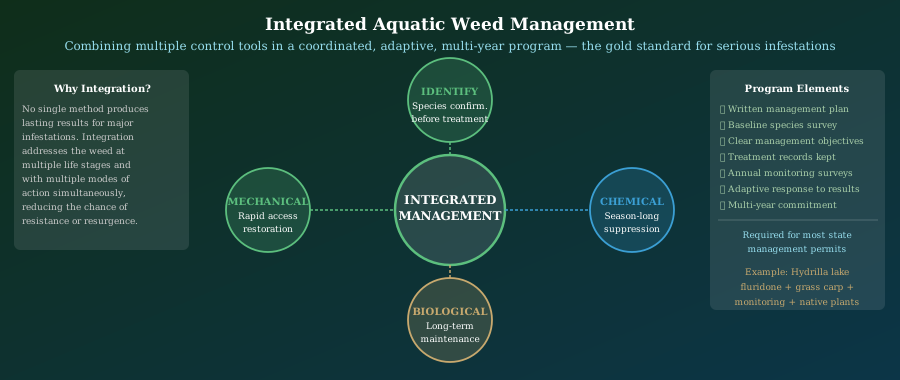
- Large infestation (10+ acres or majority of littoral zone): Integrated management combining lake-wide chemical treatment, mechanical access management, and multi-year commitment is required. Single-method programs at this scale consistently fail to achieve lasting improvement.
Step 3: Evaluate the Water Body
Water body characteristics directly determine method feasibility:
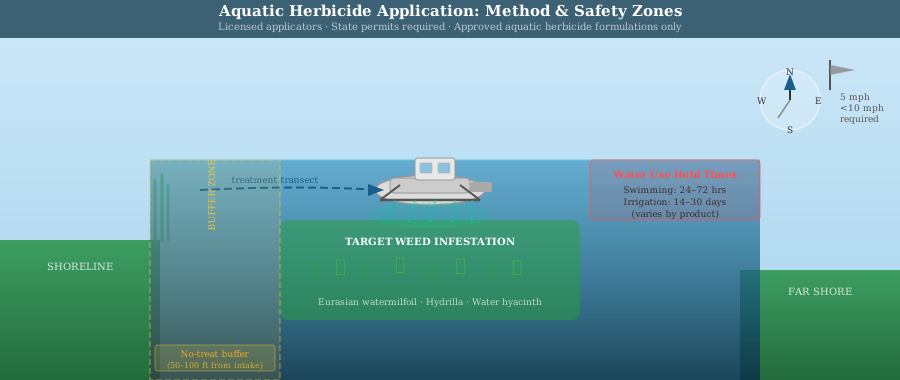
- Connectivity and water exchange rate: High-flow systems (rivers, streams, connected lakes with significant inflow/outflow) may not maintain herbicide concentrations needed for systemic products. Contact herbicides and mechanical methods are more appropriate for high-exchange systems. Chemical control guide →
- Drinking water supply use: Water bodies used as drinking water sources have stricter restrictions on herbicide use and longer post-treatment re-entry requirements. Some products are not approved for use in drinking water sources. Mechanical and biological methods may be the primary options in these systems.
- Regulatory status: Navigable waters of the United States have specific regulatory requirements under the Clean Water Act. Local permit requirements vary by state and water body classification. Confirming the regulatory status of the water body before any treatment action is mandatory. Permits guide →
- Native plant communities present: Water bodies with significant native aquatic plant communities require treatment planning that minimizes non-target impacts. Species-selective herbicides are essential in these contexts; broad-spectrum or non-selective mechanical methods must be carefully bounded to protect native species. Native plant ecology →
Step 4: Define Management Goals Explicitly
Different management objectives map to different method selections:
- Immediate access restoration: Mechanical harvesting. No other method delivers same-day results.
- Long-term population reduction and propagule bank depletion: Systemic herbicide treatment (with root kill), potentially integrated with biocontrol for maintenance. Mechanical methods alone cannot achieve this.
- Native plant community restoration: Selective herbicide treatment timed to allow native species recolonization, combined with native planting, nutrient management, and prevention of re-invasion.
- Prevention of spread to adjacent uninfested waters: Prevention protocols (Clean Drain Dry), inspection programs, and early detection monitoring with rapid response capability.
- Whole-lake sustainable long-term management: Integrated program combining all applicable methods in a multi-year adaptive management framework.
Advantages and Limitations by Method
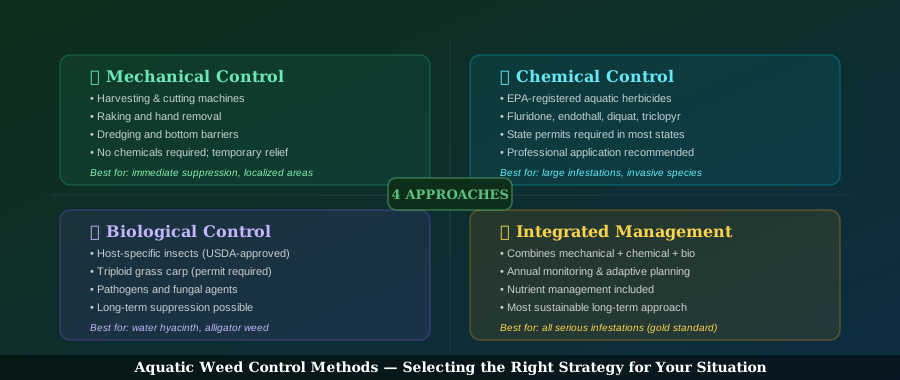
| Method | Best Applied To | Not Appropriate As Sole Method For |
|---|---|---|
| Mechanical harvesting | Immediate access needs; chemical-free waters; biomass removal; early-stage infestations | Large established infestations; species requiring root kill for population reduction |
| Aquatic herbicides | Large infestations; root/propagule kill; cost-effective scale; long-term population reduction | Drinking water intakes (some products); very high-exchange systems (systemic products) |
| Biological control | Long-term maintenance after chemical suppression; species with USDA-approved agents (water hyacinth, alligator weed, salvinia) | Rapid results needed; species without approved agents; cold climates limiting agent survival |
| Prevention and CDD | All situations — both pre-introduction and post-suppression re-invasion prevention | Cannot reduce already-established plant populations; not a substitute for active management |
| Integrated management program | Established large infestations; multi-stakeholder water bodies; long-term sustainability goals | Not required for tiny isolated infestations in simple single-owner water bodies |
Environmental Considerations in Method Selection
Each method carries environmental trade-offs that must be factored into the selection process:
- Sensitive species in the water body: Waters with rare or protected fish, invertebrates, or native aquatic plants require methods with the lowest non-target impact profiles. Species-selective herbicides, carefully targeted mechanical removal, and approved biocontrol agents are preferred over broad-spectrum or non-selective approaches in these situations.
- Oxygen dynamics risk assessment: Large-scale herbicide treatment in productive lakes risks dissolved oxygen depletion during plant decomposition. This is managed by sectional treatment and monitoring — but the risk must be assessed and factored into treatment design, particularly for lakes with oxygen-sensitive fish populations. Oxygen dynamics →
- Fragment dispersal risk for mechanical methods: For highly fragment-invasive species, mechanical methods require stringent containment protocols. If those protocols cannot be reliably implemented, herbicide treatment that kills plants in place is the lower ecological risk option for preventing infestation spread within the water body. Fragmentation biology →
The Integration Default
For any established infestation in a complex water body, the default professional recommendation is an integrated approach. Integration allows each method to operate in its zone of maximum effectiveness — chemical treatment for population-level suppression, mechanical treatment for access management, biological control for long-term maintenance, prevention for re-invasion management — resulting in better outcomes than any single method can deliver independently. Complete integration guide →
Frequently Asked Questions
What if I cannot afford a professional aquatic plant manager?
For small water bodies with limited infestations, property owners can often implement effective management without professional help: manual removal for early-stage infestations, over-the-counter aquatic herbicide products for isolated private ponds where regulations allow, and Clean Drain Dry compliance programs requiring no professional involvement. The complexity and cost of professional services become justified when the infestation covers multiple acres, the water body has multiple stakeholders, state permits are required (most chemical treatment situations), or previous self-managed attempts have repeatedly failed. Many state departments of natural resources also offer free or low-cost consultation for landowners dealing with aquatic invasive species — this is worth pursuing before spending money on commercial products or contractors.
How do I find a qualified aquatic plant management professional?
The Aquatic Plant Management Society (APMS), state chapters of the North American Lake Management Society (NALMS), and state departments of natural resources maintain directories of qualified professionals. State pesticide licensing boards can confirm whether a specific applicator holds the required aquatic pesticide application license for your state. University extension services — particularly land-grant universities with aquatic science programs — often have aquatic plant management specialists who provide educational guidance and can recommend local professionals. When hiring any contractor for aquatic herbicide treatment, confirm they hold the appropriate state applicator license before work begins.
References
- Gettys, L.A., et al. (2014). Biology and Control of Aquatic Plants: A Best Management Practices Handbook, 3rd ed. Aquatic Ecosystem Restoration Foundation.
- Netherland, M.D., et al. (2005). Aquatic Plant Management in Lakes and Reservoirs. North American Lake Management Society and Aquatic Ecosystem Restoration Foundation.
- Madsen, J.D. (2000). Advantages and disadvantages of aquatic plant management techniques. Lakeline, 20(3), 22–34.
- Cooke, G.D., et al. (2005). Restoration and Management of Lakes and Reservoirs, 3rd ed. Taylor & Francis, Boca Raton, FL.
Relevant Species
This control approach is applied to the following aquatic weed species. See each species profile for species-specific guidance, herbicide rates, and optimal treatment timing:
Regulatory Notice: Most aquatic weed control activities require permits from your state's department of natural resources or environmental protection agency. Always verify permit requirements before taking any management action.