The Gold Standard: Why Integrated Management Works
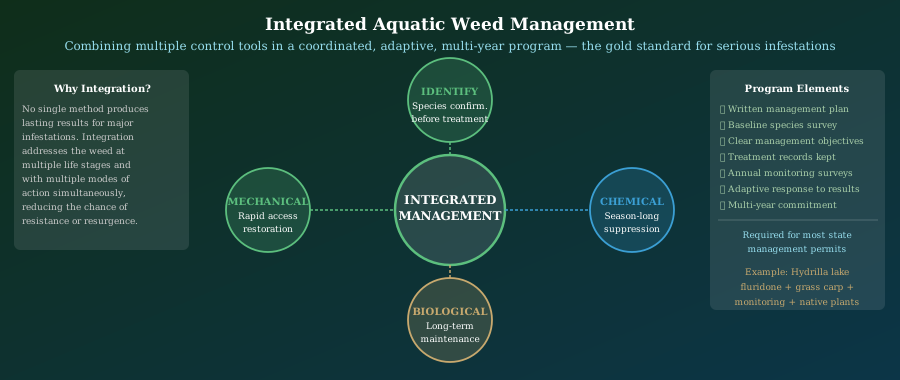
Integrated aquatic weed management (IAWM) applies the integrated pest management (IPM) framework to aquatic plant management. The core principle: use multiple complementary control methods in a coordinated, adaptive multi-year program to achieve sustainable suppression at lower long-term cost and ecological impact than any single method could accomplish alone. IAWM is not a specific treatment recipe — it is a strategic philosophy and program design framework that consistently outperforms single-method approaches in peer-reviewed research and long-term management outcomes.
The evidence for integrated approaches is compelling. Water bodies managed under integrated programs consistently achieve better long-term suppression outcomes than those using single-method programs, at comparable or lower total program cost over a 5–10 year horizon. The reasons are mechanistic: each method compensates for the limitations of the others, and the combination produces results whose sum exceeds its parts.
When Integrated Management Is Required
Integrated management is not just preferable — it is the only approach with a realistic path to long-term success under these conditions:
- Established large infestations with significant propagule banks. Any infestation covering multiple acres with tuber beds, turion banks, or extensive rhizome systems in the sediment requires years of combined chemical, mechanical, and monitoring inputs to trend toward sustainable management levels. Single-method programs for established large infestations almost universally require indefinitely escalating treatment intensity without achieving lasting improvement.
- High-value water bodies with multiple stakeholder groups. Lakes with recreational, residential, environmental, and water quality interests require programs that balance immediate access restoration (mechanical), population reduction (chemical), long-term maintenance (biological), and prevention — precisely what integrated programs provide.
- Water bodies where single-method programs have already failed. If a lake has been under a herbicide-only program for 3+ years without meaningful population reduction, or a mechanical-only program with rapid seasonal regrowth, the program needs to be redesigned as a comprehensive integrated approach.
- Programs with explicit native plant restoration goals. Restoring native aquatic plant communities after invasive suppression requires coordinating herbicide timing with native recolonization, managing nutrient conditions, and preventing re-invasion — a multi-component program by definition. Native plant community ecology →
The IAWM Framework: Core Components
A complete integrated program incorporates these components — not all of which need to be active simultaneously in every year of the program:
- Baseline monitoring and species mapping: Rigorous species identification and quantitative distribution mapping before any treatment. Defines the problem scope, establishes the baseline for measuring progress, and guides treatment targeting. Without a documented baseline, it is impossible to demonstrate program success or guide adaptive adjustments. Monitoring methods →
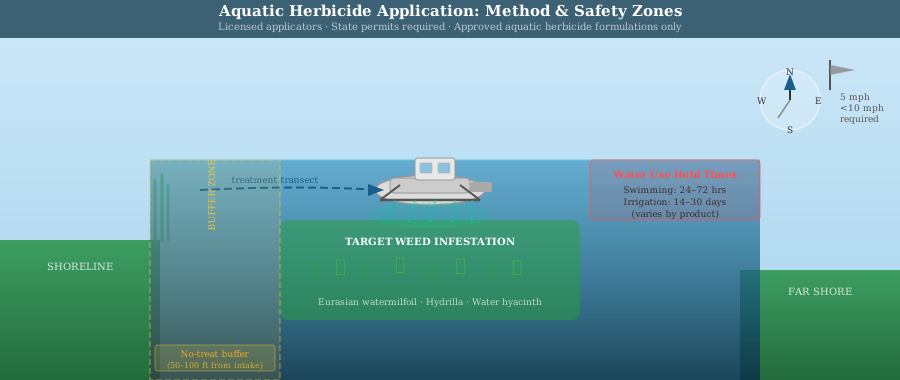
- Targeted chemical treatment: Species-selective herbicides applied at optimal phenological timing, using sectional treatment to manage dissolved oxygen risk. The chemical component handles population-level suppression and propagule bank depletion — tasks no other method can accomplish at scale. Chemical control guide →
- Mechanical access management: Targeted harvesting of priority high-use areas, coordinated with herbicide programs so that mechanical clearing maintains access while chemical suppression works on the broader infestation. Post-treatment harvesting of dead biomass may also be incorporated to improve oxygen dynamics. Mechanical control guide →
- Biological control: Where established agents are available — grass carp in enclosed water bodies for submerged weeds, approved USDA biocontrol insects for water hyacinth and alligator weed — biological agents are integrated as long-term maintenance components that reduce ongoing treatment intensity after initial suppression. Biological control guide →
- Nutrient management: Addressing the watershed-level and in-lake nutrient conditions that drive plant productivity. Without reducing nutrient availability, management programs permanently fight symptoms while the underlying cause continues fueling regrowth. Nutrient loading guide →
- Prevention and re-invasion management: Ongoing watercraft inspection, buffer management, and public education to prevent new introductions and reintroductions of species that have been suppressed. Prevention guide →
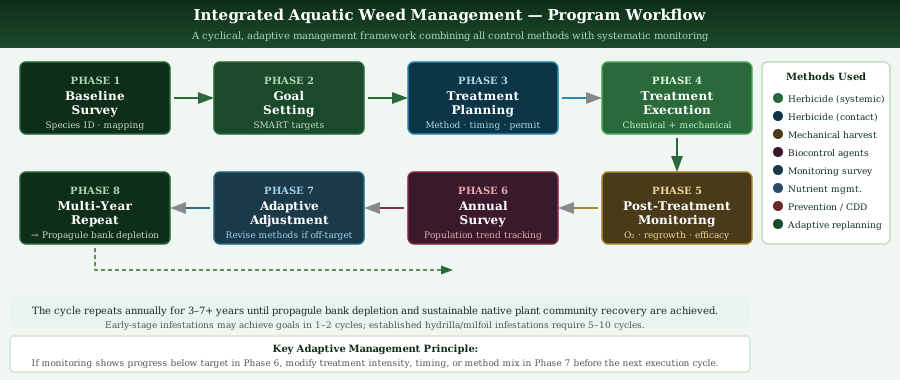
- Adaptive management: Annual monitoring that measures progress against defined goals, identifies areas of under- or over-performance, and drives annual adjustments to the program design. Without adaptive management feedback, programs continue unchanged even when evidence indicates they are not achieving intended results.
Why Single-Method Programs Fail
Understanding why each single-method approach fails in isolation makes clear why integration is structurally necessary:
- Herbicide-only programs risk herbicide-tolerant biotype selection with long-term single-product use, do not address nutrient conditions fueling regrowth, and provide no immediate access improvement during the 3–8 week herbicide action window.
- Mechanical-only programs require very high treatment frequencies (3–6 passes per season for perennials), achieve no root or propagule bank kill, and can spread infestations through fragmentation if containment protocols are imperfect.
- Biocontrol-only programs act too slowly to address established infestations in the timeframe stakeholders require, and rarely reduce large populations to non-problematic levels without chemical or mechanical support during the agent establishment phase.
- Nutrient management-only programs reduce the growth pressure driving plant density but cannot reduce already-established large plant populations to acceptable levels in any reasonable timeframe.
Advantages and Limitations
| Factor | Advantage | Limitation |
|---|---|---|
| Long-term efficacy | Consistently better outcomes than single-method programs; addresses all infestation components and the underlying growth drivers | Requires multi-year commitment and active program coordination across methods and stakeholders |
| Total cost over time | Lower total program cost over 5–10 year horizon as suppression reduces required treatment intensity in later years | Higher upfront program design, coordination, and monitoring costs than single-method approaches |
| Stakeholder communication | Demonstrates comprehensive, professionally designed program — builds community trust and stakeholder engagement | More complex communication requirements; multiple methods mean multiple scheduling and notification obligations |
| Ecological outcomes | Designed to achieve native plant recovery alongside invasive suppression; minimizes each method's ecological risks through strategic deployment of alternatives | Requires skilled program design to integrate methods without adverse interactions; wrong sequencing can reduce efficacy |
Environmental Considerations
Integrated programs have better environmental outcomes than single-method programs because they are designed to use each method strategically — minimizing each tool's ecological risks through the deployment of alternatives:
- Managing dissolved oxygen risk: Mechanical pre-treatment reduces biomass before herbicide application; sectional treatment protocols manage decomposition-related oxygen depletion during chemical treatment; post-treatment monitoring provides early warning of oxygen problems.
- Minimizing total herbicide use: Biocontrol and mechanical components reduce the intensity of herbicide application needed for population suppression — the primary long-term environmental benefit of integration over herbicide-only programs. As suppression accumulates, treatment frequency requirements decrease.
- Native plant community protection: Integrated programs can build native plant monitoring and recovery goals into the program design — timing herbicide applications, designating managed areas for native recolonization, and coordinating planting programs with treatment schedules.
- Adaptive response to ecological signals: Annual monitoring data provides early warning of unintended ecological impacts — declining native plant density, oxygen stress, non-target effects — before they become significant, allowing program adjustments to prevent cumulative damage.
Frequently Asked Questions
What does a professional integrated aquatic weed management program cost?
Total annual program costs for IAWM range widely based on water body size, infestation severity, and management intensity. For lakes of 100–500 acres with moderate to severe infestations, annual budgets of $50,000–$250,000 are common. For smaller water bodies (under 50 acres) with less severe infestations, $10,000–$50,000 per year is typical for comprehensive integrated programs. These costs decrease significantly after 3–5 years as suppression reduces required treatment intensity. Compared to indefinitely sustained costs of reactive single-method programs that never achieve lasting improvement, the investment in a well-designed integrated program almost always shows better long-term economics over a 10-year horizon.
How do I get started with an integrated management program?
The first step is a professional baseline survey — species identification, distribution mapping, and quantitative density assessment by a qualified aquatic plant surveyor. Survey results guide the management planning process: which methods suit the target species, what scale of treatment is needed, what permits are required, and what the realistic timeline and budget look like for your goals. Most states have licensed aquatic plant management professionals who conduct surveys and design programs. Your state's department of natural resources aquatic invasive species program can provide referrals to qualified professionals and explain the permit requirements for your water body.
How many years does an integrated management program take?
Measurable improvement in plant density typically occurs within the first 1–2 annual treatment cycles for most integrated programs. Achieving sustainable management levels — where annual treatment intensity can be reduced without population rebound — typically requires 3–7 years for established moderate infestations and 5–10 years for severe infestations with large propagule banks (particularly hydrilla and Eurasian milfoil). The key metric driving long-term sustainability is propagule bank depletion. Early program years are typically heavier on chemical and mechanical inputs; mature programs in later years require less treatment intensity as propagule banks are depleted and native plants recolonize treated areas.
References
- Madsen, J.D. (2000). Advantages and disadvantages of aquatic plant management techniques. Lakeline, 20(3), 22–34.
- Gettys, L.A., et al. (2014). Biology and Control of Aquatic Plants: A Best Management Practices Handbook, 3rd ed. Aquatic Ecosystem Restoration Foundation.
- Cooke, G.D., et al. (2005). Restoration and Management of Lakes and Reservoirs, 3rd ed. Taylor & Francis, Boca Raton, FL.
- Nichols, S.A., and Lathrop, R.C. (1994). Cultural impacts on aquatic plants in Lake Wingra, Wisconsin. Journal of Aquatic Plant Management, 32, 49–55.
- Wittmann, M.E., et al. (2014). Grass carp in the Great Lakes region: expert perceptions of ecological impact. Journal of Great Lakes Research, 40, 154–162.
Relevant Species
This control approach is applied to the following aquatic weed species. See each species profile for species-specific guidance, herbicide rates, and optimal treatment timing:
- Hydrilla Control Methods
- Eurasian Watermilfoil Control
- Water Hyacinth Control
- Alligator Weed Control
- Duckweed Control
Regulatory Notice: Most aquatic weed control activities require permits from your state's department of natural resources or environmental protection agency. Always verify permit requirements before taking any management action.