Why Regulatory Compliance Is Non-Negotiable
Aquatic plant management activities take place in regulated environments — navigable waters, wetlands, and water bodies that may serve as drinking water sources, recreational areas, or habitat for protected species. The regulatory framework governing aquatic plant management is multilayered: federal law establishes minimum requirements; state programs add additional requirements that vary significantly by state; and local ordinances or protected area designations may impose further restrictions. Complying with this framework is not optional — violations carry significant civil and criminal penalties and can result in injunctions halting management programs entirely.
The good news: the regulatory pathway for properly permitted management is well-established, and compliance is entirely achievable with advance planning. The critical mistake to avoid is beginning treatment without first verifying permit requirements — a common error made by well-intentioned property owners and lake managers who do not realize that their particular water body, treatment method, or herbicide product requires a permit.
When Regulatory Issues Are Most Critical
Regulatory compliance requirements are most stringent — and most likely to require advance planning — in these situations:
- Any chemical treatment in navigable or public waters. Virtually all aquatic herbicide applications in navigable waters require state permits, and in many states, any water with surface connectivity to navigable waters is also regulated. The permit process typically takes 2–6 weeks — starting permit applications in winter for summer treatments is essential.
- Large-scale mechanical operations. Commercial mechanical harvesting in navigable waters, water level manipulation (drawdown), and dredging operations typically require permits. The scope of requirements varies by state and operation scale.
- Biological control introductions. Stocking of triploid grass carp requires a state permit in virtually all states and requires purchase from certified triploid suppliers. Release of any biological control insect must be coordinated through USDA-APHIS approved programs — independent collection and release of organisms is prohibited.
- Actions in or adjacent to wetlands. Wetland jurisdictional determinations are necessary before management activity in potential wetland areas. Army Corps of Engineers Section 404 permits may be required for dredging, fill, or significant vegetation removal in regulated wetland areas.
Federal Regulatory Framework
At the federal level, the primary regulatory frameworks affecting aquatic plant management:
- Clean Water Act, Section 404: Regulates the discharge of dredged or fill material into waters of the United States, including wetlands. Mechanical dredging, bottom barrier installation in wetlands, and some vegetation removal activities may require Section 404 permits from the Army Corps of Engineers.
- NPDES General Permit for Pesticide Discharge: Chemical application to navigable waters is regulated under the National Pollutant Discharge Elimination System. Most states have NPDES general permits covering properly permitted aquatic pesticide applications — state permit compliance is typically sufficient without a separate federal NPDES application in states with approved programs.
- Federal Insecticide, Fungicide, and Rodenticide Act (FIFRA): All aquatic herbicide applications must use EPA-registered products applied strictly according to label instructions by licensed applicators. The label is a legal document — deviations from label application rates, sites, or methods constitute federal violations regardless of state permit status.
- Endangered Species Act: Management activities near critical habitat for federally listed threatened or endangered species require additional consultation with USFWS or NMFS. State permit review processes typically address this, but applicants should be aware of the obligation independently.
State Permit Requirements
State-level permits are the most directly relevant regulatory requirement for most management projects. Every U.S. state has an aquatic plant management permit program. Typical permit requirements include:
- Application describing the target species, water body, proposed treatment method and products, and timing
- Map of the treatment area showing boundaries, depths, and any adjacent sensitive features
- Confirmation of applicator licensing (most states require a licensed commercial pesticide applicator for any chemical aquatic treatment)
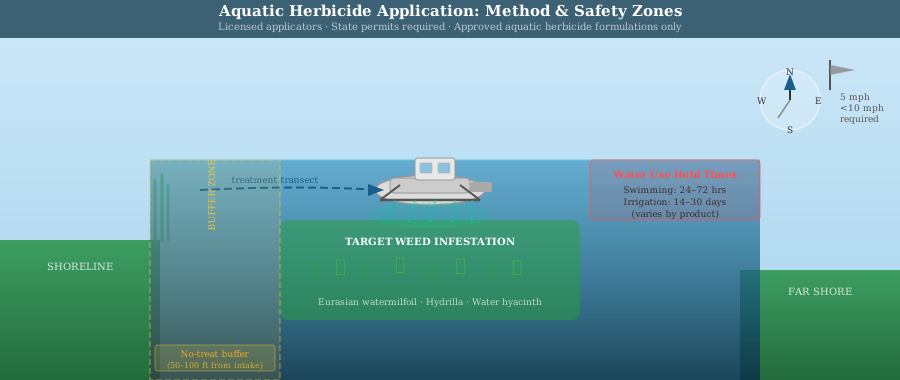
- Documentation of notification to adjacent property owners (most states require 48–72 hour advance notice of treatments)
- Post-treatment reporting of actual treatment area, products used, rates applied, and any observed environmental effects
Permit processing typically takes 2–6 weeks for routine applications. Complex situations (novel species, sensitive receiving waters, large-scale operations) may take longer. Beginning permit applications in winter or early spring for summer treatment windows is strongly recommended — last-minute applications that miss the optimal treatment timing window are a common and avoidable management failure.
Applicator Licensing Requirements
Most states require that aquatic herbicide applications be performed by or under the supervision of a licensed commercial pesticide applicator holding the appropriate aquatic pest control category license. This is separate from the treatment permit — it is a professional credential requirement for the individual performing the application. Property owners applying herbicides to their own isolated private ponds may be exempt from applicator licensing requirements in some states, but this exemption typically does not extend to treatments in public waters or waters with connectivity to public waters. Unlicensed application in regulated waters is a violation of state pesticide law independent of treatment permit status.
Advantages and Limitations of the Regulatory Framework
| Aspect | Benefit to Managers | Challenge for Managers |
|---|---|---|
| State permits | Clear pathway to legal compliance; permit departments often provide technical guidance; permit review may improve program design | 2–6 week processing time requires advance planning; permits may include conditions or restrictions |
| FIFRA label requirements | Labels contain all approved use sites, rates, and water use restrictions — built-in compliance guide | Labels are updated; products are approved and discontinued; compliance requires current label review before every treatment |
| Licensed applicator requirement | Ensures professional application standards; licensed applicators carry liability insurance | Adds cost; in rural areas, finding licensed applicators with scheduling availability can be challenging |
| Stakeholder notification requirements | Builds community trust and transparency; protects managers from liability claims by uninformed parties | Administrative burden; 48–72 hour requirements may constrain schedule flexibility |
Environmental Considerations in the Regulatory Context
The permit review process is designed to protect environmental values — and in practice it often improves management program design by requiring systematic documentation and consideration of alternatives:
- Sensitive species review: State permits trigger review of threatened and endangered species databases, ensuring management activities do not conflict with protected species conservation obligations and identifying species issues the applicant may not have been aware of independently.
- Seasonal timing requirements: Many state permits impose seasonal restrictions to protect fish spawning periods, migratory bird nesting, or critical habitat. These restrictions generally align with the biological timing that improves treatment efficacy — treating within the optimal phenological window anyway produces better results.
- Product selection guidance: State permits specify which products are approved for use in a given water body type and classification. This guidance prevents the use of products not appropriate for specific conditions — a genuine ecological protection that also reduces the risk of ineffective treatments.
Integration with Management Planning
Regulatory compliance is most efficiently managed as an integrated component of the overall program planning process, not as an afterthought following the decision to treat:
- Begin permit applications as the first step of program planning — before any field treatment activities. Management planning guide →
- Build permit timelines into the annual program calendar. Herbicide treatment windows and permit application lead times must be synchronized — especially in northern states where summer treatment windows are short.
- Maintain records of all permit applications, approvals, notifications, and post-treatment reports. Good documentation protects against liability and simplifies future permit renewals.
- Work with licensed applicators who manage the permit process as part of their service — most professional aquatic plant management contractors handle permitting for their clients. This is one of the practical advantages of professional programs over owner-managed efforts.
Water Use Restrictions (WURs)
Aquatic herbicide products carry water use restrictions (WURs) on their labels specifying the minimum time after treatment before the treated water can be used for drinking, irrigation, swimming, livestock watering, and fish consumption. WUR durations range from zero (for some products and recreational use categories) to 14–30 days (for products with longer half-lives at high application rates). All users of the treated water body must be notified of WURs before treatment — lake associations should post WUR information at all public access points and notify member mailing lists in advance of any treatment. Herbicide reference guide →
Frequently Asked Questions
Do I need a permit to treat my own private pond?
It depends on your state and whether your pond connects to any navigable waters. Most states do not require permits for treating fully isolated, privately owned ponds that do not flow into public waters. However, the herbicide products used must still be EPA-registered aquatic products applied at label rates, and some states require a licensed applicator regardless of pond connectivity. States with known exemptions for private isolated ponds include Florida, Texas, and many Midwest states, but rules change and exemption conditions are specific — always verify with your state department of natural resources or environmental protection department to confirm the current rules for your specific situation before treating.
How do I find out what permits are required in my state?
The most reliable approach is to contact your state department of natural resources or environmental quality agency directly and ask about requirements for aquatic plant management permits for your specific water body and proposed method. Most state agencies have dedicated aquatic plant management or aquatic invasive species programs with staff who provide this guidance. State university extension services — particularly land-grant universities with aquatic science programs — often publish state-specific permit requirement guidance. The Aquatic Plant Management Society also maintains resources with state-by-state regulatory information accessible to the public.
What are the consequences of treating without a required permit?
Treating regulated waters without required permits is a violation of state and potentially federal law. Penalties can include civil fines from hundreds to tens of thousands of dollars, criminal charges for willful violations, mandatory remediation requirements that may cost far more than the original treatment, injunctions preventing future management activities, and personal liability for any environmental damage caused by the unpermitted treatment. Beyond legal consequences, unpermitted treatments may use products, rates, or methods inappropriate for the specific water body — creating ecological harm that a professionally designed permitted program would have avoided. The investment in proper permitting protects both the applicator and the water body.
References
- U.S. Environmental Protection Agency. (2011). Pesticide General Permit for Discharges from the Application of Pesticides. EPA, Washington, D.C.
- U.S. Army Corps of Engineers. (2007). Nationwide Permit 27: Aquatic Habitat Restoration, Establishment, and Enhancement Activities. Federal Register.
- Gettys, L.A., et al. (2014). Biology and Control of Aquatic Plants: A Best Management Practices Handbook, 3rd ed. Aquatic Ecosystem Restoration Foundation.
- Westerdahl, H.E., and Getsinger, K.D. (eds.) (1988). Aquatic Plant Identification and Herbicide Use Guide. U.S. Army Corps of Engineers Technical Report A-88-9.
- National Agricultural Law Center. (2022). State Pesticide Regulation. University of Arkansas School of Law.
Relevant Species
This control approach is applied to the following aquatic weed species. See each species profile for species-specific guidance, herbicide rates, and optimal treatment timing:
Regulatory Notice: Most aquatic weed control activities require permits from your state's department of natural resources or environmental protection agency. Always verify permit requirements before taking any management action.