Identification Features
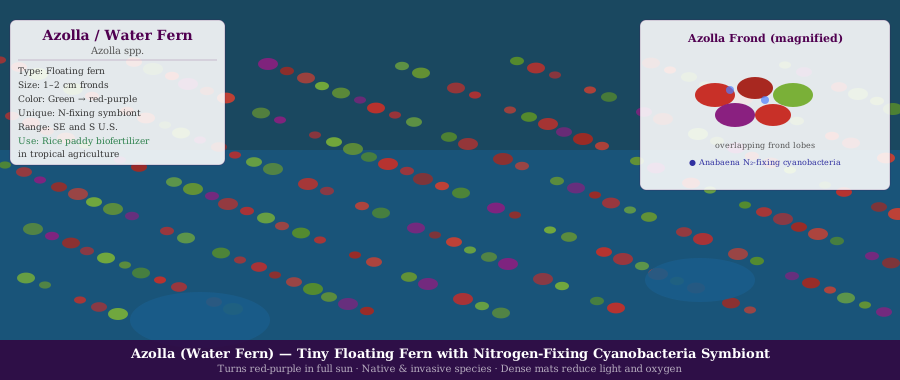
Azolla (water fern or mosquito fern, Azolla spp.) is a small floating fern that forms low-lying, interconnected mats on the water surface. Plants are 1–3 cm across, with tiny overlapping leaves arranged in two rows along thin branching stems. The most visually striking identification feature is the plant's color change: bright green in shaded or cool conditions, shifting to orange, red, or reddish-brown in strong sunlight or cool temperatures. This coloration is caused by the pigment anthocyanin, produced under stress. Dense azolla mats in autumn sunshine can turn an entire pond deep red-orange.
Azolla is distinguished from duckweed by its branching, fern-like structure and the overlapping paired leaves (visible with a hand lens). Unlike duckweed's simple oval fronds, azolla has a recognizable multi-lobed, branched architecture. The coloration under stress conditions is unmistakable. North American species include the native Azolla caroliniana (eastern U.S.) and A. mexicana (western U.S.), plus some non-native species occasionally encountered in waterways near aquaculture facilities or ornamental ponds.
Biology and the Nitrogen-Fixing Symbiosis
Azolla is distinctive among aquatic weeds in hosting a nitrogen-fixing cyanobacterium (Anabaena azollae) in cavities within its leaves. This symbiosis allows azolla to grow in low-nitrogen environments where other plants cannot, converting atmospheric nitrogen into biologically available ammonia that fertilizes both the azolla and the surrounding water. This nitrogen-fixing ability is the reason azolla has been used for centuries in Asian rice agriculture — floating azolla between rice plants fertilizes the crop without chemical nitrogen application.
The nitrogen fertilization effect also means that azolla itself can drive eutrophication: dense mats introduce significant nitrogen into the water column, potentially fueling algal blooms and subsequent weed growth after the azolla population crashes. This self-fertilization dynamic makes azolla somewhat unusual among aquatic plants — it can create the nutrient conditions that favor its own replacement by other weed species.
Ecological Role and Management Context
Native azolla species in North America are generally not considered problematic aquatic weeds in the same category as water hyacinth, hydrilla, or giant salvinia. They rarely form the thick, persistent mats that cause severe management problems, and they play a role in aquatic nitrogen cycling. However, dense azolla growth can reduce light penetration in pond margins, and the rapid growth capacity of some species can produce nuisance-level coverage under eutrophic conditions.
The greater management concern in North America is the non-native Azolla filiculoides (water velvet) from South America and A. cristata, which can be more aggressive than native species and have been found in waterways near aquaculture operations or ornamental pond disposals. If dense azolla growth is encountered in an unexpected location, verify whether it is a native or non-native species.
Distribution
Native azolla species are found throughout the eastern United States (A. caroliniana) and western states (A. mexicana). They grow in still, shallow, warm water — pond margins, rice paddies, slow ditches, and lake bays. They cannot tolerate frost (killed below 0°C) and are absent from northern water bodies in winter, reestablishing from spores in spring.
Management
In most cases, native azolla does not require management. If nuisance growth occurs, increasing water circulation, reducing nutrient loading, and physical removal are appropriate first steps. Chemical treatment with copper sulfate or diquat is effective but requires state permits. Non-native azolla species should be reported to your state invasive species program. Control methods →
Frequently Asked Questions
Why is azolla sometimes called mosquito fern?
The common name 'mosquito fern' refers to the belief that dense azolla mats on the water surface prevent mosquitoes from laying eggs on the water. Dense mats do interfere with the mosquito oviposition process, and this is one ecological service credited to azolla in natural and agricultural settings. However, dense azolla mats can also create still, sheltered water around their margins that is suitable for mosquito breeding — so the mosquito-control benefit of azolla is context-dependent and not an absolute effect.
Can I use azolla as a fertilizer in my garden?
Yes, azolla (particularly Asian species) has a long history of use as a 'green manure' fertilizer due to its nitrogen-fixing symbiosis. Native North American azolla can also be composted and applied to garden beds, providing both nitrogen and organic matter. However, care must be taken not to introduce living azolla material to natural water bodies during harvesting or disposal, as even native species can escape cultivation and cause localized nuisance growth.