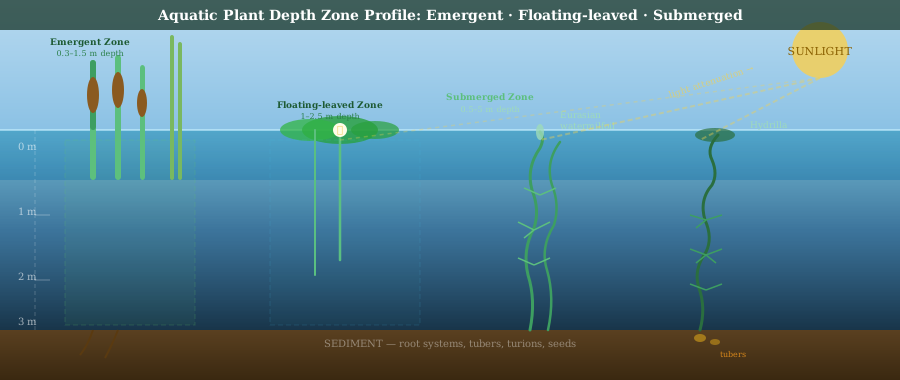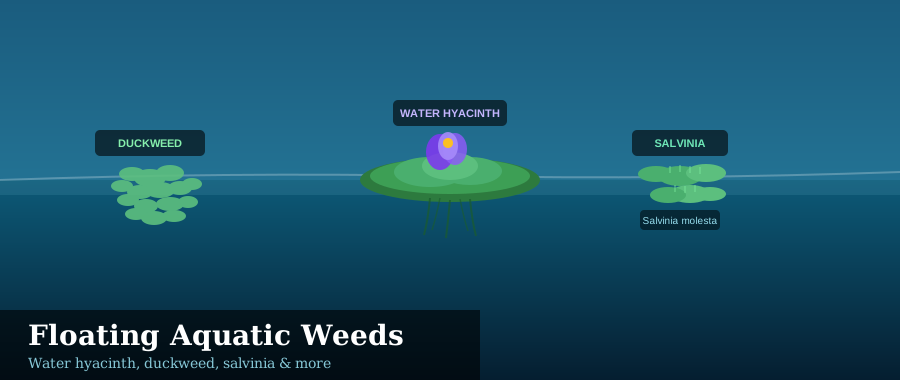
The Dual Role of Floating Aquatic Plants
Floating aquatic plants occupy a paradoxical position in lake and pond ecology: at natural densities, they provide real ecological benefits that support biodiversity and water quality; at elevated densities driven by nutrient loading and anthropogenic introductions, they become among the most damaging forces in freshwater ecosystems. Understanding both sides of this duality is essential for making informed management decisions.
Ecological Benefits at Natural Densities
When floating plants are present at natural, moderate densities — covering 10–30% of a pond surface in sheltered areas, rather than blanketing 90–100% of a large lake — they provide the following ecological services:
- Shade and temperature regulation: Floating leaf coverage in pond margins moderates summer water temperature in shallow areas, reducing thermal stress on fish and invertebrates in marginal zones.
- Invertebrate habitat: The roots, stems, and leaf undersides of floating plants are colonized by dense communities of periphyton (algae and bacteria), aquatic insects, and macroinvertebrates that form an important link in the aquatic food web. Aquatic invertebrate diversity is often higher in areas with moderate floating plant coverage than in completely open water or areas with no floating vegetation.
- Waterfowl food and cover: Duckweed, watermeal, and azolla are actively eaten by dabbling ducks, geese, coots, and other waterfowl. American frogbit seeds are consumed by waterfowl. The cover provided by floating vegetation supports nesting habitat for several waterfowl species.
- Nutrient uptake: Floating plants are extremely efficient at taking up nitrogen and phosphorus from the water column. In natural systems, this creates a nutrient sink that limits algal bloom intensity. In constructed wetland systems, this characteristic is deliberately exploited — floating plant beds are used as "nutrient polishing" zones to remove excess nitrogen and phosphorus from treated wastewater before final discharge.
- Carbon sequestration: Floating plant biomass stores significant quantities of carbon during active growth. In systems where harvested biomass is composted rather than decomposed in the water, this represents net carbon sequestration.
Risks at High Densities
The same growth capacity that makes floating plants efficient nutrient cyclers and productive ecological components at natural densities becomes catastrophically damaging at high densities driven by anthropogenic nutrient loading:
- Light exclusion: At 70–100% surface coverage, floating plant mats eliminate photosynthetically active radiation below the mat, killing submerged native vegetation.
- Dissolved oxygen depletion: Dense mats prevent atmospheric oxygen from entering the water; nighttime respiration by the mat itself consumes oxygen, driving DO to critically low levels and triggering fish kills.
- Navigation and recreation impairment: Thick mats render water bodies impassable for boats and unpleasant for swimming and fishing.
- Mosquito habitat: Still, warm water beneath dense mats creates ideal mosquito breeding conditions.
- Eutrophication cycle: Decomposing floating plant biomass releases stored nutrients back into the water, perpetuating the eutrophic conditions that drive growth — a self-reinforcing feedback loop.
Native vs. Invasive Floating Plants: A Critical Distinction
For native floating plants (American frogbit, native azolla species, native duckweed), management philosophy focuses on restoring natural densities through nutrient management rather than elimination. For invasive non-native species (water hyacinth, giant salvinia, European frogbit), management aims for eradication or maximum suppression regardless of nutrient conditions — the species have no legitimate ecological role in North American ecosystems and pose a threat regardless of density.
This distinction shapes management strategy: addressing phosphorus and nitrogen loading from agricultural runoff, stormwater, and septic systems is the primary intervention for native nuisance species. For invasive species, nutrient management is still important for reducing growth rates, but targeted species control is required regardless of nutrient status.
Frequently Asked Questions
Can floating plants improve water quality?
Yes, at natural densities, floating plants actively absorb nitrogen and phosphorus from the water column, reducing the nutrient availability that fuels algal blooms. Some municipalities and wastewater treatment operations deliberately maintain floating plant beds in treatment wetlands to polish effluent before final discharge. The nutrient uptake benefit is real but scale-dependent — at densities where plants cover more than half the water surface, the costs (oxygen depletion, light exclusion) begin to outweigh the nutrient removal benefits.
Do floating plants benefit fish?
At moderate densities, yes — the invertebrate communities supported by floating plant roots and stems are food sources for juvenile and adult fish, and shade from floating plants reduces thermal stress in warm summer conditions. At high densities, floating plants harm fish by depleting dissolved oxygen, eliminating submerged vegetation that provides spawning habitat, and reducing the open-water foraging zone. The relationship between floating plant density and fish productivity follows an inverted-U curve: some vegetation is better than none, but dense mat coverage is worse than no vegetation.