Summer: Peak Growth, Peak Challenge
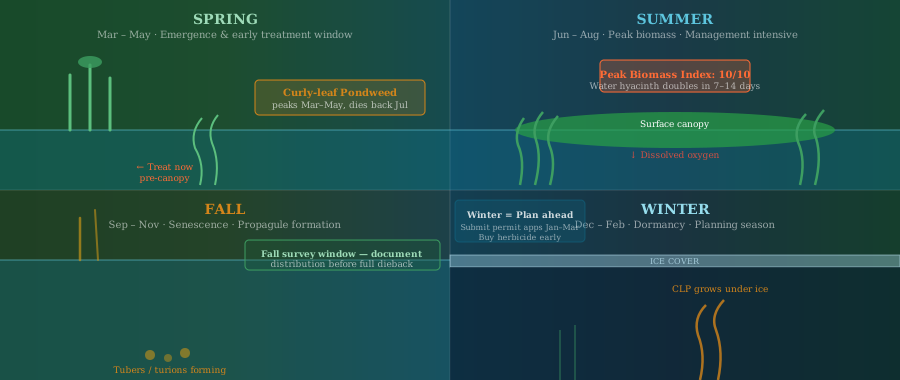
Summer represents the peak of aquatic weed growth for most warm-season species. Water temperatures, light intensity, and photoperiod are all at annual maximums from June through August in the northern hemisphere, and the combination of these factors drives growth rates of invasive submerged and floating aquatic weeds to levels that can create ecological and navigational emergencies seemingly overnight. Understanding what happens in aquatic weed populations during summer — and how management programs should respond — is essential for effective lake management.
Summer Growth Biology
Submerged Species at Peak
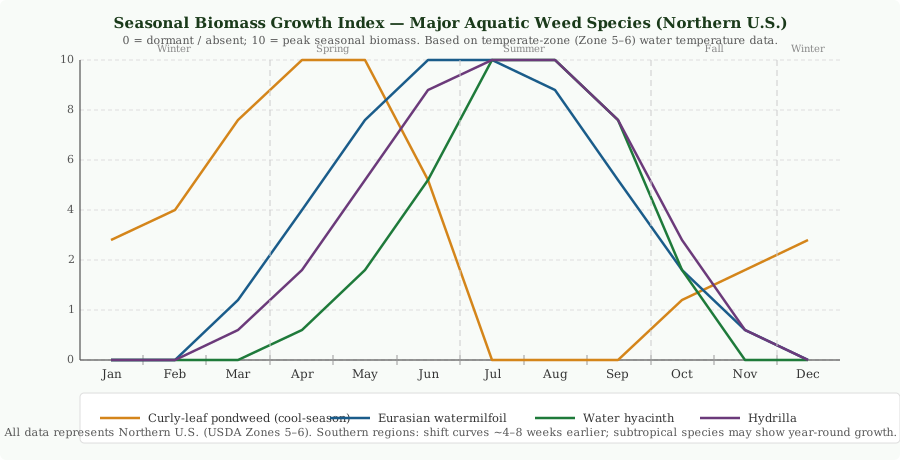
Most invasive submerged weeds reach peak biomass in July–August in the northern U.S. (earlier in southern states, where peak may be June–July). Hydrilla stems elongate up to 2.5 cm/day at peak summer growth rates. Eurasian watermilfoil already formed its surface canopy in spring (giving it the early-season competitive advantage discussed in the spring guide) but continues growing and branching through summer. In July–August, hydrilla in particular forms the dense, surface-to-bottom mats that create the most severe navigation and ecological impacts. A lake that showed only patches of submersed vegetation in May may be completely choked with surface mats by late July under optimal growing conditions.
Floating Species
Water hyacinth, duckweed, and watermeal reach their maximum growth rates in summer heat. Water hyacinth's population doubling time can drop below 10 days at peak summer temperatures. Duckweed can double within 24–48 hours under optimal summer conditions. Small populations that were manageable in spring become vast surface mats by July–August if not treated early. The exponential nature of their growth means that delayed treatment — waiting for the problem to become "bad enough" — creates an exponentially larger and more expensive treatment challenge with each week of delay.
Management During Summer
Reactive Treatment Challenges
Treating aquatic weeds at peak summer biomass presents several challenges compared to early-season treatment:
- Larger biomass requires more herbicide: Whole-pond treatment of a lake with a dense hydrilla mat requires substantially higher herbicide concentrations or volumes than early-season treatment of smaller populations. This directly increases cost.
- Die-off oxygen demand: Killing a large mass of aquatic vegetation simultaneously creates a high oxygen demand as the biomass decomposes. In summer heat, when water holds less dissolved oxygen, large-scale kills can cause secondary fish kills from hypoxia. Treatment of large biomass is best done in sections over several weeks rather than in a single whole-lake treatment in summer to avoid this risk.
- Propagule production: By midsummer, invasive plants have often already produced turions, tubers, or seeds. Treatment that kills the above-ground biomass in August or September does not prevent re-establishment from the propagule bank.
Mechanical Harvesting for Navigation Access
Summer mechanical harvesting is the primary tool for maintaining navigation channels and recreational access when plant growth exceeds acceptable levels. While harvesting does not provide lasting weed control, it provides the immediate access needed for boat travel and swimming and gives time for longer-term management plans to take effect. Harvesting frequency depends on growth rate — in high-nutrient conditions, hydrilla and water hyacinth can recover harvested areas in 2–4 weeks, requiring repeated operations throughout the summer season.
Summer Herbicide Considerations
Summer herbicide applications must account for: higher water temperatures that affect herbicide efficacy and degradation rates; increased oxygen demand risk from biomass die-off; water use restrictions (swimming, irrigation, drinking water withdrawal) that may be more problematic during peak recreational season; and the possibility that propagule production may already have occurred, limiting the lasting benefit of a late-season treatment. Despite these challenges, summer treatment is often the most practical management window for large established infestations where spring treatment was not possible.
Summer Monitoring
Summer monitoring serves several purposes: tracking treatment efficacy (confirming herbicide killed the target species at the planned concentration); detecting regrowth in treated areas early so follow-up treatment can be applied before large biomass redevelops; identifying new infestation locations that appeared since spring surveys; and documenting the extent and distribution of infestations for the annual management record. Monthly monitoring visits during the growing season (May–September) are recommended for lakes with active management programs. See monitoring and survey methods for protocol guidance.
Dissolved Oxygen Vigilance in Summer
Summer is the season of highest dissolved oxygen risk from dense aquatic weed mats. Warm water holds less dissolved oxygen than cold water; simultaneously, biological oxygen demand (respiration by weeds, bacteria, and invertebrates) is highest in warm conditions. Dense floating plant mats (duckweed, water hyacinth) and submerged plant canopies that reach the surface create oxygen-depleted conditions beneath them, particularly during still, calm weather when no wind mixing occurs. Fish kills from oxygen depletion are most likely in July–August during extended calm, warm periods. Proactive aeration (keeping aerators running continuously during summer nights) is the most effective preventive measure. Monitor dissolved oxygen levels in high-risk areas throughout the summer growing season. See fall dieback and management timing for the next seasonal transition.
References
- Getsinger, K.D. (1998). Seasonal biomass and treatment timing. Journal of Aquatic Plant Management 36:72–81.
- Boyd, C.E. (1990). Water Quality in Ponds for Aquaculture. Alabama Agricultural Experiment Station.
Regional Climate Variation in Summer Weed Pressure
Summer peak biomass occurs at different times and intensities across U.S. climate regions, and the species that dominate summer growth differ substantially by region:
- Upper Midwest and Northeast (July–August peak): Eurasian watermilfoil reaches maximum biomass in July, creating surface canopies that shade out native plants and interfere with boating. Water temperatures of 22–26°C are ideal for milfoil. Duckweed populations peak in late July–August in eutrophic ponds. Hydrilla is rarely present.
- Mid-Atlantic and Southeast transitions (June–August peak): Mixed warm-season assemblages with milfoil, hydrilla, and floating species all peaking simultaneously. Hydrilla peaks slightly later (July–September) than milfoil due to its higher temperature optimum.
- Gulf Coast and South Florida (May–October, near-continuous): Water hyacinth, water lettuce, and giant salvinia maintain near-maximum biomass from May through October. No true summer "peak" — the entire warm season maintains maximum biomass unless actively managed.
- California and Pacific Coast (July–September): Sacramento–San Joaquin Delta water hyacinth reaches peak biomass July–September, with population doubling events possible in July when temperatures and nutrients peak simultaneously.
Summer Biomass: Quantifying the Management Challenge
Quantitative data on aquatic weed biomass helps contextualize the management challenge and set realistic treatment goals:
- A dense surface mat of water hyacinth produces approximately 100–200 metric tons of fresh biomass per hectare — equivalent to 10–20 kg per square meter of water surface.
- Eurasian watermilfoil at peak summer density in a 2-meter-deep lake column can exceed 400 grams dry weight per square meter — producing several kilograms of fresh-weight plant material per square meter of lake surface.
- Giant salvinia at peak density can reduce light penetration to less than 1% of surface irradiance, effectively creating anoxic conditions in the water column beneath the mat within 2–4 weeks.
These biomass levels create dissolved oxygen depletion, fish habitat degradation, and navigation hazards that drive the management urgency. See ecological impact assessment for the water quality consequences of peak summer weed biomass.
Summer Treatment Effectiveness and Limitations
Summer herbicide treatments on peak-biomass stands face several practical challenges compared with spring pre-canopy treatment:
- Dense surface canopies intercept applied herbicide, reducing penetration to deeper stem and root zones where translocated herbicide needs to reach for effective root kill.
- High plant metabolic rates during summer heat may accelerate herbicide degradation before the herbicide can be fully translocated.
- Water temperature affects herbicide efficacy — most aquatic herbicides have temperature-dependent activity profiles, and some (fluridone, for example) require sustained exposure at warm temperatures.
- Summer water use restrictions (swimming, irrigation hold times) limit treatment windows in highly used water bodies.
Despite these limitations, summer treatment remains the primary management season for most programs. Contact herbicides (diquat, endothall) work well on floating species year-round. Systemic herbicides (triclopyr, fluridone) are effective in summer when properly applied at appropriate concentrations. Herbicide selection guide → | Management planning for summer programs →
References
- Getsinger, K.D. & Dillon, C.R. (1984). Quiescence, growth, and senescence of Egeria densa in Lake Marion. Aquatic Botany 20:329–338.
- Boyd, C.E. (1990). Water Quality in Ponds for Aquaculture. Alabama Agricultural Experiment Station.