Overview
Curly-leaf pondweed is an invasive submerged aquatic plant native to Eurasia, Australia, and Africa. Unlike most aquatic invasives, it grows most actively during cool months — fall, winter, and early spring — and dies back by midsummer. This counter-seasonal growth pattern allows it to form dense mats before native plants emerge, giving it a critical competitive advantage. It is established in 41 or more U.S. states and is a priority management species in the Great Lakes region and Midwest.
Identification Characteristics
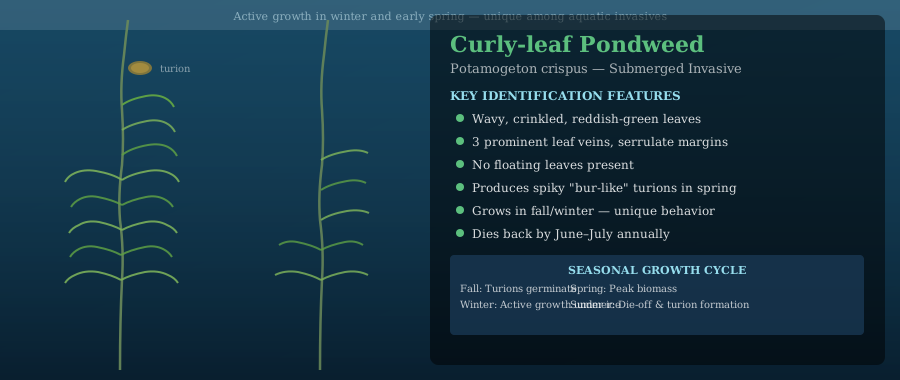
Curly-leaf pondweed is identified by its distinctive wavy or crinkled leaves — this crispy, ruffled leaf texture gives the plant its common name and is its most immediately recognizable feature. Leaves are oblong, 2–9cm long, reddish-green to brownish-green in color, with small serrations along the leaf margins and three prominent veins. Unlike many pondweeds, curly-leaf pondweed has no floating leaves — all leaves are submerged.
The plant lacks the feathery structure of milfoils and is more robust and broad-leaved than hydrilla or elodea. Stems are flattened, distinctive among pondweeds. In late spring, it produces reddish emergent flower spikes that rise above the water surface, and shortly after, distinctive spiky, hardened propagules called turions that look like small burs. These turions are extremely diagnostic — no other common aquatic weed produces turions with this distinctive spiky appearance.
Curly-leaf pondweed is most easily confused with other pondweed species, particularly Illinois pondweed (Potamogeton illinoensis), but the distinctive wavy leaf margin and the absence of floating leaves distinguish it from most native pondweed species.

Growth Habit & Ecology
Curly-leaf pondweed has a unique phenological strategy among aquatic invasives: it is a cool-season plant that grows when native aquatic plants are dormant. Growth begins in fall or winter, often germinating from turions in sediment when water temperatures fall below 50°F — while most competing plants are dormant. The plant grows actively through winter, sometimes under ice, reaching peak biomass in early spring before native plants emerge from dormancy.
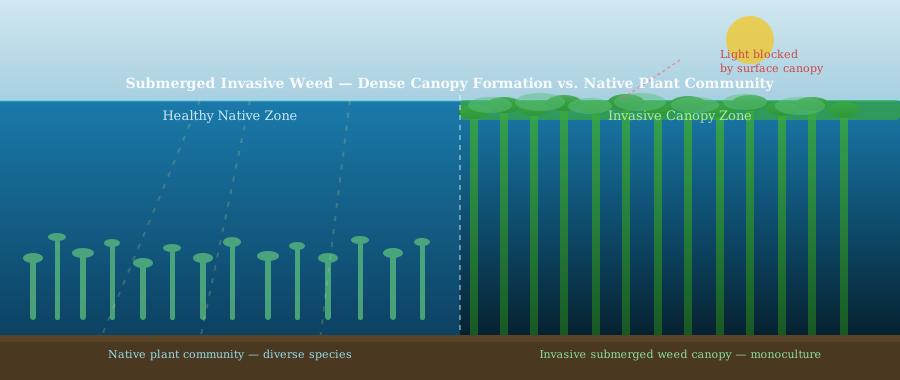
This counter-seasonal strategy gives curly-leaf pondweed a critical competitive advantage. It establishes canopy dominance in spring before native plants can grow, and the shading from its early canopy suppresses native plant germination and growth. By the time native plants would normally begin vigorous spring growth, curly-leaf pondweed has already claimed the available light.
As water warms in late May to July (typically above 65°F), the plant naturally senesces. Before dying, it produces turions — the spiky propagules that sink to the sediment, remain dormant through summer, and germinate in fall to restart the cycle. The annual cycle of growth and die-off, combined with the release of nutrients from decomposing biomass, can trigger summer algal blooms in enclosed water bodies.
Habitat Preferences
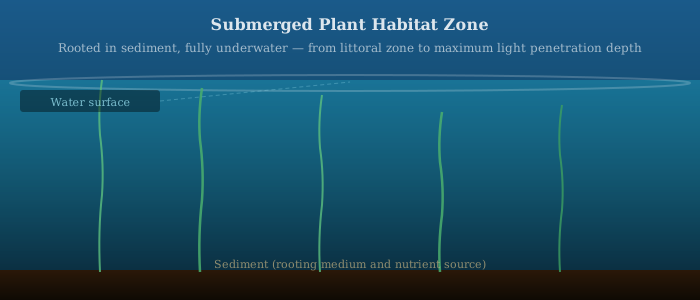
Curly-leaf pondweed is a versatile, cold-tolerant species capable of colonizing a wide range of freshwater habitats, with particular success in disturbed, eutrophic, and cool-water systems. It is established in at least 41 U.S. states, with its core range in the northern tier of states — Minnesota, Wisconsin, Michigan, New York, and adjacent regions — where cool spring water temperatures align with its seasonal growth requirements.
The species tolerates a broad range of water chemistry: from soft to very hard water, pH 6.5–9.5, and low to very high nutrient levels. Unlike most submerged aquatic plants, curly-leaf pondweed can grow in high-turbidity water with reduced light — it requires much less light than many native pondweeds. This tolerance for poor water clarity gives it a competitive advantage in eutrophic systems where turbidity limits other species.
Optimal habitat includes shallow to mid-depth water (1–12 feet), fine-grained sediments rich in organic matter, and cool water temperatures. It is commonly found in developed lakeshores, boat harbors, and areas with heavy nutrient input where its cold-season growth advantage is most pronounced. In southern states, curly-leaf pondweed is less common because water temperatures that favor it are confined to a shorter winter window, reducing its competitive advantage over warm-season native plants.
Spread Mechanisms
Curly-leaf pondweed's primary spread mechanism differs from most other aquatic invasives: instead of vegetative stem fragments, it spreads primarily through turions — hardened, spiky propagules produced in late spring before the plant dies back. These turions are approximately 1–2 cm long and remarkably durable; they can attach to waterfowl feet and feathers, survive passage through waterfowl digestive systems, and adhere to boating equipment and clothing.
Waterfowl are the most important natural vector, with diving ducks and other species that feed in shallow water inadvertently picking up and transporting turions between water bodies. Studies have documented viable turions transported hundreds of miles via waterfowl migration routes. Turions' tolerance for drying and mechanical damage makes them highly effective hitch-hiker propagules.
Watercraft and equipment transport turions as well — they can become lodged in anchor chains, trailer rollers, bilge systems, and fishing equipment. Water currents and flooding events distribute turions within and between connected water bodies.
One distinctive feature of curly-leaf pondweed spread is that the timing of management interventions matters greatly: mechanical harvesting after turion production (after late April in most of the Midwest) has minimal impact on next year's population because turions have already been released into the sediment. Early-season interventions — before turion formation — are far more effective at reducing the persistent propagule bank.
Seasonal Growth Pattern
Curly-leaf pondweed has the most unusual seasonal growth pattern of any common aquatic invasive in North America — essentially the inverse of most aquatic plants. The annual cycle begins in fall, typically September through November, when turions in the sediment germinate as water temperatures drop below 50°F. While native submerged plants are senescing and entering dormancy, curly-leaf pondweed is beginning its most active growth period.
Winter growth continues under ice in the northern states, where the plant can maintain green, actively growing mats even when lakes are completely frozen over. This cold-season growth has no competitors among native submerged plants — it is entirely alone in the water column during winter.
Spring peak biomass occurs in April and early May, when plants reach their maximum size and density. In shallow areas, stems can reach the water surface and form floating canopies, impeding navigation and blocking light from native plants trying to emerge from winter dormancy. This is the period of maximum ecological and recreational impact.
As water temperatures rise above 65°F in late spring and early summer (typically late May through July depending on latitude), the plant rapidly senesces. Within a period of weeks, the entire population dies back, releasing nutrients from decomposing biomass. Turion production occurs during this senescence phase — turions sink to sediment and remain dormant throughout summer, waiting for the return of cool fall temperatures to restart the cycle. By August, curly-leaf pondweed appears entirely absent from lake surfaces.
This summer absence creates a management timing challenge that is unique among invasive submerged plants. Recreational users who first notice the weed in spring often seek management assistance in July or August — by which point the plants are gone and the turion bank has already been replenished. Managers who survey lakes for curly-leaf pondweed in summer frequently report its apparent absence and conclude no management is needed, only to have it return aggressively the following spring. Effective programs require fall or early spring surveys when the plant is actually present, and early-season treatment before turion drop (typically mid-April through mid-May in the Midwest) to intercept the population before it completes its reproductive cycle and ensures the following year's infestation. Annual commitment to this early-spring treatment window — not reactive summer management — is the defining characteristic of effective long-term curly-leaf pondweed programs.
Ecological Impact
The ecological impacts of curly-leaf pondweed are distinct from those of summer-growing invasives due to its counter-seasonal growth pattern. In spring, dense curly-leaf pondweed mats can form before native plant communities emerge, shading native plants and preventing their establishment for the growing season.
When the plant dies back in early summer, the sudden release of large quantities of nutrients — phosphorus in particular — from decomposing biomass can fuel algal blooms. In enclosed lakes and bays, this "nutrient pulse" from curly-leaf pondweed die-off is now recognized as a significant driver of summer cyanobacterial (blue-green algae) blooms, which are toxic to humans, pets, and wildlife.
The die-off itself can also cause dissolved oxygen crashes. Large quantities of decomposing biomass create oxygen demand that can exceed replenishment, particularly in thermally stratified lakes. Fish kills following curly-leaf pondweed die-offs have been documented in Minnesota and other states.
Control Methods
Curly-leaf pondweed management requires attention to the plant's unique seasonal growth pattern. Treatments timed for summer or fall will miss the plant's active growth period and be largely ineffective.
Herbicide applications are most effective when applied in fall (after turions germinate but before winter ice-in) or in very early spring before peak biomass. Fluridone (slow-release systemic), endothall (contact), and diquat (contact) are registered for curly-leaf pondweed control. Triclopyr provides good control in some applications. Timing is critical — applications must coincide with active plant growth.
Mechanical harvesting before turion production (before late April or early May in most of the Midwest) can significantly reduce the turion seed bank. Harvesting after turion production has limited long-term benefit because the turions have already sunk to the sediment.
Raking and hand-pulling are effective in small areas, particularly for early infestations. As with other aquatic plants, prevention of spread through boat cleaning is the most cost-effective strategy.
Important: Always obtain required permits before applying any aquatic herbicide or introducing biological control agents. Requirements vary by state. Contact your state department of natural resources or environmental protection agency for guidance.
Distribution in the United States
Curly-leaf pondweed is established in at least 41 U.S. states and across much of Canada, making it one of the most widespread aquatic invasive plants in North America. It was likely introduced via waterfowl or shipping in the early 20th century and has spread steadily since.
Minnesota has particularly significant and well-studied infestations; the Minnesota DNR has invested heavily in curly-leaf pondweed research and management. The Great Lakes basin, Midwest, and Northeast have the highest densities of infested water bodies. Southern states generally have fewer problems because summer water temperatures are often too warm for the plant's preferred seasonal pattern, though it does establish in some southern locations.
Frequently Asked Questions
Why does curly-leaf pondweed die in summer?
Curly-leaf pondweed is adapted to cool water temperatures (optimal growth: 40–60°F). As water warms above 65°F in late spring and early summer, the plant enters senescence — a natural die-back. Before dying, it produces turions that sink to the sediment and remain dormant through summer, germinating again in fall when water cools. This cycle is hard-wired into the plant's biology.
Can curly-leaf pondweed cause algae blooms?
Yes, indirectly. When curly-leaf pondweed dies back in early summer, it releases large amounts of phosphorus from decomposing biomass into the water column. This sudden nutrient release can fuel cyanobacterial (blue-green algae) blooms in warm summer water. Research in Minnesota has linked curly-leaf pondweed infestations to increased frequency and severity of summer algal blooms.
Is curly-leaf pondweed the same as native pondweed?
No. Many native pondweed species (Potamogeton species) are ecologically beneficial and important to aquatic ecosystems. Curly-leaf pondweed (Potamogeton crispus) is a non-native invasive from Eurasia. The distinctive wavy leaf margins, three prominent veins, absence of floating leaves, and spiky turions distinguish curly-leaf pondweed from most native pondweed species.
References & Further Reading
- Catling, P.M. & Dobson, I. (1985). The biology of Canadian weeds: 69. Potamogeton crispus L. Canadian Journal of Plant Science 65(3):655–668.
- Unmuth, J.M.L. & Lillie, R.A. (2000). The influence of curly-leaf pondweed management on late summer phosphorus dynamics. Journal of Aquatic Plant Management 38:82–88.
- Minnesota Department of Natural Resources (2023). Curly-leaf Pondweed Management Program: Annual Status Report. MNDNR.