A Different Kind of Problem
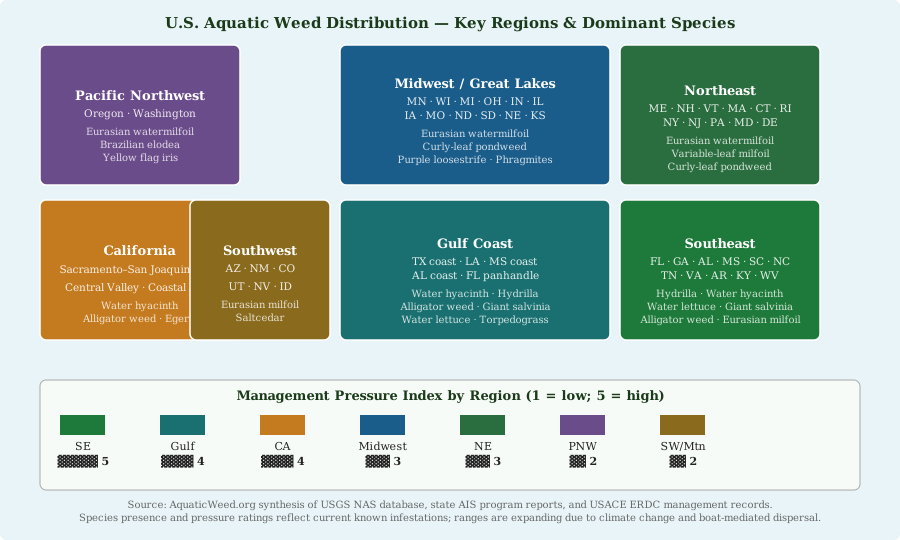
California's aquatic weed challenges differ in character from the Southeast's. The state's extensive water delivery infrastructure — the Sacramento-San Joaquin Delta, the State Water Project, the Central Valley Project, thousands of miles of irrigation canals — means aquatic weed infestations don't just impact recreational water bodies. They threaten water supply reliability for 25 million Californians and agricultural water users across the state's agricultural heartland.
Sacramento-San Joaquin Delta
The Sacramento-San Joaquin Delta is California's most complex aquatic weed management challenge. Water hyacinth (Eichhornia crassipes) infestations in the Delta are managed by the California Department of Food and Agriculture (CDFA) under a federally funded program, with an annual budget of several million dollars. Water hyacinth in the Delta clogs water pumping intakes, blocks navigation in recreational marinas, and provides habitat for invasive species (including the introduced water hyacinth moth). CDFA deploys both herbicide treatments and mechanical harvesting in the Delta annually.
Alligator weed is also a significant problem in Delta channels, and water primrose (Ludwigia hexapetala and related species) has become an increasing concern in recent years — California is investing in early detection and rapid response for new Ludwigia introductions in the Delta and coastal wetlands. Primrose willow profile →
Irrigation Canal Infestations
Hydrilla has been detected multiple times in California irrigation canals, primarily in the Sacramento Valley and San Joaquin Valley. California has pursued an aggressive eradication strategy for each detected hydrilla infestation, using rapid herbicide response while populations are small — a strategy that has successfully eradicated several infestations before they could establish large tuber banks. This California eradication success contrasts with the situation in southeastern states where large, long-established hydrilla populations make eradication impossible. The lesson is clear: early detection and rapid response are the keys to preventing establishment. Hydrilla profile →
Eurasian Watermilfoil in Northern California
Eurasian watermilfoil is established in multiple Northern California lakes and reservoirs, including Clear Lake, Lake Berryessa, and several Sierra foothills reservoirs. Lake associations and the California Department of Fish and Wildlife manage these infestations through annual treatment programs. The relatively cool climate of Northern California and the isolated nature of many infestations means milfoil management in California has been more tractable than in the Midwest and Northeast.
The Sacramento–San Joaquin Delta
The Sacramento–San Joaquin Delta is California's most significant aquatic weed management battleground. This 1,100-square-mile maze of channels connecting San Francisco Bay to the Central Valley serves as the hub of the state's water delivery system — it moves water from Northern California to farms and cities throughout the state. Water hyacinth has been a persistent and severe management problem in the Delta since the 1980s, with the California Department of Food and Agriculture (CDFA) and the Department of Water Resources (DWR) spending millions annually on control programs. Hydrilla and Brazilian waterweed are also established in portions of the Delta and require coordinated management. Large floating hyacinth mats entering water intake structures threaten the reliability of water deliveries on which 25 million Californians depend. Water hyacinth Delta management →
Mountain Lakes: A Different Challenge
California's Sierra Nevada and mountain lake systems — including Lake Tahoe, Lake Davis, and hundreds of smaller reservoirs — face invasion pressure primarily from Eurasian watermilfoil and coontail. Lake Tahoe, a high-profile oligotrophic lake prized for exceptional water clarity, has documented Eurasian milfoil infestations that threaten both the ecological character and the tourism economy of the basin. The Tahoe Regional Planning Agency coordinates aquatic invasive species management across the binational (California-Nevada) basin, including a mandatory watercraft inspection program that inspects hundreds of thousands of boats annually at lake access points. Eurasian milfoil management →
Frequently Asked Questions
Is water hyacinth in the Sacramento Delta a drinking water concern?
Dense water hyacinth mats in the Delta can affect water quality in multiple ways that potentially affect water supplies: the plants consume nutrients that would otherwise dilute as water moves through the Delta toward intake pumps; decomposing biomass releases taste-and-odor compounds; and large mats near intake structures can reduce pumping efficiency. The primary concern is physical obstruction of water delivery infrastructure rather than direct water quality contamination, but the management investment to prevent this is substantial.
Climate Influence on California Aquatic Weed Growth
California's Mediterranean climate — wet winters, dry summers — creates a distinctive aquatic weed management context unlike any other U.S. region. The Sacramento–San Joaquin Delta, which forms the hub of California's water delivery infrastructure, experiences mild winters (rarely below 5°C in water temperature) and warm, dry summers (water temperatures of 22–28°C), supporting nearly year-round growth of warm-season species like water hyacinth and egeria. In the agriculturally-dominated Central Valley, irrigation canal temperatures routinely exceed 28–30°C in summer, creating near-tropical growing conditions for submersed weeds during the irrigation season.
Water hyacinth in the Sacramento–San Joaquin Delta represents California's most costly aquatic weed management challenge. The Delta encompasses approximately 740,000 acres of tidal channels, sloughs, and open water, and water hyacinth infestations have periodically covered hundreds of miles of Delta channels. California's mild winters mean hyacinth biomass does not experience frost kill most years — populations decline in winter due to reduced photosynthesis rather than frost damage, providing only a limited management window when populations are reduced.
Climate change projections for California include increased drought severity, which will reduce freshwater flushing of estuarine systems and increase nutrient concentrations — conditions that strongly favor invasive aquatic plant growth. Sacramento–San Joaquin Delta water hyacinth populations already show earlier seasonal growth initiation since the 1990s, correlating with warming winter water temperatures.
Management Timing in California
| Species | Optimal Treatment | Notes |
|---|---|---|
| Water hyacinth | Feb–Apr (low-biomass pre-season) | California DFW coordinates Delta-wide program; penoxsulam and 2,4-D standard |
| Eurasian milfoil | Mar–Jun | Present in Lake Tahoe (special concern for water clarity), Sierra reservoirs |
| Alligator weed | Apr–Jul | Established in Delta channels and Sacramento Valley rice paddies |
| Brazilian waterweed (Egeria) | Year-round; treat Mar–Jun | Dominant submersed weed in Delta channels; cold-tolerant |
Regional Variation Within California
Sacramento–San Joaquin Delta is the primary aquatic weed management zone in the state. The California Department of Fish and Wildlife (CDFW) operates a year-round water hyacinth management program in the Delta, coordinated with the US Army Corps of Engineers and the Bureau of Reclamation. Management is complicated by the Delta's tidal hydrology, which moves plant fragments across the system regardless of local treatment.
Lake Tahoe presents a unique management case: California and Nevada jointly manage Eurasian watermilfoil and curlyleaf pondweed infestations in Lake Tahoe, where the overarching management priority is preserving the lake's exceptional water clarity. Early detection programs, lakewide surveys, and hand-harvesting of small infestations are the primary management tools — large-scale herbicide treatment is highly restricted to protect water quality.
Southern California faces aquatic weed challenges in its water delivery infrastructure (Metropolitan Water District canals, spreading basins) and in restoration wetlands where invasive cattails, water hyacinth, and Phragmites threaten native vegetation.