Why Systematic Monitoring Is Non-Negotiable
Effective aquatic weed management depends on reliable, repeatable monitoring data. Without systematic monitoring, you cannot detect new infestations early (when they are manageable), measure the impact of management actions, track population trends over time, or adjust a management program based on evidence. Monitoring is not an optional add-on to a management program — it is the foundation on which all management decisions should be based.
Point-Intercept Sampling
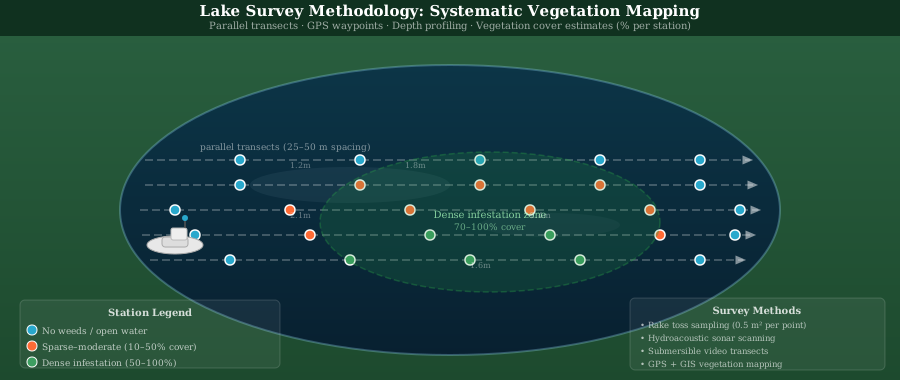
Point-intercept sampling is the most widely used quantitative aquatic plant survey method for lakes in the United States. The method involves sampling at fixed points on a systematic grid throughout the water body — at each point, the presence/absence and cover score of each aquatic plant species is recorded by an observer using a rake, diver, or bottom-viewing device. Statistical analysis of the resulting dataset produces estimates of each species' frequency of occurrence, relative frequency among species, and changes in distribution over time.
Point-intercept data is particularly valuable for tracking management progress over multiple years — comparing the same grid points in year 1 and year 4 of a management program provides rigorous, defensible evidence of whether target species frequency has declined and whether native species are recovering. Many state regulatory agencies require point-intercept survey data in management permit applications and post-treatment reports. The method is standardized enough that data from different years and surveyors is directly comparable. Data documentation →
Transect Surveys
Transect surveys involve conducting surveys along pre-defined lines (transects) from shore to the deep end of a water body, recording plant presence, identity, and percent cover at regular depth intervals. Transect surveys are faster than full point-intercept surveys for large water bodies and are particularly well-suited to detecting species at different depths and confirming the depth limit of specific invasive species populations. They are also appropriate for qualitative baseline surveys early in a monitoring program before formal quantitative methods are established.
Remote Sensing Tools
Drone aerial photography, satellite multispectral imagery, and airborne hyperspectral imaging are increasingly used to map aquatic plant distributions in large water bodies. These tools can cover large areas rapidly and detect patterns not visible from the boat level. Consumer-grade drones provide useful georeferenced imagery for mapping floating mats and emergent plant boundaries. Professional airborne or satellite surveys are available from several specialized aquatic plant mapping services and provide species-level classification for some targets in suitable conditions.
Monitoring Schedule
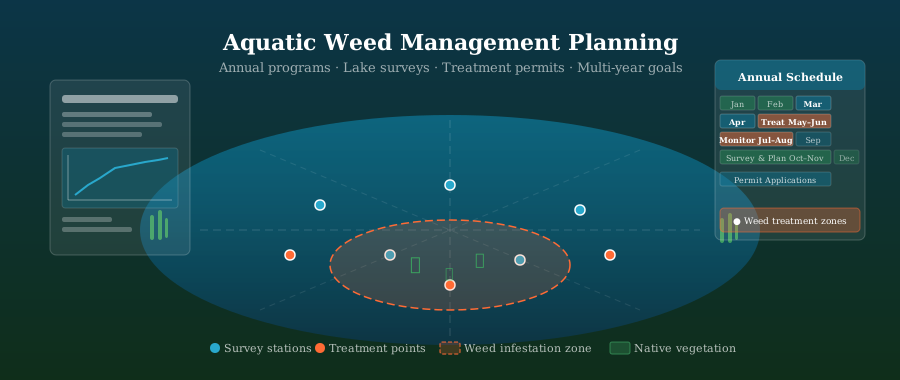
A comprehensive monitoring program for a managed lake should include: early spring survey (April–May) for cool-season species like curly-leaf pondweed; peak-growing-season survey (July–August) for warm-season submerged and floating species; post-treatment survey 4–8 weeks after any treatment to confirm efficacy; and a fall survey for emergent species assessment and turion/tuber documentation. Annual photographic documentation from fixed viewpoints provides a qualitative record of changes in coverage that complements quantitative survey data.
Integrating Monitoring Data into Adaptive Management
Monitoring data has value only when it is acted upon. Annual survey results should be reviewed against the program's baseline and prior-year data before each treatment season: if coverage is declining on schedule, the program is on track; if it is stable or increasing despite treatment, the program needs adjustment — different products, different timing, or an investigation of whether a non-target re-introduction pathway is replenishing the population. Adaptive management — the systematic cycle of monitoring, analysis, adjustment, and re-monitoring — is what distinguishes programs that achieve lasting results from those that treat indefinitely without progress. Setting measurable management goals →
Frequently Asked Questions
Can I do my own aquatic plant surveys or do I need a professional?
For small ponds and simple infestations, motivated property owners can conduct adequate monitoring with basic training. The Wisconsin DNR, Minnesota DNR, and several university programs offer published point-intercept sampling protocols and identification training resources that are accessible to informed non-professionals. For larger lakes, multi-species infestations, permit-required surveys, or situations involving federally noxious species, professional survey services are recommended. Professional surveys produce legally defensible data, include proper identification of all species encountered, and meet regulatory documentation standards.