Private Pond Aquatic Weed Management
Private ponds — farm ponds, residential ponds, ornamental water features, livestock watering ponds, and stocked fishing ponds — are the most common aquatic management challenge in the United States. An estimated 5 million private ponds exist in the U.S., and the majority of their owners will deal with nuisance aquatic plant growth at some point. Effective pond management planning balances multiple objectives: recreation and aesthetics, fish habitat quality, water quality, livestock use, and long-term sustainability.
Setting Realistic Pond Management Goals
For most private ponds, the goal is not zero vegetation — it is optimal vegetation coverage for the intended use. Research on small fishing ponds consistently shows that moderate aquatic vegetation coverage (10–30% of pond surface) produces higher fish biomass and diversity than either heavily vegetated ponds or completely bare ponds. The optimal coverage range provides invertebrate habitat and juvenile fish refuge without impairing dissolved oxygen or recreational access.
Identify your priority uses: If the primary use is bass fishing, maintaining 15–25% vegetation coverage with a mix of submerged and emergent plants is ideal. If the primary use is swimming, keeping the swimming area clear with natural buffer margins is appropriate. If the primary use is livestock watering, preventing floating mats from reaching the watering area is the management goal. Clear goal definition determines which management interventions are worth the investment. Goal setting →
Pond Baseline Assessment
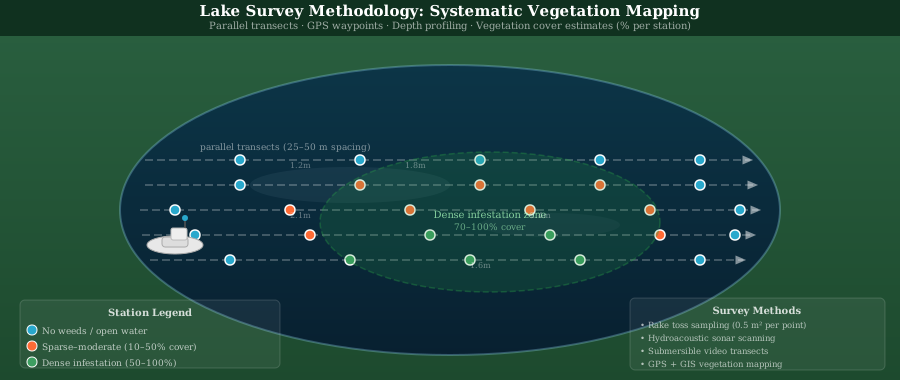
Before treating a private pond, identify all species present. Ideally, engage a local aquatic plant management professional or county extension agent to assist with identification — correct ID is essential for selecting the right treatment. Determine whether species present are native (may not need treatment) or invasive/non-native (treatment is appropriate). Map the distribution of each species within the pond. Measure water quality parameters: pH, dissolved oxygen (in morning and afternoon), water clarity. This baseline takes a few hours but saves money by ensuring the treatment program targets the right species with the right method.
Pond Management Tool Selection
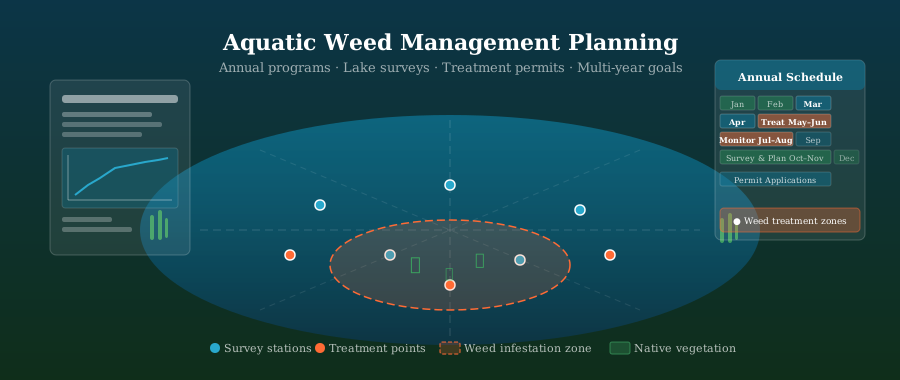
Private pond treatment options include mechanical removal (raking, dragging), chemical treatment (EPA-registered aquatic herbicides and algaecides), biological control (grass carp with state stocking permit), and nutrient management (reducing nutrient inputs from lawn fertilizers, livestock, and stormwater). Pond owners without professional management experience should generally consult a certified aquatic plant management professional for chemical treatments — permit requirements, label compliance, water use restrictions, and fish safety must all be addressed. For small ponds under 1/4 acre, self-managed treatment using over-the-counter products may be appropriate for certain species.
The Nutrient Management Foundation
No treatment program achieves lasting results in a private pond without addressing the nutrient loading that fuels weed growth. Common nutrient sources for private ponds: lawn fertilizer applied near the water's edge; grass clippings and organic debris entering the water; livestock waste from animals with direct water access; agricultural runoff from adjacent cropland; waterfowl populations (particularly domestic ducks and geese); and septic system discharge. Eliminating or reducing these inputs reduces the growth pressure that forces repeated treatments. Nutrient effects →
Frequently Asked Questions
How much does it cost to treat a small pond?
Professional aquatic weed treatment for a small pond (1/2 to 2 acres) typically runs $200–$1,500 per treatment, depending on species, products used, and whether consultation or permit assistance is included. Grass carp stocking (where permitted) typically costs $15–$30 per fish, with 5–15 fish needed for a 1-acre pond. DIY treatment with over-the-counter products can cost $50–$200 per treatment for small ponds. Nutrient management improvements (fencing livestock out of the water, creating buffer strips) are one-time investments that typically cost $500–$2,000 but provide lasting nutrient reduction.