How Aquatic Weeds Deplete Dissolved Oxygen
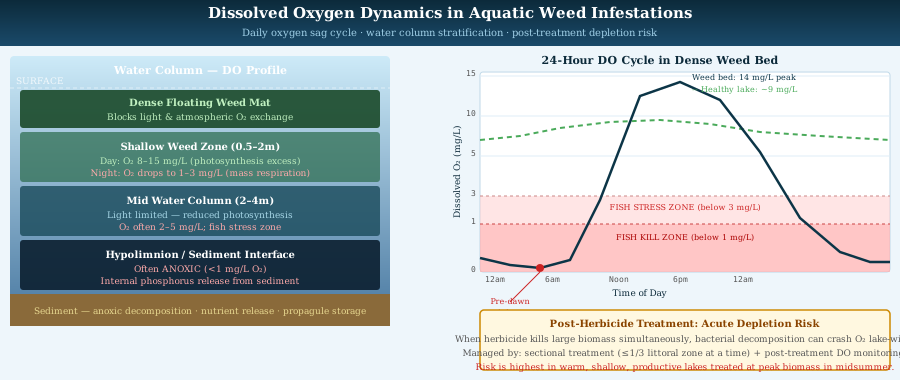
Dissolved oxygen (DO) depletion is the most immediately lethal ecological impact of dense aquatic weed infestations. Fish, invertebrates, and most aquatic organisms require adequate dissolved oxygen to survive — when DO falls below about 3 mg/L (milligrams per liter), most fish become stressed and feeding stops; below 1 mg/L, mass fish kills become likely in all but the most hypoxia-tolerant species. Dense aquatic weed growth creates conditions for severe DO depletion through multiple simultaneous mechanisms operating across different timescales.
The Nighttime Oxygen Sag: Daily Cycle
The most characteristic oxygen dynamic of heavily weeded water bodies is the nighttime oxygen sag — an extreme daily fluctuation between daytime oxygen supersaturation and nighttime oxygen depletion. During daylight hours, dense aquatic plant beds produce large quantities of dissolved oxygen through photosynthesis — surface layers in productive weed beds are sometimes supersaturated to 200–300% of air equilibrium during peak afternoon photosynthesis, well above what aerobic organisms can use. But all aquatic plants (and all organisms) consume oxygen through aerobic respiration continuously, and at night, without photosynthesis to replenish it, the oxygen consumption of the plant mass itself — combined with the bacteria and invertebrate communities living in the weed bed — drives DO down rapidly.
In heavily vegetated shallow water bodies in warm climates, pre-dawn DO can crash to near-zero levels, causing mass fish kills that are discovered at sunrise as floating dead fish. This pattern is regularly documented in shallow, densely weeded ponds and small lakes throughout the southeastern U.S. The critical threshold: most warm-water game fish (bass, bluegill, crappie) begin showing stress responses at DO below 3 mg/L and suffer mortality at sustained DO below 1–2 mg/L. Water hyacinth oxygen impacts →
Post-Treatment Oxygen Depletion: The Decomposition Risk
One of the most important — and least intuitive — ecological risks in aquatic weed management is post-treatment dissolved oxygen depletion from plant decomposition. When aquatic herbicide kills large quantities of plant material simultaneously, the resulting biomass decomposition by aerobic bacteria consumes oxygen at a rate that can easily exceed the lake's oxygen replenishment capacity (from atmospheric diffusion and any remaining photosynthesis), driving DO to fish-kill levels across the treated area.
The scale of this risk scales with: the quantity of biomass killed (more biomass = more decomposition demand); water temperature (decomposition rates approximately double per 10°C); initial DO concentration (warm water holds less oxygen than cold); and mixing rate (still water replenishes oxygen from the atmosphere slowly). In warm, productive lakes treated at peak biomass in midsummer, post-treatment fish kills can be more severe than any oxygen stress the pre-existing weed infestation produced. This is why professional treatment programs use sectional treatment — treating a maximum of one-third of the littoral zone at a time with waiting intervals between sections — as a standard risk mitigation protocol. Treatment protocols for oxygen management →
Floating Mat Light Exclusion and Surface Anoxia
Dense floating mats (water hyacinth, giant salvinia, duckweed, water lettuce) create oxygen depletion by two mechanisms acting simultaneously. First, the mat physically blocks wind-driven diffusion of atmospheric oxygen into the water, removing one of the primary oxygen resupply pathways in shallow water. Second, the shade under the mat eliminates all photosynthesis by submerged species below, removing the other primary oxygen source. In combination, these mechanisms can create near-complete oxygen depletion (essentially anoxic conditions) in the water column beneath a thick floating mat even in full sunlight. The result is a biological dead zone under the mat — devoid of aerobic invertebrates and fish — with all activity concentrated in the few centimeters at the mat surface where aerial oxygen exchange occurs across the mat structure. Giant salvinia oxygen impacts →
Hypoxic Sediments and Nutrient Feedback
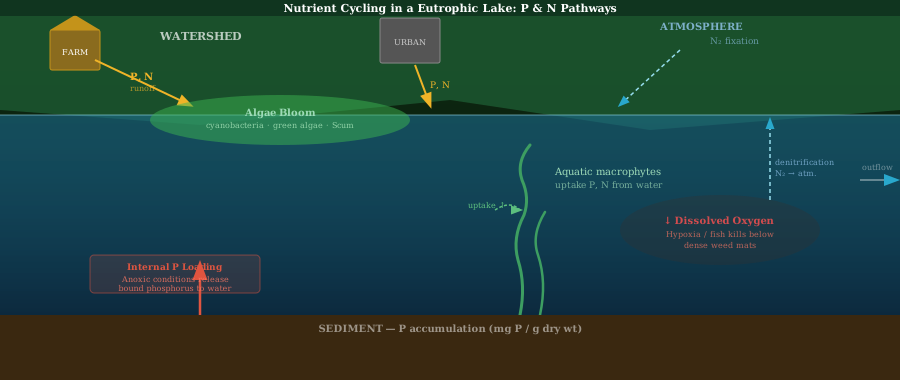
Where dense weed growth persists for multiple seasons, oxygen depletion at the sediment surface creates hypoxic and anoxic sediment conditions that drive an internal nutrient loading feedback. Under aerobic conditions, iron in the sediment forms iron-phosphate complexes that bind phosphorus tightly in the sediment. When the sediment-water interface becomes anoxic, iron is reduced to its ferrous form, releasing bound phosphorus back into the water column. This internal loading can deliver more phosphorus to the water column than all external watershed inputs combined in some productive lakes — a self-sustaining feedback loop in which oxygen depletion from weed growth releases nutrients that fuel further weed growth. Nutrient loading and internal cycling →
Dissolved Oxygen Thresholds for Common Aquatic Species
| Species or Group | Stress Threshold (mg/L DO) | Lethal Threshold (mg/L DO) |
|---|---|---|
| Largemouth bass | 3.0 | 1.0–1.5 |
| Bluegill / sunfish | 2.5 | 0.8–1.2 |
| Northern pike | 4.0 | 2.0–2.5 |
| Trout (all species) | 6.0 | 3.0–4.0 |
| Carp / catfish | 1.5 | 0.3–0.5 |
| Aquatic invertebrates (most) | 4.0 | 1.0–2.0 |
| Sensitive invertebrates (stoneflies, mayflies) | 7.0 | 4.0–5.0 |
Note: Thresholds are approximate and vary with temperature (warmer water amplifies stress), acclimation history, species age, and duration of exposure. Salmonid species are the most sensitive to oxygen depletion; carp and catfish are the most tolerant.
Monitoring and Management Response
Active dissolved oxygen monitoring during and after herbicide treatment is standard practice in professional management programs:
- Pre-treatment baseline DO surveys establish baseline conditions and identify already-stressed areas that should not be treated aggressively.
- Post-treatment monitoring (typically daily for 1–2 weeks after treatment) detects developing oxygen depletion events before they reach lethal levels.
- Emergency aeration (floating aerators, diffuser systems) can be deployed when monitoring detects concerning DO trends, potentially preventing a fish kill that would otherwise occur. Monitoring methods guide →
Frequently Asked Questions
How can I tell if low oxygen is killing fish in my pond?
The most obvious indicator is fish at the water surface or at pond edges early in the morning (just before or after sunrise), gasping or behaving lethargically. Fish gulp air at the surface when dissolved oxygen in the water column drops to critically low levels — this is called surface piping and is a distress behavior indicating oxygen depletion. Finding dead fish floating at the surface in the morning is the post-mortem indicator. For advance warning before a kill, a dissolved oxygen meter (affordable portable units are available for under $200) measured at the pond surface near dawn provides direct measurement of the minimum overnight DO level.
Should I aerate my pond to prevent oxygen depletion from weeds?
Aeration can mitigate oxygen depletion but does not address the root cause (weed biomass and its nighttime respiration). In ponds with severe weed infestations, aeration systems can provide important short-term protection for fish populations — particularly during the post-treatment period after herbicide treatment when decomposing plant biomass creates peak oxygen demand. However, aeration alone in a heavily weeded pond must operate continuously at high rates to keep pace with the oxygen demand, which is energy-intensive and expensive. The most cost-effective approach is to combine weed management that reduces biomass with supplemental aeration in ponds where fish are a priority.
References
- Welch, E.B. (1992). Ecological Effects of Wastewater, 2nd ed. Chapman and Hall, London.
- Cooke, G.D., et al. (2005). Restoration and Management of Lakes and Reservoirs, 3rd ed. Taylor & Francis, Boca Raton, FL.
- Gettys, L.A., et al. (2014). Biology and Control of Aquatic Plants: A Best Management Practices Handbook, 3rd ed. Aquatic Ecosystem Restoration Foundation.
- Moss, B. (1998). Ecology of Fresh Waters: Man and Medium, Past to Future, 3rd ed. Blackwell Science, Oxford.