Aquatic Weeds as Water Quality Drivers
The relationship between aquatic weeds and water quality is bidirectional and complex. Nutrient enrichment drives weed growth; weed growth in turn degrades water quality through multiple mechanisms — altered chemistry, reduced clarity, oxygen dynamics, internal nutrient cycling, and facilitation of cyanobacterial blooms. Understanding this feedback relationship is essential for designing management programs that address root causes rather than symptoms, and for communicating to stakeholders why weed management and watershed nutrient management must be coordinated. Nutrient loading and eutrophication →
pH Alteration
Dense aquatic plant communities produce dramatic pH fluctuations through their photosynthesis and respiration cycles. During peak afternoon photosynthesis, aquatic plants consume dissolved CO₂ (carbon dioxide) from the water faster than it can diffuse in from the atmosphere. As CO₂ is removed, the carbonate-bicarbonate buffer system shifts, driving pH upward — in highly productive water bodies, afternoon pH can reach 9.5–10.5, well above the 6.5–8.5 range considered optimal for most aquatic organisms. At night, when respiration adds CO₂ back to the water, pH drops — sometimes falling to 6.0–6.5 by pre-dawn in highly productive systems.
These pH swings have direct biological effects. At pH above 9.0, ammonia toxicity increases sharply (because more of the total ammonia pool is in the toxic un-ionized form), and some invertebrates experience physiological stress from direct pH effects on respiration and ion regulation. The daily pH swing in a heavily weeded shallow lake — potentially 3–4 pH units — is far more extreme than in healthy aquatic systems, and represents a chronic physiological stress on resident biota. Linked oxygen and pH dynamics →
Water Clarity and Light Transmission
Dense aquatic plant growth both responds to and modifies water clarity. The relationship depends on the growth form:
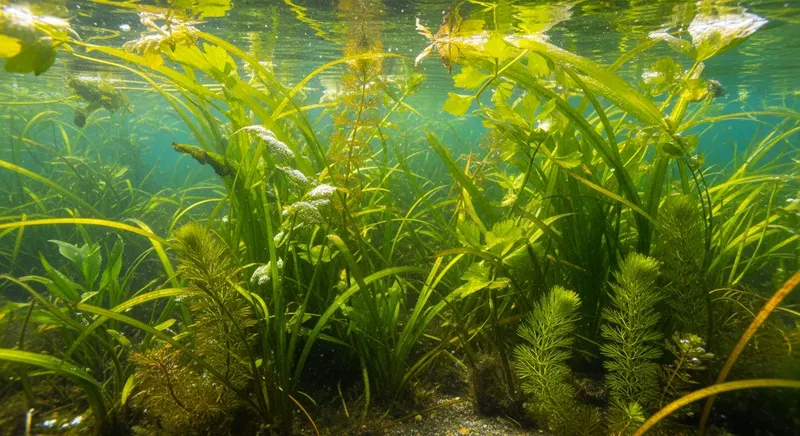
- Submerged plant beds in clear-water lakes may initially maintain or even improve water clarity by filtering suspended particles from the water column. However, as plant density increases and oxygen depletion events increase, associated turbidity from sediment disturbance and algae growth increases.
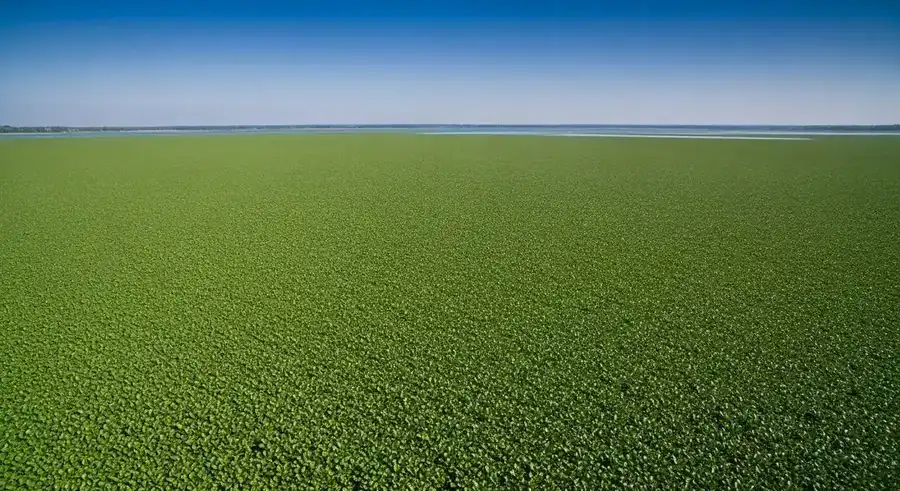
- Floating mat species (water hyacinth, giant salvinia, duckweed) directly reduce water clarity by shading the water column, eliminating phytoplankton growth beneath mats but creating nearly opaque conditions that prevent any light penetration to submerged species. The water directly beneath dense floating mats has the appearance of dark, stagnant liquid even in otherwise productive water bodies. Giant salvinia water quality impacts →
- Post-treatment turbidity: After herbicide treatment, the decomposition of large plant biomass releases fine organic particles that temporarily increase turbidity. This typically resolves within 2–4 weeks as decomposition completes and the organic load settles.
Nutrient Cycling and Internal Loading Acceleration
Dense aquatic plant communities accelerate the internal nutrient cycle in ways that can sustain eutrophication even after external nutrient inputs are reduced:
- Sediment nutrient mining and recycling: Rooted aquatic plants extract phosphorus and nitrogen from nutrient-rich sediments through their root systems and release a portion back to the water column through leaf exudation, decomposition, and grazing. This translocation of sediment nutrients to the water column is estimated to contribute 20–60% of total in-lake nutrient availability in some eutrophic lakes.
- Anoxic internal loading trigger: Plant-driven oxygen depletion at the sediment surface activates the redox-controlled release of iron-bound phosphorus from the sediment. This internal loading feedback can deliver more P to the water column than all external watershed inputs combined in mature eutrophic lakes — sustaining nutrient-driven weed growth independently of any watershed loading. Full nutrient cycling guide →
- Nitrogen processing: Submerged plant beds host large nitrogen-cycling microbial communities that mediate nitrification, denitrification, and nitrogen fixation — processes that alter the nitrogen speciation and availability in overlying water. Dense weed beds can shift nitrogen cycling in ways that favor algae over native plant competition.
Cyanobacteria Bloom Facilitation
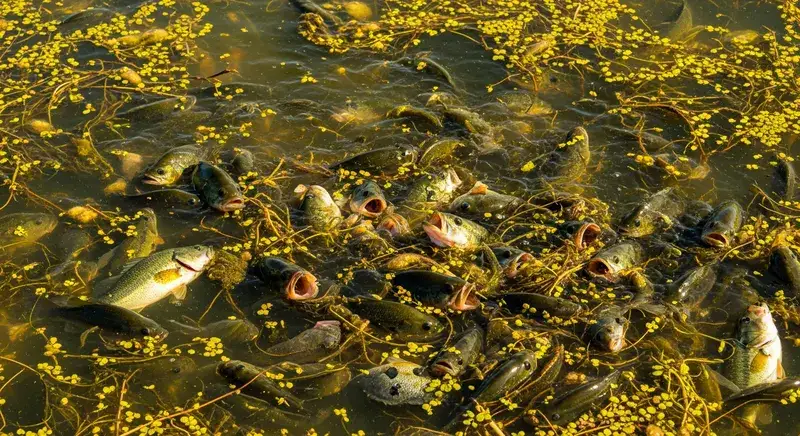
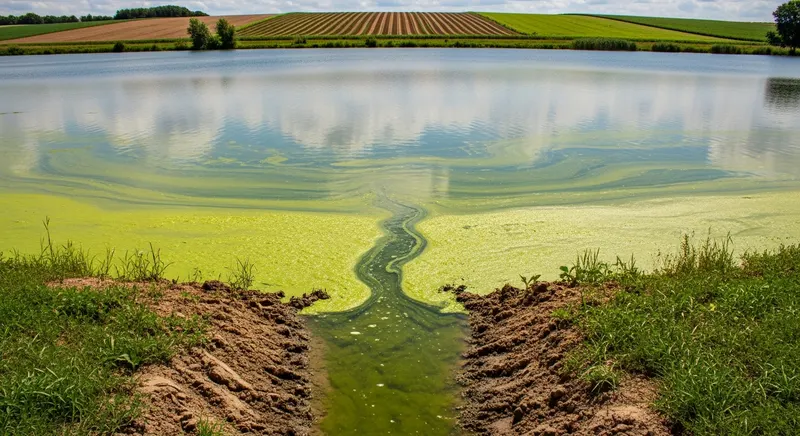
One of the most significant water quality concerns associated with dense aquatic weed infestations is the facilitation of cyanobacteria (blue-green algae) blooms, some of which produce toxins (microcystins, anatoxins, cylindrospermopsins) posing genuine public health and wildlife risks:
- The conditions created by dense weed beds — high pH, elevated phosphorus from internal loading, warm stratified water — are ideal for cyanobacteria growth. Some cyanobacteria fix atmospheric nitrogen, giving them an advantage over other algae in nitrogen-limited conditions.
- After herbicide treatment that kills large weed biomass, the nutrient pulse from decomposing plants is frequently followed within 1–4 weeks by cyanobacteria blooms. This is a known and predictable post-treatment dynamic that management programs must communicate to stakeholders in advance.
- Cyanotoxins produced during blooms can cause liver damage, neurological effects, and dermatitis in humans, dogs, and wildlife. Water bodies with confirmed cyanobacteria blooms may require recreational use restrictions — an impact that extends the weed management problem into a public health management problem. Integrated management planning →
Taste and Odor Impacts
Dense aquatic plant growth and decomposition produce a suite of taste and odor compounds that affect water quality for drinking water utilities and recreational users. Geosmin and 2-methylisoborneol (2-MIB) are two volatile compounds produced by actinomycetes and cyanobacteria associated with dense plant beds that produce the characteristic "earthy/musty" taste and smell in affected water bodies. Even trace concentrations of geosmin (around 10 ng/L — 10 parts per trillion) are detectable to human taste and smell, making water quality complaints a common indicator of advanced eutrophication and weed problems in water supply reservoirs.
Frequently Asked Questions
Are aquatic weeds a sign that the water is polluted?
Dense nuisance aquatic weed growth is typically a sign of elevated nutrient concentrations in the water body — which in most cases does reflect elevated pollutant loading from human activities (fertilizer runoff, stormwater, wastewater). However, 'polluted' in the common sense of chemically contaminated or health-threatening applies only when specific contaminants are present. A heavily weeded lake is typically nutrient-enriched (eutrophic) rather than chemically contaminated, and is generally safe for recreation absent specific hazards like cyanobacteria blooms. Dense weed growth is best understood as a symptom of excess nutrient loading rather than direct chemical pollution.
Can aquatic weeds cause drinking water problems?
Yes, in several ways. Taste and odor compounds (geosmin, 2-MIB) from aquatic plants and associated cyanobacteria cause objectionable taste in treated water that's difficult to remove without specialized treatment. Cyanotoxins from associated cyanobacteria blooms pose direct health risks and require activated carbon treatment or membrane filtration to remove — treatment approaches not all utilities have installed. Dense weed growth can also foul intake screens and increase raw water treatment costs through elevated organic load. For water utilities with source water quality concerns related to aquatic plant growth, coordinated watershed management to reduce nutrient loading is the most cost-effective long-term solution.
References
- Cooke, G.D., et al. (2005). Restoration and Management of Lakes and Reservoirs, 3rd ed. Taylor & Francis, Boca Raton, FL.
- Hudnell, H.K. (ed.) (2008). Cyanobacterial Harmful Algal Blooms: State of the Science and Research Needs. Advances in Experimental Medicine and Biology, v. 619. Springer.
- Welch, E.B. (1992). Ecological Effects of Wastewater, 2nd ed. Chapman and Hall, London.
- Gettys, L.A., et al. (2014). Biology and Control of Aquatic Plants: A Best Management Practices Handbook, 3rd ed. Aquatic Ecosystem Restoration Foundation.
Ten-Year Lake Management Plan: Lake Wingra, WI
Lake Wingra, a 342-acre urban lake in Madison, WI, developed a comprehensive 10-year management plan coordinating the City of Madison, University of Wisconsin, and adjacent neighborhood associations. The plan addressed Eurasian watermilfoil, curly-leaf pondweed, and purple loosestrife through an integrated approach including targeted herbicide treatment, mechanical harvesting, native plant restoration, and public education.
Key outcome: The structured multi-agency planning process secured consistent funding across multiple budget cycles, a key advantage over ad hoc management. Native plant restoration efforts showed measurable progress in designated restoration zones within three years of initiation.
The ecological impact section helped our team explain to county commissioners why early intervention matters. The oxygen depletion data alone secured funding for our early-detection monitoring program.
Donna Whitfield State Wildlife Biologist, GA · Okefenokee regionWe used the integrated management framework from this site to structure our Eurasian watermilfoil control program. After three seasons we've reduced lake-wide coverage by 78% on our 340-acre water body.
Susan Thibodeau Lake District Manager, MN · Crow Wing County