When Weeds Take Over the Lake
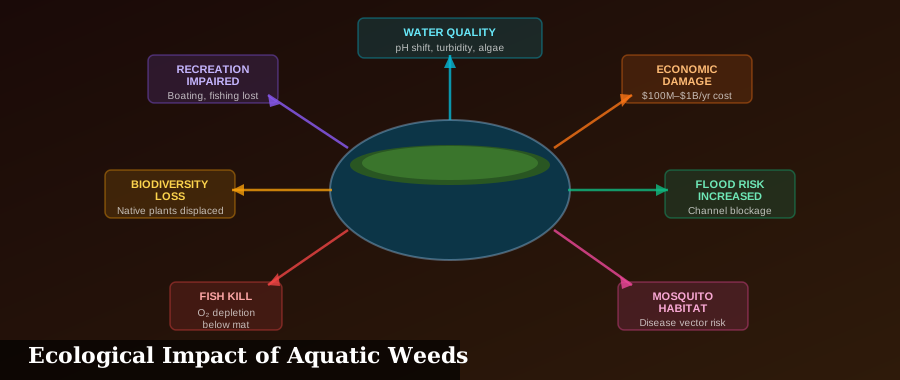
Aquatic weed infestations impose direct, tangible costs on water body recreation and navigation that extend far beyond aesthetic concerns. Dense weed beds make boating physically impossible, swimming unsafe, and fishing frustrating or futile. These impacts translate into measurable economic losses for lakefront property owners, tourism-dependent businesses, and the broader regional economies built around water recreation. Understanding the specific mechanisms of recreational impact helps set clear management targets and communicate the urgency of management investment to stakeholders. Economic costs of aquatic weeds →
Boating and Navigation Impacts
Dense submerged weed beds — particularly hydrilla, Eurasian milfoil, and coontail — create severe boating impediments that range from nuisance to navigation hazard:
- Propeller entanglement: Dense submerged vegetation wraps around boat propellers, reducing thrust and causing engine overheating and damage. In severe infestations, propeller entanglement can stop a boat entirely and require manual clearing — which generates plant fragments that spread the infestation. Aluminum propellers on smaller boats are more susceptible to weed fouling than stainless steel; lower-horsepower motors slow more severely under weed loading. Hydrilla's navigation impacts →
- Channel obstruction: Dense weed beds in navigation channels create navigation hazards in regulated waterways. The Army Corps of Engineers manages aquatic weed infestations in maintained navigation channels as a regular component of waterway maintenance — a cost ultimately borne by taxpayers and commercial operators.
- Floating mat hazards: Large floating mats of water hyacinth, giant salvinia, or duckweed can be mistaken for solid ground, creating hazards for swimmers and small boat operators. Floating mats also drift and accumulate at boat launches, marinas, and dock areas, physically blocking access. Water hyacinth navigation impacts →
- Dock fouling: Floating weeds and dense emergent vegetation (Phragmites, cattail) encroaching on dock areas reduce usable dock space, entangle dock lines, and make swimming and boat access difficult. Property owners with dock infestations typically report significantly reduced summer use of their waterfront.
Swimming and Water Contact Recreation
Dense aquatic weed growth creates significant barriers to safe water contact recreation:
- Physical entanglement: Dense submerged vegetation in swimming areas creates entanglement risk for swimmers, particularly children and weak swimmers. The psychological deterrent of swimming in weed-dense water is often severe — most swimmers abandon swimming in areas where vegetation is visible or palpable underfoot. This is one of the most frequently cited quality-of-life impacts in lake association surveys.
- Water quality perception: Weed-infested water is typically associated with reduced water clarity, floating debris and plant fragments, unpleasant smells from decomposing vegetation, and surface scum from associated algae blooms. These conditions deter recreational swimming even when no direct health risk is present.
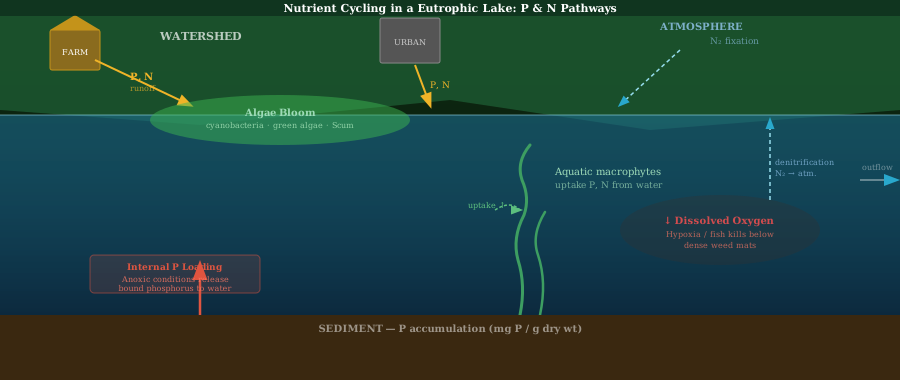
- Cyanobacteria bloom risk: Dense aquatic macrophyte beds and associated oxygen depletion events create conditions that favor cyanobacteria (blue-green algae) blooms in the water above and adjacent to weed beds. Some cyanobacteria species produce toxins (microcystins, anatoxins) that pose genuine health risks to swimmers and pets — elevating the weed problem from aesthetic to public health significance. Water quality impacts →
Fishing Impacts
Aquatic weed infestations reduce fishing quality both directly (by impeding angling mechanics) and indirectly (by degrading fish habitat):
- Dense weed beds make casting and retrieving lures impossible in most fishing techniques. Fishing lines and hooks tangle immediately in dense milfoil or hydrilla, limiting effective presentation to the upper 30–60 cm of the water column at the edge of weed beds.
- Fish population changes in heavily infested lakes (reduced large predator abundance, increased small prey fish density) result in lower catch rates of desirable sport fish species, particularly largemouth bass and walleye. Fish habitat impacts →
- Commercial and charter fishing businesses near infested lakes report significant revenue impacts during severe infestation periods. Fishing tournament organizations have relocated events from heavily infested lakes, with associated economic impacts on host communities.
Tourism and Water-Based Recreation Economy
The economic ripple effects of recreational impairment extend beyond the water's edge:
- Boat launch use decreases at infested lakes — measured as reduced boat launch permit sales and parking lot occupancy in studies comparing infested and non-infested comparable lakes.
- Overnight accommodation bookings in lake communities show measurable declines in seasons when weed infestations are widely reported or when access problems receive local news coverage.
- Real estate agents report that aquatic weed infestation history is among the top concerns of buyers evaluating lakefront properties, with documented effects on selling price. Economic cost quantification →
Frequently Asked Questions
What can a lake association do about weed problems affecting recreation?
Lake associations are often the most effective organizing entities for coordinated aquatic weed management programs. Key actions: (1) Commission a baseline species survey to document what is present and where, which is the foundation for permit applications and treatment planning. (2) Consult with your state DNR about permit requirements for the proposed management approaches. (3) Engage a licensed aquatic plant management contractor for permit preparation and treatment. (4) Coordinate with property owners on cost-sharing arrangements for the management program. (5) Implement a Clean Drain Dry education program to prevent new introductions. Most states have lake association resources and may offer cost-sharing programs for management in public-access lakes.
Can I clear a boat path or swimming area without treating the whole lake?
Yes — mechanical harvesting is specifically suited to creating localized clearance in designated areas. A harvesting contractor can clear a boat launch channel, a swimming beach area, or a dock access corridor in a single day's work, providing immediate usable access. However, regrowth typically requires repeat harvesting every 30–60 days during the growing season if no other management is occurring. Localized mechanical clearing is most cost-effective when used alongside a lake-wide herbicide program that slows overall plant regrowth, reducing the required frequency and extent of mechanical retreatment. For small isolated areas like a dock zone, bottom barriers are also an option for persistent clearance maintenance.
References
- Eiswerth, M.E., et al. (2000). The rapid spread of the invasive macrophyte Eurasian watermilfoil and its effect on recreation and property values. Journal of Aquatic Plant Management, 38, 33–40.
- Wisconsin Department of Natural Resources. (2012). Eurasian Watermilfoil and Property Values in Wisconsin. WDNR Research Report.
- Gettys, L.A., et al. (2014). Biology and Control of Aquatic Plants: A Best Management Practices Handbook, 3rd ed. Aquatic Ecosystem Restoration Foundation.