Overview
Elodea is a submerged aquatic plant native to North America that provides important ecological services — oxygenating water, providing fish and invertebrate habitat, and serving as waterfowl food — in its native range. In Europe, where it was introduced as an aquarium plant in the 19th century, it became invasive and displaced native aquatic flora. In Alaska, certain elodea species introduced from the contiguous U.S. are now spreading and are a current conservation management priority.
Identification Characteristics
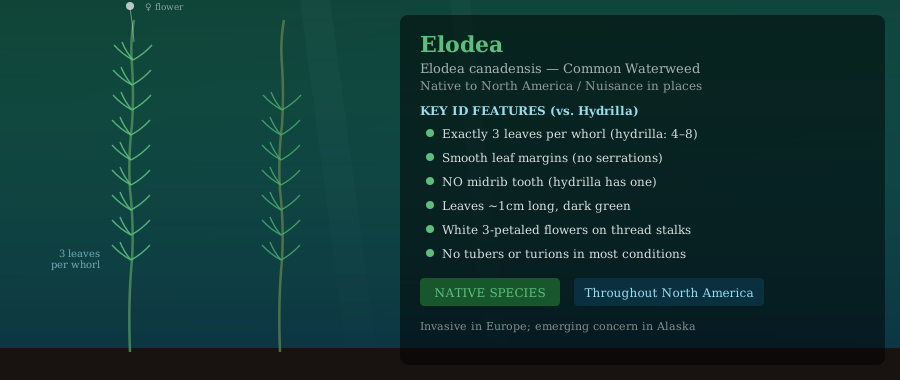
Elodea is most reliably distinguished from its dangerous look-alike hydrilla by counting leaves per whorl. Elodea has exactly three leaves per whorl at each node along the stem — this is the single most reliable identification character. Hydrilla has 4–8 leaves per whorl. If you count three smooth-edged leaves at each node, you are almost certainly looking at elodea (or a related native species). If you count four or more leaves — especially with visible serrations — it is almost certainly hydrilla.
Elodea leaves are small, lance-shaped to oval, approximately 1cm long, dark green, and arranged in alternating whorls of three. Crucially, the leaf margins are smooth — not serrated as in hydrilla. Elodea also lacks the single diagnostic tooth on the midrib underside that is the most reliable identification feature of hydrilla.
Small white, three-petaled flowers float on the water surface on thread-like stalks in summer. These flowers confirm the plant's identity but are only present during the flowering season. The plant is dark green, with stems that can grow several feet long. It typically maintains its shape better than hydrilla when removed from water, though both plants are flexible.
Growth Habit & Ecology
Elodea reproduces primarily through vegetative fragmentation — stem fragments produce roots at nodes and establish new plants. It also produces winter buds (turions) in some populations that overwinter in sediment. In milder climates, elodea may remain green and somewhat active through winter, while in colder regions it dies back to persistent root crowns.
Elodea is a perennial plant that grows in cool to warm water (optimal: 50–65°F), preferring clear to moderately turbid conditions with moderate nutrient levels. Unlike hydrilla, it does not tolerate extremely low light or high turbidity and is generally outcompeted by hydrilla where both occur. This difference in environmental tolerance is one reason why ecologists can use the presence of elodea as a rough indicator of water quality — it generally requires better conditions than invasive hydrilla.
The plant can form dense beds in its preferred habitat, particularly in spring and early summer when light is ample. Growth slows in midsummer heat and resumes in fall as temperatures moderate.
Habitat Preferences
Elodea (Elodea canadensis) is native to North America and found throughout the continental United States and into southern Canada, occupying a wide range of freshwater habitats. It grows in ponds, lakes, streams, rivers, and irrigation canals from coastal wetlands to montane elevation. As a native species with a continental range, it is naturally present in most water bodies that provide adequate light and a moderate nutrient base.
Preferred habitat conditions include clear to moderately turbid water with moderate to good light penetration, temperatures between 50–75°F (the plant is cool-to-moderate temperature adapted), and moderate nutrient levels. Elodea does not thrive in highly eutrophic, turbid systems the way invasive hydrilla does — this environmental specificity is one reason why ecologists sometimes use elodea presence as a rough proxy for moderate water quality. In oligotrophic lakes, elodea may be present but sparse; in moderately eutrophic conditions, it can grow densely.
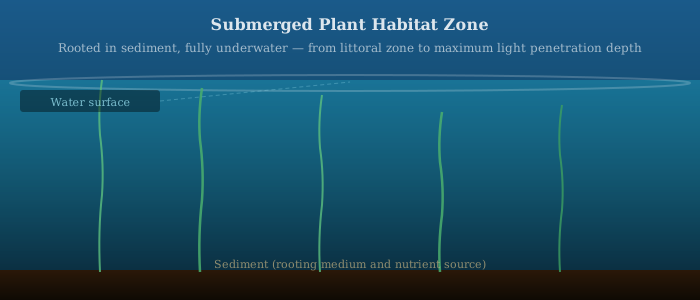
Depth range is typically 1–15 feet, limited by light penetration. In very clear lakes with excellent transparency, elodea can be found at greater depths. The plant requires rooting substrate — unlike coontail, it must anchor to sediment — but grows in sands, silts, and gravel. In Alaska, where elodea is introduced rather than native, it has colonized rivers, lakes, and sloughs, proving capable of establishing in cold, subarctic water bodies that would seem at the extreme edge of its temperature tolerance.
Spread Mechanisms
In its native range across most of North America, elodea spreads naturally through vegetative fragmentation — detached stem pieces produce roots at nodes and establish new plants. Waterfowl, fish, and other wildlife transport fragments between connected water bodies. Flooding moves fragments downstream. These are the same mechanisms that maintain its wide natural distribution.
Aquarium and water garden trade has historically been a significant pathway for introducing elodea to isolated water bodies, since it was widely sold as an aquarium oxygenator plant ("anacharis") for over a century. While largely replaced by other plants in commercial trade, elodea is still available from water garden suppliers, and aquarium releases continue to introduce it to new locations. In Alaska — where elodea is not native — this pathway has been identified as the most likely source of initial introductions; early infestations in Interior Alaska were traced to airstrips and communities where aquarium fish releases were documented.
In Alaska, the spread of non-native elodea is a serious conservation concern. The primary ongoing spread vector is motorized equipment — boats, floatplanes, and water-related gear moving between drainages. A single motorized boat moving from an infested watershed to a clean one can establish elodea in an entirely new river system, where it may spread rapidly without the natural checks present in its native range. This is why Alaska's elodea management program prioritizes equipment inspection and decontamination across all Alaskan waterways.
Seasonal Growth Pattern
Elodea follows a temperate seasonal pattern tied to temperature and light. In the continental U.S., spring growth begins in March–April as water temperatures rise above 45°F. Growth is initially modest, accelerating through May and June as temperatures and day length increase.
Peak growth occurs in late spring and early summer (May–July) when temperatures are in the 55–70°F range — the plant's optimal thermal window. In deeper, clearer lakes, elodea may remain active through much of summer. However, in shallow ponds and low-clarity water, midsummer heat (water temperatures above 75°F) slows growth significantly, and populations typically thin during the hottest part of summer. This summer slowing provides a natural check absent in invasive species like hydrilla that maintain rapid growth through peak summer heat.
Fall resumption of growth occurs as temperatures moderate in August–September, and elodea often shows a secondary growth period through fall in suitable conditions. As water temperatures drop below 45°F in autumn, growth stops and the plant dies back; root crowns and winter buds (turions in some populations) persist through freezing temperatures.
In Alaska, the seasonal window is compressed but otherwise similar. Growing season runs approximately May through September. Non-native elodea populations in Alaskan systems have shown vigorous growth within this narrow window, suggesting the species is well-adapted to high-latitude seasonal cycles despite being introduced.
In its native range, the seasonal pattern of elodea — with peak growth in cool late spring and secondary fall growth — aligns with the thermal preferences of many cool-water fish species, including salmonids and cool-water panfish, reinforcing its ecological importance as a seasonal habitat element in northern lake and river systems. Management actions that eliminate or suppress elodea during its spring and fall growth peaks should carefully consider the implications for the fish communities that depend on the habitat structure and invertebrate resources it provides during these same periods.
Ecological Impact
In North America, where elodea is native, it is generally considered ecologically beneficial and an important component of healthy aquatic ecosystems. Elodea beds oxygenate the water through photosynthesis, provide critical cover and foraging habitat for fish and invertebrates, serve as important food for waterfowl (particularly Canada geese, mallards, and diving ducks), and help stabilize sediment.
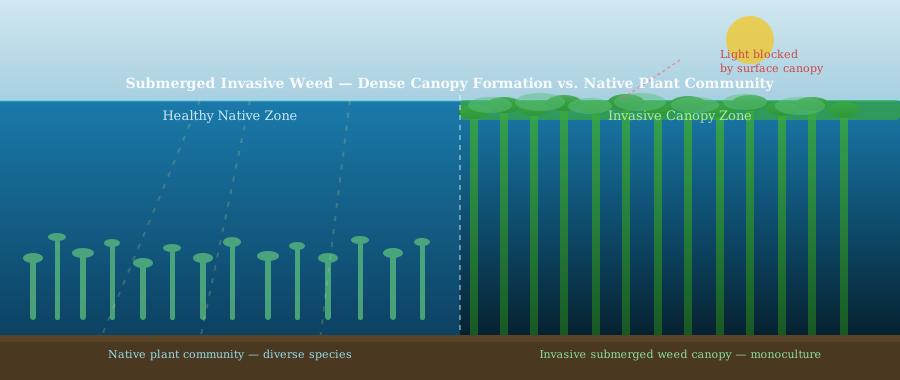
In nutrient-rich or disturbed water bodies, elodea can grow very densely and impede navigation and recreation. However, this overgrowth is typically a symptom of eutrophication rather than an inherently invasive behavior. Because elodea is native, management should be approached conservatively, with the goal of reducing problem growth rather than elimination.
In Alaska, the situation is more complex. Elodea species that have been introduced from the contiguous U.S. — through aquarium releases and watercraft transport — are spreading in Alaskan waterways and displacing native aquatic vegetation. The Alaska Department of Fish and Game has designated elodea management as a conservation priority in affected regions, particularly in areas where it threatens salmon spawning habitat.
Control Methods
Because elodea is native in most of North America, management is generally only warranted when growth becomes dense enough to significantly impair water uses. Complete removal from a water body is almost never appropriate and would harm the fish, waterfowl, and other organisms that depend on elodea habitat.
Nutrient reduction is the most ecologically sound approach. Reducing the phosphorus and nitrogen inputs that fuel excess growth will gradually reduce plant density over time without harming other native species.
Mechanical harvesting in targeted areas can provide seasonal relief from dense growth and improve navigability. Repeated harvesting several times per season is usually necessary.
Aquatic herbicides can reduce elodea but will also affect other native aquatic vegetation. Their use should be carefully targeted and limited to situations where elodea growth is causing unacceptable harm.
In Alaska, where introduced elodea is treated as a non-native invasive, more aggressive management including herbicide treatment is pursued to prevent further spread in unaffected drainages.
Important: Always obtain required permits before applying any aquatic herbicide or introducing biological control agents. Requirements vary by state. Contact your state department of natural resources or environmental protection agency for guidance.
Distribution in the United States
Elodea canadensis is native to most of North America and widely distributed throughout the United States and Canada, from the southeastern states to Alaska. It is among the most common native submerged aquatic plants in the country and is found in lakes, ponds, rivers, and streams across a wide range of conditions.
Concern about elodea as an invasive plant centers primarily on Alaska. Populations of elodea (believed to be Elodea canadensis or the related E. nuttallii) have been documented in numerous Alaskan water bodies since the early 2000s, with confirmed spread in Interior Alaska waterways. The Alaska Department of Fish and Game coordinates a management and monitoring program targeting these introduced populations.
Frequently Asked Questions
Is elodea invasive in North America?
Elodea canadensis is native to most of North America and not considered invasive in its native range. However, it became invasive in Europe in the 19th century when introduced as an aquarium plant. In Alaska, there are concerns about elodea spreading into drainages where it is not native, and it is managed as a regional invasive in that context.
What is the difference between elodea and hydrilla?
The most reliable differences: elodea has exactly 3 leaves per whorl; hydrilla has 4–8. Elodea leaves have smooth margins without serrations; hydrilla leaves have visible serrated margins. Hydrilla has a single tooth on the midrib underside — elodea does not. Elodea is native to North America; hydrilla is an invasive species from Asia.
Why is elodea called waterweed?
The common name 'common waterweed' reflects the plant's appearance as a leafy, weed-like plant that grows underwater. The name was applied by early botanists and reflects the plant's often abundant, somewhat 'weedy' growth habit in eutrophic conditions. Despite the name, elodea is an ecologically valuable native plant rather than a true weed in most contexts.
References & Further Reading
- St. John, H. (1965). Monograph of the genus Elodea. Rhodora 67:1–35, 155–180, 218–268.
- Simpson, D.A. (1986). Taxonomy of Elodea Michx. in the British Isles. Watsonia 16:1–14.
- Alaska Department of Fish and Game (2022). Elodea in Alaska: Status, Spread, and Management. Division of Sport Fish.