A Cascade of Harm
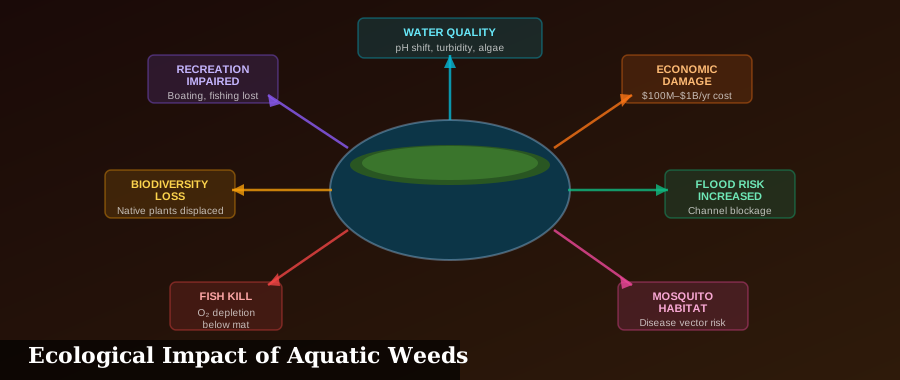
The impacts of aquatic weed infestations are not limited to the weeds themselves — they cascade through aquatic ecosystems, affecting dissolved oxygen, temperature, light penetration, pH, nutrient cycling, species composition, food web structure, and the physical habitat that all aquatic life depends on. What begins as a visible surface problem can convert a healthy, productive water body into a stagnant, oxygen-depleted, low-diversity system within a single growing season.
These cascading impacts also interact and reinforce each other through positive feedback loops. Dense floating weed mats reduce light penetration, killing submerged native vegetation. Dead native vegetation releases nutrients into the water column. Those nutrients fuel further weed growth. Decomposing weed biomass consumes oxygen. Low oxygen kills fish. Dead fish provide nutrients. And so the cycle continues, driving the system progressively further from its pre-disturbance state.
Understanding the full scope of these impacts is important not just for ecological reasons — it provides the justification for management investment and the framework for setting measurable management goals. Effective management programs are built around specific impact reduction targets, not just plant density reduction targets. What ecological function do we need to restore? What economic value do we need to protect? The answers to these questions drive management strategy.
Dissolved Oxygen Depletion and Fish Kill
Dissolved oxygen (DO) depletion is one of the most ecologically significant — and immediate — effects of dense aquatic weed growth. The mechanisms are multiple and compound each other:
- Photosynthesis-respiration cycle: Dense submerged and floating plant beds produce large amounts of oxygen during daylight photosynthesis, but at night all aquatic plants respire, consuming oxygen. In heavily vegetated water bodies, the night-time drop in dissolved oxygen can be severe, sometimes reaching critically low levels before dawn — a phenomenon called nighttime oxygen sag.
- Decomposition: When large masses of aquatic plant biomass die — whether from seasonal senescence, summer die-off of floating mats, herbicide treatment, or natural senescence — aerobic decomposition by bacteria consumes enormous quantities of dissolved oxygen. In poorly mixed, warm water, this decomposition can drive DO to near-zero levels across large areas, triggering fish kills that can involve hundreds or thousands of fish in severe cases.
- Light exclusion: Dense floating weed mats prevent the oxygenation of water beneath them by blocking wind-driven mixing and atmospheric oxygen exchange, while also eliminating the photosynthesis of any submerged vegetation below.
Fish kills following summer die-off of dense aquatic weed beds are regularly documented across Florida, Texas, Louisiana, and other states with heavy infestations. The economic and ecological value of the fish killed in these events is significant, and the incidents receive substantial public attention — making oxygen depletion one of the most politically compelling aquatic weed impacts. Detailed: Oxygen Depletion from Aquatic Weeds →

Biodiversity Loss and Native Plant Displacement
The most ecologically fundamental impact of invasive aquatic plants is the displacement of native plant communities. Native aquatic vegetation communities are diverse, structurally complex assemblages that have developed over thousands of years alongside the local fauna. A healthy lake might support 20–40 species of submerged, floating-leaved, and emergent aquatic plants, each occupying a slightly different niche, providing different types of food and habitat, and contributing to the overall resilience of the ecosystem.
When invasive aquatic plants establish, they typically reduce this diversity dramatically. Hydrilla, by forming dense canopies near the surface that intercept nearly all available light, eliminates the layered structure of native submerged plant communities. Eurasian watermilfoil's apical branching creates similar dense surface mats. Invasive Phragmites forms monocultures that eliminate the diverse native emergent plant communities of coastal wetlands. The result — a single invasive species dominating where dozens of native species grew — represents a profound reduction in ecological function.
This species loss propagates through the food web. The diverse assemblage of insects, invertebrates, and microorganisms that depend on specific plant species disappears. The fish and waterfowl that depend on those invertebrates for food are affected. The water quality and habitat structure functions that diverse native vegetation provides are lost. What remains is a structurally simplified, low-diversity system that is less resilient to future disturbance and less productive for the wildlife and human uses that water bodies support. Detailed: Fish and Wildlife Habitat Effects →
Water Quality Degradation
Dense aquatic weed infestations degrade water quality through several mechanisms:
- pH alteration: During peak photosynthesis, dense plant beds remove so much dissolved CO₂ that water pH can rise to 10 or above — levels that stress many aquatic organisms. At night, CO₂ accumulates and pH drops. These daily pH swings stress fish, invertebrates, and native plants unable to tolerate the variation.
- Turbidity increase: Dying and decomposing weed biomass releases fine organic particles that increase water turbidity. This in turn reduces light penetration, further limiting native submerged vegetation recovery.
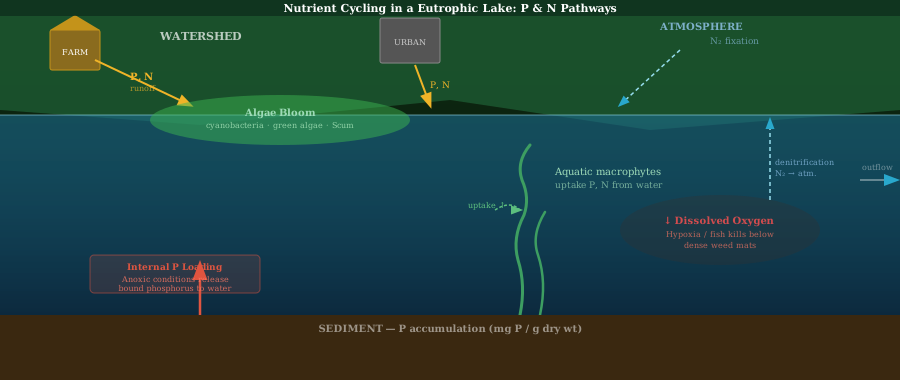
- Nutrient release: Decomposing aquatic weed biomass releases the nitrogen and phosphorus stored in plant tissue back into the water column and sediment — fueling algal blooms and further weed growth in a positive feedback loop. This internal nutrient loading can sustain eutrophication even after external nutrient inputs have been reduced.
- Taste and odor: Decomposing aquatic plants release compounds including geosmin and 2-methylisoborneol (2-MIB) that cause musty, earthy taste and odor in water. These compounds affect drinking water supplies drawn from surface waters with aquatic weed infestations and are difficult and expensive to remove in water treatment.
Detailed: Water Quality Degradation →
Recreation and Navigation Impacts
The recreation and navigation impacts of aquatic weed infestations are often the most immediately visible and politically significant — they are the impacts most likely to drive management action. Dense floating mats of water hyacinth or giant salvinia can entangle and stall boat motors; even shallow submerged weed canopies at the surface catch propellers and cause motor damage. Anglers cannot fish effectively in heavily weeded areas because lures tangle in vegetation and fish feeding behavior changes.
Swimming in weed-infested water is unpleasant and potentially hazardous — dense underwater growth entangles swimmers, and the bacteria associated with decaying weed mats pose sanitation concerns. Waterfront property owners report dramatic reductions in property values adjacent to heavily infested water bodies. Tourism revenues from fishing, boating, and water recreation decline significantly.
The U.S. Army Corps of Engineers has estimated that aquatic weed infestations reduce the economic value of recreational fisheries by hundreds of millions of dollars annually. Studies of specific infestations — including hydrilla in Florida and Eurasian milfoil in the Midwest — have documented statistically significant reductions in lakefront property values ranging from 10–30% for severely infested water bodies. Detailed: Recreation and Navigation Impacts →
Flood Risk and Infrastructure
Dense aquatic vegetation growing in rivers, drainage channels, canals, and stormwater basins significantly reduces hydraulic flow capacity. Studies have documented flow reductions of 30–50% in channels heavily infested with aquatic weeds. This reduced flow capacity translates directly into increased flood risk during storm events — water that cannot move through vegetation-clogged channels backs up and overtops banks.
Agricultural drainage ditches infested with aquatic weeds require significantly higher maintenance costs to maintain design flow capacity. Irrigation canals blocked by aquatic weeds reduce water delivery efficiency. Water intake screens at treatment plants clogged with aquatic plant material require increased maintenance and can threaten water supply reliability. Detailed: Flood Risk and Water Flow Restriction →
Public Health: Mosquito and Disease Vector Habitat
Dense floating aquatic weed mats create ideal habitat for mosquito larvae. The still water beneath floating mats is protected from wind disturbance, warm, and rich in the decaying organic matter that mosquito larvae feed on. In regions where mosquito-borne diseases — West Nile virus, Eastern equine encephalitis, dengue fever — are public health concerns, aquatic weed infestations represent a significant vector control challenge. Public health agencies in affected states cite aquatic weed management as a component of their mosquito vector control programs.
Economic Costs
The economic costs of aquatic weed infestations are substantial and span multiple sectors:
- Direct control costs: State and federal aquatic weed management programs collectively spend hundreds of millions of dollars annually. Florida alone spends approximately $30–40 million per year managing aquatic plants in public water bodies.
- Property value impacts: Studies document lakefront property value reductions of 10–30% adjacent to heavily infested water bodies, representing billions of dollars in reduced taxable value.
- Recreation and tourism: Reduced fishing and boating activity translates to reduced revenue for bait shops, marinas, hotels, restaurants, and guide services in affected communities.
- Agricultural infrastructure: Irrigation canal maintenance costs increase substantially with aquatic weed infestations.
- Hydroelectric power: Weed-clogged turbine intakes at hydroelectric facilities reduce generating efficiency.
Total economic costs of aquatic weed infestations in the United States have been estimated at $100 million to $1 billion annually, depending on methodology and what costs are included. These figures do not include the non-market ecological costs — biodiversity loss, habitat degradation, ecosystem function impairment — that are likely substantially larger. Detailed: Economic Costs of Aquatic Weeds →
Impact Topics in This Hub
- → Oxygen Depletion and Fish Kill
- → Fish and Wildlife Habitat Effects
- → Recreation and Navigation Impacts
- → Flood Risk and Water Flow Restriction
- → Water Quality Degradation
- → Economic Costs of Aquatic Weeds
Frequently Asked Questions
How quickly can aquatic weeds degrade a water body?
Extremely fast, under the right conditions. A new water hyacinth or giant salvinia infestation can cover a 5-acre pond in a matter of weeks. Within a single growing season, a heavily infested water body can shift from a clear, species-diverse, productive ecosystem to a stagnant, oxygen-depleted, weed-dominated system. Fish kills can occur within days of a major die-off event. The rate of ecosystem degradation depends on species, water body size, water clarity, nutrient levels, and temperature — but severe infestations can effectively destroy a water body's recreational and ecological value in a single summer.
How much do aquatic weed infestations cost property owners?
Research on specific infestations has documented lakefront property value reductions of 10–30% for severely infested water bodies compared to similar properties on clean lakes. For a lakefront home worth $500,000, this represents a loss of $50,000–$150,000 in property value. Beyond property values, waterfront property owners typically bear costs for private weed management treatments, increased dock maintenance, lost recreational use value, and potential costs related to water quality issues. These costs are substantial and explain why lakefront associations often drive coordinated management programs.
Do aquatic weeds affect drinking water quality?
Yes. Decomposing aquatic plant material releases taste and odor compounds (geosmin and 2-methylisoborneol) that are extremely difficult to remove in water treatment and cause musty, earthy taste and smell in tap water even at very low concentrations. Dense weed beds also promote algal blooms that can produce cyanotoxins (blue-green algal toxins) at concentrations that pose health risks. Water intake screens clogged with plant material increase treatment plant maintenance costs. These impacts on drinking water supply are documented at water utilities across the country that draw from surface water sources with aquatic weed problems.
Can a water body recover after aquatic weeds are removed?
Recovery is possible but often slow and requires addressing the underlying conditions that allowed the infestation to develop in the first place. Even after successful weed control, nutrient-enriched sediments can sustain algal blooms and fuel reinfestation. Native plant communities may take years to reestablish. Fish communities can take multiple years to recover from severe oxygen depletion events. Sustained management — weed control combined with nutrient management, native plant restoration, and long-term monitoring — provides the best prognosis for recovery. Water bodies that address only the symptom (the weeds) without addressing the cause (typically, excess nutrients) typically see rapid reinfestation.
Are there any positive ecological roles that aquatic weeds play?
At low densities, even some invasive aquatic plants can provide some ecological benefits — structural complexity for fish, food for waterfowl, and bank stabilization. But these limited benefits are vastly outweighed by the harms at the densities that constitute a management problem. For native aquatic plants that have expanded to nuisance densities under eutrophic conditions, the goal is not elimination but restoration of appropriate densities. Moderate native aquatic vegetation is ecologically valuable; dense monocultures — whether native or invasive — are harmful. The key is maintaining diverse native plant communities at ecologically appropriate densities.
References and Further Reading
- Pimentel, D., et al. (2005). "Update on the environmental and economic costs associated with alien-invasive species in the United States." Ecological Economics, 52(3), 273–288.
- Cooke, G.D., et al. (1993). Restoration and Management of Lakes and Reservoirs, 2nd ed. Lewis Publishers, Boca Raton, FL.
- Engel, S. (1990). "Ecosystem responses to growth and control of submerged macrophytes." Technical Bulletin No. 170, Wisconsin Department of Natural Resources.
- Monfils, M.J., et al. (2014). "Emergent vegetation and waterbird use of Great Lakes coastal wetlands." Journal of Great Lakes Research, 40(3), 560–571.
- Born, S.M., et al. (1973). Inland Lake Rehabilitation: A Practical Guide. Wisconsin Department of Natural Resources.
- U.S. Army Corps of Engineers. (2013). Aquatic Plant Control Program Annual Report. ERDC/EL MP-13-1.