Identification Features
Common waterweed (Elodea canadensis) is a native submerged plant that is ecologically beneficial at natural densities but can become problematic in nutrient-enriched water bodies. Its identification is critical because it is the species most commonly confused with hydrilla — one of North America's most destructive aquatic invasive plants. Getting this identification right is a legal and ecological imperative before any management action.
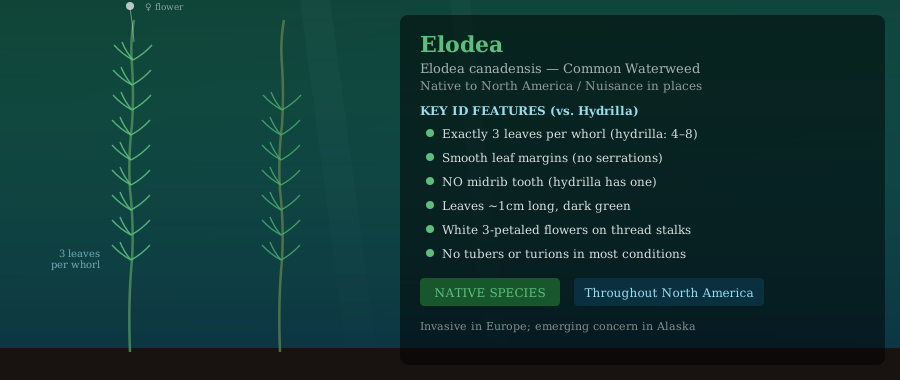
Key elodea identification features: leaves consistently in whorls of 3 per node (occasionally 4, but rarely and inconsistently); smooth leaf margins (no teeth visible with naked eye — may show very fine microscopic toothing under 20× magnification, but not the coarse serrations of hydrilla); leaves 6–13 mm long, oblong with rounded tips; leaves curl or crinkle when removed from water. Most importantly: no tubers in the sediment, no axillary turions. Detailed hydrilla vs. elodea comparison →
Biology and Ecological Role
Elodea is native throughout North America and is one of the most important native submerged plants in temperate freshwater ecosystems. It oxygenates the water column during photosynthesis (providing up to 40% of dissolved oxygen in some lakes during warm months), stabilizes fine sediment, provides spawning habitat for fish, and supports dense invertebrate communities that are the food base for fish and waterfowl.
In lakes where native elodea has been eliminated by invasive hydrilla or over-treatment with broad-spectrum herbicides, fish production, invertebrate diversity, and water clarity all typically decline. Restoration ecologists sometimes reintroduce elodea to lakes where it has been extirpated as part of ecosystem restoration programs. In healthy systems, elodea is an asset to be protected, not a plant to be managed.
Elodea becomes problematic in highly eutrophic water bodies where excess phosphorus and nitrogen fuel explosive growth to the point of impeding navigation and recreation. In these cases, the management approach should prioritize nutrient reduction to restore natural densities, with direct plant management as a secondary measure. Treating native elodea as if it were hydrilla — applying broad-spectrum aquatic herbicides — can cause severe ecological harm. How nutrients drive weed growth →
Distinguishing Elodea from Hydrilla — Step by Step
- Count leaves at 5 different nodes along the same stem. If all or nearly all are exactly 3, you likely have elodea. If any nodes have 4 or more leaves, investigate further.
- Examine leaf margins under a 10× hand lens. Smooth, clean edges = elodea. Saw-tooth serrations visible under hand lens = hydrilla.
- Check the sediment at the plant base. White, pea-sized tubers = hydrilla. No tubers = supports elodea ID.
- If still uncertain, contact your state department of natural resources for professional identification assistance before taking any management action.
Distribution
Elodea is found throughout North America from Florida to Alaska, including most Canadian provinces. It is one of the most widely distributed submerged aquatic plants in the world — it has naturalized in Europe, Asia, and Australia where it was introduced through the aquarium trade (it is invasive in Europe). In the U.S., it is native and plays an important ecological role.
Management (When Needed)
Treat elodea as a native species requiring careful management. Nutrient reduction is the primary approach for nuisance elodea. If direct plant management is necessary (for navigation or recreation access), selective mechanical removal or carefully targeted low-dose herbicide application with guidance from your state DNR is appropriate. Never apply fluridone or other broad-spectrum herbicides at lake-wide doses to elodea without professional guidance. Control methods →
Frequently Asked Questions
Why is elodea sometimes called a weed if it is native and beneficial?
The term 'weed' in aquatic plant management has a functional definition: any aquatic plant that achieves densities that impair the intended use of a water body. Even native plants can reach nuisance densities when external nutrient loading (agricultural runoff, septic systems, stormwater) pushes the system to a highly eutrophic state. Elodea in a hypereutrophic pond may impede navigation and recreation even while providing ecological benefits. This is why aquatic plant management is nuanced — native plants that reach nuisance densities require management approaches that restore natural densities, not aggressive eradication programs.
Does elodea die back in winter?
Elodea remains green through winter in most water bodies, though growth slows dramatically in cold water. It does not produce turions or undergo the same deep dormancy as hydrilla or curly-leaf pondweed. In lakes that freeze completely, elodea survives under the ice as living but slow-growing plant material. This winter persistence is ecologically important — it provides winter habitat for invertebrates and maintains some level of water oxygenation under ice in shallow lakes.
Conservation Status and Research Importance
Elodea and its close relatives occupy a complicated position in aquatic plant science. In North America, Elodea canadensis is a native species of conservation importance — its presence in lakes and streams is an indicator of adequate water clarity, appropriate nutrient levels, and intact native plant community function. When elodea disappears from a lake it previously occupied, it is almost always a symptom of either aggressive management action (over-treatment) or worsening water quality (increased turbidity or hydrilla invasion). Monitoring elodea presence and abundance over time is therefore a useful proxy for water quality and habitat condition.
Ongoing research on elodea focuses on: improving discrimination between elodea and hydrilla using environmental DNA (eDNA) tools; studying elodea's role in dissolved oxygen dynamics in shallow lakes under ice; and developing community science programs that engage lakeside residents in monitoring native submerged plant communities. Several state and federal programs include native elodea as a target for active restoration in lakes where it has been extirpated. For identification precision and management permit guidance, always contact your state department of natural resources before treating any submerged plant. Aquatic weed biology hub →
Full Species Profile: Visit the Elodea authority page → for complete biology, distribution, and management guidance.