What Is the Data Tools Section?
Aquatic weed management, research, and policy work depends on access to reliable, current, and well-organized information. Different users have different information needs: a lake association president needs to quickly understand what species are present in their region and what the best management options are; a university researcher needs access to primary source references and distribution data; a state agency staff member needs current distribution records and management program benchmarks; a property owner needs clear, jargon-free identification guidance before deciding whether to call a management professional.
The Data Tools section of AquaticWeed.org describes how we structure information to serve all of these user types — what formats are currently available, what is in development, how to navigate our content by species type or geographic region, how often our data is updated, and how to access the primary sources behind our content when you need to go deeper than our educational summaries.
Available Information Types
AquaticWeed.org currently provides the following categories of structured information:
Species & Management Content
Comprehensive educational content for 241 pages covering 9 major species (identification, biology, ecology, control, distribution), management methods, biology and ecology, seasonal patterns, and questions and answers. All content is structured for both human browsing and machine-readable indexing. Access formats →
Distribution Data
Species distribution information for all 9 authority species, organized by state and region, with explanations of data sources, confidence levels, and tracking methodology. Currently presented as structured web content; interactive mapping and downloadable datasets are in the development roadmap. Distribution data →
Browse & Search Features
Category-based navigation by growth type (floating, submerged, emergent), by species, by geographic region, and by topic (management method, biology topic, question type). Site structure is designed so every piece of information is reachable within 3 clicks from the home page. Search features →
Update Schedule & Data Currency
Content update schedules vary by type: regulatory information and noxious weed listings are verified annually; management efficacy content is reviewed when major new research is published; distribution data is updated as state agency and USGS records change. Update frequency →
What Is Coming

AquaticWeed.org is actively developing additional data access capabilities. The following are on our near-term development roadmap:
- Downloadable species summary reports (PDF): Formatted two-page reference sheets for each of the 9 authority species, suitable for field use and educational distribution. Target availability: 2026.
- Interactive distribution maps: State-level maps showing presence/absence and infestation severity for major invasive species. Data sourced from USGS Nonindigenous Aquatic Species database and state agency records. Target availability: 2025–2026.
- CSV data exports: Downloadable tabular datasets of species distribution records, management program data, and reference bibliographic information for use in research and analysis workflows. Target availability: 2026.
- API access (read-only): Structured data access for developers, researchers, and state agency systems needing to programmatically query AquaticWeed.org species and distribution data. Future development contingent on demand — contact us at [email protected] to register your interest.
Who This Section Is For
The Data Tools section is designed primarily for users who need to do more than read educational articles — users who need to access, export, cite, integrate, or navigate our information systematically. This includes:
- Researchers and graduate students who need citable distribution data, management efficacy summaries, or structured access to the primary literature citations we reference
- State agency staff who need current distribution information and management program benchmarks organized by region or species
- Consultants and lake management professionals who need to quickly pull together species-specific information for management planning documents and client communications
- Educators who need downloadable reference materials and structured content for classroom, workshop, or lake association training use
- Journalists and science communicators who need reliable, citable data for coverage of aquatic invasive species issues
- Developers and data integrators who want to know whether AquaticWeed.org data is available in machine-readable formats and what the roadmap looks like
Data Quality and Sourcing
All data and information presented on AquaticWeed.org is derived from peer-reviewed research, federal government databases (USGS, USDA, EPA), and authoritative state agency publications. We do not generate primary data — we curate, synthesize, and make accessible the information produced by the research and agency programs that do. Our research methodology page describes our sourcing and review standards in detail, and our references page lists all primary sources by category.
When you use AquaticWeed.org data in your own work, we ask that you cite the original primary sources rather than AquaticWeed.org alone. We provide primary source citations on all species and distribution pages precisely to facilitate this. For questions about data quality, sourcing, or to report an apparent error, contact us at [email protected].
Getting Started: Which Access Path Is Right for You?
Different users have different starting points for accessing aquatic weed information. Here's the fastest path to what you need:
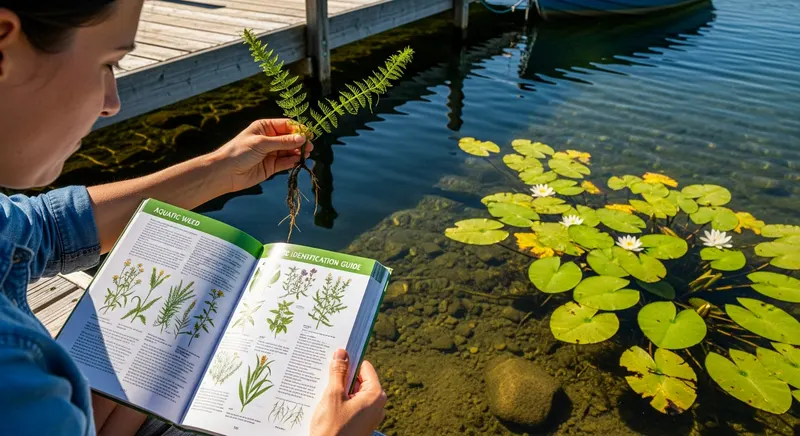
- I need to identify a plant I found: Start with the Identification Hub. If you know whether it grows floating, submerged, or emergent, jump directly to the relevant category hub.
- I need management options for a specific species: Go directly to the Species Authority Hub, find your species, and follow the control methods link from that profile.
- I need to know if a species is present in my state: Check the US Distribution Hub or the distribution section within the relevant species authority page.
- I need current permit requirements: See the permits and regulatory considerations page, then verify current requirements with your state agency — permit requirements change and our content may not reflect the most current regulations in every state.
- I need data for a research project: Start with our references page for primary literature, then use the access formats page to understand what structured data is available or in development.
- I want to understand the full scope of the site: The site map lists all 241 pages, and the search and browse features page explains how the navigation structure works.
Ten-Year Lake Management Plan: Lake Wingra, WI
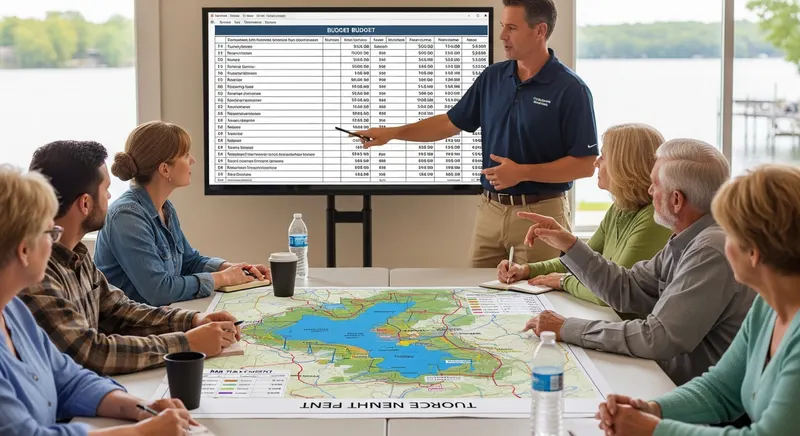
Lake Wingra, a 342-acre urban lake in Madison, WI, developed a comprehensive 10-year management plan coordinating the City of Madison, University of Wisconsin, and adjacent neighborhood associations. The plan addressed Eurasian watermilfoil, curly-leaf pondweed, and purple loosestrife through an integrated approach including targeted herbicide treatment, mechanical harvesting, native plant restoration, and public education.
Key outcome: The structured multi-agency planning process secured consistent funding across multiple budget cycles, a key advantage over ad hoc management. Native plant restoration efforts showed measurable progress in designated restoration zones within three years of initiation.
The species identification guides on AquaticWeed.org are the most accurate I've used in 18 years of lake management. I now send all my new clients here first before we discuss treatment options.
Robert Harmon Certified Lake Manager, FL · Lake Okeechobee regionWe referenced the biological control pages extensively when evaluating our grass carp stocking proposal. The detail on stocking rates and target species specificity helped us present a credible case to our board.
Karen Ostrowski HOA Lake Committee Chair, MN · Lake Minnetonka association