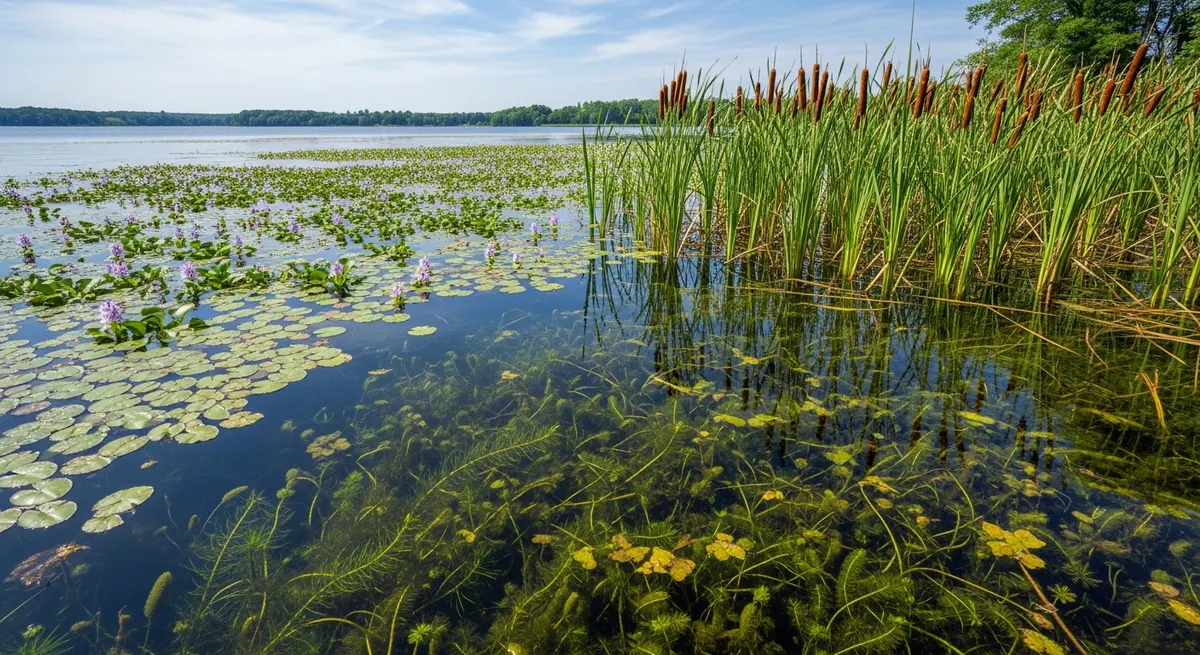
Hydrilla, Eurasian watermilfoil, water hyacinth, giant salvinia, and curly-leaf pondweed are the five most invasive and economically damaging aquatic weeds in the United States. These species collectively infest hundreds of thousands of acres of U.S. waterways, cost tens of millions of dollars annually to manage, and cause severe ecological damage wherever they establish.
- Hydrilla is present in 30+ states and is the most damaging submerged aquatic invasive in the U.S.
- Water hyacinth is widely regarded as the world's most problematic aquatic weed — it can double in 12 days.
- Eurasian watermilfoil is established in every contiguous state — the most geographically widespread invasive.
- Giant salvinia can double its biomass in under a week; a single plant can cover 40 acres in one season.
- Federally listed noxious aquatic weeds are illegal to transport, sell, or import across state lines.
- The Southeast — especially Florida — hosts the largest and most severe invasive aquatic plant infestations.
Criteria for "Most Invasive"
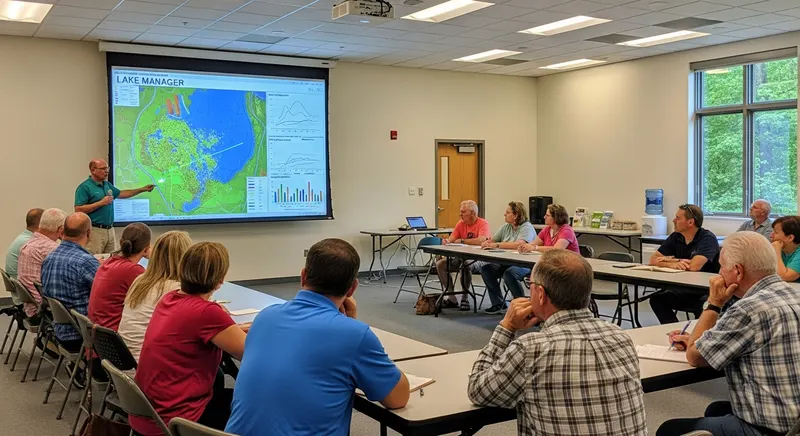
Ranking aquatic weed invasiveness involves multiple dimensions: geographic range, growth rate, resistance to control, ecological damage, economic cost, and federal regulatory status. The five species profiled here rank highly on all of these criteria and collectively represent the greatest management burden in U.S. waterways.
Hydrilla (Hydrilla verticillata)
Hydrilla is a submerged aquatic plant native to Asia and parts of Africa and Australia that was likely introduced to the U.S. through the aquarium trade in the 1950s or 1960s. It is now established in more than 30 states and is federally listed as a noxious weed. Hydrilla's ecological dominance stems from an unusual combination of traits: it can grow in extremely low light (1% of surface irradiance), tolerates high turbidity, grows as fast as 1 inch per day under optimal conditions, and produces both turions (dormant buds) and tubers (underground storage structures) that persist in sediment for years after surface plants have been treated. A single tuber can reestablish a plant population even after total above-ground removal. Full hydrilla species profile →
Eurasian Watermilfoil (Myriophyllum spicatum)
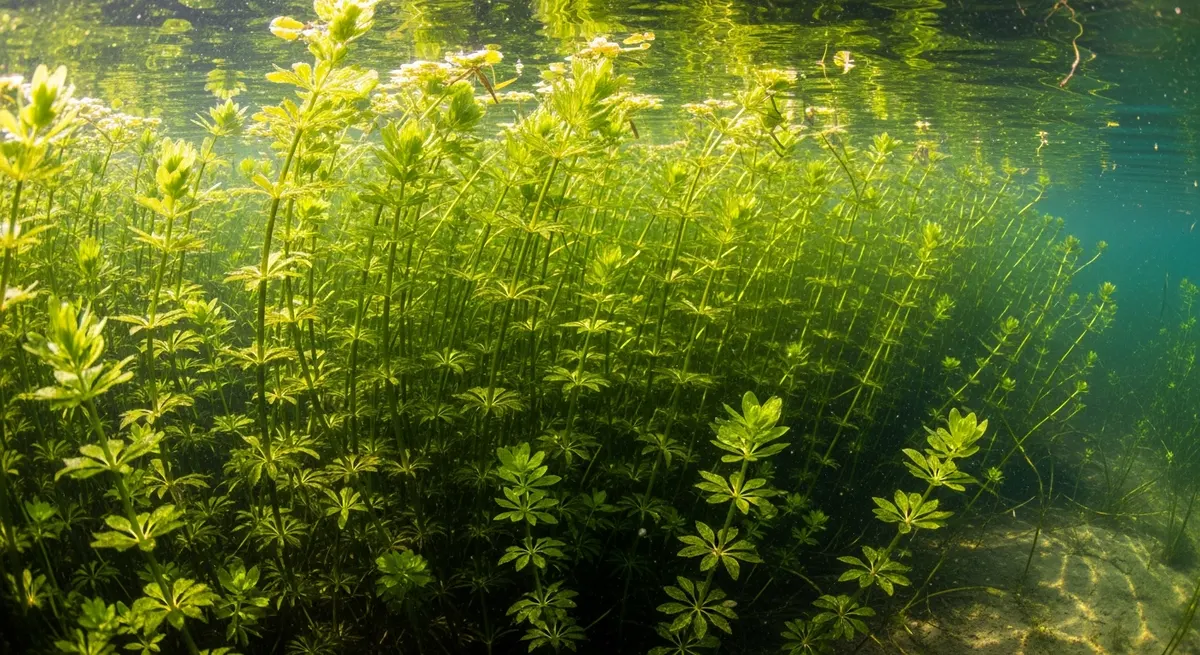
Eurasian watermilfoil is the most geographically widespread invasive aquatic plant in North America, established in all 48 contiguous states. A native of Europe, Asia, and North Africa, it entered U.S. waterways in the mid-20th century and spread rapidly via boat traffic. Its defining invasive characteristic is extreme fragmentation ability — a 1-cm stem segment with a single node can establish a new plant. Boat propellers cutting through milfoil beds scatter hundreds of viable fragments per pass. Dense milfoil beds suppress native aquatic vegetation, alter water temperature profiles, and degrade fish habitat. Hybridization between Eurasian and native northern watermilfoil produces especially vigorous hybrids that can be herbicide-resistant. Full Eurasian watermilfoil profile →
Water Hyacinth (Eichhornia crassipes)
Water hyacinth is a free-floating plant native to South America that was introduced to the U.S. as an ornamental in the 1880s. It is the world's most problematic aquatic plant by most measures, capable of doubling its population every two weeks under favorable conditions. In the U.S., it infests hundreds of thousands of acres in the South (Louisiana, Florida, Texas) and has severely impacted the Sacramento-San Joaquin Delta in California. Water hyacinth forms dense, impenetrable surface mats that block sunlight, deplete oxygen, impede navigation and fishing, and dramatically reduce biodiversity. Its control costs Louisiana and Florida alone tens of millions of dollars annually. Full water hyacinth profile →
Giant Salvinia (Salvinia molesta)
Giant salvinia is a free-floating fern native to Brazil that is considered one of the world's most aggressive invasive aquatic plants. Federally listed as a noxious weed in the United States, it has been confirmed in at least 10 southern states and continues to spread northward. Giant salvinia can double its biomass in 2–4 days under ideal conditions and form mats over 2 feet thick that completely shade out all life below. In Texas, Louisiana, and other Gulf Coast states, giant salvinia has devastated recreational fishing and waterfowl habitat across hundreds of lakes. Its ability to survive cool temperatures — better than water hyacinth — expands its potential range. Giant salvinia profile →
Curly-Leaf Pondweed (Potamogeton crispus)
Curly-leaf pondweed occupies a unique invasive niche: it is a cold-season invader that germinates and grows actively in late fall and winter when native aquatic plants are dormant. This off-season growth allows it to dominate shallow lake sediment before native plants have a chance to establish in spring. It peaks in late May–early June, then dies back dramatically, releasing a massive pulse of nutrients into the water column that fuels summer algal blooms — the blue-green algae blooms that close beaches and harm water quality. It is established throughout the Midwest and Great Lakes region. Pondweed species profile →
Other Significant Species
Beyond the top five, several other species cause major regional problems: alligator weed (Southeast, California), Phragmites australis (Nationwide, especially Northeast and Great Lakes), parrot feather (Southeast and West), Brazilian elodea (Pacific Northwest), flowering rush (Great Lakes, upper Midwest), and water chestnut (Northeast). US distribution maps →
Sources & Scientific References
- Madeira, P.T. et al. (1997). Identification of Hydrilla verticillata biotypes. Aquatic Botany, 59(1–2), 11–29.
- Aiken, S.G. et al. (1979). Identification of Myriophyllum species. Canadian Journal of Botany, 57, 2666–2685.
- Penfound, W.T. & Earle, T.T. (1948). The biology of the water hyacinth. Ecological Monographs, 18(4), 447–472.
- USDA APHIS. Federal noxious weed list. Plant Protection and Quarantine.
Frequently Asked Questions
What is the most invasive aquatic plant in the US?
Hydrilla (Hydrilla verticillata) is widely considered the most damaging invasive aquatic plant in the United States. It is present in over 30 states, grows extremely rapidly, tolerates a wide range of conditions, produces persistent underground tubers that resist control, and forms dense mats that can completely dominate a water body. It costs tens of millions of dollars annually to manage in affected states.
Is Eurasian watermilfoil in all 50 states?
Eurasian watermilfoil (Myriophyllum spicatum) is established in all 48 contiguous U.S. states and is one of the most widespread invasive aquatic plants in North America. It is not confirmed in Alaska and Hawaii. Its ability to spread by tiny stem fragments carried on boats makes it extraordinarily difficult to contain.
What states have the worst aquatic weed problems?
Florida has the most severe aquatic weed problems in the nation, driven by year-round warm temperatures and a high diversity of established invasive species. Other heavily impacted states include California (water hyacinth in the Sacramento-San Joaquin Delta), Texas (giant salvinia, hydrilla), Louisiana (water hyacinth, alligator weed), and states throughout the Great Lakes region (Eurasian watermilfoil).
How are invasive aquatic weeds controlled?
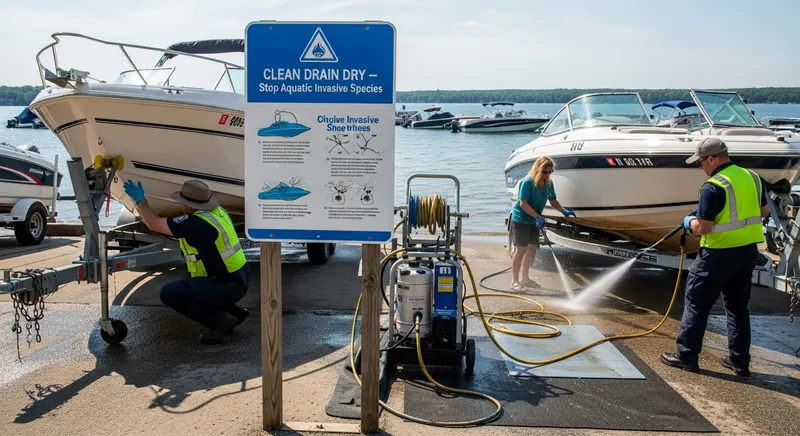
No single control method is universally effective. The most successful management programs use integrated approaches combining selective herbicide application, mechanical harvesting, biological control agents where available, and prevention programs to stop further spread. Eradication is rarely achievable for established invasive species; management focuses on population reduction and containment.
Key Takeaways
- Hydrilla is present in 30+ states and is the most damaging submerged aquatic invasive in the U.S.
- Water hyacinth is widely regarded as the world's most problematic aquatic weed — it can double in 12 days.
- Eurasian watermilfoil is established in every contiguous state — the most geographically widespread invasive.
- Giant salvinia can double its biomass in under a week; a single plant can cover 40 acres in one season.
- Federally listed noxious aquatic weeds are illegal to transport, sell, or import across state lines.
- The Southeast — especially Florida — hosts the largest and most severe invasive aquatic plant infestations.
Ten-Year Lake Management Plan: Lake Wingra, WI
Lake Wingra, a 342-acre urban lake in Madison, WI, developed a comprehensive 10-year management plan coordinating the City of Madison, University of Wisconsin, and adjacent neighborhood associations. The plan addressed Eurasian watermilfoil, curly-leaf pondweed, and purple loosestrife through an integrated approach including targeted herbicide treatment, mechanical harvesting, native plant restoration, and public education.
Key outcome: The structured multi-agency planning process secured consistent funding across multiple budget cycles, a key advantage over ad hoc management. Native plant restoration efforts showed measurable progress in designated restoration zones within three years of initiation.
The ecological impact section helped our team explain to county commissioners why early intervention matters. The oxygen depletion data alone secured funding for our early-detection monitoring program.
Donna Whitfield State Wildlife Biologist, GA · Okefenokee regionWe used the integrated management framework from this site to structure our Eurasian watermilfoil control program. After three seasons we've reduced lake-wide coverage by 78% on our 340-acre water body.
Susan Thibodeau Lake District Manager, MN · Crow Wing County