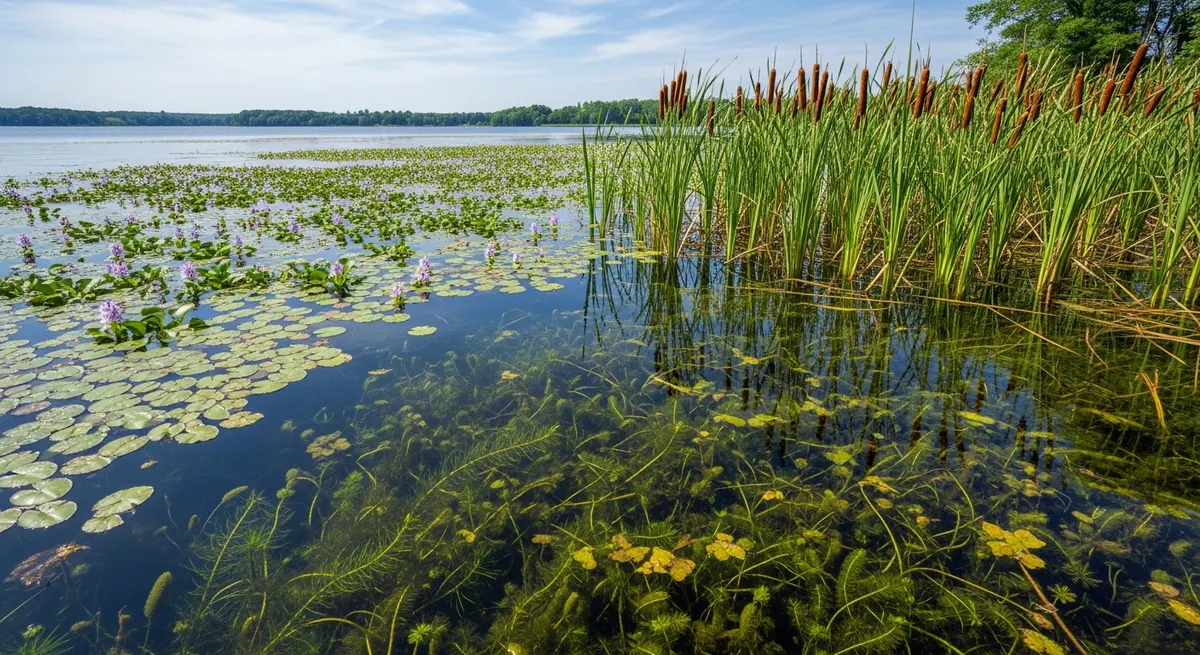
Aquatic weeds are aquatic plants — native or non-native — that grow in densities or locations causing ecological, economic, or recreational harm. The term is a management designation, not a taxonomic one: the same species may be ecologically valuable in one water body and a serious problem in another.
- Aquatic weeds are a management designation — the same species can be beneficial in one water body and harmful in another.
- Three growth forms dominate: floating (water hyacinth, duckweed), submerged (hydrilla, milfoil), and emergent (cattails, Phragmites).
- About 40 species cause significant problems in U.S. waterways; roughly 20 account for most management expenditure.
- Non-native invasive species lack natural predators and can grow far more aggressively than in their native range.
- Dense infestations deplete oxygen, block sunlight, trap sediment, and reduce property values and recreation.
- Annual management costs in the U.S. run into the hundreds of millions of dollars.
Defining Aquatic Weeds
The phrase "aquatic weed" does not describe a specific plant family, genus, or ecological role. It is a management designation — applied to any aquatic plant, native or introduced, that grows in sufficient density or occupies locations where it causes measurable harm. This harm can be ecological (displacement of native species, oxygen depletion, habitat degradation), economic (reduced property values, clogged irrigation systems, damaged boats), or recreational (impaired swimming, boating, and fishing access).
The contextual nature of this definition has important practical implications. A dense stand of native cattails at a lakehead may provide valuable wetland habitat in one setting and be an encroachment problem requiring management in another. The species is the same; the context and management need differ. Non-native invasive species add an additional layer of concern because they typically lack the natural controls — herbivores, pathogens, and competitors — that regulate native plant populations.
Globally, approximately 40 aquatic plant species cause significant economic or ecological problems. In the United States, roughly 20 species account for the majority of management expenditure and ecological damage. This concentrated problem distribution makes targeted expertise highly valuable: understanding the biology, spread mechanisms, and habitat requirements of the most problematic species is the starting point for every management decision.
Three Growth Categories
Aquatic weeds are broadly classified by their position in and around the water column. This classification is not just taxonomic — it directly shapes management approaches, identification methods, and ecological impacts.
Floating Aquatic Weeds
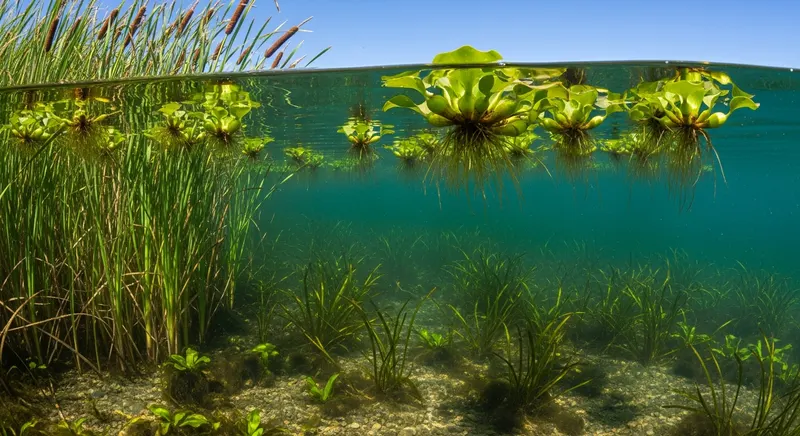
Floating weeds grow on the water surface, either rooted in shallow sediments with leaves floating on top (like water lilies) or completely free-floating (like water hyacinth and duckweed). Free-floating species are among the most problematic globally because they spread rapidly, form dense surface mats, and can double their coverage in days under favorable conditions. Water hyacinth, the world's most problematic aquatic plant, can cover entire lake surfaces in weeks during warm weather. Explore floating aquatic weeds →
Submerged Aquatic Weeds
Submerged weeds grow entirely or primarily below the water surface, rooted in sediment. They photosynthesize underwater and typically require reasonable water clarity to establish. Submerged species can form dense beds across the entire bottom of shallow water bodies, dramatically altering water chemistry and physically impeding navigation and recreation. Hydrilla and Eurasian watermilfoil — two of the most invasive submerged species in the U.S. — are capable of forming surface mats that block light to everything beneath them. Explore submerged aquatic weeds →
Emergent Aquatic Weeds
Emergent weeds root in shallow water or saturated shoreline soils and extend stems and leaves above the water surface. Common examples include cattails, Phragmites (common reed), and water primrose. Emergent species are the primary drivers of shoreline encroachment — the progressive filling-in of open water as terrestrial conditions gradually replace aquatic ones. Dense stands can fundamentally alter wetland structure over decades. Explore emergent aquatic weeds →
Native vs. Non-Native Species
One of the most critical distinctions in aquatic weed management is between native nuisance species and invasive non-native species. Native species that grow out of control — often due to elevated nutrient levels or loss of natural competitors — can cause serious problems, but management options are typically broader because the species has ecological relationships with native fauna and flora that should be preserved.
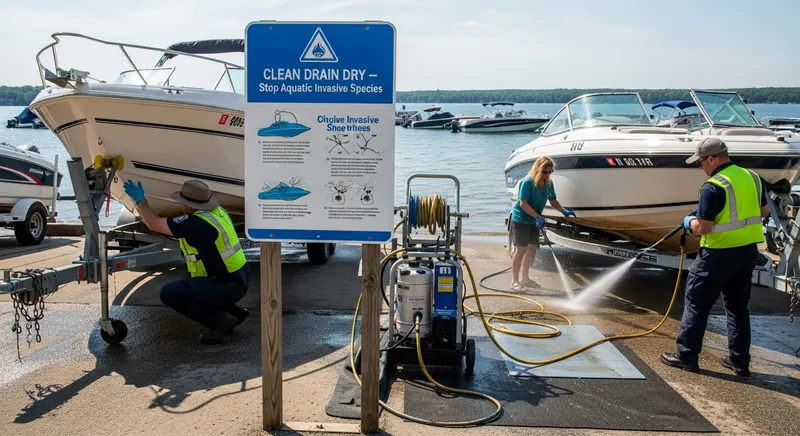
Non-native invasive species are a different category entirely. These plants entered U.S. waterways through the aquarium trade, ornamental water gardening, intentional stocking, or accidental introduction on boats and equipment. In their new environment, they lack the insects, fungi, fish, and competing plants that regulated their growth in their native range. This "enemy release" allows invasive plants to grow far more aggressively than they do where they originated. Learn about aquatic weed biology →
Why Aquatic Weeds Matter
The national scale of aquatic weed impacts is substantial. Hydrilla has been documented in more than 30 states. Eurasian watermilfoil is established in every contiguous state. Water hyacinth infests hundreds of thousands of acres of waterways in the South and California. The combined annual cost of management, property value losses, agricultural damage, and recreation impacts runs into hundreds of millions of dollars.
Ecological damage extends far beyond the visible. Dense aquatic weed infestations deplete dissolved oxygen (causing fish kills), alter pH and temperature profiles, trap sediment, fuel harmful algal blooms, eliminate native plant diversity, and degrade the structural complexity of aquatic habitats. Understanding aquatic weeds — what they are, how they grow, and why they spread — is the essential foundation for protecting the lakes, rivers, and wetlands that communities depend on. Understand the ecological impacts →
Sources & Scientific References
- Langeland, K.A. & Burks, K.C. (Eds.) (1998). Identification and Biology of Non-Native Plants in Florida's Natural Areas. University of Florida IFAS.
- Madsen, J.D. (1997). Seasonal biomass and carbohydrate allocation in a southern population of Eurasian watermilfoil. Journal of Aquatic Plant Management, 35, 15–21.
- USDA NRCS. Aquatic invasive species. Plant Materials Program.
- Parsons, J.K. et al. (2009). Ecology and management of aquatic invasive plants in the Pacific Northwest. PNW Research Station.
Frequently Asked Questions
What makes a plant an aquatic weed?
A plant is classified as an aquatic weed when it grows in sufficient density or in locations where it causes ecological damage, economic harm, or recreational impairment. The designation is contextual and management-based, not purely taxonomic — native species can be aquatic weeds when they grow out of balance.
Are all aquatic weeds invasive?
No. Many aquatic weed problems involve native species that have proliferated due to excess nutrients or habitat disturbance. Non-native invasive species — such as hydrilla, Eurasian watermilfoil, and water hyacinth — are a distinct and often more serious category, but they represent only part of the aquatic weed problem.
How many aquatic weed species are there in the US?
Approximately 40 aquatic plant species cause significant problems in U.S. waterways. Roughly 20 species account for the majority of management expenditure and ecological damage, with hydrilla, Eurasian watermilfoil, water hyacinth, giant salvinia, and curly-leaf pondweed being the most problematic nationally.
What is the difference between an aquatic weed and a beneficial aquatic plant?
Beneficial aquatic plants grow at natural densities and provide ecological services: habitat structure for fish and invertebrates, shoreline stabilization, water filtration, and food for wildlife. Aquatic weeds form dense monocultures that displace this diverse native community, reduce dissolved oxygen, block light, and degrade water quality.
Can aquatic weeds be removed permanently?
Permanent eradication is rarely achievable once a species is established in a water body. Management goals typically focus on population reduction and long-term control through integrated approaches — combining physical, chemical, biological, and preventive strategies. Prevention before establishment is the only reliably permanent solution.
Key Takeaways
- Aquatic weeds are a management designation — the same species can be beneficial in one water body and harmful in another.
- Three growth forms dominate: floating (water hyacinth, duckweed), submerged (hydrilla, milfoil), and emergent (cattails, Phragmites).
- About 40 species cause significant problems in U.S. waterways; roughly 20 account for most management expenditure.
- Non-native invasive species lack natural predators and can grow far more aggressively than in their native range.
- Dense infestations deplete oxygen, block sunlight, trap sediment, and reduce property values and recreation.
- Annual management costs in the U.S. run into the hundreds of millions of dollars.
Ten-Year Lake Management Plan: Lake Wingra, WI
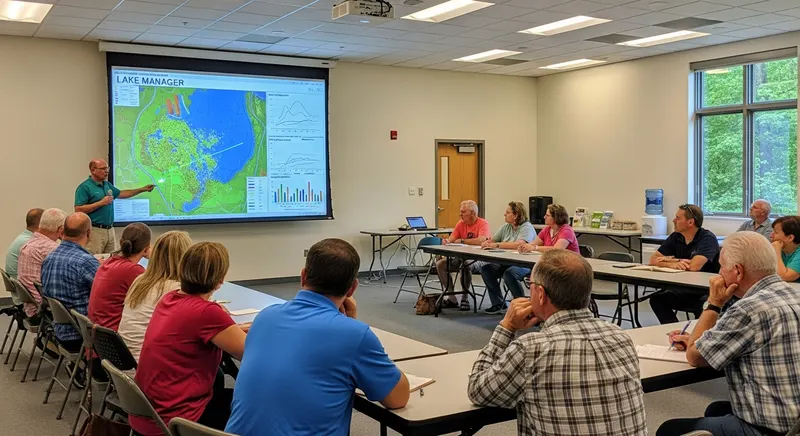
Lake Wingra, a 342-acre urban lake in Madison, WI, developed a comprehensive 10-year management plan coordinating the City of Madison, University of Wisconsin, and adjacent neighborhood associations. The plan addressed Eurasian watermilfoil, curly-leaf pondweed, and purple loosestrife through an integrated approach including targeted herbicide treatment, mechanical harvesting, native plant restoration, and public education.
Key outcome: The structured multi-agency planning process secured consistent funding across multiple budget cycles, a key advantage over ad hoc management. Native plant restoration efforts showed measurable progress in designated restoration zones within three years of initiation.
I've managed aquatic vegetation on Texas reservoirs for 15 years. The water hyacinth control content here is the most up-to-date, practical guidance I've found anywhere online.
Travis McKinley Commercial Fishing Guide, TX · Lake Travis / Lake AustinThe species identification guides on AquaticWeed.org are the most accurate I've used in 18 years of lake management. I now send all my new clients here first before we discuss treatment options.
Robert Harmon Certified Lake Manager, FL · Lake Okeechobee region