Direct answer: Lake science (limnology) is the integrated study of the physical, chemical, and biological processes that govern lakes, ponds, and reservoirs. For aquatic weed managers, the core limnological concepts — littoral zone structure, thermal stratification, lake turnover, dissolved oxygen dynamics, eutrophication, watershed nutrient loading, sediment accumulation, shoreline erosion, and pond succession — explain why invasive plants succeed in some waterbodies and not others, and why durable management programs always address underlying lake processes rather than treating visible symptoms alone.
Why Lake Science Matters for Weed Management
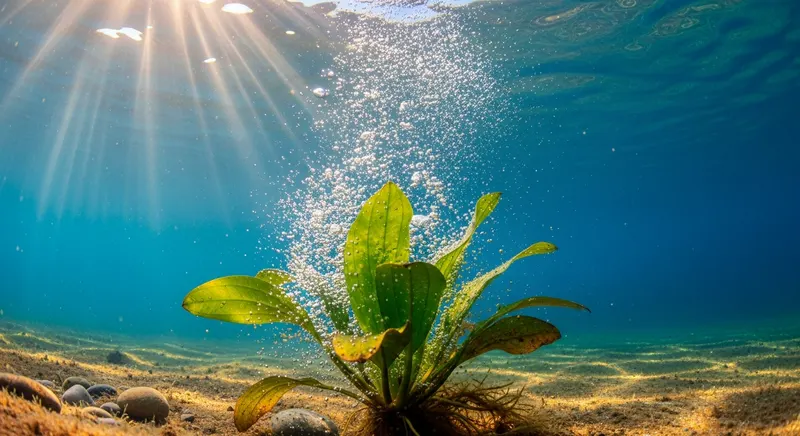
Every aquatic weed problem is, ultimately, a lake science problem. The conditions that allow hydrilla, Eurasian watermilfoil, and water hyacinth to dominate U.S. waters are produced by underlying limnological processes — light penetration through the littoral zone, summer thermal stratification, nutrient cycling between sediment and water column, watershed nutrient delivery, and sediment accumulation. Management programs that target only the visible weeds without addressing the underlying lake conditions reliably fail in the medium term, with reinvasion within 2–10 years.
This hub is organized around the core limnological concepts every lake manager, lakefront owner, pond owner, and aquatic vegetation specialist should understand. Each topic links to deeper guides covering identification, biology, ecology, and management implications.
Lake Physical Structure
The physical structure of lakes — light penetration, thermal layering, and seasonal mixing — controls where aquatic plants can grow and how nutrients move through the system. Three foundational topics:
- The Littoral Zone: The shallow, sunlit margin of every lake where rooted aquatic plants grow, fish spawn, and most invasive weed problems begin.
- Thermal Stratification: The summer formation of epilimnion, thermocline, and hypolimnion layers that drives nutrient cycling and oxygen distribution.
- Lake Turnover: The seasonal mixing events that redistribute oxygen, nutrients, and temperature throughout the lake.
Water Chemistry and Nutrient Cycling

Lake water chemistry — particularly dissolved oxygen and phosphorus — determines water quality, fish habitat, and aquatic plant productivity. Three foundational topics:
- Dissolved Oxygen: The master variable of lake health, controlling fish survival and biogeochemical processes.
- Eutrophication: The progressive enrichment of lakes with nitrogen and phosphorus that drives nuisance plant and algal growth.
- Watershed Nutrient Loading: The external delivery of nitrogen and phosphorus from the drainage basin — the master variable controlling long-term lake water quality.
Long-Term Lake Trajectory
Lakes are not static — they evolve over decades and centuries through sediment accumulation, vegetation succession, and shoreline dynamics. Four foundational topics:
- Pond Succession: The natural ecological succession that converts open ponds into marshes and eventually dry land.
- Sediment Accumulation: The progressive buildup of mineral and organic material that drives succession and stores legacy phosphorus.
- Shoreline Erosion: The progressive loss of bank material that delivers sediment and nutrients to the lake while destroying littoral habitat.
- Detention vs Retention Ponds: The hydrologic and ecological differences between dry detention basins and wet retention ponds.
Connecting Lake Science to Management
These limnological concepts directly inform every aspect of aquatic weed management. The nutrient–growth coupling explains why source control is the foundation of sustainable management. The seasonal growth cycle of invasive species tracks the seasonal stratification and turnover cycle. Chemical control timing depends on stratification regime and dissolved oxygen status. Lake management planning integrates the full limnological picture with measurable management goals.
For pond owners, lake associations, and stormwater pond operators specifically managing nuisance vegetation, the pond management plans guide and stormwater basin management guide translate these scientific principles into operational programs.
Frequently Asked Questions
What is limnology?
Limnology is the scientific study of inland waters — lakes, ponds, rivers, streams, and wetlands. It integrates physics, chemistry, biology, and geology to understand how freshwater ecosystems function. Limnology is the scientific foundation of aquatic plant management, fisheries management, and lake water quality programs.
Why do some lakes have aquatic weed problems and others don't?
Differences in lake-specific conditions — depth, watershed nutrient inputs, sediment fertility, light penetration, and the suite of plants and animals already present — determine whether invasive aquatic plants can establish and dominate. Eutrophic lakes with shallow, fertile littoral zones in heavily-trafficked watersheds are at highest risk; deep, oligotrophic lakes in pristine watersheds are at lowest risk.
Is lake science only relevant to deep natural lakes?
No. The same principles apply to ponds, reservoirs, and stormwater basins. Pond owners and stormwater pond operators benefit substantially from understanding stratification, dissolved oxygen dynamics, nutrient loading, and sediment accumulation — these processes drive almost every management problem they encounter.
How does climate change affect lakes?
Climate change produces several documented lake effects: earlier and warmer summer stratification (longer hypolimnetic oxygen depletion periods), shorter and less reliable winter ice cover (more polymictic behavior), increased storm-driven nutrient loading from intense precipitation events, and northward range expansion of warm-water invasive species. The cumulative effect generally worsens existing eutrophication and weed problems in affected lakes.
Where can I learn more about limnology?
University extension services in lake-rich states (Wisconsin, Minnesota, Michigan, New York, Vermont, Maine, Florida, and others) publish accessible introductory limnology resources. The North American Lake Management Society (NALMS) is the leading professional organization and publishes the journal Lake and Reservoir Management. Standard graduate-level texts include Wetzel's Limnology and Kalff's Limnology — both excellent comprehensive references.
References
- Wetzel, R.G. (2001). Limnology: Lake and River Ecosystems, 3rd ed. Academic Press, San Diego.
- Kalff, J. (2002). Limnology: Inland Water Ecosystems. Prentice Hall, Upper Saddle River, NJ.
- Cooke, G.D., et al. (2005). Restoration and Management of Lakes and Reservoirs, 3rd ed. Taylor & Francis.
- Hutchinson, G.E. (1957). A Treatise on Limnology, Volume 1: Geography, Physics, and Chemistry. John Wiley & Sons.
- U.S. EPA (2009). National Lakes Assessment. EPA 841-R-09-001.
Ten-Year Lake Management Plan: Lake Wingra, WI
Lake Wingra, a 342-acre urban lake in Madison, WI, developed a comprehensive 10-year management plan coordinating the City of Madison, University of Wisconsin, and adjacent neighborhood associations. The plan addressed Eurasian watermilfoil, curly-leaf pondweed, and purple loosestrife through an integrated approach including targeted herbicide treatment, mechanical harvesting, native plant restoration, and public education.
Key outcome: The structured multi-agency planning process secured consistent funding across multiple budget cycles, a key advantage over ad hoc management. Native plant restoration efforts showed measurable progress in designated restoration zones within three years of initiation.
The ecological impact section helped our team explain to county commissioners why early intervention matters. The oxygen depletion data alone secured funding for our early-detection monitoring program.
Donna Whitfield State Wildlife Biologist, GA · Okefenokee regionWe used the integrated management framework from this site to structure our Eurasian watermilfoil control program. After three seasons we've reduced lake-wide coverage by 78% on our 340-acre water body.
Susan Thibodeau Lake District Manager, MN · Crow Wing County