Federal Agency Partners

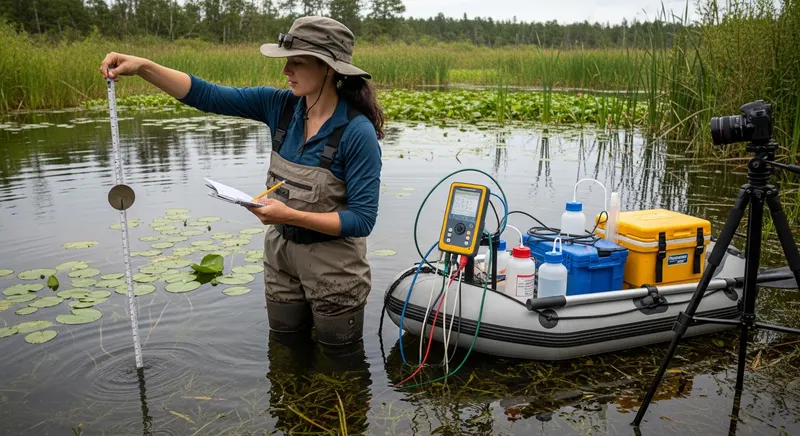
Our content draws heavily on the research, regulatory data, and technical guidance produced by U.S. federal agencies with statutory responsibilities for invasive species management and water quality protection.
U.S. Environmental Protection Agency (EPA)
The EPA regulates aquatic herbicides and algaecides under FIFRA and administers the NPDES permit program for aquatic pesticide applications. Our chemical control content is based on EPA-registered product registrations, label requirements, and water quality standards.
U.S. Geological Survey (USGS) — Nonindigenous Aquatic Species Program
The USGS Nonindigenous Aquatic Species (NAS) database is the authoritative national repository for distribution records of invasive aquatic species in the United States. Our distribution pages and species range maps draw from NAS occurrence data.
USDA Animal and Plant Health Inspection Service (APHIS)
USDA APHIS administers the federal noxious weed list, regulates biological control agent approvals, and coordinates national invasive species management programs. Our legal status information and biological control content reflects APHIS regulatory decisions.
U.S. Army Corps of Engineers — Engineer Research and Development Center (ERDC)
The ERDC Aquatic Plant Control Research Program (APCRP) has produced decades of research on aquatic weed control methods, herbicide efficacy, and management best practices. ERDC technical notes and research reports are a primary source for our control methods content.
USDA Natural Resources Conservation Service (NRCS) — PLANTS Database
The USDA PLANTS Database provides authoritative taxonomic information, native range data, and federal noxious weed status for all plant species discussed on AquaticWeed.org. Our species naming and native status information follows USDA PLANTS taxonomy.
University Research Programs
University-based aquatic science programs produce the majority of the peer-reviewed research that forms the scientific foundation of AquaticWeed.org. Key research programs whose published work informs our content include:
University of Florida IFAS — Center for Aquatic and Invasive Plants
CAIP is the nation's premier university center for aquatic plant research and management, producing authoritative species profiles, management guides, and peer-reviewed research. The Langeland & Burks identification manual — a primary reference for AquaticWeed.org — was produced by CAIP researchers.
University of Wisconsin — Center for Limnology
The UW Center for Limnology has produced foundational research on lake ecology, aquatic plant community dynamics, and the economics of lake management that directly informs our ecology and management planning content.
Michigan State University Extension — Fisheries and Wildlife Program
MSU Extension produces practical lake management guidance for Great Lakes states that informs our regional distribution and management content.
Cornell University — New York State Invasive Species Research Institute
NYISRI coordinates invasive species research, management, and outreach in New York State and the Northeast region, with strong programs on water chestnut, Eurasian watermilfoil, and Phragmites management.
Minnesota Sea Grant — University of Minnesota
Minnesota Sea Grant produces research and outreach on aquatic invasive species in the Great Lakes and Minnesota water bodies, including detailed work on spiny waterflea, curly-leaf pondweed, and Eurasian watermilfoil management. Their AIS educational resources are among the most comprehensive produced by any Sea Grant program.
Purdue University — Cooperative Extension Service
Purdue Extension produces regionally relevant aquatic invasive species identification and management resources for Indiana and the broader Midwest, including excellent guides on common submerged invasives and integrated management planning for recreational lakes.
Auburn University — School of Fisheries, Aquaculture, and Aquatic Sciences
Auburn's aquatic sciences program is a leading research center for aquatic weed management in the Southeast, with substantial published work on herbicide efficacy in warm-water systems, aquaculture pond management, and aquatic plant biology in southern water bodies.
Conservation and Professional Organizations
Aquatic Plant Management Society (APMS)
APMS is the primary professional organization for aquatic plant management professionals in North America. The Journal of Aquatic Plant Management, published by APMS, is a key peer-reviewed source for our management content.
North American Lake Management Society (NALMS)
NALMS is the leading professional organization for lake managers in North America, publishing Lake and Reservoir Management and coordinating the Volunteer Lake Monitoring Program. NALMS guidelines inform our lake management planning content.
National Invasive Species Council (NISC)
NISC coordinates the federal government's response to invasive species across agencies and provides national strategic guidance. Our regulatory and prevention content is informed by NISC management plans.
Ducks Unlimited — Wetlands Conservation
Ducks Unlimited is North America's largest wetland and waterfowl conservation organization. Their research and conservation work on wetland ecology, invasive emergent plants (particularly Phragmites australis), and wetland restoration is directly relevant to our emergent aquatic weed coverage.
The Nature Conservancy — Invasive Species Programs
The Nature Conservancy's work on invasive species management and aquatic ecosystem restoration provides conservation-oriented context for our ecological impact content, particularly regarding aquatic invasive species effects on native biodiversity and the conservation case for active management.
State Programs
Every U.S. state has aquatic invasive species programs, cooperative extension services, and natural resource agencies that produce regionally specific guidance. Our distribution content draws on state-specific program data from all 50 states. Key state programs referenced on AquaticWeed.org include the Florida Fish and Wildlife Conservation Commission Invasive Plant Management Section, California Department of Water Resources Aquatic Weed Control Program, Minnesota DNR Invasive Species Program, Wisconsin DNR Aquatic Invasive Species Program, and many others. See our US distribution guide →
State aquatic invasive species programs vary significantly in scale and scope. Florida's program is among the largest, managing more than 1 million acres of public water bodies for invasive aquatic plants annually. Wisconsin and Minnesota have particularly well-developed early detection and rapid response programs. California manages major aquatic weed problems in the Sacramento-San Joaquin Delta system and statewide irrigation infrastructure. Texas has active programs targeting giant salvinia in East Texas reservoirs. We reference current state program guidance for states where a species has significant management activity, and we link directly to state program resources rather than summarizing content that state agencies present more accurately than any secondary source can.
Scientific Journals
Primary peer-reviewed journals referenced by AquaticWeed.org include: Journal of Aquatic Plant Management, Aquatic Botany, Freshwater Biology, Hydrobiologia, Ecological Applications, Invasive Plant Science and Management, Lake and Reservoir Management, and Weed Technology. A comprehensive bibliography is available on our references page.
We access the peer-reviewed literature primarily through Web of Science and Google Scholar. For content requiring toxicological information relevant to human health and wildlife safety, we additionally reference PubMed and EPA's ECOTOX database. Our editorial team holds institutional library access that enables retrieval of full-text journal articles rather than relying on abstracts alone — a meaningful distinction for the quality of content we can produce. Species content in the Journal of Aquatic Plant Management is particularly well-represented in our reference base, as this journal publishes the most applied aquatic plant management research directly relevant to U.S. practitioners.
Ten-Year Lake Management Plan: Lake Wingra, WI
Lake Wingra, a 342-acre urban lake in Madison, WI, developed a comprehensive 10-year management plan coordinating the City of Madison, University of Wisconsin, and adjacent neighborhood associations. The plan addressed Eurasian watermilfoil, curly-leaf pondweed, and purple loosestrife through an integrated approach including targeted herbicide treatment, mechanical harvesting, native plant restoration, and public education.
Key outcome: The structured multi-agency planning process secured consistent funding across multiple budget cycles, a key advantage over ad hoc management. Native plant restoration efforts showed measurable progress in designated restoration zones within three years of initiation.
I've managed aquatic vegetation on Texas reservoirs for 15 years. The water hyacinth control content here is the most up-to-date, practical guidance I've found anywhere online.
Travis McKinley Commercial Fishing Guide, TX · Lake Travis / Lake AustinThe species identification guides on AquaticWeed.org are the most accurate I've used in 18 years of lake management. I now send all my new clients here first before we discuss treatment options.
Robert Harmon Certified Lake Manager, FL · Lake Okeechobee region