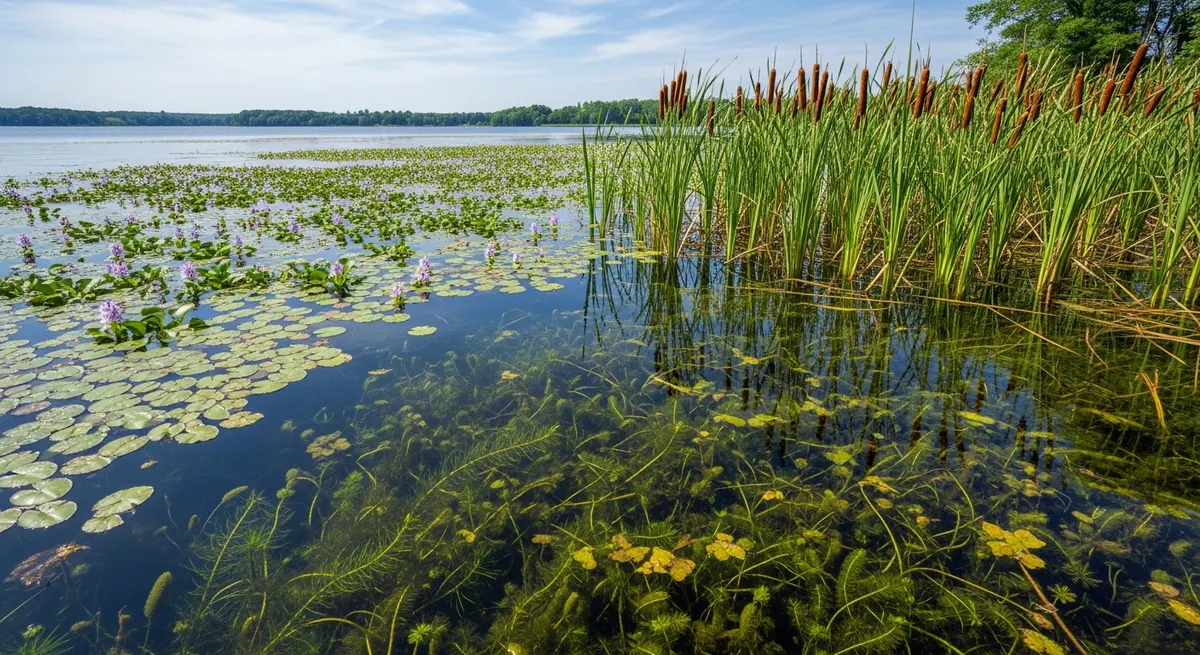
Several aquatic plant species are federally listed as noxious weeds under the Plant Protection Act, making their importation, transport, and sale across state lines illegal. Additional species are regulated at the state level. Possession, transport, or introduction of federally listed noxious weeds can result in civil penalties of up to $50,000 per violation.
- USDA APHIS maintains the federal noxious weed list — listed species cannot be transported across state lines or imported.
- States maintain their own lists, often including more species than the federal list.
- Civil penalties for federal violations can reach $50,000 per violation; criminal penalties apply for willful violations.
- The aquarium and water garden trade are the leading pathways for illegal species to enter wild waterways.
- Hydrilla, water hyacinth, giant salvinia, alligator weed, and water lettuce are among the key federally listed species.
Federal Noxious Weed Regulations
Under the Plant Protection Act of 2000, USDA APHIS maintains the federal noxious weed list, which includes species whose importation into or transport through the United States is prohibited. Federal listing makes it illegal to:
- Import listed species into the United States
- Export listed species from the United States
- Transport listed species across state lines
- Sell or offer for sale listed species in interstate commerce
Federal enforcement is handled by USDA APHIS and CBP (Customs and Border Protection). Civil penalties can reach $50,000 per violation, with criminal penalties available for willful violations. The federal list is the baseline — states can and often do restrict additional species not on the federal list.
Key Federally Listed Aquatic Species
The federal noxious weed list includes the following aquatic plants of greatest concern:
- Hydrilla (Hydrilla verticillata) — The most damaging submerged aquatic invasive in the U.S. Present in 30+ states. Species profile →
- Giant salvinia (Salvinia molesta and related species) — Free-floating fern capable of catastrophic growth. Present in 10+ southern states.
- Water hyacinth (Eichhornia crassipes) — Most problematic floating plant globally. Severe in Southeast and California. Species profile →
- Alligator weed (Alternanthera philoxeroides) — Emergent and floating weed of southern waterways. Species profile →
- Water lettuce (Pistia stratiotes) — Free-floating rosette plant of subtropical waters.
- African oxygen weed and several other submerged species
State Regulatory Variation
Individual states maintain their own regulated plant lists, which vary significantly in scope and species coverage. Florida, which has the most severe aquatic weed problems, has an extensive list of prohibited and restricted aquatic plants under Chapter 369, Florida Statutes. California's list is administered by CDFA. Great Lakes states have coordinated invasive species lists under the Great Lakes Compact. Western states increasingly regulate species like Eurasian watermilfoil and Brazilian elodea.
Penalties for state violations vary — most include civil penalties, mandatory eradication requirements, and in some cases criminal charges for willful introductions. Check your state's invasive species program website for the current prohibited plant list before purchasing, planting, or transporting any aquatic plant. US distribution and regulatory overview →
Sources & Scientific References
- USDA APHIS. Federal noxious weed list — aquatic species. Plant Protection and Quarantine.
- Plant Protection Act of 2000, 7 U.S.C. 7701 et seq.
- USDA National Invasive Species Information Center. State invasive species resources.
Frequently Asked Questions
What aquatic plants are on the federal noxious weed list?
USDA's federal noxious weed list includes several aquatic species: giant salvinia (Salvinia molesta and related species), hydrilla (Hydrilla verticillata), water hyacinth (Eichhornia crassipes), alligator weed (Alternanthera philoxeroides), water lettuce (Pistia stratiotes), several water fern species, and others. The federal list prohibits interstate transport, sale, and introduction — individual states maintain separate lists that may be more or less restrictive.
Is it illegal to have aquatic weeds in my pond?
Having regulated aquatic plants in a private pond may be illegal depending on the species and your state laws, even if you did not intentionally introduce them. If you suspect a federally listed species is present, contact your state's department of environmental quality or natural resources for guidance. Failure to report or properly manage federally listed noxious weeds can result in penalties. Most states also restrict or prohibit the sale and distribution of listed species.
What happens if you transport aquatic weeds?
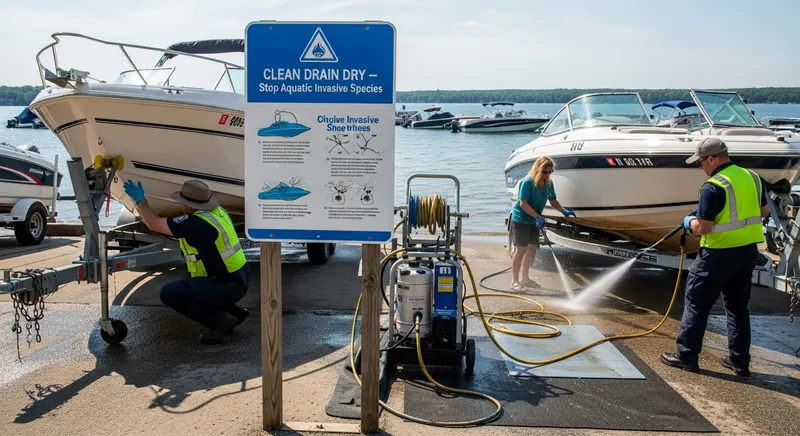
Transporting federally listed noxious weed species across state lines is illegal under the Plant Protection Act and can result in civil penalties of up to $50,000 per violation. Transporting regulated aquatic plants within a state violates state noxious weed laws in most states. Unintentional transport (plant fragments on a boat or trailer) is not typically prosecuted, but is the reason most states have mandatory Clean, Drain, Dry requirements and boat inspection programs.
Are aquarium plants regulated?
Many aquatic plants sold in the aquarium trade are invasive or potentially invasive. Regulation varies by state. Several states prohibit the sale of specific aquarium plant species — including Hydrilla, Cabomba, Ludwigia, and others — that have established invasive populations. Releasing aquarium plants into natural waterways is illegal in virtually all states. If you have concerns about an aquarium plant you own, contact your state fish and wildlife agency before disposal.
Key Takeaways
- USDA APHIS maintains the federal noxious weed list — listed species cannot be transported across state lines or imported.
- States maintain their own lists, often including more species than the federal list.
- Civil penalties for federal violations can reach $50,000 per violation; criminal penalties apply for willful violations.
- The aquarium and water garden trade are the leading pathways for illegal species to enter wild waterways.
- Hydrilla, water hyacinth, giant salvinia, alligator weed, and water lettuce are among the key federally listed species.
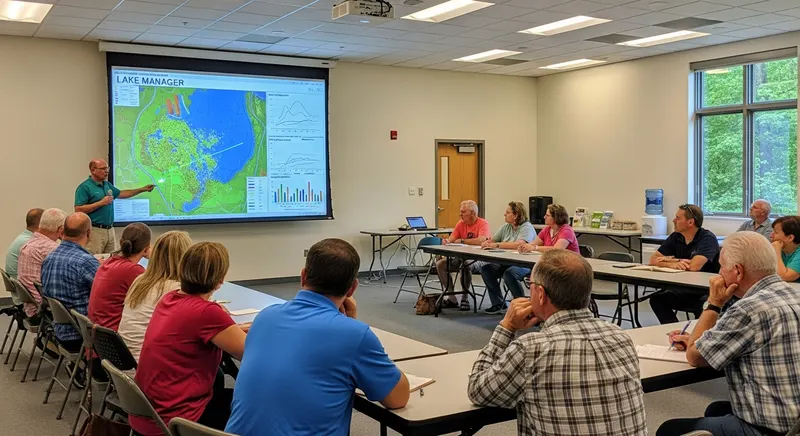
Ten-Year Lake Management Plan: Lake Wingra, WI
Lake Wingra, a 342-acre urban lake in Madison, WI, developed a comprehensive 10-year management plan coordinating the City of Madison, University of Wisconsin, and adjacent neighborhood associations. The plan addressed Eurasian watermilfoil, curly-leaf pondweed, and purple loosestrife through an integrated approach including targeted herbicide treatment, mechanical harvesting, native plant restoration, and public education.
Key outcome: The structured multi-agency planning process secured consistent funding across multiple budget cycles, a key advantage over ad hoc management. Native plant restoration efforts showed measurable progress in designated restoration zones within three years of initiation.
Running a golf course with three retention ponds means constant weed pressure. The prevention and best management practices guide gave us a systematic approach that replaced our reactive spray schedule.
Paul Esteban Golf Course Superintendent, SC · Myrtle Beach areaAs a lakefront property owner I was completely lost until I found AquaticWeed.org. The permit guidance alone saved me from making costly, potentially illegal treatment mistakes.
Gerald Renfrew Lakefront Landowner, WI · Vilas County