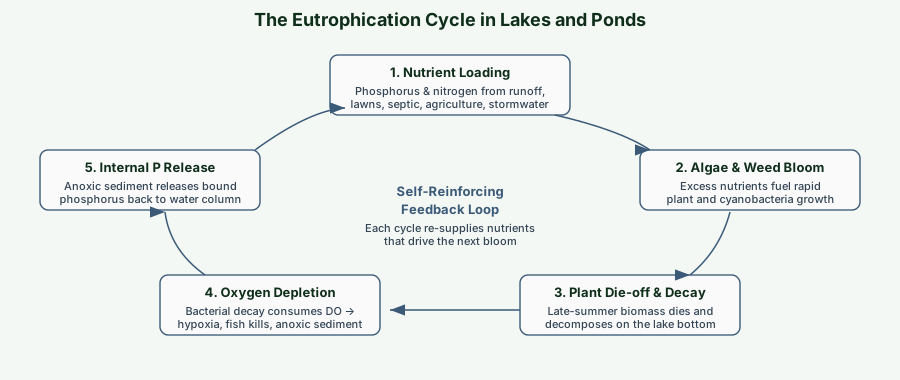
Direct answer: Eutrophication is the progressive enrichment of a lake or pond with nitrogen and phosphorus, driving a predictable shift from clear, low-productivity (oligotrophic) conditions toward turbid, algae- and weed-dominated (eutrophic and hypertrophic) conditions. It is the single most important driver of nuisance aquatic plant problems in U.S. water bodies.
The Trophic State Classification
Limnologists classify lakes into four trophic states based on phosphorus concentration, chlorophyll-a, and Secchi transparency. Oligotrophic lakes (total phosphorus < 10 μg/L) are clear, deep, oxygen-rich, and support low fish biomass dominated by cold-water species. Mesotrophic lakes (10–30 μg/L) are moderately productive and represent the typical condition of well-managed natural lakes. Eutrophic lakes (30–100 μg/L) show frequent algal blooms, oxygen depletion in the hypolimnion, and nuisance aquatic plant growth. Hypertrophic lakes (> 100 μg/L) are perpetually turbid, with chronic algal scums, frequent fish kills, and dense weed beds dominated by invasive species like hydrilla and water hyacinth.
The trophic state classification is more than descriptive — it predicts management response and cost. Restoring an oligotrophic lake from a single eutrophication episode may take 5–10 years of source control. Restoring a long-eutrophic lake requires multi-decade programs targeting both watershed nutrient sources and internal sediment phosphorus stores.
Drivers of Eutrophication
Phosphorus is typically the limiting nutrient in freshwater systems, and reductions in phosphorus loading produce the largest water quality response. Primary phosphorus sources include agricultural runoff (fertilizer and livestock manure), urban stormwater (lawn fertilizer, leaf litter, pet waste), wastewater treatment plant discharges (where not phosphorus-removing), failed septic systems, and atmospheric deposition. See the nutrient-driven growth guide for biological mechanisms by which excess phosphorus translates into plant biomass.
Nitrogen (primarily nitrate and ammonium) is the secondary limiting nutrient in most lakes and the primary limiting nutrient in some coastal and tropical systems. Cyanobacterial blooms that produce toxins are particularly sensitive to nitrogen-to-phosphorus ratio shifts — low N:P ratios favor nitrogen-fixing cyanobacteria, complicating management.
Symptoms of an Eutrophic Lake
Field practitioners diagnose eutrophication from a cluster of co-occurring symptoms: reduced water clarity (Secchi depth < 2 m, often < 1 m); algal blooms (visible as green or blue-green scum, particularly in late summer); dense aquatic plant beds dominated by fast-growing invasive species; hypolimnion dissolved oxygen depletion during summer stratification; periodic fish kills, particularly after fall turnover; and accelerated pond succession. The combination of three or more of these symptoms is diagnostic.
Restoration: Source Control First
Decades of lake restoration experience have established a clear principle: in-lake interventions without source control fail. Whole-lake herbicide treatments, aluminum sulfate (alum) applications, hypolimnetic aeration, and biomanipulation can all produce short-term water quality improvements, but the effects reverse within 2–10 years unless the underlying nutrient loading is reduced. Effective restoration programs sequence interventions: first reduce external loading through agricultural BMPs and stormwater controls; then address internal loading from sediment; only then consider symptomatic in-lake treatments. See lake management plans for program design.
The economic case for source control is compelling. The U.S. EPA estimates that nutrient enrichment causes more than $2 billion annually in damages to U.S. lakes through lost recreational and property value alone (see economic costs of aquatic weeds). Watershed-scale source control programs typically return $10–$40 in avoided damages for every dollar invested.
Frequently Asked Questions
What is the difference between oligotrophic and eutrophic lakes?
Oligotrophic lakes are nutrient-poor, with total phosphorus below about 10 μg/L, clear water, deep light penetration, and low biological productivity. Eutrophic lakes are nutrient-rich, with phosphorus above 30 μg/L, turbid water, frequent algal blooms, and high productivity that often includes nuisance aquatic plant beds and oxygen depletion.
What causes eutrophication?
Eutrophication is caused by elevated inputs of phosphorus and nitrogen, primarily from agricultural fertilizer runoff, urban stormwater, wastewater treatment plant discharges, failed septic systems, and atmospheric deposition. Phosphorus is the limiting nutrient in most freshwater systems, so phosphorus controls produce the largest water quality response.
Can eutrophication be reversed?
Yes, but reversal typically takes 5–30 years of sustained source control. Recovery is faster for lakes recently impacted, slower for chronically eutrophic systems with large internal phosphorus stores in the sediment. In-lake treatments alone do not produce durable recovery — watershed source control is essential.
Are all eutrophic lakes weed-choked?
Most are, but the specific symptoms vary. Some eutrophic lakes are dominated by phytoplankton (algae and cyanobacteria) and remain free of dense rooted plants; others develop massive submerged plant beds; many show both. The phytoplankton vs macrophyte balance depends on water clarity, depth, sediment type, and the specific species present.
Does eutrophication kill fish?
Indirectly, yes. Eutrophication does not directly kill fish, but the resulting oxygen depletion (particularly under summer thermal stratification and after fall turnover) and cyanobacterial toxins do kill fish. Fish kills in eutrophic lakes are predictable summer events; gradual fishery degradation through reduced spawning habitat and species shifts is a longer-term consequence.
What is the role of phosphorus vs nitrogen in eutrophication?
Phosphorus is the limiting nutrient in most freshwater lakes — meaning that controlling phosphorus produces the largest water quality response. Nitrogen is the limiting nutrient in many coastal and tropical lakes and contributes to cyanobacterial bloom severity. Most U.S. lake restoration programs prioritize phosphorus control while monitoring nitrogen.
How is trophic state measured?
The Carlson Trophic State Index combines three measurements — total phosphorus concentration, chlorophyll-a (a proxy for algal biomass), and Secchi disk transparency — into a single 0–100 scale where 0–40 is oligotrophic, 40–50 is mesotrophic, 50–70 is eutrophic, and above 70 is hypertrophic. Standardized monitoring protocols are available from state lake management programs.
References
- Schindler, D.W. (1974). Eutrophication and recovery in experimental lakes: implications for lake management. Science, 184(4139), 897–899.
- Carlson, R.E. (1977). A trophic state index for lakes. Limnology and Oceanography, 22(2), 361–369.
- Smith, V.H. & Schindler, D.W. (2009). Eutrophication science: where do we go from here? Trends in Ecology & Evolution, 24(4), 201–207.
- U.S. EPA (2009). National Lakes Assessment. EPA 841-R-09-001.
- Cooke, G.D., et al. (2005). Restoration and Management of Lakes and Reservoirs, 3rd ed. Taylor & Francis.
Ten-Year Lake Management Plan: Lake Wingra, WI
Lake Wingra, a 342-acre urban lake in Madison, WI, developed a comprehensive 10-year management plan coordinating the City of Madison, University of Wisconsin, and adjacent neighborhood associations. The plan addressed Eurasian watermilfoil, curly-leaf pondweed, and purple loosestrife through an integrated approach including targeted herbicide treatment, mechanical harvesting, native plant restoration, and public education.
Key outcome: The structured multi-agency planning process secured consistent funding across multiple budget cycles, a key advantage over ad hoc management. Native plant restoration efforts showed measurable progress in designated restoration zones within three years of initiation.
We referenced the biological control pages extensively when evaluating our grass carp stocking proposal. The detail on stocking rates and target species specificity helped us present a credible case to our board.
Karen Ostrowski HOA Lake Committee Chair, MN · Lake Minnetonka associationThe ecological impact section helped our team explain to county commissioners why early intervention matters. The oxygen depletion data alone secured funding for our early-detection monitoring program.
Donna Whitfield State Wildlife Biologist, GA · Okefenokee region