30 Expert Answers on Aquatic Weeds
Aquatic weed management generates hundreds of questions every year from lake associations, municipalities, agricultural users, anglers, and property owners. This library addresses the 30 most frequently asked questions with authoritative, research-backed answers. Each page provides a direct answer followed by comprehensive context, scientific explanation, practical guidance, and sources.
Use the index below to navigate directly to the question most relevant to your situation, or browse all pages for a comprehensive understanding of aquatic weed identification, ecology, management, and regulation.
Foundations
- What Are Aquatic Weeds?
- What Causes Aquatic Weeds to Grow?
- How Do Aquatic Weeds Spread Between Lakes?
- What Are the Most Invasive Aquatic Weeds in the US?
- How Do You Identify Aquatic Weeds?
- What Is the Difference Between Algae and Aquatic Weeds?
- What Are Floating vs. Submerged vs. Emergent Weeds?
Ecology & Water Quality
- How Do Aquatic Weeds Affect Fish Populations?
- Do Aquatic Weeds Reduce Oxygen in Water?
- How Do Aquatic Weeds Impact Water Quality?
Management & Control
- What Is the Best Way to Remove Aquatic Weeds?
- Are Herbicides Safe for Aquatic Weed Control?
- What Is Mechanical Aquatic Weed Harvesting?
- What Is Biological Control for Aquatic Weeds?
- How Much Does Aquatic Weed Removal Cost?
- How Fast Do Aquatic Weeds Grow?
Regulation, Economics & Special Situations
- Can Aquatic Weeds Be Beneficial?
- What Aquatic Weeds Are Illegal in the US?
- How Are Aquatic Weeds Managed in California?
- What States Have the Worst Aquatic Weed Problems?
- How Often Should Aquatic Weeds Be Managed?
- What Permits Are Needed for Aquatic Weed Removal?
- How Do Aquatic Weeds Affect Property Value?
- Can Aquatic Weeds Clog Irrigation Systems?
Species-Specific Questions
- What Is Hydrilla and Why Is It Dangerous?
- What Is Water Hyacinth and Why Is It Invasive?
- What Is Duckweed and How Do You Control It?
- What Is Filamentous Algae and How Do You Treat It?
- Can You Prevent Aquatic Weeds Permanently?
- What Is Integrated Aquatic Weed Management?
- How Are Aquatic Weeds Managed in Florida?
- How Are Aquatic Weeds Managed in Texas?
- How Are Aquatic Weeds Managed in the Great Lakes?
- How Are Aquatic Weeds Managed in the Pacific Northwest?
- Are There Government Grants for Aquatic Weed Control?
- How Much Does a Professional Lake Weed Survey Cost?
- How Do Aquatic Weeds Affect Drinking Water?
- How Do Aquatic Weeds Affect Wetland Ecosystems?
- What Is the Economic Cost of Aquatic Weeds in the US?
- How Do Aquatic Weeds Affect Waterfowl and Waterbirds?
- Are Aquatic Weeds Dangerous for Swimmers?
- How Does Climate Change Affect Aquatic Weed Spread?
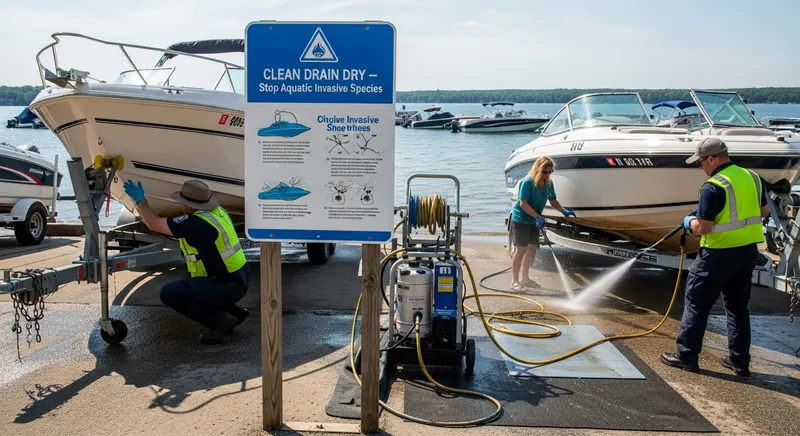
- What Is Clean, Drain, Dry and Does It Work?
- How Do Early Detection Programs Prevent Aquatic Weed Invasions?
- How Do You Manage Aquatic Weeds in a Small Private Pond?
- Can Grass Carp Control Aquatic Weeds?
- What Are Benthic Barriers and Do They Work?
- How Do Seasonal Drawdowns Control Aquatic Weeds?
- How Do Aquatic Weeds Affect Native Plant Communities?
- How Do You Create a Lake Weed Management Plan?
Why These Questions Matter
Aquatic weed management is one of the most misunderstood areas of environmental management. Property owners frequently receive conflicting advice from neighbors, contractors, and online sources — and the cost of acting on incorrect information can be significant: treatments that don't work, fish kills from improper herbicide application, permit violations from unpermitted chemical use, and year after year of wasted management spending that doesn't address the underlying problem.
These 30 questions represent the information gaps that cause the most management failures. Understanding what aquatic weeds actually are and how they function biologically is the foundation for every effective management decision. Understanding the full range of control options — and their real-world trade-offs — prevents both over-treatment and under-treatment. Understanding the legal and regulatory framework prevents costly compliance problems. And understanding species-specific biology for the most problematic invasives allows management to be targeted precisely rather than broadly, improving cost-effectiveness and reducing non-target impacts.
About the Answers
Each answer in this library follows the same structure: a direct, clear answer to the question at the top; followed by the scientific and practical context that explains the why behind the answer; followed by links to the relevant in-depth content on AquaticWeed.org and to authoritative external sources. The answers are written for a reader who needs to make a real management decision or understand a situation they are dealing with — not for an academic audience. Where the answer depends on context (water body type, geographic region, specific species), we explain those dependencies clearly rather than oversimplifying to a single answer that would be wrong for half the situations where the question arises.
Questions We Hear Most Often
Among the 30 questions in this library, a handful come up most frequently from visitors to AquaticWeed.org and from lake associations, property owners, and managers across the country. These are the questions that drive the most consequential management mistakes when answered incorrectly:
- Do I need a permit to treat aquatic weeds? Yes, in most situations — and the specific requirements vary by state, water body type, and control method. Skipping this step is the most common compliance error in aquatic weed management. Full answer →
- What is the most effective way to control aquatic weeds? The honest answer is that it depends entirely on the species and situation — and any source that gives a single blanket answer is oversimplifying. Full answer →
- What is the most invasive aquatic weed in the US? Hydrilla is generally considered the most ecologically damaging submerged invasive; water hyacinth is the most destructive floating species. Full answer →
What to Do After Reading
Reading the answers on this page is a starting point, not an end point. Aquatic weed management requires site-specific assessment — the right approach for your lake or pond depends on species present, water body size and depth, intended uses, adjacent land use, budget, state permit requirements, and many other factors that a general Q&A library cannot fully address. After using this resource to understand the landscape of options and the questions you need to ask, we recommend contacting your state's aquatic invasive species program, your state's cooperative extension service, and — for direct management assistance — a licensed aquatic plant management professional. Many state programs offer free identification assistance and management guidance for lake associations and individual property owners.
For in-depth species coverage, visit the Species Authority Hub. For comprehensive control guidance, see the Control Methods Hub. For identification assistance, use the Identification Hub.
Ten-Year Lake Management Plan: Lake Wingra, WI
Lake Wingra, a 342-acre urban lake in Madison, WI, developed a comprehensive 10-year management plan coordinating the City of Madison, University of Wisconsin, and adjacent neighborhood associations. The plan addressed Eurasian watermilfoil, curly-leaf pondweed, and purple loosestrife through an integrated approach including targeted herbicide treatment, mechanical harvesting, native plant restoration, and public education.
Key outcome: The structured multi-agency planning process secured consistent funding across multiple budget cycles, a key advantage over ad hoc management. Native plant restoration efforts showed measurable progress in designated restoration zones within three years of initiation.
We used the integrated management framework from this site to structure our Eurasian watermilfoil control program. After three seasons we've reduced lake-wide coverage by 78% on our 340-acre water body.
Susan Thibodeau Lake District Manager, MN · Crow Wing CountyThe seasonal timing guidance has been invaluable. Treating at the right growth stage cut our herbicide costs by nearly 30% without sacrificing efficacy on our county-managed reservoir.
Dale Buchanan County Parks Director, MI · Kalamazoo County