Direct answer: Thermal stratification is the summer (and winter) layering of lake water into distinct horizontal density layers caused by temperature differences. Stratification governs dissolved oxygen distribution, nutrient cycling, and aquatic plant growth zonation in nearly every lake deeper than 3–4 meters in temperate North America.
The Three Summer Layers
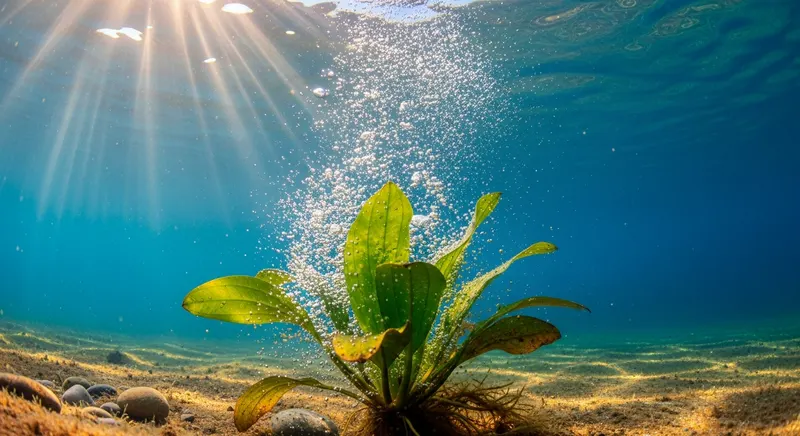
In a temperate stratified lake from late spring through early fall, three distinct layers form. The epilimnion is the warm, well-mixed upper layer (typical summer temperatures 18–28°C), kept homogeneous by wind- and convection-driven turbulence; it is in continuous exchange with the atmosphere and remains oxygen-saturated. The thermocline (or metalimnion) is the narrow transition zone where temperature drops rapidly with depth (typically > 1°C per meter); it acts as a physical barrier between upper and lower layers. The hypolimnion is the cold, dark, isolated bottom layer (typically 4–10°C in northern lakes); it receives no atmospheric reaeration and accumulates the products of sediment decomposition.
Stratification depends on three lake properties: depth (lakes shallower than 3–4 meters typically do not stratify because wind reaches the bottom), surface area to depth ratio (large shallow lakes resist stratification; small deep lakes stratify strongly), and latitude (cooler northern lakes stratify more sharply than warmer southern lakes).
Why Stratification Matters
The hypolimnion's isolation from the atmosphere during summer stratification is the single most important fact in lake water quality. With no surface reaeration and continuous oxygen consumption by sediment microbes, the hypolimnion progressively depletes oxygen — many eutrophic lakes show complete anoxia (0 mg/L) by midsummer. Anoxic sediment releases dissolved phosphorus, ammonia, iron, manganese, and hydrogen sulfide back into the water column — a process called internal loading that fuels late-summer algal blooms and degrades drinking water quality. See the dissolved oxygen guide for the biological consequences.
For aquatic plants, stratification establishes the depth limit of the littoral zone. Rooted submerged plants generally cannot grow below the thermocline because of cold temperatures and reduced light. The thermocline therefore acts as a depth ceiling for submerged plant colonization — even invasive species like hydrilla rarely establish below 5–6 meters in well-stratified clear lakes.
Aquatic Weeds and Stratification
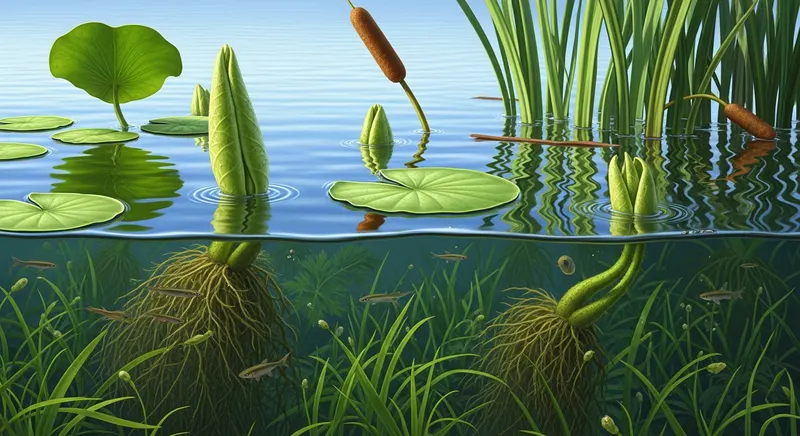
Dense weed beds in shallow water alter local stratification dynamics. Surface canopies of milfoil or hydrilla intercept sunlight in the top 1–2 meters, warming the upper water column rapidly while leaving deeper water cooler — producing a localized "weed-induced thermocline" in just a few meters of water. This stratification within the weed bed prevents wind mixing, accelerates oxygen depletion below the canopy, and creates the conditions for nighttime fish stress and predawn oxygen sags. The phenomenon is particularly pronounced in calm, hot summer weather.
Weed canopies also alter whole-lake thermal structure indirectly by suppressing wind-driven mixing across large infested areas. Studies on Adirondack lakes infested with Eurasian watermilfoil have documented earlier and stronger seasonal thermoclines compared with comparable uninfested lakes — with measurable effects on hypolimnetic oxygen depletion timing.
Winter Inverse Stratification and Ice Cover
In northern lakes, a second stratification regime develops under winter ice cover. Water at exactly 4°C is densest, so the bottom layer of an ice-covered lake stabilizes near 4°C while the surface (immediately below ice) remains at 0°C — an inverse temperature profile. Winter stratification persists until ice-out triggers spring turnover. In severely eutrophic lakes, winter oxygen depletion under ice can produce winter fish kills, particularly in shallow lakes with limited oxygen reserves and high organic matter accumulation.
Frequently Asked Questions
When do lakes stratify?
In temperate North America, lakes typically begin stratifying in April–May as surface warming accelerates, achieve strong stratification by June–July, and break down stratification at fall turnover in September–November. Tropical lakes may stratify year-round; very shallow lakes (under 3 m) may never stratify because wind reaches the bottom.
What is a thermocline?
The thermocline is the depth zone in a stratified lake where temperature drops rapidly — typically more than 1°C per meter of depth. It separates the warm, well-mixed upper layer (epilimnion) from the cold, isolated bottom layer (hypolimnion). The thermocline acts as a physical barrier to mixing between the two layers.
Why does the hypolimnion lose oxygen?
Once stratified, the hypolimnion is isolated from atmospheric reaeration and from photosynthetic oxygen production (because light is too low). Continuous oxygen consumption by sediment microbes decomposing organic matter steadily depletes the limited oxygen pool. In productive lakes the hypolimnion can become completely anoxic within weeks to a few months.
Do aquatic weeds change lake stratification?
Yes — dense surface canopies of invasive submerged weeds can produce localized stratification within the weed bed (in just a few meters of water depth), suppress wind-driven mixing across infested areas, and contribute to earlier and stronger whole-lake thermoclines. The cumulative effect aggravates hypolimnetic oxygen depletion and the associated water quality and fish habitat problems.
Can stratification be prevented or reversed?
Yes — destratification systems (compressed-air diffusers, mechanical mixers) artificially circulate water to prevent or break down stratification. These systems can substantially improve hypolimnetic oxygen and reduce internal phosphorus loading, but they consume significant electrical energy and do not address the underlying nutrient loading. They are best deployed as part of an integrated restoration program.
Do all lakes stratify?
No. Lakes shallower than about 3–4 meters, lakes with high wind exposure relative to surface area, and lakes with low-density surface inflows often do not stratify or stratify only briefly. Reservoirs with strong surface or bottom-withdrawal outlets show non-classical stratification patterns. Limnologists classify lakes as polymictic (frequent mixing), dimictic (mixes twice annually), monomictic (mixes once), or meromictic (rarely or never fully mixes) based on stratification regime.
References
- Hutchinson, G.E. (1957). A Treatise on Limnology, Volume 1: Geography, Physics, and Chemistry. John Wiley & Sons.
- Wetzel, R.G. (2001). Limnology: Lake and River Ecosystems, 3rd ed. Academic Press.
- Boehrer, B. & Schultze, M. (2008). Stratification of lakes. Reviews of Geophysics, 46(2), RG2005.
- James, W.F. (2017). Internal phosphorus loading contributions from deposited and resuspended sediment. Lake and Reservoir Management, 33(4), 347–359.
- Cooke, G.D., et al. (2005). Restoration and Management of Lakes and Reservoirs, 3rd ed. Taylor & Francis.
Ten-Year Lake Management Plan: Lake Wingra, WI
Lake Wingra, a 342-acre urban lake in Madison, WI, developed a comprehensive 10-year management plan coordinating the City of Madison, University of Wisconsin, and adjacent neighborhood associations. The plan addressed Eurasian watermilfoil, curly-leaf pondweed, and purple loosestrife through an integrated approach including targeted herbicide treatment, mechanical harvesting, native plant restoration, and public education.
Key outcome: The structured multi-agency planning process secured consistent funding across multiple budget cycles, a key advantage over ad hoc management. Native plant restoration efforts showed measurable progress in designated restoration zones within three years of initiation.
We referenced the biological control pages extensively when evaluating our grass carp stocking proposal. The detail on stocking rates and target species specificity helped us present a credible case to our board.
Karen Ostrowski HOA Lake Committee Chair, MN · Lake Minnetonka associationThe ecological impact section helped our team explain to county commissioners why early intervention matters. The oxygen depletion data alone secured funding for our early-detection monitoring program.
Donna Whitfield State Wildlife Biologist, GA · Okefenokee region