No single method is 'best' for all aquatic weed situations — the optimal approach depends on species, infestation size, water use restrictions, budget, and long-term management goals. Integrated management combining multiple methods consistently outperforms any single approach. The most cost-effective action is always prevention before establishment.
- No single method is universally 'best' — effective removal depends on species, water body size, water use, and budget.
- Integrated management (combining physical, chemical, and biological methods) consistently outperforms any single approach.
- Herbicides are the most cost-effective option for large infestations when EPA-registered products are used with permits.
- Mechanical harvesting removes biomass immediately but does not kill roots — regrowth occurs in weeks to months.
- Biological control takes years but can provide sustainable long-term suppression with low ongoing cost.
- Prevention of new introductions is 10–100× more cost-effective than treating established infestations.
Understanding the Range of Options
Aquatic weed control options fall into four broad categories: physical/mechanical, chemical, biological, and preventive. Each has distinct advantages, limitations, costs, and regulatory requirements. The "best" method for any given situation is the one that most effectively targets the specific species, meets permit requirements, fits the available budget, and addresses the long-term management goal.
Mechanical and Physical Methods
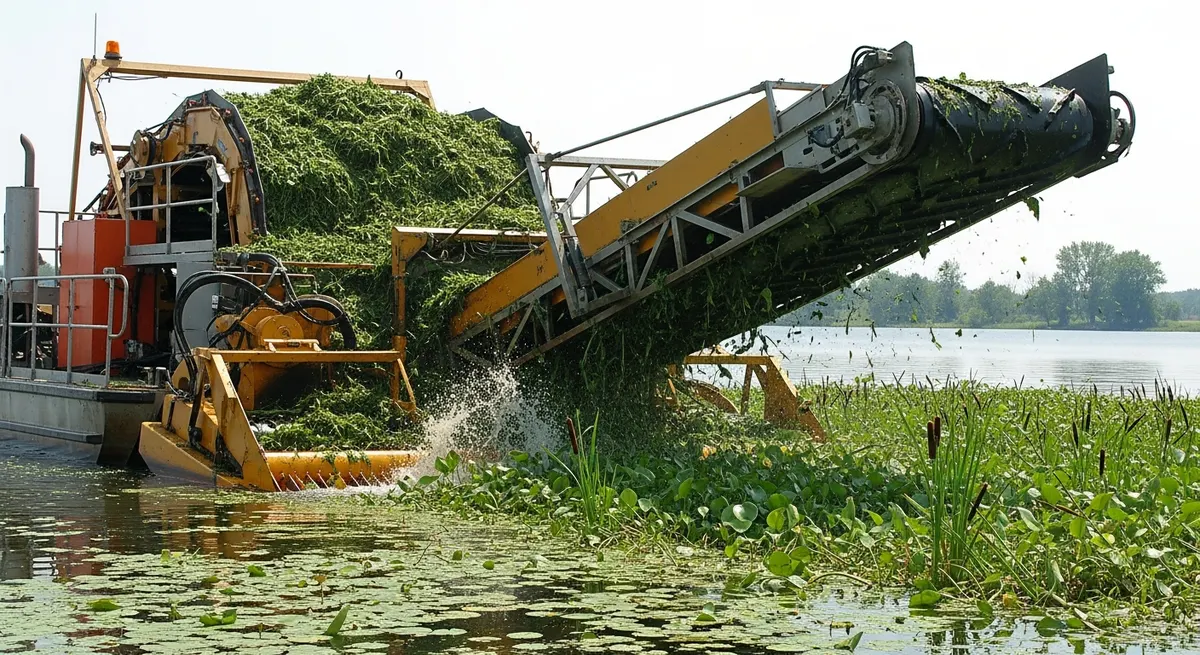
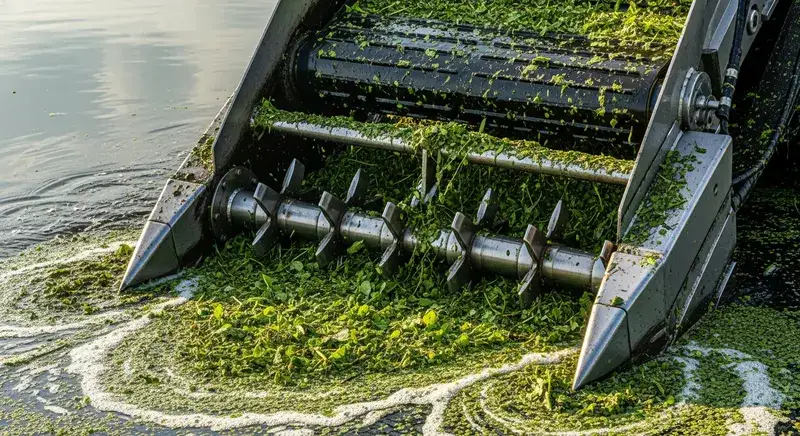
Mechanical control uses physical equipment to cut, collect, or suction aquatic vegetation. Commercial harvesters are barge-mounted machines that cut and collect aquatic plants in a single pass, removing biomass from the water body. Suction dredges remove plants and sediment simultaneously. Hand tools (rakes, cutters) serve small-scale needs.
The key advantage of mechanical harvesting is immediate results — a harvestable lake can show open water within days. The key limitation is regrowth: most invasive species regrow from fragments, tubers, or turions, and harvesting may stimulate regrowth by removing competitive exclusion from established plants. For species that spread aggressively by fragmentation (milfoil, hydrilla), harvesting with inadequate fragment control can worsen infestations. Properly managed harvesting with barrier screens to contain fragments is important for these species. Mechanical control guide →
Chemical Control (Herbicides)
Aquatic herbicides applied by licensed professionals are typically the most cost-effective control method for established infestations. Approved products include fluridone (systemic, season-long), triclopyr (systemic, dicot-selective), endothall (contact, fast-acting), and others. Each product has specific species efficacy, application timing, contact time requirements, water use restrictions, and permit requirements.
Professional chemical control benefits include high specificity (some products are selective for invasive species while sparing natives), ability to treat large areas efficiently, and sustained control (systemic herbicides can provide 12–18 months of suppression from a single treatment). The primary drawbacks are cost (professional application of aquatic herbicides typically runs $150–$400 per treated acre), permit requirements in all states, and water use restrictions that may close water to swimming, irrigation, or fishing for periods following treatment. Chemical control guide →
Biological Control
Biological control uses living organisms — insects, fish, pathogens, or waterfowl — to reduce aquatic weed populations. The best-established biological control for aquatic weeds in the U.S. is triploid grass carp for submerged vegetation management. Classical biocontrol agents have been developed for water hyacinth, hydrilla (grass carp), alligator weed (flea beetle), and Eurasian watermilfoil (weevil). Biological control is rarely a stand-alone solution but can provide long-term suppression that reduces dependence on repeated chemical treatments. Biological control guide →
Integrated Management: The Best Approach
For virtually any established invasive aquatic weed problem of significant scale, integrated management — combining targeted chemical treatment, mechanical maintenance, nutrient management, native plant restoration, and monitoring — consistently outperforms any single method. Integrated programs address both the immediate weed problem and the underlying conditions that sustain it. They are more cost-effective over multi-year horizons even if initial costs are higher than single-method approaches. Integrated management guide →
Sources & Scientific References
- Madsen, J.D. (2000). Advantages and disadvantages of aquatic plant management techniques. ERDC/EL SR-00-1. U.S. Army Engineer Research and Development Center.
- Getsinger, K.D. et al. (1997). Fluridone treatment of Eurasian watermilfoil and curlyleaf pondweed. Journal of Aquatic Plant Management, 35, 65–72.
Frequently Asked Questions
What is the most effective way to get rid of aquatic weeds?
For established infestations, professionally applied aquatic herbicides — selected by species, growth form, and permitted water uses — are typically the most cost-effective control method. For small water bodies or situations where herbicide use is restricted, mechanical harvesting removes biomass immediately but rarely prevents regrowth without follow-up treatment. Long-term success requires integrated management addressing the root causes (nutrients, disturbed habitat) alongside direct weed control.
Can you pull aquatic weeds by hand?
Hand pulling is practical only for small infestations in shallow water and for specific species that do not regenerate from fragments. For fragmentation-prone species like hydrilla, Eurasian watermilfoil, or elodea, hand pulling disperses viable fragments and typically makes infestations worse. For species that reproduce primarily by seed or don't fragment easily, hand removal before seed set can be effective for small populations.
Does raking help remove aquatic weeds?
Raking (with a weighted lake rake or weed rake) removes surface growth and reduces density but rarely addresses roots, rhizomes, or underground storage structures. For most invasive submerged species, raking provides temporary relief and may worsen the problem if fragments are released and not collected. Raking is most useful as a supplement to other treatments or for maintenance of areas already under chemical or mechanical management.
How long does it take to get rid of aquatic weeds?
Aquatic weed management is an ongoing process, not a one-time fix. For established invasive species, herbicide treatment results are visible within 2–6 weeks, but regrowth from seeds, tubers, or turions typically begins within the same season or the following year. Multi-year management programs — annual or biennial treatment combined with monitoring and nutrient reduction — are the standard approach for invasive species management in most lakes.
Key Takeaways
- No single method is universally 'best' — effective removal depends on species, water body size, water use, and budget.
- Integrated management (combining physical, chemical, and biological methods) consistently outperforms any single approach.
- Herbicides are the most cost-effective option for large infestations when EPA-registered products are used with permits.
- Mechanical harvesting removes biomass immediately but does not kill roots — regrowth occurs in weeks to months.
- Biological control takes years but can provide sustainable long-term suppression with low ongoing cost.
- Prevention of new introductions is 10–100× more cost-effective than treating established infestations.
Ten-Year Lake Management Plan: Lake Wingra, WI
Lake Wingra, a 342-acre urban lake in Madison, WI, developed a comprehensive 10-year management plan coordinating the City of Madison, University of Wisconsin, and adjacent neighborhood associations. The plan addressed Eurasian watermilfoil, curly-leaf pondweed, and purple loosestrife through an integrated approach including targeted herbicide treatment, mechanical harvesting, native plant restoration, and public education.
Key outcome: The structured multi-agency planning process secured consistent funding across multiple budget cycles, a key advantage over ad hoc management. Native plant restoration efforts showed measurable progress in designated restoration zones within three years of initiation.
Running a golf course with three retention ponds means constant weed pressure. The prevention and best management practices guide gave us a systematic approach that replaced our reactive spray schedule.
Paul Esteban Golf Course Superintendent, SC · Myrtle Beach areaAs a lakefront property owner I was completely lost until I found AquaticWeed.org. The permit guidance alone saved me from making costly, potentially illegal treatment mistakes.
Gerald Renfrew Lakefront Landowner, WI · Vilas County