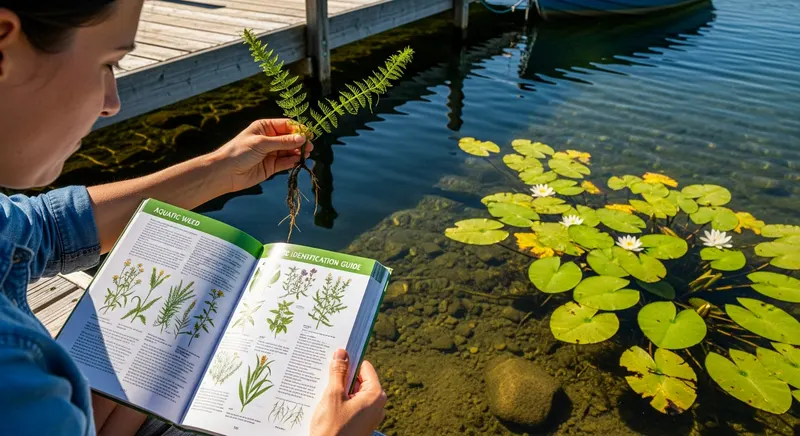
How AquaticWeed.org Is Organized
AquaticWeed.org's information architecture is built around four primary navigation dimensions: by species, by growth category, by topic, and by geography. Each dimension provides a complete path to the information you need, and they cross-reference each other extensively through internal links. Understanding these dimensions makes it possible to reach any page on the site quickly regardless of where you start.
Browse by Species
The most direct path to species-specific information is through the Species Authority Hub. Each of the 9 authority species has a comprehensive hub page and a full cluster of sub-pages covering identification, ecology, control, and distribution:
- Species Authority Hub — index of all 9 species with descriptions, categories, and links to full profiles
- From any species hub page, the sidebar provides direct links to all sub-pages for that species
- From any species sub-page, related species are linked contextually within the text and in the sidebar
The 9 species with full authority profiles: hydrilla, water hyacinth, Eurasian watermilfoil, curly-leaf pondweed, alligator weed, duckweed, coontail, elodea, and chara.
Additional species (without full authority profiles but with dedicated content) include: giant salvinia, water chestnut, purple loosestrife, phragmites, cattails, bulrush, azolla, frogbit, watermeal, najas, and others covered within the category hubs.
Browse by Growth Category

If you know the growth habit of the plant you're dealing with but not the species name, the category hubs provide the most efficient entry point:
- Floating Aquatic Weeds Hub — plants that grow at or near the water surface, including water hyacinth, duckweed, giant salvinia, water chestnut, azolla, and frogbit. Includes identification guides, ecological context, species-specific pages, and management overview.
- Submerged Aquatic Weeds Hub — plants that grow entirely beneath the surface, including hydrilla, Eurasian watermilfoil, coontail, elodea, curly-leaf pondweed, najas, and chara. Includes identification tips for submerged plants, management approaches, and species profiles.
- Emergent Aquatic Weeds Hub — plants that root in the substrate but grow through the water surface, including phragmites, cattails, bulrush, alligator weed, and purple loosestrife. Includes shoreline management guidance and wetland regulation context.
Each category hub includes an identification key that distinguishes the species within that category from each other, and links to individual species pages within the category.
Browse by Topic
AquaticWeed.org content is also organized by functional topic, accessible through the top navigation and the site's hub pages:
- Identification Hub — how to identify aquatic weeds, visual keys, comparison guides, and species-specific identification sub-pages. Start here if you are trying to identify an unknown plant.
- Control Methods Hub — comprehensive coverage of mechanical, chemical, biological, and preventive control methods, organized both by method type and by management situation. Start here if you know what you have and need to understand your management options.
- Management Planning Hub — how to develop a comprehensive management plan, from initial assessment through implementation, monitoring, and adaptive management. Start here if you are setting up a new management program.
- Biology Hub — aquatic plant biology including growth mechanisms, reproduction, physiological tolerances, and seasonal cycles. Start here for foundational understanding of how aquatic weeds work.
- Ecological Impact Hub — how aquatic weeds affect water quality, native plant and animal communities, oxygen levels, and recreation. Start here for impact assessment information.
- Questions & Answers Hub — 30 expert answers to the most common questions about aquatic weeds. Start here if you have a specific practical question.
Browse by Region or State
Geographic navigation is available through the distribution hub and its regional sub-pages:
- US Distribution Hub — national overview of aquatic weed distribution patterns, dominant species by region, and geographic spread trends
- Northern US Distribution — Great Lakes, New England, Upper Midwest, Pacific Northwest
- Southern US Distribution — Gulf Coast, Southeast, Florida, Texas, Southwest
- Western US Distribution — Pacific Coast, Mountain West, arid regions
- Invasive Weeds by State — state-level summary of major invasive aquatic plant species
Within each species authority page, the distribution section provides state-level presence information with regional context for that specific species.
Navigation Through the Site Header
The site header provides drop-down navigation organized into the following menus, each containing relevant sub-pages:
- Identify: Identification hub and sub-pages — floating vs. submerged vs. emergent, leaf shapes, root structures, stem patterns, comparison with native plants
- Floating / Submerged / Emergent: Dedicated menus for each growth category hub and the species and sub-pages within each category
- Species: Direct links to all 9 authority species profiles
- Control: Control methods hub and sub-pages by method type
- Learn: Biology, ecology, management, distribution, research, questions, and data tools — organized by sub-topic within the Learn menu
In-Page Navigation and Cross-Links
Every page on AquaticWeed.org is extensively cross-linked to related content. Species pages link to identification guides, management pages, and related species. Management pages link to species profiles and permit information. Ecology pages link to the species that drive the ecological effects being described. This dense internal linking structure means that following contextually relevant links from any page will reach most of the content relevant to your question within a few clicks.
Each page also includes a sidebar with topic-specific navigation widgets — the sidebar on a species page links to all other pages in that species cluster; the sidebar on a management page links to related management sub-pages and species most relevant to that management method.
Future: Full-Text Search
We are developing a full-text search feature that will allow keyword search across all 241 pages of AquaticWeed.org, returning results ranked by relevance with page-type filtering (limit results to species profiles, management pages, or Q&A pages). This will complement the existing category-based navigation for users who prefer keyword search to browse navigation. Target availability: 2026. Contact us at [email protected] with feedback on what search features would be most valuable for your use case.
Ten-Year Lake Management Plan: Lake Wingra, WI
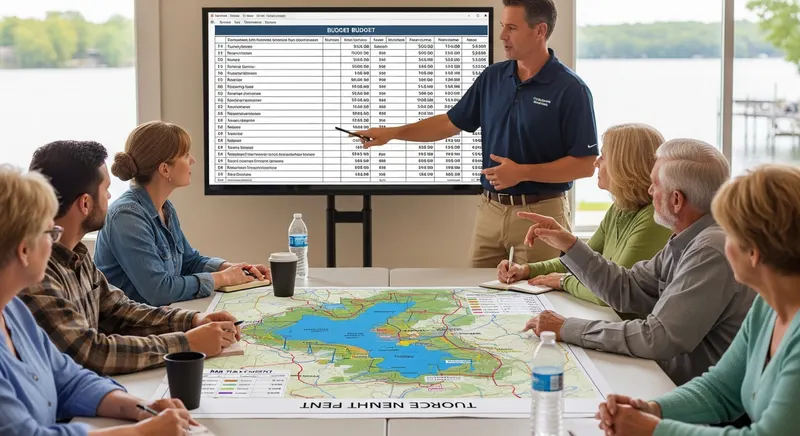
Lake Wingra, a 342-acre urban lake in Madison, WI, developed a comprehensive 10-year management plan coordinating the City of Madison, University of Wisconsin, and adjacent neighborhood associations. The plan addressed Eurasian watermilfoil, curly-leaf pondweed, and purple loosestrife through an integrated approach including targeted herbicide treatment, mechanical harvesting, native plant restoration, and public education.
Key outcome: The structured multi-agency planning process secured consistent funding across multiple budget cycles, a key advantage over ad hoc management. Native plant restoration efforts showed measurable progress in designated restoration zones within three years of initiation.
I've managed aquatic vegetation on Texas reservoirs for 15 years. The water hyacinth control content here is the most up-to-date, practical guidance I've found anywhere online.
Travis McKinley Commercial Fishing Guide, TX · Lake Travis / Lake AustinThe species identification guides on AquaticWeed.org are the most accurate I've used in 18 years of lake management. I now send all my new clients here first before we discuss treatment options.
Robert Harmon Certified Lake Manager, FL · Lake Okeechobee region