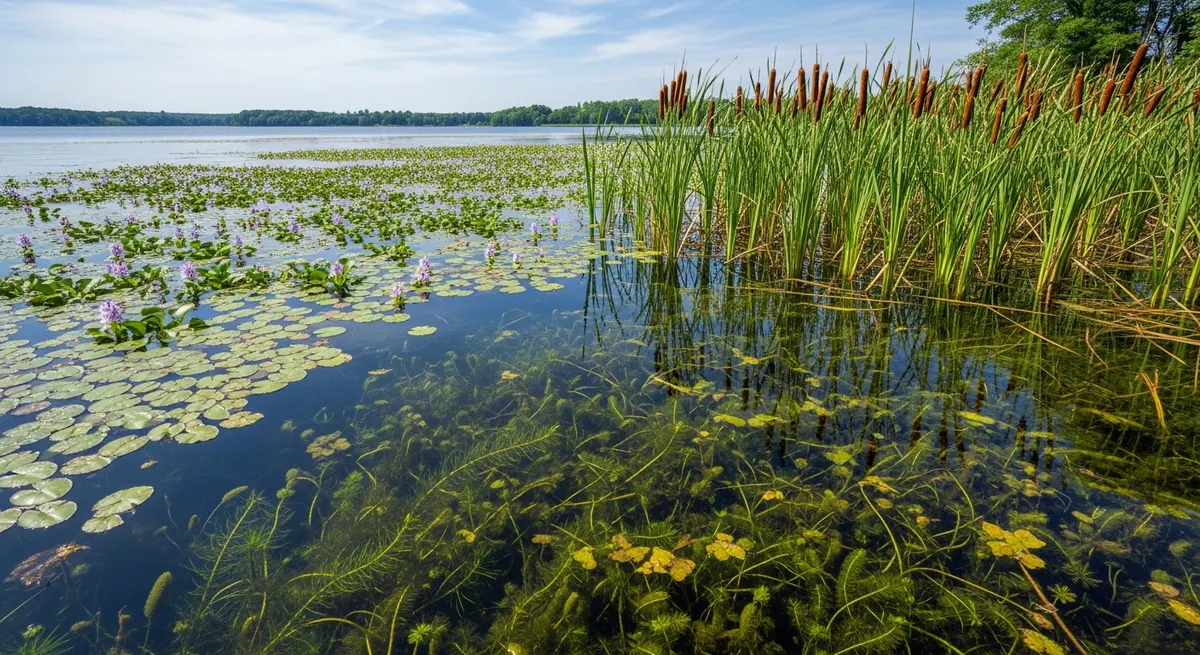
Hydrilla (Hydrilla verticillata) is a submerged aquatic plant native to Asia that is federally listed as a noxious weed and is the most damaging invasive aquatic plant in the United States. It is dangerous because it grows faster than any native aquatic plant, tolerates near-zero light conditions that others cannot survive in, produces underground tubers that persist for years after surface treatment, and forms dense surface mats that fundamentally alter lake ecosystems.
- Hydrilla is a federal noxious weed established in 30+ states — the most damaging submerged invasive in the US.
- It grows up to 1 inch per day and forms dense surface mats that block light, oxygen, and navigation.
- Hydrilla reproduces via four mechanisms: seeds, stem fragments, turions, and tubers — making eradication nearly impossible.
- Tubers persist in sediment for years and can resprout after all above-ground vegetation is killed.
- Hydrilla is associated with avian vacuolar myelinopathy (AVM), a fatal neurological disease in birds and eagles.
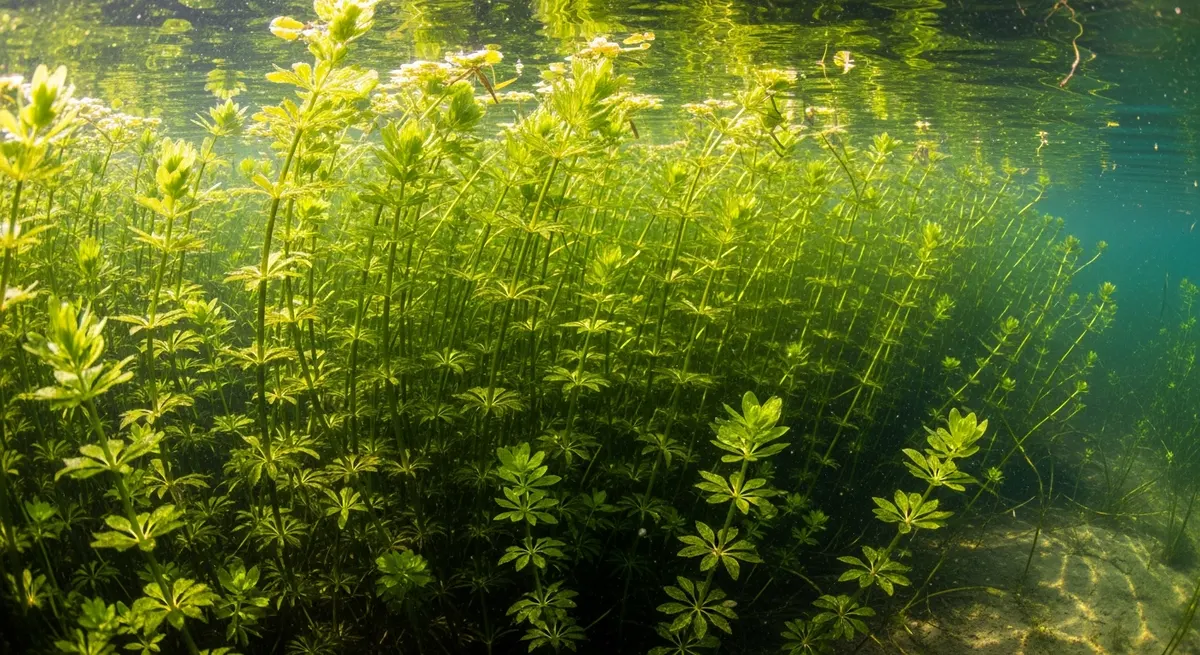
What Makes Hydrilla Uniquely Dangerous
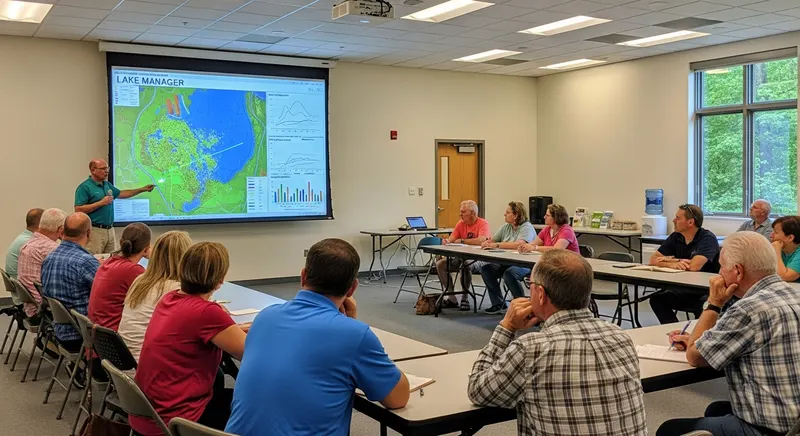
Dozens of aquatic plant species have been introduced to U.S. waterways from other regions of the world. Most cause localized problems; a handful cause significant regional damage; and hydrilla stands alone in its combination of traits that make it the most problematic invasive aquatic plant in North America.
Exceptional light efficiency: Most submerged aquatic plants require at least 10–15% of surface light irradiance to grow. Hydrilla is photosynthetically active at light levels as low as 1% of surface irradiance. This allows it to establish in turbid water where native plants cannot compete, and to grow from depths of 15–20+ feet in clear water — colonizing the entire water column rather than just the shallower zones accessible to competitors.
Rapid growth rate: Under optimal conditions, hydrilla elongates at rates of up to 1 inch per day. Established plants reaching the surface form dense lateral mats that spread horizontally across the water surface, blocking light to everything beneath.
Persistent underground structures: Hydrilla produces both turions (small dormant buds that form in leaf axils) and tubers (fleshy underground storage structures that develop at root tips in the sediment). Tubers can survive up to 5 years in sediment, germinating each spring to reestablish plants long after surface populations have been treated. A single water body can contain millions of tubers per acre of sediment, providing a virtually inexhaustible regeneration source. Full hydrilla species profile →
Ecological Impacts
Dense hydrilla infestations eliminate native submerged plant communities, dramatically reduce dissolved oxygen levels through their own respiration, alter water temperature profiles, and degrade the structural complexity of aquatic habitats. Water bodies that once supported diverse native submerged plant communities supporting diverse fish and invertebrate communities can be converted within 2–3 growing seasons to near-monocultures of hydrilla with impaired water quality and degraded ecology.
Hydrilla infestations are also associated with avian vacuolar myelinopathy (AVM), a neurological disease that has killed bald eagles and water birds at hydrilla-infested reservoirs in the Southeast. The relationship involves a cyanobacterium (Aetokthonos hydrillicola) that grows on hydrilla leaves and produces a neurotoxin consumed by coots and other waterbirds, which are then eaten by eagles. This ecosystem-level impact illustrates the far-reaching and sometimes unexpected consequences of invasive species establishment. Other invasive species →
Management Approaches
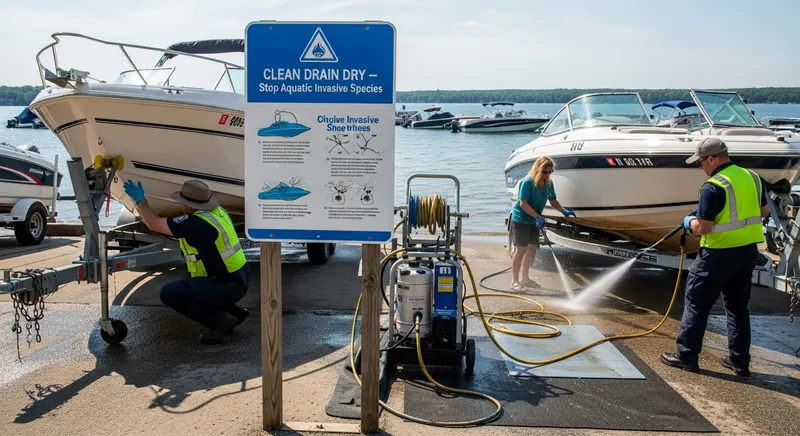
Hydrilla management in established infestations requires multi-year, integrated programs. Fluridone applied at low concentrations through a long (60–90 day) contact period is the most widely used systemic approach, providing season-long control and killing plants before they can produce the current year's tuber crop. Endothall provides faster results with shorter contact time. Mechanical harvesting is used in high-use areas but carries significant fragmentation risk. Triploid grass carp stocking can reduce above-ground biomass but does not address the tuber bank. Prevention of new introductions through boat inspection remains the most critical management intervention. Integrated management →
Sources & Scientific References
- Langeland, K.A. (1996). Hydrilla verticillata: The perfect aquatic weed. Castanea, 61(3), 293–304.
- Steward, K.K. (1984). Ecology of Hydrilla. In: Biology and Control of Aquatic Plants.
- Doyle, R.D. et al. (2002). Hydrilla tuber production and herbicide treatment. Journal of Aquatic Plant Management, 40, 17–22.
Frequently Asked Questions
Where did hydrilla come from?
Hydrilla is native to Asia (particularly India, Korea, and surrounding regions) and parts of Africa and Australia. It was introduced to the United States through the aquarium trade in the 1950s or early 1960s — likely through deliberate releases of aquarium water containing plant fragments or through disposal of aquarium plants. First documented in Florida in the early 1960s, it has since spread to more than 30 U.S. states.
How do you identify hydrilla?
Hydrilla is identified by: (1) whorled leaves in groups of 4–8 around the stem; (2) serrated (toothed) leaf margins visible under 10x magnification; (3) a distinctive raised midrib tooth on the underside of the leaf; (4) reddish-brown tubers in the sediment; and (5) turions (small, dormant buds) at leaf axils in fall. The midrib tooth is the most reliable field diagnostic character that distinguishes hydrilla from similar-looking elodea and naiad species.
Is hydrilla illegal?
Yes. Hydrilla is on the federal noxious weed list, making its interstate transport, sale, and introduction illegal. Most states where it is not yet established prohibit its possession and transport. States with established populations regulate its management through state aquatic weed programs. Importing hydrilla-infested equipment from infested states is a significant spread risk and may constitute a regulatory violation in uninfested states.
Can hydrilla be eradicated?
Eradication of established hydrilla is considered practically impossible at the watershed scale due to the persistence of its tuber bank in sediment. Even after years of aggressive herbicide treatment that eliminates all above-ground plants, tubers can remain viable for 3–5+ years, regrowing plants when conditions become favorable. Management goals in established areas focus on population reduction to levels that allow recreational use and minimize ecological damage, not eradication.
Key Takeaways
- Hydrilla is a federal noxious weed established in 30+ states — the most damaging submerged invasive in the US.
- It grows up to 1 inch per day and forms dense surface mats that block light, oxygen, and navigation.
- Hydrilla reproduces via four mechanisms: seeds, stem fragments, turions, and tubers — making eradication nearly impossible.
- Tubers persist in sediment for years and can resprout after all above-ground vegetation is killed.
- Hydrilla is associated with avian vacuolar myelinopathy (AVM), a fatal neurological disease in birds and eagles.
Ten-Year Lake Management Plan: Lake Wingra, WI
Lake Wingra, a 342-acre urban lake in Madison, WI, developed a comprehensive 10-year management plan coordinating the City of Madison, University of Wisconsin, and adjacent neighborhood associations. The plan addressed Eurasian watermilfoil, curly-leaf pondweed, and purple loosestrife through an integrated approach including targeted herbicide treatment, mechanical harvesting, native plant restoration, and public education.
Key outcome: The structured multi-agency planning process secured consistent funding across multiple budget cycles, a key advantage over ad hoc management. Native plant restoration efforts showed measurable progress in designated restoration zones within three years of initiation.
As a lakefront property owner I was completely lost until I found AquaticWeed.org. The permit guidance alone saved me from making costly, potentially illegal treatment mistakes.
Gerald Renfrew Lakefront Landowner, WI · Vilas CountyI've managed aquatic vegetation on Texas reservoirs for 15 years. The water hyacinth control content here is the most up-to-date, practical guidance I've found anywhere online.
Travis McKinley Commercial Fishing Guide, TX · Lake Travis / Lake Austin