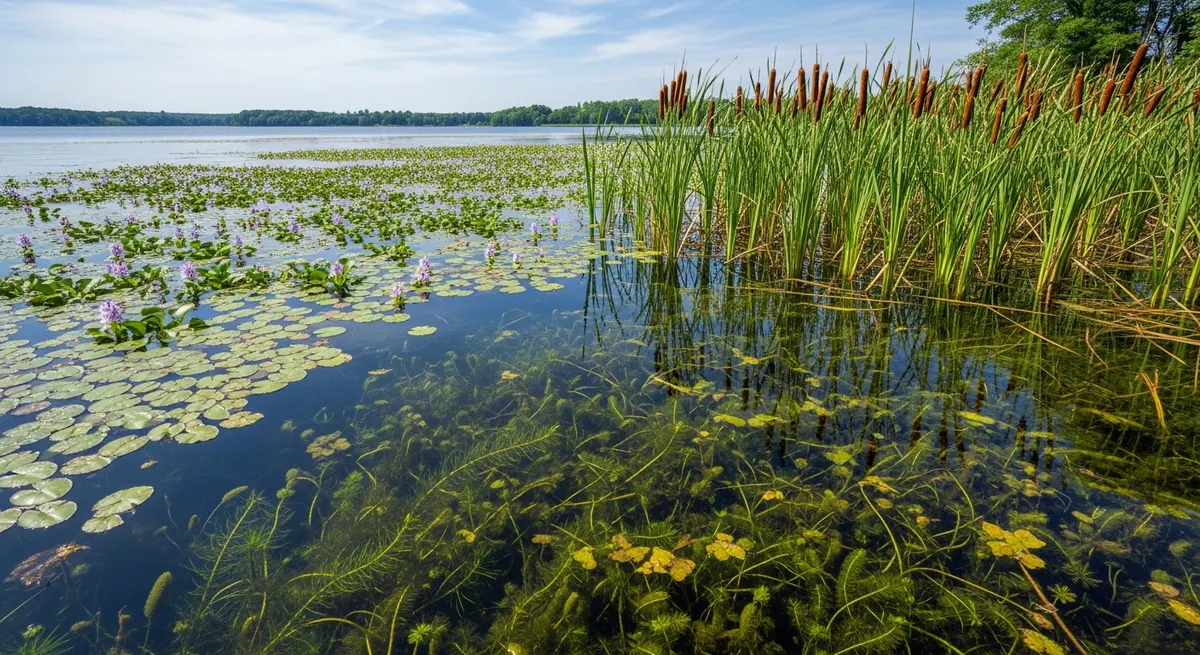
Aquatic weeds affect drinking water quality through multiple mechanisms: taste-and-odor compounds produced by algae associated with weed beds, increases in dissolved organic carbon from decomposing vegetation, potential cyanotoxin production from algal blooms triggered by weed-related nutrient cycling, and physical clogging of water intake structures. Water utilities drawing from weed-impacted source water typically spend significantly more on treatment than those with cleaner source water.
- Dense aquatic weed growth causes taste-and-odor problems in drinking water through algae-associated compounds like geosmin and MIB.
- Decomposing weed biomass increases dissolved organic carbon, raising the potential for disinfection byproducts (DBPs) in treated water.
- Aquatic weeds can clog water intake structures, increase treatment costs, and compromise source water reliability.
- Harmful algal blooms — often triggered by nutrient pulses from weed die-offs — produce cyanotoxins toxic to humans.
- Water utilities in weed-impacted watersheds spend significantly more on treatment compared to systems with clean source water.
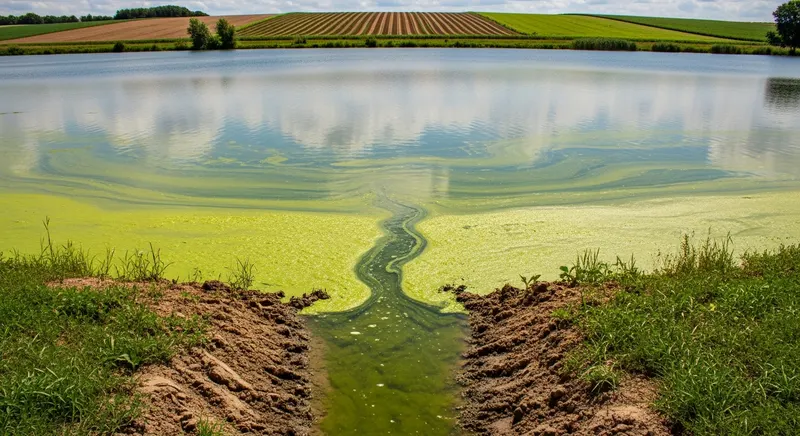
Taste and Odor: The Most Common Consumer Impact
The most frequently reported drinking water impact of aquatic weed beds is taste and odor. The primary compounds responsible are geosmin (producing an earthy, musty smell reminiscent of beets or wet soil) and 2-methylisoborneol (MIB, producing a musty or camphor-like taste). Both are produced by bacteria and cyanobacteria living in the biofilms attached to aquatic weed surfaces and in the sediment of weed beds. Human taste and smell receptors can detect geosmin at concentrations as low as 5–10 parts per trillion — making it one of the lowest human detection thresholds for any water contaminant. Activated carbon filtration effectively removes geosmin and MIB, but the additional carbon adds $50,000–$500,000 or more in annual treatment cost depending on system size. Water quality impacts guide →
Disinfection Byproducts
When water is chlorinated — the most common disinfection method for drinking water — chlorine reacts with naturally occurring organic compounds in the water to form disinfection byproducts (DBPs). The most regulated DBPs are trihalomethanes (THMs) and haloacetic acids (HAAs), both of which have EPA maximum contaminant levels (MCLs) under the Safe Drinking Water Act. Dissolved organic carbon — which increases significantly in water bodies with heavy aquatic weed growth due to decomposing plant material — is the primary precursor for DBP formation. Utilities drawing from weed-impacted source water often have higher DBP formation potential, requiring additional treatment steps and more careful management of chlorine dosing.
Cyanotoxins: The Emerging Risk
Harmful algal blooms (HABs) dominated by cyanobacteria are an increasing concern in eutrophic water bodies — and dense aquatic weed growth contributes to eutrophication. Some cyanobacteria produce powerful toxins: microcystins (liver toxins), cylindrospermopsin, anatoxin-a (a neurotoxin), and saxitoxins. These toxins can pass through conventional water treatment, requiring specialized approaches — ozonation, activated carbon adsorption, and UV treatment. EPA issued health advisories for microcystins in 2015, triggering monitoring requirements at utilities drawing from potentially impacted sources. Managing aquatic weed biomass reduces the probability of HAB events by reducing nutrient cycling and thermal stratification. Dissolved oxygen and weed impacts →
What Water Utilities Are Doing
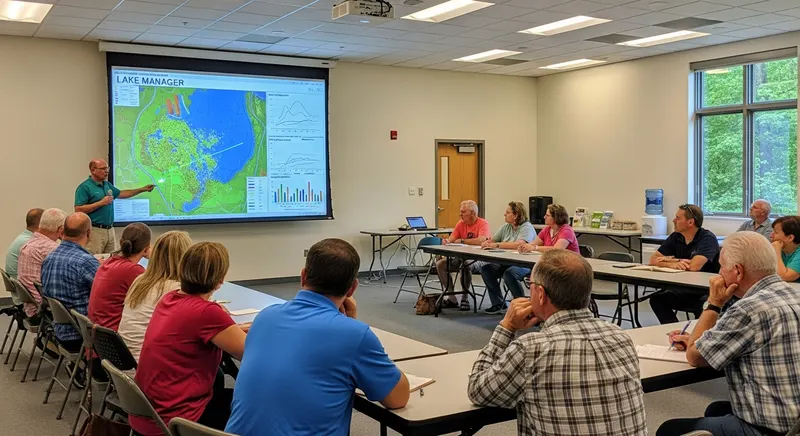
Water utilities serving communities with weed-impacted source water have become increasingly active participants in lake and watershed management. Many utilities fund or co-fund lake management programs on their source reservoirs, recognizing that the cost of preventing weed and algae growth is far less than the cost of treating the resulting water quality impacts. Utilities also engage with watershed authorities on nutrient loading reduction — targeting agricultural runoff, septic system upgrades, and stormwater management as the most durable long-term solution to source water quality impairment. National economic cost of aquatic weeds →
Sources & Scientific References
- US EPA. (2019). Drinking Water Health Advisory for Cyanotoxins. EPA 820-F-19-001. Washington, DC.
- Watson, S.B. et al. (2016). Algal smell — olfactory detection of taste and odor compounds in water. Water Science and Technology, 73(6), 1182–1192.
- Summers, R.S. et al. (1997). Seasonal variability in NOM and its impact on DBP formation. Journal AWWA, 89(1), 43–54.
Frequently Asked Questions
Can aquatic weeds make tap water taste bad?
Yes. Dense aquatic weed beds support large populations of algae and cyanobacteria in their associated biofilms. These microorganisms produce taste-and-odor compounds — primarily geosmin (earthy/musty smell) and 2-methylisoborneol (MIB, musty taste) — that humans can detect at concentrations of a few parts per trillion. Water utilities use activated carbon filtration to remove these compounds, but the process adds significant treatment cost. The problem is most severe during late summer when weed and algae biomass peaks.
Do aquatic weeds increase the risk of harmful algal blooms?
Yes, through two mechanisms. First, nutrient cycling by dense aquatic vegetation — particularly the concentrated nutrient release during die-offs — can provide the nutrient pulse that triggers algal blooms in water bodies with marginal nutrient levels. Second, shallow, thermally stratified, low-oxygen conditions created by dense weed mats favor cyanobacteria (blue-green algae) over other algae. Some cyanobacteria produce cyanotoxins — including microcystins, cylindrospermopsin, and anatoxins — that are harmful to humans at very low concentrations and require specialized treatment to remove from drinking water.
Can aquatic weeds clog municipal water intakes?
Yes, particularly for water systems drawing from weed-impacted water bodies. Floating weeds, weed fragments dislodged by wind and boat traffic, and algae mats can accumulate at intake screens and reduce flow capacity. Hydrilla and water hyacinth are the most frequently cited species causing intake problems. Water utilities in weed-impacted areas typically install coarser screens upstream of fine intake screens, conduct more frequent screen cleaning, and — in severe cases — coordinate with lake management agencies to treat weed populations near intake structures.
How do utilities treat water from weed-impacted sources?
Water utilities treating weed-impacted source water typically use enhanced treatment steps not required for clean source water: powdered activated carbon (PAC) injection for taste-and-odor control; enhanced coagulation for dissolved organic matter removal; algae monitoring and algaecide application at reservoirs; cyanotoxin testing and specialized treatment (ozonation, UV, activated carbon) when toxins are detected; and increased chlorination monitoring to manage disinfection byproduct formation. These additional steps add meaningful cost to treatment — estimates range from $0.05–$0.25 per 1,000 gallons above baseline treatment costs.
Can aquatic weed management improve source water quality?
Yes, when integrated with nutrient management. Managing weed populations reduces the decomposing organic matter that contributes to taste, odor, and disinfection byproduct precursors. However, treatment-induced weed die-offs can temporarily worsen these parameters as stored nutrients are released. The most durable source water quality improvements come from nutrient loading reduction — reducing the phosphorus and nitrogen entering the water body — combined with weed management. Utilities with impaired source water should engage with watershed management programs to address upstream nutrient sources.
Key Takeaways
- Dense aquatic weed growth causes taste-and-odor problems in drinking water through algae-associated compounds like geosmin and MIB.
- Decomposing weed biomass increases dissolved organic carbon, raising the potential for disinfection byproducts (DBPs) in treated water.
- Aquatic weeds can clog water intake structures, increase treatment costs, and compromise source water reliability.
- Harmful algal blooms — often triggered by nutrient pulses from weed die-offs — produce cyanotoxins toxic to humans.
- Water utilities in weed-impacted watersheds spend significantly more on treatment compared to systems with clean source water.
Ten-Year Lake Management Plan: Lake Wingra, WI
Lake Wingra, a 342-acre urban lake in Madison, WI, developed a comprehensive 10-year management plan coordinating the City of Madison, University of Wisconsin, and adjacent neighborhood associations. The plan addressed Eurasian watermilfoil, curly-leaf pondweed, and purple loosestrife through an integrated approach including targeted herbicide treatment, mechanical harvesting, native plant restoration, and public education.
Key outcome: The structured multi-agency planning process secured consistent funding across multiple budget cycles, a key advantage over ad hoc management. Native plant restoration efforts showed measurable progress in designated restoration zones within three years of initiation.
We used the integrated management framework from this site to structure our Eurasian watermilfoil control program. After three seasons we've reduced lake-wide coverage by 78% on our 340-acre water body.
Susan Thibodeau Lake District Manager, MN · Crow Wing CountyThe seasonal timing guidance has been invaluable. Treating at the right growth stage cut our herbicide costs by nearly 30% without sacrificing efficacy on our county-managed reservoir.
Dale Buchanan County Parks Director, MI · Kalamazoo County